

It was a technically a much larger group. Here’s how that works: For a pittance, people “join” the national Sierra Club, and get a tote bag and the national magazine. They are then referred down to the local group, and are put on the local mailing list and receive the local newsletter. So from maybe 200 people in the Billings area formed the “branch,” and from that came the ten who actually went to meetings. (I later learned from Montana Wilderness Association that membership counting is quite an art, and often includes spouses and children of the joining member. But not pets. Well, dogs maybe. But no cats!) “Members” serve as a front to give the group a grassroots feel as they pull down money from Pew or other foundations that are their true funding source
Many environmental groups, like Alliance for the Wild Rockies, really are grassroots. Wild West Institute is another, and each of these websites will lead to other worthy groups. These groups understand that to sell out for funding is to sell out the mission. I belonged to Montana Wilderness Association for years when it too was mostly grassroots. Since I left its budget has mushroomed, paid positions multiplied, and the mission is down the toilet.
I soon became the newsletter editor for Sierra Club, and in the early days of desktop publishing, it was an excruciating task. I had to fill four full pages each month, and so wrote things to fill space, and eventually was taken aside by the Grand Poobah whose name I have long forgotten and told that all writing had to go through him for vetting. That’s fair, I know. But I just could not bear the idea that my thoughts had to be subordinated to his. So I didn’t do it much. It was my first indication that I am not a good person to have in a group.
I was nervous, as I had never done such a thing before. Further, because I had worked in oil and gas, where there is great technological expertise, I assumed that there was also great political intelligence on the right wing, and that I would be challenged by a strong intellect and fierce competitor. I prepared a list of questions and on the day of the interview called Chuck to double-check time and place. He said forget it. No interview.
I have long since learned that there is not much more intelligence on the right than on the left, and that the best minds are often outliers. I’ve met people from all ideologies, and so have developed a disdain for isms and ogies. All I want are smart people with good hearts.

The greatest polarizing force in the media is radio. As McLuhan discovered, radio is a tribal drum, a one-on-one medium – one speaker, one listener. It has inflammatory power. A talented radio speaker is able to make the listener angry, and the angry listener has to do something with that anger. Since radio does not allow feedback (“talk radio” is an illusion), the inflamed listener seeks other outlets. From there it is easy to manipulate him.
In case you don’t know it, I have just outlined the origins of the Tea Party – they are polarized talk radio listeners. People on the left who have ‘infiltrated’ rallies are surprised to find out that they are often intelligent and well-educated, but the one common theme among them is sources of information.
This is the reasoning behind imposing a Fairness Doctrine on public air waves. It’s good public policy. It forces people to deal with one another.
The Internet is an anti-polarizing force. Or could be. But once polarized, the natural tendency of people is to stay that way.
_____________
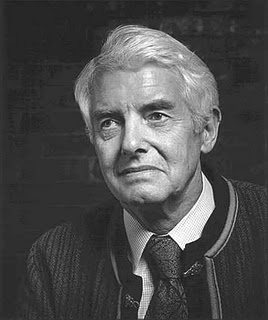
PS: Polarization even happens within groups. I’m going on memory here, often faulty and selective. David Brower, pictured above, led an insurgent movement within the Sierra Club, called the “John Muir Sierrans” to remove the club from the grip of professional Democrats like its leader, Carl Pope. In 2000 some who ran for the national board said they would endorse Nader instead of Gore, enough that they might swing the vote. Two were from Montana, as I remember, and they won their seats. Even though board members had fought for their seats based on the promise to endorse Nader, once seated, they changed their minds. (Budgets were probably the lever – Pope likely told the two from Montana that their state would suffer if they did not endorse Gore.)
Later I talked to a regional organizer for Sierra working out of Bozeman. She was salaried help with an office and budget and all of that. I asked her about her thoughts on the Brower/Pope battle. She knew nothing of it, didn’t even know it had happened. Apparently professional staff knew less than outsiders.
 Piece of Mindful