
Tweedle Dee: “We dropped our subscription to the Denver Post. We don’t watch TV news, ever.”
Tweedle Dum: “But how do you stay informed?”
Tweedle Dee: “I just told you.”
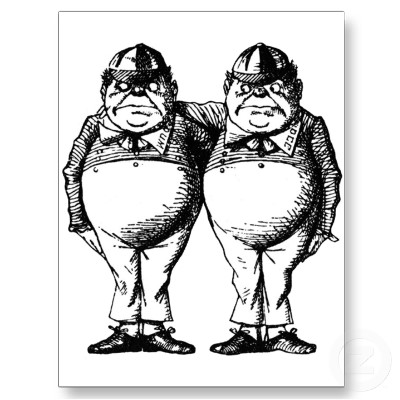 I made that up, but the content is true. We dropped our Denver Post subscription around June of last year, and we do not watch TV news. I subscribe to Rolling Stone, and we take the Financial Times. I usually skim the bar on the left-hand side and look for news of importance. Though FT is technically a British publication, the version we see is aimed at wealthy Americans who are keen to stay on top of business news. That’s not us, but it does offer a wider range of news than a typical American source.
The Denver Post is crap. It’s amazing that a city of this size is so poorly served by its one major circulation newspaper. It does what newspapers are supposed to do – entertain while appearing to inform. It’s not unusual for sports to dominate the front page. I’ve long been an ardent editorial page reader, but in the final days with the Post, with their redundant and extreme right wing editorials balanced by squishy “liberals” (The Ellen Goodman Syndrome), I found myself focusing more on letters from readers. They sort through them, it appears, looking for the most predictable and reflexive. There’s got to be better ones that don’t make the cut!
My only real exposure to American news are those three and four minute broadcasts by NPR which we endure before Car Talk and Wait Wait (which calls itself a “news” program). I listen with some disdain, as most of the focus is on trivia – the Republican race for president, the words of the president on various subjects. They follow him all day every day, and his every word and deed is chronicled for us. There are also human interest and spectator stories – car crashes, kidnappings, storms and crimes (of the punishable variety – not the activities of the powerful).
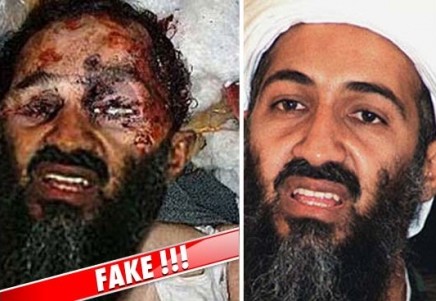 In distancing myself from American news, I have more time to look around for what is really going on, not an easy task. It requires quite a bit of subjective judgment and consideration of the source of stories. For instance, I learned that many of Navy Seal Team six had died in a National Guard helicopter crash in Afghanistan, and that story quickly disappeared from the scene. Team Six is now being trotted out for some high-profile rescues, however. I learned from (what I believe to be a credible) eye witness to the scene that the supposed “killing” of Osama bin Laden involved a helicopter that landed, de-boarded, re-boarded and then blew up in the air as it took off. It appears to have been murder all right, but the victims were Navy Seal Team Six, and not OBL (who probably died in late 2001.)
But it’s very difficult to know. However, I am familiar with certain techniques of the military – they mask deaths as “accidents.” The helicopter crash that no longer happened (what was Team Six doing on an overloaded National Guard copter anyway?) was probably a way to kill the already dead, and a few more who were threatening to speak out.
What do I know about all of this …. for sure? Not much. What would I know if I only read my Denver Post and watched the pretty boys and girls on TV? Zip. I do remember a radio broadcast that told me how OBL loved pornography and smoked pot and was vain, which was why the supposed OBL’s that we saw in the later years after his death were younger men with a dark beards and hair. The spooks were covering their ass, as the OBL imitators in those films were sloppy imitations. (I think we are so dumbed down that they don’t feel they have to try very hard.) Even the one in the recovered tape from late 2001 (where he supposedly admitted guilt) is suspicious: one: they stumbled on it in a vast pile of rubble; two: It is so convenient; and three: because he contradicts earlier statements that we know were his, where he said he was not involved in the attacks on the World Trade Center.
That’s but one story. I don’t suffer from indifference, but don’t have the answers. I am only wise enough to stay away from American news.
What else is going on? The Libyan aftermath receives little coverage, but I am reading of thousands of political prisoners, and a new regime not much different from the old and rebels who feel they were sold out. The Syrian rebels are remarkably well-armed, and that situation receives wide coverage as opposed to, say, Yemen or Bahrain. Egypt is in turmoil, and the ten Americans detained are very suspicious. What were they up to? Don’t know. Are we being prepped for war with Iran? Are they going to attack? Will it be Israel, acting on orders, that fires the first shot? What about China and Russia? Their veto of a UN resolution last week really pissed off the War Department, but the whole of that situation is hard to read. It centers around oil and the petrodollar, no doubt. Once it is understood that the US does not care about human rights or democracy, then it is easier to read the lay of the land. But still difficult.
Domestically? Who knows. I’ve long since concluded that the November election will bring about four more years of Obama, since there’s been no real effort at finding an opponent for him. A Mormon cannot, will not, be elected. There might be shenanigans at the convention to put up a real candidate, and if that happens I might have to re-think it, but for now I’m satisfied that money and Wall Street and the military are happy with BHO.
It is amazing how much oxygen gets used up with presidential politics, probably the least important activity going on right now. But American journalists are prohibited form covering anything of real importance, and so have no choice but to dwell on trivia.
We are pretty much left to our own judgment and devices in trying to understand the activities of the powerful. Journalists are charged with the task of reporting on them, but do not fulfill that mission. There are a few, confined to the margins, who try. With them, with foreign news sources, with rabble rousers, with open dissidents like Julian Assange, it is possible to construct a reasonable picture of reality. But you never know. Never.
The writer Simon Louvish recounts the story of a group of Russians touring the United States at the height of the Cold War. They were astonished to find, after reading newspapers and watching television, that all the opinions on vital issues were more or less the same. ‘In our country,’ they said, ‘to get that result we have a dictatorship, we imprison people, we tear out their fingernails. Here you have none of that. So what’s your secret? How do you do it?’
Then there’s this, from -Russian General Alexander Lebed, commenting on US air strikes in Iraq in September of 1996:
This is the nature of democracy: You send in the planes and drop the bombs. Then you gather in the journalists and tell them to applaud. We need to study that.
And finally, Claud Cockburn:
Never believe anything until it is officially denied.
American journalists, as a whole, never doubt anything handed them from official sources. It’s an amazing spectacle, but one that should be viewed only from a distance. Immerse yourself in American news, rely on it, and there can be only one result: Ignorance.
 Piece of Mindful
What about local news?
You focus on big national and international news, things that are remote from your personal influence. Looks like an emotional investment in things that don’t matter, and that you can’t affect.
LikeLike