
Anyone paying close attention to international events over the decades implicitly understands that the United States is not interested in either democratic rule or human rights. Quite the opposite. In addition, the US media only directs our attention to places where the US military industrial complex wants that attention directed.
So when we learn that the US supports the protest movement in Syria, a concerned citizen has to ask the question “Why?” Obviously there are strategic reasons, as generally the US seeks to surround the oil fields of the Mideast. Pervasive anti-US sympathy throughout the region eliminates the possibility of self-rule. Democracy and human rights are not in the best interest of the US. Ergo, dictators like Mubarak, Gaddafi, Saddam Hussein and the House of Saud are installed, supported, and replaced as necessary.
I merrily went along assuming that the answer is that the US doesn’t tolerate independent governments anywhere in the region for any reason, but the following words from Paul Craig Roberts do offer some illumination:
“The United States is bold in stirring up the opposition and in arming it. They used the cover of the Arab Spring and Arab protests as they did in Libya,” he said. “These are not spontaneous protests, and certainly in an authoritarian state like Syria you wouldn’t find people in opposition able to readily supply themselves with arms, with military weapons.”
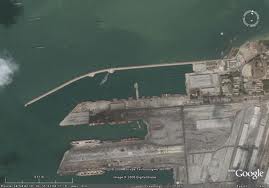
What’s involved here is that the Russians have a naval base in Syria, and the Americans don’t want a Russian naval presence in the Mediterranean. And, just as in Libya, the problem was the Chinese oil investments. If Syria goes, Iran is in the target sites, and Lebanon.
 Piece of Mindful
The Great Game continued. Substitute U.S.A. for Britain, and you’ve got a pretty clear picture of a century of geopolitical maddness based on obsessing over what the Russians are thinking and doing. All too often we underestimate the State Department’s role in ongoing imperialist/military policy decisions. This where institutional memory is stirred and stored, but never erased.
Who’s still in Iraq? Contractors, CIA, and embassy “diplomats” — 17,000 of them — under the new command of Hillary. Don’t be calling Obama at 3am, he’ll too busy campaigning after a few weeks of Merry Christmas cheer in Hawaii.
LikeLike
Yeah, Russian bases in Syria. The truth comes out.
LikeLike
American bases everywhere … Do you ever confront contradiction, as Rand says you must?
LikeLike
Plus Syrian presence in Lebanon. Syrian regular army and Hezbollah. Although I seem to recall news of the regular syrian army withdrawing from Lebanon some time ago cant remember. Without syria as a platform iranian support of Hezbollah becomes much more difficult.
What do you suppose these ‘civilians’ were smuggling and on behalf of whom?
http://www.dailystar.com.lb/News/Local-News/2011/Nov-19/154608-syrian-army-lebanese-civilians-exchange-fire-on-border.ashx#axzz1hD4MJQZN
LikeLike
Israel is the regional threat – it has invaded Lebanon in 1978 and occupied it from 1982 to 1990, and invaded again in 06. All wars of aggression, and not self-defense – Israel seems to regard southern Lebanon, as the West Bank, as part of its god-given Territory. Hezbollah was formed to fight the Israelis in Lebanon, but by the time it gets filtered through our propaganda system, it’s the “terrorist” group Hezbollah harassing Israel.
LikeLike
You forgot to mention that they also possess vast quantitites of weapons of mass destruction. Hezbollah is a regional threat…in the sense they threaten Israeli & US (and to a lesser extent Saudi) dominance. In that last war / incursion by Israel into Lebanon in 2006 they got their asses handed to them by Hezbollah. The only way to beat them (Hezbollah) is going to be to starve them out by cutting off support from Syria and then Iran.
LikeLike
You forgot to mention that Israel also possess vast quantitites of weapons of mass destruction. Zionism is a regional threat…in the sense they threaten Syria and Lebanon and to a lesser extent Iranian dominance. In that unprovoked invasion by Israel into Lebanon in 2006 they got their asses handed to them by Hezbollah. The only way to beat them (Israel) is going to be to starve them out by cutting off support from The United States.
LikeLike
I was referring to Israel in my post as the holder of the evil WMDs. I dont think Hezbollah or Syria actually have any to speak of. Hezbollah can be smoked out of their holes in Lebanon. As a shia militia they have lots of enemies in the mideast other than Israel who tacitly and actively oppose them.They are pretty tough and well organized though. They just outsmarted the CIA a couple weeks ago and blew the cover on a whole ring of their spies.
There will be no “beating” Israel though. A curbing of their more aggressive tendencies through Israel’s own domestic politics or US pressure (unlikely) is about the best their adversaries can hope for.
LikeLike
My dear friends, Russia, China, India and U.S.A. are all involved in every move. To focus on smaller fish is a distraction.
LikeLike
Not feeling any Indian love in this region. Care to bring me up to speed?
LikeLike
As former French colonies, Syria and Lebanon never appreciated the British/U.S. program much. Turkey sided with the Germans in WWI for protection against British plans to carve up the Ottoman Empire for themselves. So, the Russians have a natural contemporary presence — the old enemy of my enemy routine.
Russian troops periodically invaded and occupied eastern Turkey, Georgia, Azerbaijan, and northern parts of Persia (Russo-Persian Wars, 1811-1813 and 1825-1828). The Brits and Indian troops invaded southern Persia (Afghan/Anglo-Persian War, 1856-1857). The Brits didn’t last long. The Bigs have been playing this game for a long, long time. The Bigs still control the action.
LikeLike
India, a former British colony, is a dominant player in the region (nuclear) militarily, and economically. Now, like every other former soverign in the world, it’s a colony of the multi-nationals. Global invesment capital continues to flood into India, which in turn requires huge energy and transportation infrastructure upgrades. Newly secured oil and gas reserves, and minerals from Afghanistan, will not just go to China. Capital flows dictate that India will get its share to produce goods for global market demands, especially for consumers in the Middle East and Asia as “growth” wanes in Europe and the U.S. Our job is cop on the resources beat protecting capital and profit on long-term “investments” that support the growth-model myth. The shell game has moved to India and China, the ideology never changes.
LikeLike