“In a defiant raspberry to the city Department of Education — and taxpayers — disgraced teacher Alan Rosenfeld, 66, won’t retire.
Deemed a danger to kids, the typing teacher with a $10 million real estate portfolio hasn’t been allowed in a classroom for more than a decade, but still collects $100,049 a year in city salary — plus health benefits, a growing pension nest egg, vacation and sick pay.
Mayor Bloomberg and Gov. Cuomo can call for better teacher evaluations until they’re blue-faced, but Rosenfeld and six peers with similar gigs costing about $650,000 a year in total salaries are untouchable. Under a system shackled by protections for tenured teachers, they can’t be fired, the DOE says.”
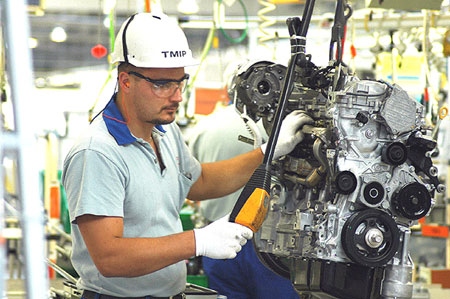
Take a second look at your “wealth producer” picture.
He looks stout but do you think he could lift that engine all by his self and install it in the car body? Not hardly.
The wealth producer is the one who patented the hydraulic lift or at least financed it’s purchase in order for Joe to push the buttons to raise and lower.
And if Joe’s union gets too full of itself with unreasonable demands then some one might finance a robot to do the “producer’s” job.
Creativity is a form of wealth production. I chose this picture merely to distinguish those who work for a living from those who live off the work of others – your capitalists.
Labor + resources = wealth. Capital is stored labor and resources from the past. Machines that produce products are indeed more useful than those that merely serve a single purpose. So the machine he is using, the inventor of that machine (who is not a capitalist, but rather an “inventor”), are indeed intricate to our wealth production process.
I chose a teacher because I believe that profession creates more wealth each year than the whole of Wall Street, which is tasked merely to allocate capital, and does a shitty job of it.
This is evidence that the whole of your thought processes are non-sequitur.
Imagine the following: I like donuts, and stop by a donut shop each morning, but lately the donuts have been infected with rat poison, so I am getting sicker and sicker – I mention this to you and you say “well, if the donut shop does a lousy job of making donuts, then who should? The Government?” You’re sort of missing the point.
During the run-up to the housing crash, your donut shop created $8 trillion in fictitious wealth. The inevitable collapse nearly destroyed the economy and sent ripples all over the world. People who Obama appointed to manage the aftermath were the very people who made the mess. No one was penalized for their criminal behaviors.
Such a problem does not easily lend itself to your “either/or” scenario. Care to rethink your bullshit answer?
Ashamed? WTF? I presented you with the problem, and you answered with a false choice. The private sector went ape shit and practically brought the economy to its knees. Your answer – would the government do better, makes no sense! Money is not wealth. Investors are entrusted with money for allocation, and the spun out of control chasing other money.
The answer in part is high marignal taxes and regulation.
There’s a whole lot going on in that article – it speaks to several issues that pass unnoticed – one, that command economies are more efficient than supposedly “democratic” ones, that China’s situation is so desperate that abysmal wages and work conditions are highly prized, and that our own education system is not turning out high quality candidates for even low-tech jobs.
But most of all, Apple execs act as if they have no control over the situation, that they could not improve pay or conditions or hours for the factory workers. This is the Nike defense, the idea that by subcontracting rather than directly employing these workers, Apple has washed its hands and bears no guilt for their treatment.



 Piece of Mindful
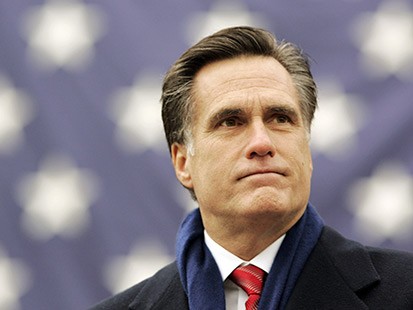
Here’s another “wealth creator”. From NY Post.
“In a defiant raspberry to the city Department of Education — and taxpayers — disgraced teacher Alan Rosenfeld, 66, won’t retire.
Deemed a danger to kids, the typing teacher with a $10 million real estate portfolio hasn’t been allowed in a classroom for more than a decade, but still collects $100,049 a year in city salary — plus health benefits, a growing pension nest egg, vacation and sick pay.
Mayor Bloomberg and Gov. Cuomo can call for better teacher evaluations until they’re blue-faced, but Rosenfeld and six peers with similar gigs costing about $650,000 a year in total salaries are untouchable. Under a system shackled by protections for tenured teachers, they can’t be fired, the DOE says.”
Read more: http://www.nypost.com/p/news/local/queens/dud_of_the_class_V94XccuHkAS9OKOVaTtWMK#ixzz1l4XXStd9
LikeLike
In the gallery of theft, this is a postcard on the door in the lobby, See … Wall Street.
It’s also anecdotal and a non sequitur.
LikeLike
Take a second look at your “wealth producer” picture.
He looks stout but do you think he could lift that engine all by his self and install it in the car body? Not hardly.
The wealth producer is the one who patented the hydraulic lift or at least financed it’s purchase in order for Joe to push the buttons to raise and lower.
And if Joe’s union gets too full of itself with unreasonable demands then some one might finance a robot to do the “producer’s” job.
LikeLike
Creativity is a form of wealth production. I chose this picture merely to distinguish those who work for a living from those who live off the work of others – your capitalists.
Labor + resources = wealth. Capital is stored labor and resources from the past. Machines that produce products are indeed more useful than those that merely serve a single purpose. So the machine he is using, the inventor of that machine (who is not a capitalist, but rather an “inventor”), are indeed intricate to our wealth production process.
I chose a teacher because I believe that profession creates more wealth each year than the whole of Wall Street, which is tasked merely to allocate capital, and does a shitty job of it.
LikeLike
If Wall Street (semi-free market) does a lousy job of allocating money then who should?
The Govt.?
We are approaching $10 million/week interest on the debt.
LikeLike
This is evidence that the whole of your thought processes are non-sequitur.
Imagine the following: I like donuts, and stop by a donut shop each morning, but lately the donuts have been infected with rat poison, so I am getting sicker and sicker – I mention this to you and you say “well, if the donut shop does a lousy job of making donuts, then who should? The Government?” You’re sort of missing the point.
During the run-up to the housing crash, your donut shop created $8 trillion in fictitious wealth. The inevitable collapse nearly destroyed the economy and sent ripples all over the world. People who Obama appointed to manage the aftermath were the very people who made the mess. No one was penalized for their criminal behaviors.
Such a problem does not easily lend itself to your “either/or” scenario. Care to rethink your bullshit answer?
LikeLike
BS answer followed by a BS response.
Solution please, or are you too ashamed to answer.
LikeLike
Ashamed? WTF? I presented you with the problem, and you answered with a false choice. The private sector went ape shit and practically brought the economy to its knees. Your answer – would the government do better, makes no sense! Money is not wealth. Investors are entrusted with money for allocation, and the spun out of control chasing other money.
The answer in part is high marignal taxes and regulation.
LikeLike
Mark, I was going to come down on you about Apple and the cost of manufacturing in China vs. CA.
Then I found this. http://www.tuaw.com/2012/01/22/why-apples-products-are-designed-in-california-but-assembled/
If for instance the I-phone was made here the additional cost would add $65 to the price tag.
But alas, the product(s) can’t be made here. Interesting read.
LikeLike
There’s a whole lot going on in that article – it speaks to several issues that pass unnoticed – one, that command economies are more efficient than supposedly “democratic” ones, that China’s situation is so desperate that abysmal wages and work conditions are highly prized, and that our own education system is not turning out high quality candidates for even low-tech jobs.
But most of all, Apple execs act as if they have no control over the situation, that they could not improve pay or conditions or hours for the factory workers. This is the Nike defense, the idea that by subcontracting rather than directly employing these workers, Apple has washed its hands and bears no guilt for their treatment.
Not true.
LikeLike