This sort of thing is outrageous enough to be exposed by local news, and remedied. A Florida-based insurance company, Ceridian Cobra Services, is the administrator of COBRA-based insurance for people who have lost their employment but are still allowed for a period of time thereafter to carry their insurance and pay their own premiums. From Forbes Rick Ungar:
Ronald Flanagan, a veteran suffering from Multiple Myeloma – a particularly deadly form of blood cancer which Ronald suspects may be the result of his exposure to Agent Orange when serving in Viet Nam – was in the doctor’s office getting ready for a bone marrow biopsy when his wife rushed into the room and announced, “Stop. We don’t have health insurance.”
While Ron had been preparing for the procedure, the office staff had informed Mrs. Flanagan that the family’s health care coverage had lapsed. Confused, Ron’s wife, Frances, got on the phone with an administrator at Florida based Ceridian Cobra Services to get an explanation.
It turns out that Mrs. Flanagan had made an error in her November premium payment, shorting the insurer two cents.
Ron and Frances Flanagan - the good guys win for onceDenver News Channel Seven now reports that Ceridian has relented, and will cover the treatment for myeloma.
Not everyone who is mistreated by their insurance company has the benefit of a story that receives national attention and goes viral. Most just have to eat it. Remember that once they have a condition, it is a preexisting condition, so changing insurers is not an option. Without some worthy news reporting, Flanagan was totally hosed.
People will say “bad apple,” and that might be true.
People will say that they did the right thing in the end, and that is true as well, though only due to bad publicity that they determined would be costlier in the long run than paying the claims.
People will say that most insurers are good and try to do the right thing. Not true, or only partially true. While most people are good, and the army of bureaucrats that works for the insurance companies are just like the rest of us, bad behavior is incentivized within these companies because every claim denied is applied directly to the bottom line.
The problem with Ceridian is the problem with American private health insurance in general: The profit motive.
Making money and serving customers are adverse incentives, or two masters. It’s a classic conflict of interest, and the reason why no other industrialized country has our crazy health care system.
_______________ Question: Why is Flanagan not eligible for VA coverage?
The twentieth century has been characterized by three developments of great political importance: the growth of democracy, the growth of corporate power, and the growth of corporate propaganda as a means of protecting corporate power against democracy. (Alex Carey, Taking the Risk out of Democracy: Propaganda in the U.S. and Australia, 1995) [This is the opening citation in Potter’s book.]
One of the nagging questions about health care “reform” is “Why now?” Health care reform has been one our primary concerns for decades. The problems we face now were minor when Clinton proposed his plan in the early 1990’s. It was a festering problem in 2004 when John Kerry avoided it. Why now?
We drove into Denver last night to hear Wendell Potter discuss the issues. Potter was a PR executive for CIGNA, but also a man with a conscience who, in the end, did the right thing, the costly thing. He walked away from CIGNA and turned against his former employers. He became an advocate for true reform.
He answered the question, though I did not like the answer. I paraphrase: Wall Street is making severe demands of health insurance companies. They have to deliver excellent returns to investors, or the investors flee. In 1993, when Clinton proposed his plan, the “medical loss ratio” (“MLR” – the amount that insurance companies pay out in actual medical expenses for clients) was around 95%. Most companies were not-for-profit.
Then the for-profits moved in.
Most of the not-for-profits are gone now, and the industry is driven by Wall Street. MLR now hovers around 80%. Insurers are looking for new and better ways to squeeze more profit out of this system. Their long-term plan is to force us all into crappy high-cost high-deductible policies, and sell junk insurance for the more destitute (these are plans that cover some in-system doctor bills, but not hospitalization). But they know that the fallout for this will be more pressure for true reform, even single payer (or at least a public option).
So they went to Obama and the Democrats for “reform.” That’s why it finally became a campaign issue. The lobby called “AHIP” (America’s Health Insurance Plans) wanted it.
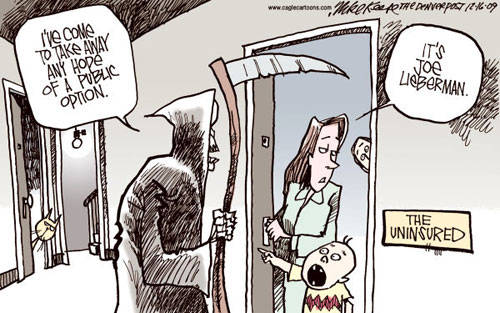
AHIP went into the game knowing exactly what they needed, and got it. One, they want a private mandate – the ability for force us to buy their products. Second, they wanted no government competition, no public option. In the reform charade, the Kabuki theater that Obama, Baucus, Lieberman, Nelson and the other Democrats put us through in 2009, it had already been decided that there would be no public option and a private mandate. The insurers bought Obama, and Obama delivered.
That’s why we finally got reform. Wall Street decided it was time.
____________________
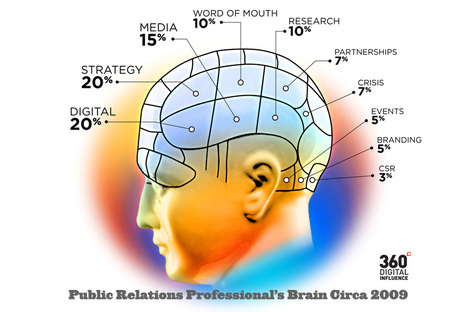
Potter is at heart a journalist who lost his way, finding his way back after decades of public relations. He watched the health care debate unfold, and understood the forces at work. Phrases like “death panels,” “government takeover,” and “job killing” are professionally crafted, the specialty of the PR industry. They are planted in the dialogue, and then spread like viruses. They are short and memorable, and pack emotional punch. That is usually all that is needed to win a debate in our shill-infested environment. (Isn’t it interesting that the Democrats can never manage to come up with a good hard-hitting name for the things they supposedly favor? S-CHIP anyone?)
Potter is on a book tour now, which is why he was in Denver. Most of his talk was Q&A, and there were very good questions.
Here’s his take on what is unfolding right now: While the health insurers got most of what they wanted out of Obama’s bill, there were some unpleasant features that they want eliminated. One, they want the 80% cap on medical losses eliminated. (As outrageous as that number is, it merely froze them in time – that’s where they were already at.) There’s also a provision in the law that mandates basic benefits that must be covered, basically outlawing junk insurance. They have bought the companies that sell the junk, and so want that provision gone.
There is also a provision in the bill (coupled with the private mandate) that prohibits insurers from denying coverage for “preexisting conditions” starting in 2014. Right now these poor schmucks are being sent to state exchanges that are adversely selected and prohibitively expensive. (Potter did not talk about this, but surely the “reform” that now exists is useless – about 8,000 people nationwide have taken advantage of the exchanges.)
“This legislation will set into motion several key reforms. First, it will eliminate the possibility that individuals can be denied coverage because they have a preexisting medical condition. Second, it will require insurance companies to sell coverage to small employer groups and to individuals who lose group coverage without regard to their health risk status. Finally, it will require insurers to renew the policies they sell to groups and individuals.”
Those words are from Bill Clinton’s signing statement for HIPAA, the portability act passed in 1996. The insurers merely countered by making portable insurance unaffordable. I do not believe that there is a real fix in Obamacare for preexisting conditions because there were no cost controls. Nonetheless, expect that the preexisting condition mandate scheduled to take force in 2014 will disappear. Already the PR industry is hard at work – they are saying that we who have preexisting conditions are actually people who wait to buy insurance until we get sick. That’s how they are selling the repeal. It invokes the notion of freeloading, and so has emotional punch.
Anyway, Potter’s message was that current bill that passed the House, the title of which actually contains the PR-written catchphrase “jobs-killing”, is a smokescreen. Of course it won’t pass, but the real negotiating is going on elsewhere. AHIP is under incredible pressure to produce more profit for the investors. Expect that the few actual reforms that were included in reform will disappear.
And Obama will not stop them. He’s no friend of Jack.
__________________
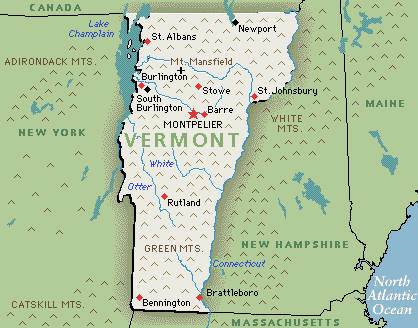
The final siege will take place here ... care to join?But all hope is not lost – single payer is on the table in Vermont and California. It has a reasonable chance of passage in Vermont, but AHIP is watching closely and has far more clout than the legislators in that small state. The threat of a good example is real – Canada didn’t willy-nilly overhaul their system – it started in the provinces. Because it worked, it spread like a virus, and the insurers were booted.
In the board game Monopoly, there comes a point late in the game when so much power has acceded to one player that he can easily overwhelm all the others. We are probably at that point in the health care game, when our best hope is that a tiny state might boot the for-profits. But it might be our green sprout, our lifeline, a sliver of light in our darkest hour before dawn.
From: Lindsey Jackson, Blue Cross Blue Shield of Montana To: Blue Cross Blue Shield Montana clients
In today’s world, planning health care expenses can seem like an overwhelming task. However, by proactively managing your health care and thoroughly understanding your insurance benefits, you can feel better about how you choose to spend your health care dollars.
Toward that end Blue Cross and Blue Shield of Montana is pleased to present Health Insurance Essentials education sessions through our Blue University℠ team; this is a select group of our staff dedicated to educating our members about how to most effectively use their benefits while navigating the sometimes confusing waters of the health insurance industry.
Beginning January 18, 2011, Blue University℠ will be hosting the Health Insurance Essentials program throughout Montana to help you learn how to:
Wisely use health insurance benefits
Access the right provider network
Proactively manage health care costs
Sign up today for one of the sessions below. If you have questions, call Lindsey Jackson at 406.437.5369 or send her an email at Lindsey_Jackson@bcbsmt.com.
Blue Cross and Blue Shield of Montana | 560 N. Park Avenue | Helena, MT 59604 | 1.800.447.7828 | http://www.bcbsmt.com
An independent licensee of the Blue Cross and Blue Shield Association, an association of independent Blue Cross and Blue Shield Plans. Registered and SM service marks of the Blue Cross and Blue Shield Association, a registered mark of BCBSMT, serving the residents and businesses of Montana.
Suggested new logo for BCBS of MontanaMemo
To: Lindsey Jackson, Blue Cross Blue Shield of Montana
Re: Your offer to provide “Health Insurance Education”
Dear Ms. Jackson:
Thank you for your generous offer to provide me and former fellow Montanans with “education” regarding what you do for a living, which is screw us personally and mess up our health care in general.
I have another view of who is in need of education, and offer the following:
1. For-profit health insurance is bad public policy. Health insurance profit and quality patient care are at odds with one another. 2. Due to the profit motive, health insurers seek to avoid any client that might potentially be unprofitable. 3. Because of #2, health insurers created the term “preexisting condition.” 4. Because of #2, health insurers created “rescission.” 5. Because of #2, health insurers invest heavily in politicians so that laws contrary to public policy are passed. Hence, Obama’s health care “reform” package. 6. Because of #2, people with “preexisting conditions” (a term created by insurers) are forced into high-risk pools where generally they have to spend $12,000 or more before insurers pay $1. 7. Because of the high cost of adversely selected pools, people don’t buy in. Hence, millions of people who might get sick are uninsured, and you have conveniently avoided them. (That’s bad public policy.) 8. Because of #2, health insurers dumped senior citizens on government. 9. Because of #2, health insurers created the hugely profitable “Medicare Supplement”, where you pay 20% of approved Medicare expenses often at a higher price than Medicare charges for the other 80%! 10. Because of #2, health insurers created the hugely profitable Medicare “Advantage”, a subsidized programmed subtly designed to remove profitable clients from Medicare, leaving Medicare with the sick ones. (We spend our working days pining for the day we can get on Medicare and away from you. When finally we are able to join Medicare, there you are again. Weird!) 11. Because of health insurers reluctance to pay claims at all or in full, doctors and hospitals over-bill, hence driving health care costs upward and upward. 12. Because of greed and the profit motive, health insurers often skim 20% or more off the top of each health care dollar for their private use. 13. Because health insurers fear real competition, they convinced their in-pocket politicians to remove any kind of public option from health care “reform”, and want to force private citizens to buy their crappy products.
Hence, because of private health insurers, the United States has the worst health care system of the 34 industrialized democracies, with massive expenses, poor outcomes, and millions of uninsured.
You did this to us. You are leaches on our system. Your bosses are probably sociopaths. We can’t get rid of you because you are politically entrenched in our corrupt political system. You are part of the corruption.
So, how’s my education going, Lindsey? Want me to come lecture, or is the conference really for the purpose of blowing smoke up people’s asses?
Most sincerely,
Mark
PS: Lindsey, why don’ you write me?
______________ PS: It is true that BCBS of Montana is technically “not for profit”, meaning its overhead is 14% instead of 20%. However, its agents and executives are driven by the same motives and play in the same arena as the for-profits, and so are the same animal with a lighter coat.
U.S. District Judge Henry Hudson, a Bush appointee, strikes a blow for civil libertiesJC has a nice post about the recent federal court ruling throwing out the individual mandate from the Health Insurance Company Protection Act (HICPA) passed by Obama (usually referred to as “health care reform”). It’s one of those instances where the work of civil libertarians is being carried forward by principled conservatives while liberals sit on their hands. (The bill was pushed through congress by President Obama, a perceived liberal.)
Any fool can see that a mandate that we buy a product from a private company without a public option is immoral. Whether or not it is unconstitutional will end up in the hands of our right wing Supreme Court, and the odds are that this court will come down on Obama’s side, and against civil liberty.
Perceptions screwed up? Try adjusting them, and leaving reality as it is.
Sanctimonious bastard fist-bumps wifeOne nice thing about being president is that you get to create your own reality. Ordinary meaningless words sound like thunder. Critics are a mere distant echo, as sycophants use up all the existing band width. Here’s Obama after his latest betrayal of his base:
“So I pass a signature piece of legislation where we finally get health-care for all Americans, something that Democrats had been fighting for a hundred years, but because there was a provision in there that they didn’t get that would have affected maybe a couple million people, even though we got health insurance for 30 million people and the potential for lower premiums for a hundred million people, that somehow that was a sign of weakness and compromise. …people will have the satisfaction of having a purist position and no victories for the American people.”
Gave up a lucrative career in health insurance for other pursuitsReality: A health care bill written by the health insurance companies (AHIP) and pharmaceuticals (PhRMA), carefully constructed to preserve their business model, offering only a few tidbits of true reform, and those at taxpayer expense.
The reforms?
Expanded Medicaid, is a true reform, but one affecting AIHIP and PhRMA not in the least. There was no potential for the new Medicaid clients to be profitable to the health insurers, so they allowed them to be dumped on taxpayers.
People can no longer be denied coverage due to preexisting conditions, but it isn’t the health insurance companies that offer that coverage. People formerly turned down for coverage are still turned away, but sent to state exchanges. Those exchanges suffer from adverse selection, and so offer lousy coverage with high premiums. People are staying away in droves – when the premium subsidies finally come through, low-income people will be able to get this coverage, and the health insurance companies will be paid to manage the exchanges, but will not actually face risk exposure.
No soup for you!Children with preexisting conditions can no longer be denied coverage. This was a purely American phenomenon – parents who could not afford or were denied coverage could still buy policies for their kids … if the kids were potentially profitable for the insurance companies. The new law said that insurers had to take all comers, no matter health their status. I don’t know about the rest of the country, but here in Colorado, the insurers simply stopped writing policies for kids.
Preventive care must be covered, indeed a real reform, good public policy. We who have insurance can now go to a doctor for a physical, or a man-ogram, and the insurance company has to pay for it. Here’s how my insurer, Anthem Blue Cross, handled this matter: They now cover preventive care, as required by law, but no longer cover any other office visits of any type.
Frankly, this is the worst possible outcome for our health coverage crisis – fake reform. Democrats told us that we should take what was offered because we could always come back and fix it later. Not on this planet – there will never again be an opportunity like that, and their squandering of that chance is an historic betrayal of their mission and constituency.
There are other parts of the bill that might benefit us, but it is all done under the hovering shadow of AHIP and PhRMA. Before passage of the bill, typical private insurer overhead was 20% – Wall Street watches this number very carefully – if “medical losses” exceed 80% of premiums, stock prices go down. (A Harvard study found that total medical overhead in this country is 31% – that other 11% is hospitals and doctors share of the burden). The Obama bill, in a striking reform, mandates that their overhead not exceed …. 20%. There was a push at one time to get that number down to 15% … it disappeared in the reconciliation process.
Yes, we will have health insurance. We’ll be required to buy it, and if we can’t afford it, the government will pay … the insurers. There’s very little in the bill regarding quality of coverage – deductibles and co-pays, policy premiums – all of that untouched. Lifetime coverage caps are gone now – perhaps that is the one thing that the insurers did not like, as it introduces a wild card feature into their rate structure – they cannot precisely define their risk. But it all gets built into the premium structure anyway, and so will not affect their bottom line, as they are free to charge whatever they feel they need as a buffer.
Screw you, Democrats, screw you, Obama. You are worthless. We cannot afford your good works, don’t need that kind of help anymore. The tragedy of business-run America is that as bad as the Democrats are, and they are truly bad, our only other choice is worse.
A commenter at 4&20 (Ingemar Johansson, about 4/5 down the page) remarked that the standard right wing solution to our health care cost problem, crossing state lines to buy health insurance, would work because we all buy our property and casualty insurance from companies that cross state borders.
That does work. It’s a common thought, but misguided. It starts with a perceptual mistake – to name property and casualty and health care both “insurance.” It may be a useful name in terms of catastrophic events, like auto accidents and building fires where people and property are harmed.
But property insurance is based on the premise that events that require claim payments are rare. People who buy homeowners’ insurance do so because coverage is cheap and prudent, and not because they know they are going to have a fire someday. Auto accidents seem common, but in terms of the number of drivers and miles driven, are rare.
Companies who sell that insurance compete less on price and more on quality of service. It’s a good deal for everyone, and the market does a good job for us.
Health “insurance” is different. It is a virtual certainty that we will all make claims on the insurers, and also that we will avoid seeking out needed services that are not covered. Young people are so healthy that they don’t want to buy into the system and pay for other people’s costs. But these are the very clients the insurers want. Older people are a certainty to file claims, and so insurers avoid them. They even dumped those 65 and older on government.
So health insurers write elaborate contracts that sound good but disappoint when a claim is filed. States stepped in and required that they cover certain events, like maternity or the first day or two of a baby’s life. Insurers avoid those states that do that, and flock to states like Arizona, that don’t regulate them.
Because they are paying fewer claims in Arizona (medical costs are not lower there – only the percentage that insurance companies pay), if we allowed cross-state insurance, people would flock there for coverage, and we would all be under-insured. That is bad public policy.
The simple answer, the bonehead answer that every other industrial country already knows about, is to quit calling health care an “insurance” product, and simply build its cost into the national budget and spread it over the whole population. After that, we are no longer playing the hide-and-seek insurance game, which itself is a large driver behind our skyrocketing costs.
Instead we would play a game called “retail/wholesale.”
That is the essential difference between us and other countries – we pay retail. Other countries cover their entire populations, and even the worst performers, like Canada, pay only two-thirds as much per capita as us. Most countries pay around one-half of our per capita cost, and everyone is covered. Life is better in those places than it is here.
All we need to do is expand the covered pool of clients to “us” and change the enrollment period to “anytime.” We can allow insurers to practice their trade, but instead of profit-seekers, they become utility plant managers. They can’t refuse service to anyone, are guaranteed a reasonable rate of return, and are heavily regulated.
The downside? There aren’t many.
Some claim that profit-seeking drives innovation. That is a valid point in the sense that private companies innovate. That would not change, as they would be selling their products to us via government instead of private companies.
Some say there is a moral hazard as people would use medical services unnecessarily. That’s not been the case elsewhere, as evidenced by per capital costs.
Some say, in the face of all evidence, that it will cause costs to spiral. But we are the spiral. Our cost increases far outpace inflation. Costs are going up everywhere, but the U.S. leads the pack by several lengths.
And finally, some say that our system is lawsuit-driven, and that we must have tort reform before anything else can happen. False. Lawsuit settlements and malpractice insurance are a very small part of our cost spiral. Maybe we should address that matter, but it is being used as a lever – corporations simply don’t like being sued, and are using medical malpractice as a device by which they can avoid lawsuits in all areas. That is nothing more than clever PR.
[The company will] stop selling new health insurance to small groups in Colorado and move companies that have existing clients off the plan in the next year, affecting 1,200 companies with 5,200 employees and their dependents.
Aetna says it has to do this because they
…feel they can no longer meet the needs of our customers while remaining competitive.”
State insurance officials said they
… think the 1,200 companies affected by Aetna’s decision to leave the small group market will be able to purchase insurance from other insurers.
Note the careful wording … you’re being “moved off the plan” (dumped). State officials think you’ll be OK … they offer no data, no guesses, no remedy. They just think you’ll be OK.
Tough luck, buddy.
Aetna is leaving because of Obamacare, not that they were doing us any great favors anyway. Good riddance. Bur welcome to health care reform. It’s a game, and the insurance companies won.
People who need health insurance most are the ones that insurance companies don’t want to insure. This is known as “adverse selection.” Insurance companies have devised a myriad of ways to avoid sick people, but sick people are clever too, always looking for loopholes and back doors.
In the U.S., people looking for back doors are considered a problem, or “moral hazard,” while insurance companies avoiding sick people is normal and acceptable behavior. We’re a little perverse in the morality department.
One back door is fake (or part-time) employment with companies for the sole purpose of getting on the health plan. While it may appear that these phantom employees are being insured by the employer, they are reimbursing him under the table. In this manner, they escape the private placement market, where insurers refuse to offer coverage.
The new logoStatistics show that large companies either don’t play this game, or that it is not a large factor in costs. But with small companies, one sick employee can skew the cost structure. The green eye shade people are watching closely, and realize that undesirable clients are breaking through the barriers via small companies. They have two options: Jack up premiums, or jump ship.
In the past, the insurer response has been to make insurance so expensive that small businesses with low wage employees cannot afford it. Those that can afford small market coverage tend to be high skill professionals, but the corner grocery store … no way. So insurance companies avoided undesirables by making themselves unaffordable.
Health care “reform” now offers credits to small businesses of less than 25 employees whose average wage is less than $50,000. Seems like a fix, right?
Wrong. What it really means is that the back door is opened a little wider now, and unprofitable clients are going to have an easier time getting through the barriers to coverage. Insurers still don’t want to cover them, and can either raise premiums to the point where credits are negated, or jump ship.
Run away! That’s all Aetna did. Smart move on their part.
The failure is not the “reforms,” and the health insurance companies are merely rational actors. The failure is the American health care model: “for-profit” companies managing health insurance is bad public policy. Obamacare did not a whit to fix this, and our problems will only get worse now.
And there is no hope of remedy. The health care debate is over.
Molly Moody (file photo)“Molly Moody” (middle name “Tooly?”) wrote over at Left in the West on the supposed wonderful reforms of health care “reform.
The primary job of Democrats, as commenter “Ladybug” once reminded me, is to lower our expectations and keep them low. With health care, we are being told that a little bit of change is a really big deal. We are also to assume that this little bit of change would not have happened had not Democrats been elected. But it is public discontent, and not the party in power, that is the driving force behind reform. In the current environment, where money rules all, it is Democrats who are best at suppressing the reform impulse by rubbing a little bit of salve on a gaping wound, and then telling us it is major surgery.
Here are Molly’s six, the wonderful reforms the Democrats have given us. The Wellpoint-written health care reform bill …
1. Bans Insurance Companies from Dropping our Coverage When We Get Sick: The practice of rescission is indeed abominable, but only came about because insurance companies are able to construct artificial barriers around health care to prevent entry by potentially unprofitable clients. When someone lied on an application, the insurance company did not care, as they could simply fix the error by retroactively canceling the policy. Now that they cannot go back, they will simply be more cautious at the outset.
One a scale of 1-10, the amount of positive change here: 1.
2. Prohibits Excluding Coverage for Children With Pre-existing Conditions: There are many families where the parents buy insurance for the kids but not themselves, a third-world kind of fallback for people shut out of the system. Insurance companies here in Colorado, and no doubt elsewhere, have simply stopped writing policies in that area. (0)
3. Empowers Consumers to Appeal Insurance Company Denials: This already existed at the state level. Good grief. (0)
4. Extends Coverage for Young Adults: Young adults can stay on a parent’s plan until they turn 26. Here we might have something of value … if we pay the Piper. These insurance companies are willing to change any procedure if their bottom line is not threatened. Now that they all must insure kids until age 26, they will merely adjust their rates to compensate for the additional exposure. (Kids in their early 20’s are not a high-risk group anyway.) (0)
5. Provides Free Preventive Care: Nothing is “free.” of course, and surely not under these supposed reforms. The requirement that insurers now cover preventive care without deductibles and co-pays will be reflected in premiums. (Remember, there were no cost controls in this legislation.) However, the fact that people who previously avoided preventive care will now more likely seek it out is a good thing. (2)
6. Eliminates Lifetime Limits on Insurance Coverage: As with #5 above, this too will be reflected in premium structure, and insurance company profits are not threatened. Nonetheless, the very idea that our life lines could be cut off was barbaric. (3)
So, six changes heralded as a great accomplishment by these mealy-mouthed quislings we call Democrats … potential positive change: 60. Actual change, in the writer’s view: 6.
6/60 = 10% of mission accomplished. I’ll be damned. As Democrats go, this is overachieving!
Democrats are going to take a drubbing at the polls in November, and will whine that we are better off with them than the alternative. They always whine about that. If that were true, if it were anything more than good-cop-bad-cop, they might have a legitimate case.
As I am so fond of saying, better a real enemy than a false friend.
Dr. BodineThis is a public health problem that is easily preventable – vaccines. But there are people out there – professional people like Jennifer McCarthy, MD, pictured above in her laboratory, who are telling parents they should not immunize their kids against various diseases. She cites a link between vaccines and autism.
Groundbreaking work on this subject was done by Dr. Jethro Bodine, using grant money from the Horwitz, Horwitz and Fine Institute of Hollywood.
I finally had an opportunity to talk to a neighbor yesterday – let’s call him Jack for short. We’ve been living next door to each other for a year now, and have met and said hi, but never talked turkey about anything. Yesterday he and his family were standing in their driveway eating ice cream cones as we arrived home, and so began to chat. Jack is a bit reticent and standoffish, and so his body was outside the circle of conversation among his wife and mine and his kids and me. So I decided to leave the circle myself and get into his sphere a bit.
It was interesting, but a bit uncomfortable at first, and he moved off the driveway and into the street. He is a nervous type, and his hands often say more than his others means of expression. I got him to talk a bit about what he does – it’s a mixture of things. He’s a bit of a weatherman and computer geek, but is primarily a mathematician, the field in which he has a PhD. I found it easy to get him to open up after learning about this, and marveled at the science of moving equations, weather prediction, Moore’s law, randomness, and the United States of America.
He’s from Canada. Much of his reticence comes from a learned reluctance to talk about this crazy, stupid country. Once he had finished his probe of me, and learned that he could speak freely, the conversation took off. Later his wife and kids were waiting for the two of us to shut up so they could get on with their evening activity, a walk in the park. I told him we must have a barbecue, but he suggested we take a walk together in the near future. Whatever – we are moving soon, but I want to maintain contact with this very interesting man (who does not waste his free time blogging, I’m sure).
He asked me a very basic question: “Why can’t you reform the health care system?” (There were a few “Don’t get me going’s” littered about by both of us.) I told him that it was power – the health insurance companies have control of politicians and have constructed a wall around the system. They charge for entry, and rake off a large percentage of the health care dollar for their own consumption. Further, they only want to insure people who are in their prime – young and healthy. They are risk-averse. If an American is not young AND healthy, then health insurance companies don’t want to deal with him. They dump him – they don’t care what happens to him, whether he is uninsured or dies young or is so fortunate as to gain entry into a government program … they just want him to go away.
To a Canadian, this is insanity. To me, it is insanity. Canadians enjoy access to their system without having to pay a king or corporate executive a premium or royalty. Health care is a mere commodity – when we get sick, we take care of on another. In normal countries. Not in this crazy, stupid country.
In the USA, tweets from a twit are newsJack and I talked about the insane, but not the stupid part. Americans have a larger share of sociopaths running free in the population than other countries (4% of the population versus 1% elsewhere), but it is hard to imagine, given random distribution, that we have bred more stupid people than other places. But look about …our Teabaggers saying “Keep your government hands off my Medicare” and this phenomenon called “Sarah” who is so popular for the mere fact that she is ignorance on display. People are drawn to stupidity. That is hard to fathom.
I hope to take a walk with Jack very soon. He knows he can speak freely with me. I am so glad I took time to draw him out a bit. He is a brilliant man, academically speaking, but also a man living in a country whose people do not have basic intelligence or the ability to take care of their own needs. He feels a bit of an outsider. Imagine he has learned to shut up about what he sees, which is why he was reluctant to converse … until he knew that I was safe.

 This sort of thing is outrageous enough to be exposed by local news, and remedied. A Florida-based insurance company, Ceridian Cobra Services, is the administrator of COBRA-based insurance for people who have lost their employment but are still allowed for a period of time thereafter to carry their insurance and pay their own premiums. From Forbes Rick Ungar: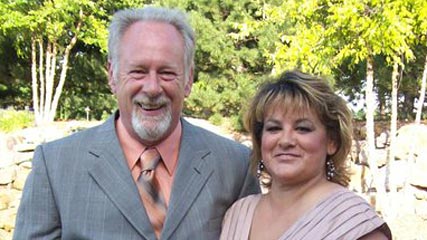















 Piece of Mindful