I am highlighting a comment from down below, Democrats who don’t even bother with the lipstick, by Steve Kelly here. I tend to focus on the elements of thought control and crowd behavior, and so am fascinated by the behavior of groups like Democrats. They are unaware of how their own common thought patterns are identical to their supposed opposites. In the example I wrote about they are seemingly unaware that they are advancing a corporate agenda identical to the other party, even adopting the same language.
This is what I think of as the “magnet” effect – imagine metal particles scattered about on a table top, and someone waving a powerful horseshoe magnet above. The particles, heavily influenced by the magnet, will form patterns of alignment. This is the effect of money in politics. Continue reading “Jobs”→
This hoary marmot had never before heard the sound or smelled the fumes of an ATVThe “Sportsmen’s Heritage Act of 2012” (HR 4089) is one of a long list of bills that are part of a full frontal attack on our wilderness system. When I was working these issues back in the 1990’s, the ever-present threat was the loggers, who like so many others, cannot conceive of the concept “enough.” They wanted everything, every log, and the idea of setting land apart merely to preserve it was foreign to them. That is the ethos of the corporation, and while corporations are comprised of human beings, corporations manifest the worst aspects of humans – greed and indifference to nature and human aesthetics. In fact, that is what corporate structure promotes, and what the law mandates – profit before all.
Loggers are still with us, and presented their agenda (again – it’s old wine in a new bottle) in Sen Jon Tester’s (D-MT) “Forest Jobs and Recreation Act,” like the Heritage Act, a name crafted around a long oak table in a room deep in the bowels of an ad agency. Their job is to sell, and the naming of a bill (Clear Skies, anyone?) is as important as any other aspect of getting anti-social, anti-commons, anti-community legislation passed.
SHA2012 does the following, according to Wilderness Watch of Missoula:
HR 4089 would give hunting, fishing, recreational shooting, and fish and wildlife management top priority in Wilderness, rather than protecting the areas’ wilderness character, as has been the case for nearly 50 years. This bill would allow endless, extensive habitat manipulations in Wilderness under the guise of “wildlife conservation” and for providing hunting, fishing, and recreational shooting experiences. It would allow the construction of roads to facilitate such uses and would allow the construction of dams, buildings, or other structures within Wildernesses. It would exempt all of these actions from National Environmental Policy Act (NEPA) review. Finally, HR 4089 would remove Wilderness Act prohibitions against motor vehicle use for fishing, hunting, or recreational shooting, or for wildlife conservation measures.
I have often written here and elsewhere that “Democrats are the problem.” If it were that simple, of course, then Republicans would be a logical alternative. Alas, neither party offers much in the way of hope or change. And it is not so much the failings of individuals, even well-intended ones, as it is herd behavior. People simply do not think their own thoughts, and desire to be led by others. Democrats would reflexively oppose a nominal member of the other party who assassinated American citizens, mandated purchase of private health insurance, extended tax cuts for the wealthy, ran a prison dedicated to indefinite detention and torture, arbitrarily attacked other countries and even attacked a country after Congress voted against allowing him to do that.
Alas, Obama has done all of this, and for this garners high praise from his own party. He is, after all, a Democrat, so it must be the right way to go.
It’s not a failure of leadership either, as the system mandates that those who occupy leadership positions first accept private bribes to gain access to those positions. For a man or woman to accept bribes and then turn on the benefactor is political suicide – there are many ways to remove such a person from office, as Nixon, Spitzer, Kucinich, Feinstein and so many others know. So the idea of changing the system by participation in the system, or to “get active,” as Thom Hartmann says is our patriotic duty, makes no sense. If the only way to affect meaningful change is to join the Democratic Party, then it is time to resign citizenship. Continue reading “The security of the herd”→
Not much going on here in Arizona, but I had an idea yesterday as we wandered in the desert (how appropriate!) that this would be a good time to start the Jon Tester Chronicles. This is the man who so charmed Montana progressives in 2006 and still holds them in rapture. I’ll add to this now and then as I am inspired and invite reader contributions.
Jon Tester believed in a “public option” for health insurance when he was elected. That’s because Max Baucus said that it meant that the public would be given the option of buying health insurance from a private company. OR ELSE. Jon still supports that kind of public option, and will fight hard for it.
Jon Tester set out one morning on his way to work to count to ten. When he got to five, he backed down.
Jon Tester thinks that we should change the last words of the national anthem to “o’er the land of the free, so why can’t we all just get along?”
Jon Tester believes, in his heart of hearts, that Notre Dame’s mascot should be called just an “Irish Fella.” He doesn’t get why “fighting” is important to them.
Jon Tester likes to tell the joke in the Senate dining room that he loves progressives … “boiled in oil!” (He usually guffaws and discharges liquids out his nostrils). He gets odd stares and polite chuckles.
Jon Tester was driving down a country road near his home one day when he saw a sticker in the window of the car ahead. It said “Progressive Insurance.” Enraged and gorged with country cider, he floored it, pulled in front of the car, slammed on the brakes, forcing the driver with her infant passenger to stop suddenly. He then flipped her off, screamed out his window “Take that, bitchwoman!”, floored it and sped home.
Jon Tester and Max Baucus are close friends. Max taught Jon all about this “being a senator shit.” He said that all you have to do is talk the right way, and people talk themselves into believing in you. That way, you can pretty much do what you want. Jon didn’t really believe it until he proposed the Forest Jobs and Recreation Act, and saw Democrats and some environmental groups line up behind it. “Holy shit,” he said to Max. “I can do anything I want!”
Jon Tester is fat, so he doesn’t get the babes like Max does. Even so, Max occasionally sends over an intern who searches amid the layers of fat for his unit. If she can find it, he gets his Monica on.
Jon Tester once told Max that he could not believe how easy it was to be a senator. He said “I vote right, money rolls in.” He told Max that all he had to do was watch out for the burrowing press. They both laughed heartily.
The following is a comment that Matt Koehler left on a post down below.
I had to chuckle a little when I read the comments from Mr. Gabriel Furshong, MWA’s Forest Jobs and Recreation Act Campaign Director, over at George Wuerthner’s excellent perspective piece on Tester’s bill over at NewWest.net titled “Tester’s Response Poor Strategy“:
Mr. Furshong stated:
“Wilderness philosophers from other states can postulate all they want about Montana politics – such chatter will never result in actual legislation to protect 500,000 acres of ground in the largest National Forest in the lower 48 states and create new jobs at Montana mills that have a record of stewardship best practices.”
You know what? Mr. Furshong’s dismissive comment is striking when compared with the fact that just this week the Senate’s Energy and Natural Resources Committee approved 26 bills establishing new Wilderness areas and dealing with other public lands issues. Those 26 bills were approved by the ENR Committee en bloc, by unanimous consent.
Somehow, Mr. Furshong's predecessors pulled this off!
Tester publicly promised in 2006 to protect Montana's roadless lands
Reader’s will recall that Senator Tester’s FJRA [Forest Jobs and Recreation Act] is currently before this same Senate ENR [Energy and Natural Resources] Committee. Sometime in May, the ENR Committee sent Senator Tester a draft revision of this bill, which his office shared with the collaborators. Once the media questioned Senator Tester about the ENR’s draft he proclaimed it “Dead on arrival.”
So now, on June 20, the Senate ENR Committee approved 26 bills dealing with Wilderness and public lands issues
Something I’d encourage Wilderness supporters to consider is the very likely fact that if Senator Tester and the collaborators (Mr. Furshong and MWA included) would have accepted the ENR Committee’s draft revisions when they were shared about a month ago, it too would have been approved by the Committee this week.
So despite Mr. Furshong’s claim that “such chatter will never result in actual legislation” it sure seems to me that MWA and the other collaborator’s insistence on mandated logging and motors in Wilderness might have cost all of us the opportunity to designate over 660,000 acres as Wilderness and get some good restoration and fuel reduction work accomplished as proposed in the ENR Committee’s draft.
Some details of the ENR Committee’s draft:
* It would protect over 660,000 acres in Montana as Wilderness. However, it doesn’t undermine Wilderness by allowing military helicopters to land in Wilderness or ranchers to ride their ATV’s in Wilderness, as Senator Tester’s draft allows.
* It drops the controversial and unprecedented mandated logging levels on the Beaverhead-Deerlodge and Kootenai National Forests. It adds language requiring that any project carried out under the bill must fully maintain old growth forests and retain large trees, while focus any hazardous fuel reduction efforts on small diameter trees.
* It would also establish a “National Forest Jobs and Restoration Initiative” that would “preserve and create local jobs in rural communities…to sustain the local logging and restoration infrastructure and community capacity…to promote cooperation and collaboration…to restore or improve the ecological function of priority watersheds…to carry out collaborative projects to restore watersheds and reduce the risk of wildfires to communities.” Much of this work would be carried out through stewardship contracting.
Senatorial candidate Jon Tester promised, before witnesses, that he would …work to protect all of Montana’s remaining roadless areas.” What we got instead is mandated logging, violations of the spirit of the Wilderness Act itself, and Baucus-style ‘rocks and ice’ wilderness designations. This is not a nuanced interpretation of what the candidate said versus what reality dictates to the Senator. It a broken promise.
Period.
Something should be done here about MWA’s name – perhaps a contest and a new name for this once-proud defender of Montana wild lands. Here are some suggest new names:
Pew Charitable Trusts, Montana Logging Division
Montana Facilitators Association
The Baucus (Jr.) Caucus
Collaborators Roundtable
Paul Richards pulled out of 2006 Senate race based on a Tester promise to protect roadless areas
Other names will surely occur to me later today …
Now we all know how long it takes for an honest farmer from Big Sandy, Montana, to transform into a Machiavellian and dishonest Washington DC politician. (Paul Richards a Boulder, Montana, former candidate for U.S. Senate)
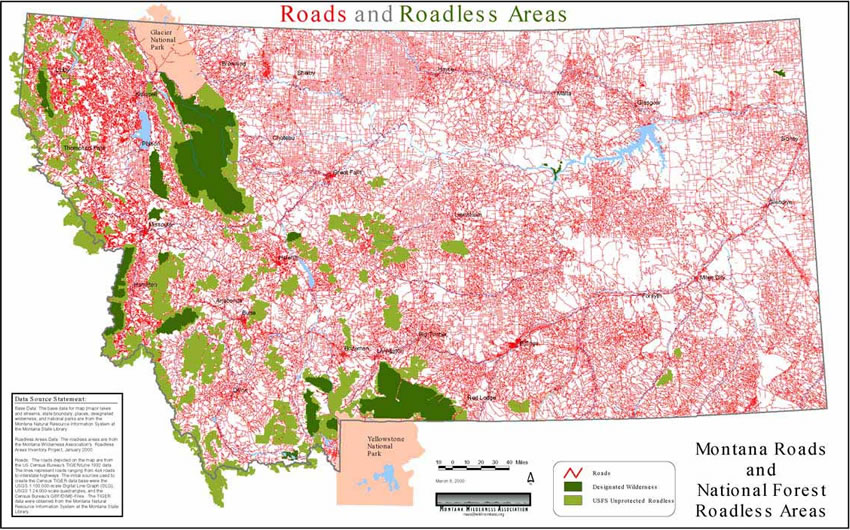
Light green areas are remaining roadless landsI was very active in Montana wilderness issues up until about ten years ago. At the time I withdrew, I was convinced that there would never be anymore new wilderness in Montana, and that worse than that, in the future we would be fighting to preserve what we had. I had visions of developers banging on the doors of national parks and existing wilderness areas. The motorbacks were just coming into their own, and were making “share the trails” demand much in the same way that smokers might demand to “share the air” in our restaurants. The idea of saving any of our then-roadless lands seemed out of reach.
The players were:
Sen Conrad Burns and his replacement, Jon Tester Senator Conrad Burns: He was the focus for conservationists, as he was openly antagonistic towards wilderness, and easily adopted the posture of motorbacks that machines should go everywhere. He was a rallying point, and served the cause of preservation well by bringing various groups together in opposition.
Senator Max Baucus, faux bonhomme Senator Max Baucus: He was the man who undermined any efforts to preserve additional lands. Industry had long lost interest in high and rocky lands and lightly timbered ones. Baucus gathered up all of these areas in his own Wilderness Bill, the “Rocks and Ice” Bill. Predictably, wherever there was serious movement at preservation, Baucus trotted out rocks and ice, and said “this or nothing”. MWA Founders Ken and Florence Baldwin ... wherefore art thou?
Baucus was the real enemy, yet I will never forget John Gatchell’s words to me after the 1996 election, when Max won another term: “At least we still have Max.” Gatchell is the Conservation Director for the Montana Wilderness Association, a group with a proud conservation history and founded in 1957 by Ken and Florence Baldwin, and others.
Power is dangerous, a narcotic. Proximity to power changes a person, clouds the intellect and alters perceptions. (Wasn’t there some kind of trilogy about a ring or some such thing?) Max, nominally a “Democrat”, managed the conservationists as part of a larger strategy of keeping his left flanks in line and ineffective. (I wrote an op-ed published in the Billings Gazette in which I called him a “faux bonhomme,” literally a “pretended good fellow,” or “false friend.” That is the most dangerous kind of friend to have.
When Conrad Burns left office, we lost our rallying point. Jon Tester was an unknown quantity, but did make serious attempts to reach out to conservationists in his campaign. Many progressives adopted him, placing almost blind faith in his good will as a substitute for on-the-ground organizing. That’s a dangerous situation, as there are few answers inside politics. We were effective against Conrad Burns, literally immobilizing the development forces behind him because we were organized groups with common purpose. That organization stopped the political wheels.
Danger has come to fruition. Tester has set out to achieve what Burns never could – to split environmentalist forces, bring the loggers into roadless lands, and undermine the legal concept of “wilderness” that has guided us thus far. His Forest Jobs and Recreation Act is Baucus “Rocks and Ice” redux, with huge tracts of roadless lands given over to mandated logging. What wilderness it preserves is sullied by helicopter and ATV encroachment.
At the center of this controversy are two people from years past who might now be seen as “collaborators.” They are the aforementioned Gatchell of Montana Wilderness Association (not pictured), and Tom France of National Wildlife Federation’s Missoula branch. Tom France of NWF: Collaborative participantThere are others, but these two are my focus, as they have seemingly traveled to the other side. (Gatchell’s 1996 statement of fealty to Baucus indicates that for him, at least, it was a short trip.)
George Wuerthner, among many others, is a new prominent voice for conservation in Montana, and has done serious writing on this subject. This piece, from New West, explores the different meanings of “collaboration” and “negotiation.” He gives and example of each:
Quincy Library Group in California Here local environmental activists joined with timber industry to craft a plan that called for logging up to 60,000 acres of the Plumas National Forest annually in exchange for protection of some old growth trees and small roadless areas. Like the Tester legislation, the Quincy proposal was hailed as an example of how collaboration had achieved a resolution to a long-standing stalemate.
However, other environmentalists, including the Wilderness Society, Sierra Nevada Forest Protection Campaign, and Sierra Club among others did not support more logging on the Plumas NF and they railed against the Quincy Library Group proposal. Environmental members of the Quincy group soon joined the timber industry in denouncing the anti-corporate giveaway activists.
The collaborationists adopted the goals of their opposition in an attempt to move the process forward. In so doing, they split from their own ranks and joined the developers, and as the Little Lamb followed Mary, were soon attacking conservationists. This is the Tester Process that Gatchell and France have fostered in Montana.
Steens Mountain National Monument in eastern Oregon: First, ONDA remained very up front that their goal was to end grazing–and they were not afraid to tell the ranchers, the Congressman, or anyone else that if they had an opportunity to eliminate grazing, they would go for it. Indeed, one of the things they negotiated successfully in the Steen Mountain legislation was the first legislated cow-free wilderness. Since they were clear in expressing that their chief goal was to protect wilderness and eliminate grazing, no one, including the local ranchers had any misgivings about their motives.
The ranchers went into the negotiations with their eyes wide open. They knew where [Oregon Natural Desert Association] stood on matters. They did not think ONDA lied or deceived them when they continue to lobby to remove cows from public lands, not only on Steens, but also throughout Eastern Oregon.
However, ONDA’s goal of livestock removal didn’t keep them from working with the ranchers either. By negotiation ranchers got some things they wanted too. They were able to consolidate their private lands by land exchanges with the BLM. Some received permit buyouts, and left the business altogether, but with a golden parachute. With these negotiations, the ranchers had some control over where wilderness designations occurred.
Wuerthner: Carrying on the Baldwin legacy
That is negotiation, with each side sticking to principles, but understanding that they must find middle ground. In the end, ranchers and ONDA walked away from the process, neither side having lost or gained everything, but having achieved primary goals. More important, their principles were not compromised and dignity was intact.
Sen Jon Tester has done what Conrad Burns could not do – he has divided the Montana environmental community, and has set the stage for to degradation of large tracts of Montana’s roadless lands. This is why I have consistently and stridently maintained over the years that we face far more danger form Democrats in office than Republicans.
Join AWR, donate, attend a concert, have some fun
I miss you Conrad. Your replacement is far, far more dangerous than you ever dreamed to be. (In wartime, don’t they shoot collaborators?)
Anyway, as old fighters fall by the road, new ones take their place. The battle goes on. At this time the fighters for wilderness are many, and my favorite group is called “Alliance for the Wild Rockies.” To this date, they have fought for their cause, stand ready to negotiate, and have never collaborated.

 I am highlighting a comment from down below, Democrats who don’t even bother with the lipstick, by Steve Kelly here. I tend to focus on the elements of thought control and crowd behavior, and so am fascinated by the behavior of groups like Democrats. They are unaware of how their own common thought patterns are identical to their supposed opposites. In the example I wrote about they are seemingly unaware that they are advancing a corporate agenda identical to the other party, even adopting the same language.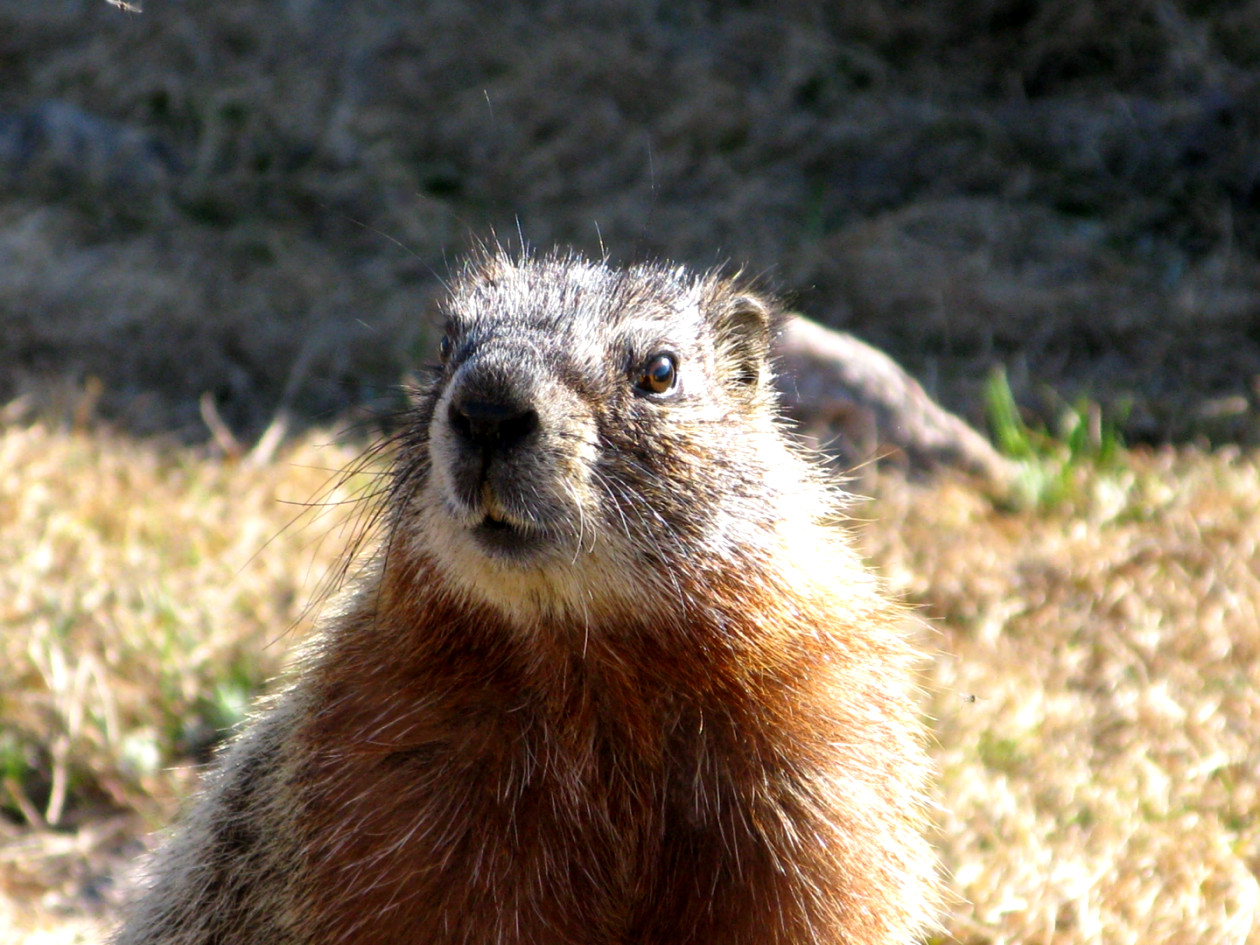






 Piece of Mindful