“Hell is empty, and all the devils are here”*

George M. Dennison served on the Board of Plum Creek Timber while also serving as the president of the University of Montana. When asked how he could justify this apparent conflict of interest, he claimed not to have any such conflict, as he did his work for Plum Creek in his off hours.

He knew better, surely, as he is no fool. “Conflict of interest” has less to do with how a person spends his time than service to two masters. If the objectives of one do not line up with those of the other, then Dennison was obligated to resign one position or the other. If UofM and Plum Creek share common objectives, then UofM is obligated to watch out for Plum Creek’s bottom line. That’s the only reason the company exists.

Dennison did not resign either during his tenure. It’s emblematic of our new Gilded Age.

Avoidance of conflict of interest is why elected politicians set up blind trusts, why judges recuse themselves from certain cases, and why law firms diligently search their records for potential conflicts before taking on a new client.

Bethany McLean and Joe Nocera
This came to mind this morning as I read the following passage from the book All the Devils are Here, by Bethany McLean and Joe Nocera. They are financial reporters who wrote about the recent financial meltdown, and the passage I cite (p 289) is about attempts by some people to stave off future losses by helping people who were under water with their mortgages:

In fact, around this time [March, 2007] there had been efforts by some of the big Wall Street firms to salvage their triple-A tranches by buying actual mortgages and preventing enough foreclosures to keep those trances from eroding. Bear [Stearns]…announced “Mod Squad”…, which was supposed to help delinquent borrowers avoid foreclosure. Other firms, including Merrill Lynch and Morgan Stanley, were meeting to see if they could do something collectively to keep homeowners from defaulting.

Continue reading ““Hell is empty, and all the devils are here”*”

Why free markets work – examples abound

It’s a wonderful system, this free market capitalism. So I take this opportunity to celebrate and offer examples of how it works and makes life better for all of us. Since we recently traveled from Denver to the east coast, I’ll start with the airlines in the wake of Jimmy Carter’s deregulation:

Baggage: Once airlines charged to carry customer luggage in addition to the ticket price. But one airline saw a market opportunity, and offered to carry bags as part of the ticket price. Soon all the other airlines were forced to go along. Bags now fly free. Markets work.

Legroom: Airlines once squeezed as many people on to an airliner as possible. This allowed them to run fewer flights. Then one of them saw an opportunity to increase its market share, and increased passenger comfort by increasing legroom. All the other airliners, for fear of losing market share, went along. Markets work.
Continue reading “Why free markets work – examples abound”

Avoiding mistakes made in Iraq

This link is to a long and interesting essay by Gilbert Achcar in Jadaliyya. He attempts to answer the question of just who the Libyan rebels are and who they represent.

The answer is, of course, that it is complicated. There are factions, and NATO is not exactly forthcoming about its intentions. But NATO’s behavior may be telling in that it has refused to arm the rebels and only done light bombing. It’s real mission could well be to do what was done in Egypt, to replace one set of bad actors with another. (Ideally the new regime will appear democratic and still cater to Western interests. That is always the best scenario.)

One factor that raised my eyebrows – the key mistake that Bush made in Iraq was to disband the army. Without it, there was no local mechanism to suppress rebellion, and eventually a huge commitment of US troops had to be used. NATO would want to avoid that mistake, so that it appears that after the rose petals have fallen from the rebellion, Gadaffi’s army will be in place sans Gadaffi. In that manner, the rebellion in Libya will lead to insurgency and counterinsurgency, but with local actors doing the latter, and western troops not used.

Bonehead economics

Here is a debate on the minimum wage between two learned scholars, whom I label S and C, for socialist and conservative. The debate took place on the lawn of the campus of Liberty University on July 25, 2011.

C: We would like to see the minimum wage eliminated in total. We see no need for it.

S: Why would you want to do that?

C: It interferes with market mechanisms to set proper wages.

S: That’s just nuts.

C: No. We find that when wages gravitate towards their natural level, markets work their best. It’s natural efficiency.

S: Nuts, I say. Where do you get these crazy ideas.

C: Are you going to argue or sit there and call me names?

Continue reading “Bonehead economics”

Never enough

I like beer. Let’s get that out of the way. I don’t actually drink beer – I do have a sip of my wife’s beer when she partakes, but beer is carbohydrate-intensive, and so has a way of attaching itself to my gut and butt. Just out of boredom last night I watched a documentary called “The Beer Wars,” and it answered questions I had not even asked. Here’s the main one: Why is American beer so shitty? (As one guy said, American beer is like making love in a canoe, or “f***** close to water.”)

The answer is not what I would have suspected – it is not pedestrian taste. There used to be thousands of breweries in this country, most local and each having their own style and flavor. (My Dad drank Great Falls Select, made in that town.) One by one they fell by the wayside or got bought up by Anheuser-Busch, Coors and Miller. That’s a normal result of so-called “free” markets – big fish consume little fish. Continue reading “Never enough”

Are they managing my perceptions?

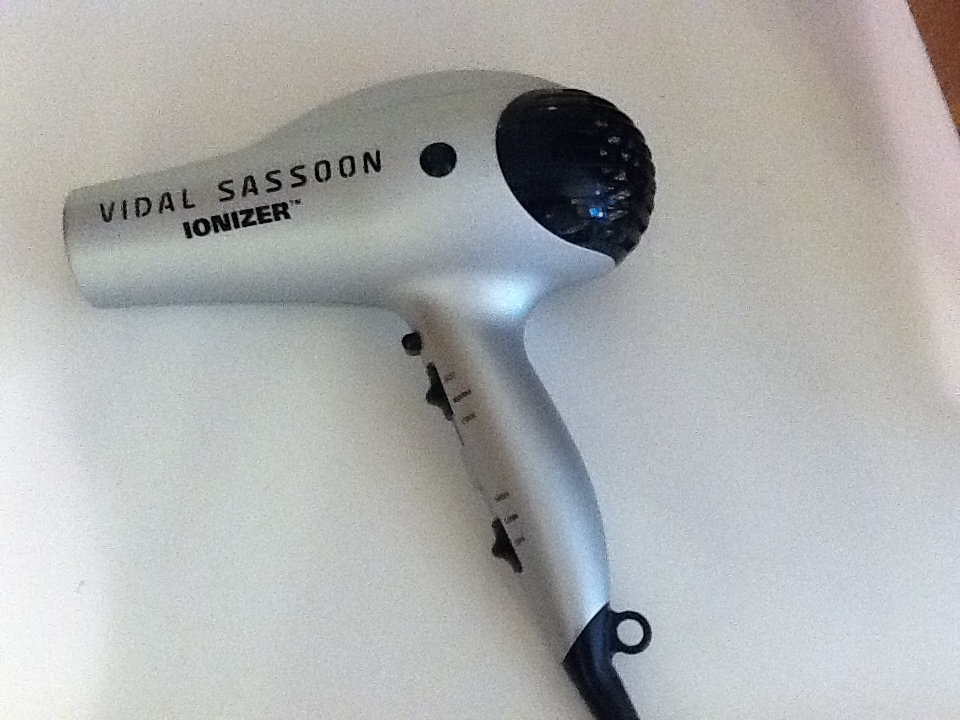
This has been bugging me each day for months – I dry my hair with the hair dryer pictured below. I realize that’s a silly thing to do, like hot wind blowing across a desert. But here’s a picture of the Vidal Sassoon blower:

On the top is a thing called the “ion switch.” When I turn it on, nothing changes, and when I turn it off, nothing changes. Does anyone know what the ion switch does?

The case for charter schools (not-for-profit)

Sarah Palin’s recent gaffe regarding Paul Revere’s midnight ride struck me as one of those journeys into a “Fun House.” We’ve all had that experience – at the annual carnival or fair we get in a boat or a little train and prepare to be shocked by creatures jumping out at us. We know it’s coming, but all the same, it’s scary.

But who cares. I sat through quite a few history classes in my time. Who is to say that Sarah’s rendition is not as credible as the official one. Remember that the Japanese attack on Pearl Harbor was a mere seventy years ago, and is so decked in patriotic streamers that the real history of that time is hard to know. Likewise with the dropping of atomic bombs on Japanese cities – real events have been replaced by official narratives which are now taught daily in our schools. History is indeed bunk.

Getting “good grades” is important, we are told, so that regurgitation is considered meritorious behavior. The best way around this dilemma is simply not to teach history in the schools. It’s all bullshit anyway, overseen by patriots wearing blinders and taught by people who know no better. Imagine if the real motive behind the Texas Revolution in the 1830’s, that the Texans were rebelling against Mexico’s outlawing of slavery, were taught for just one day in one Texas school – there would be another Texas rebellion and that teacher would be summarily fired.

Charter schools are a good idea, as I see it, because they can free us from the doldrums of education – the factory bells and whistles, the competency testing and regurgitation. I do not beleive that kids are naturally lazy or disinterested, or that we need this system of negative reinforcement to get them to perform well in their studies. Bright kids will shine in any system, even in spite of those systems. But average kids, or kids who could do a whole lot better than they do are turned off by our factory system of teaching.

Imagine that information flow were reversed and that school was about students teaching teachers. I don’t mean that kids would rewrite history or reinvent math – I mean something more basic. Teachers would explore the inner workings of kids, looking for their special interests and talents. Kids would be engaged alongside the teachers. There’d be no bells, no regimented schedules. Kids would explore various fields of knowledge and skill. When they hit upon something that gave them a psychic jolt, they’d follow that path. It might be mechanical engineering, art, music, study of the past, business or even, sigh, accounting. Something will get their attention. Being “smart” is the result of being interested and applying oneself to something. We’re all smart enough to do one thing well.

Rather than handing out bad grades for subjects that kids do not excel at, they would simply find out that they do not have those aptitudes without negative fallout. Artistic kids would not be taught bookkeeping, mechanically adept kids would not be immersed in horticulture or Emily Dickenson. Education would be fun, and a prelude to an exciting life of exploration of the self and service to others as one’s talent dictates. If education is not about making life more interesting and fulfilling, if it is only about turning out workers and keeping up with other countries, then don’t complain when kids don’t respond to the bell.

We do need basics, of course. Kids need to know how to read and write and parse a sentence, add and subtract and do compound interest and think critically. We should be taught at least a second language, perhaps a third, when we are young and our minds soak up that stuff with ease. That can all be done in elementary years. But a good portion of each day ought to be left for individual immersion in subjects of interest.

Whatever we’re doing now, it’s not working. Charter schools offer a pathway to change. We can experiment a bit, let the kids off the hook for not working hard on things that do not offer positive feedback. By the time a kid leaves his twelfth year of schooling (if that many years are even needed), she should have some idea of her talents and passions and be about her life’s work. From there we could have post-secondary schools or apprenticeships, colleges and even graduate school for the really gifted ones. But those first twelve years were for me mostly a waste, and I’d bet for many others too.

A radical, maniac, and idiot, all in one  big fat packageJust a caveat or two about charter schools: They should be non-profit. The profit motive instantly puts a school at odds with its mission, as quarterly results encourage fudging of results, selection bias towards apparently brighter kids, and budget cutting to satisfy investors. Education, like health care, should be a not-for-profit enterprise. And, we should approach them with conservative caution – treat them as test laboratories, only expanding when something is shown to work. Governor Chris Christie of New Jersey wants to privatize that state’s schools all at once without any regard to what already works or caution about what might not work. He’s fooking crazy.

My two bits.

Democracy flowers in Iraq

Lloyd Blankfein worked tirelessly behind the scenes for Iraqi freedom
From Politico:

FIRST LOOK: WALL STREET IN IRAQ? – Secretary of State Hillary Clinton and Deputy Secretary Tom Nides (formerly chief administrative officer at Morgan Stanley) will host a group of corporate executives at State this morning as part of the Iraq Business Roundtable. Corporate executives from approximately 30 major U.S. companies – including financial firms Citigroup, JPMorganChase and Goldman Sachs – will join U.S. and Iraqi officials to discuss economic opportunities in the new Iraq. Full list of corporate participants: http://politi.co/kOpyKA

This is what the Iraq war was about, beginning, middle and someday, end. All the rest was lies. Always keep in mind, as we watch American policy makers at work, the maxim that has guided me through the past 23 years: “They lie, they lie, they lie.”

Earning vs owning

Never earned a dime, wants to be president
This is a comment I made below which exhausted my allotted effort for thinking [sic] today. It’s all I got.

I am struggling with an even deep[er] anti-Reaganian ideal – that beyond a certain natural limit, it is impossible to “earn” money. It’s an invitation to totalitarianism, I know. But the primary means of earning large sums of money are due to inheritance, scaling, and mere proximity.

Scaling is the ability to take a product sold one-on-one, and repeat the act of selling that product without additional effort. Effort is involved in writing a computer program, scaling comes about when you have the ability to market it by merely putting up a web site . If you are a writer you can read your writing to someone and charge a fee, read it to a large group and collect a number of fees at once, or get it published, like Dan Brown, and watch the public engage in a crap-feast.

Hard to quantify, but pure luck has a lot to do with rewards in that type of activity. How many authors better than Dan Brown never get published?

And then there is proximity – this includes inheritance, but also banking, real estate – any type of transaction where you can place yourself at a bottleneck and charge for passage of that money from one set of hands to another. There’s a lot of calculating in that, but not what I would call socially useful skill. As a banker you are managing other people’s money, and charging a fee for taking from one group and lending to another. Whoopti-doo. That ‘skill’ would not amount to a dime’s worth of income were it not for the fact that the banker is close to the money.

There’s a whole class of people who are merely in the hunt for bottlenecks. We call them “entrepreneurs”, but that is something else entirely. These people don’t invent, they merely fence off goods or services and charge for use – wireless Internet or cell phones are a good example – the “skill” involved in those activities comes from lawyers who rope us into complex contracts of little benefit to us, but huge benefit to the people who stand at the bottleneck.

It’s a part of my justification for high tax rates on high incomes – the idea that for the most part, high income is due to clever calculating without much societal benefit in the outcome, or mere luck. From a moral standpoint, I can justify high taxes on high incomes if we allow people to avoid those taxes by doing socially useful things with their money, like investing in plants and equipment and people, or giving it to charity. You [know], like in the 1950′s, when we had a better system of shared prosperity than now.

Never earned a dime, wants to be president
To add just a bit: What about the people who perform valuable one-on-one services, earning a certain amount of income from each transaction? This would include lawyers, carpenters, prostitutes, even us accountants, but that’s all redundant, except for carpenters. I am talking about “earning” in the sense of sale of raw ability rather than harvesting the labor of others for profit, which is the true underlying nature of the employer-employee relationship.

There was a concept in play up until Reagan took office, a distinction between “earned” income (wages, self-employment) and “passive” income (interest, dividends, royalties, etc). Passive income was taxed at higher rates than earned income.

Republicans, tools that they are, are now promoting the idea that passive income ought to be exempt in total from taxation. It’s perverse, but a natural product of the idea that mere proximity is the same as earning, and therefore ought to enjoy privilege. Indeed there should be a reward for saving and setting aside for one’s future, but this should not be confounded with inheritance, luck, and proximity. God what weird times we live in.

Obtuse and incurious

Without the habit of correct observation, no one can ever excel or be successful in his profession. Observation does not consist in the mere habitual sight of objects – in a kind of vague looking-on, so to speak – but in the power of comparing the known with the unknown, of contrasting the similar with the dissimilar, in justly appreciating the connection between cause and effect, the sequence of events and in estimating at their correct value established facts. (Thomas Hawkes Tanner on the methods of medical diagnoses, 1869)

It’s been interesting to observe American behavior in the wake of the “killing” of Osama bin Laden. There’s been no objective evidence put forth around the event. There’s no body. “DNA evidence” is said to exist, but is not made available. There is no independent verification. Standard denigration propaganda has been offered up – drugs and pornography, and there might be “evidence” of this, as if such evidence could not be manufactured by any normal American teenager.

And yet to doubt official truth is to be subjected to ridicule. Hawkes above wrote in a pre-mass media era, so that world view could only be the subject of verbal evidence, spoken and written, and a few pictures. So much has changed since that time. It is possible now for “reality” to be entirely supplied by artificial means. Television is a window, but one that is easily filtered to offer a controlled vision of reality. I would imagine that if Hawkes had been told that a villain of his time, if such a thing even existed, had been killed, body disposed of, no autopsy or independent verification offered, he would have laughed heartily.

The problems that a normal inquisitive person encounters are not lack of evidence, but an overabundance of evidence, and ridicule. The latter is the most off-putting facet in the management of public opinion. Obtuse and incurious dolts can sit back and jeer at normally curious people, saying “That’s some conspiracy theory you got there,” as if doltism conferred superior intelligence.

Life in a controlled media environment offers countless avenues for discovering hidden truth. This makes living an inquisitive life a delightful journey. The notion that we should not be curious, that we should not stray from gray, monotonous fealty; that we should all be “journalists” and accept the words of public official at face value, is an intellectual death sentence.

Of course, the problem with living on the curious side of life is the temptation to think that we have captured all that we need to know, and that we are able to advance theories based on what we think adequate evidence. That’s the rub – adequacy of evidence is always going to be subject to personal failings. We are fallible humans. We make mistakes, presume too much. I made a mistake in the post immediately below, presuming, failing to note the facts that are not subject to interpretation by media outlets. But that path that led me there, the surveillance state, evidence of massive eavesdropping on American citizens, testimony of an NSA official that virtually every high profile journalist in the country is being spied upon … stands.

But I maintain that given the thousands of clowns who have bought, with all the absence of credible evidence supported only by the words of authoritative officials, that Osama bin Laden was “killed,” that I live in a sane place in an insane world. I’ll defend that idea against all comers. I can say with certainty that bin Laden is dead, as all he would have to do is make an appearance to set the record straight. The question is, when did he die? And if indeed he died almost ten years ago, as I suspect, then his having been kept alive for ten years in our virtual reality is a path of inquiry that every thinking person needs to travel.