Corporations are usually owned by a wide array of wealthy individual and “institutional” investors. The latter collect funds from many places – mutual funds, retirement funds, college endowments. Behind the institutions are millions of small investors.
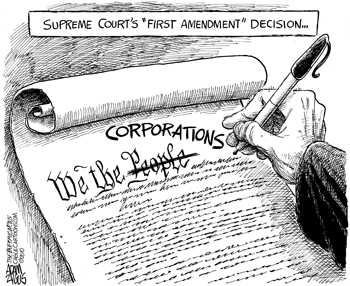
Corporations are considered legal “persons”, and carrying that logic to its extreme, the Supreme Court decided last year (Citizens United) that these persons should be able to engage in advocacy politics. So now more than ever before we are seeing anonymous groups with healthy sounding names like Citizens for Kindness running ad campaigns.
This country is so goofy that I cannot even be disgusted anymore. I can only laugh. We must surely be near the end!
Which takes us back to the beginning when our country was founded on a tax revolt – “No taxation without representation!” was the rallying cry, we are told. How is it that a corporation comprised of stockholders from millions of sources can speak for all those various persons?
Is this not contributions without representation? Isn’t it kind of, like, you know, ludicrous?
Henry WaxmanThe problem with having Democrats in office is that they say they are for things and then do not fight for them. It is just like having enemies in office, except that we don’t have a chance to organize against Democrats. People think they are our friends.
Henry Waxman announced that a bill to regulate how telecoms control the flow of traffic on the Internet, so-called “net neutrality”, is dead. He failed to garner Republican support, and did nothing deceitful or intimidating or clever to keep the bill alive. He proposed no deals, threatened nobody – he just meekly withdrew the bill.
Isn’t it interesting how flaccid, how timid, how weak these guys are even when they are in power.
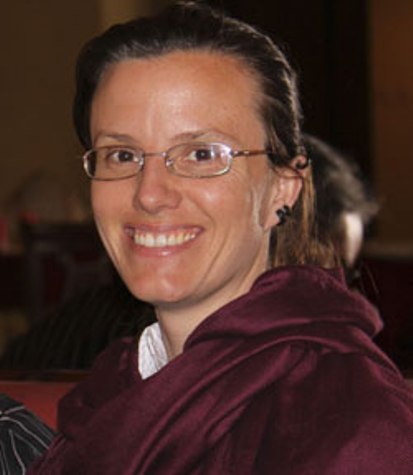
Sarah ShroudThe following are the comments of Sarah Shroud upon release from an Iranian prison after being detained over a year on charges of espionage:
It is so good to be free again, to taste new food and smell ocean air. I wake up with a heavy heart and then realize that I am free to go anywhere, do anything I please. The sense of freedom overwhelms me. It is so good be alive.
If it were only me. But there are others behind bars, people held without charges by an unaccountable regime. These people have been held for years on trumped-up charges, some not having seen their homeland or families for almost ten years.
I am referring, of course, to the prison at Guantanamo, and the secret prisons that the United States runs in Iraq, Afghanistan, and CIA torture prisons in undisclosed locations. I am referring to the hundreds, if not thousands of Palestinians who have disappeared into the Israeli prison system, and for whom Israel refuses to offer details.
Oh yeah, also, my fiance’ Shane Bauer, and our friend, Josh Fattal. Them too. Almost forgot.
OK, yeah, I made it up. Just wanted to point out the American state of mind that can see small injustice and be blind to monstrous ones.
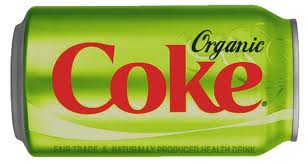
I have read in various places from people who should know that there is no nutritional difference between “organic” and regular food. I do not doubt this, but we eat mostly organic food. It costs more, but we believe it is an ethical choice. I realize that most people cannot justify the extra expense. There is no way we could have afforded Whole Foods when our kids were young.
However, I would not care how food was labeled if we had transparency – if we could know that animals are treated ethically, soil preserved. We would be far better off to let our chickens roam free and put Monsanto in a cage. And if advertising ever told us anything that was true, we might make better choices.
But that’s the way we live. So even though it’s a bit annoying, we pay more for the “organic” label. Part of the high cost of organic food is the “ideology cost” – that is, Whole Foods jacks up its prices knowing that people will pay more if they believe they are participating in an ethical movement.
Whole Foods gouges the eyes out of its patrons. Every single item in that store ends with two digits: $.99. Pricing is merely a matter of picking the numbers that precede .99, and that often seems to be a random process. But they also treat their people well – their employees and suppliers. That matters too.
Here are our justifications for organic food:
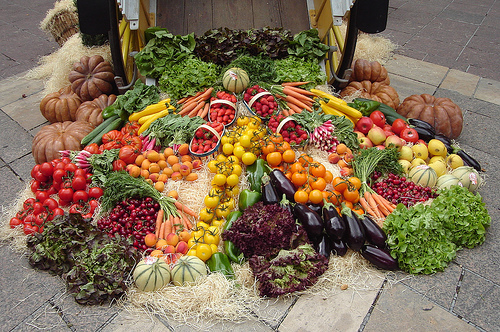
An American kid's food cornucopia1. Organic food practices are easier on the land. Most food that we eat is petroleum-dependent, and the soil is merely the medium by which we convert oil to food. Organic food uses natural fertilizers and no pesticides, so that nutrients are constantly recycled to preserve long-term soil viability. I wonder what would happen to the Midwest if we ran out of oil. Would it be a desert?
2. Most organic food tastes better. Organic strawberries are smaller, but sweeter and juicier than their non-organic counterparts. Organic deli meat does not have that oily texture that we find in Subway sandwiches. (God only knows what they inject in that stuff to make it appear edible. Two things about it are certain: They add color, to make it look wholesome, and artificial flavors, to make it taste real.)
Some non-organic food is as wholesome as its organic counterpart. I notice no difference in organic potatoes, peppers, beans, chips, beer. Some is worse – organic bananas are hit-and-miss. Organic peanut butter … well, if I can’t spread it with a knife, I don’t eat it. I’m a Skippy man.
Can it be far behind?3. Animals raised for organic food have better lives. People laugh at the idea of “free range” chickens, but I like the idea that a chicken gets to enjoy chickenhood, eating bugs and pecking at manure, before she dies. Cows like eating grass – it makes them happy. Pigs like rooting. And none of them anticipate death. They are the last to know what is coming. But for their brief stay on the planet, why not treat them ethically?
I realize that this is America, and there is probably a lot of hype behind claims of “free range” and “grass fed.” For instance, if they merely put a door and fifty square feet of lawn on a barn housing several thousand chickens, they can say that the eggs are “cage-free.” And probably much of it is just plain lying, either outright, or using words and phrases, like “lightly sweetened” or “natural” that have no legal meaning. Most likely much of what is labeled organic is just re-branded. This is America, after all, and advertising is nothing more than professional lying.
Free-range potheadsIt’s a compromise. We know that Whole Foods is gouging us, and that some growers are probably lying their asses off. But there’s another movement that makes even more sense – to buy locally. Our local farmers’ market is talking now about five days a week. We can buy local fruit and vegetables, beef, chicken and pork, wine and beer (OK – hops are from far away places), all without that 1,500 miles of transportation regular food takes to get to our table.
As always, it is buyer beware. But the closer to home our food sources, the more accountability there is.
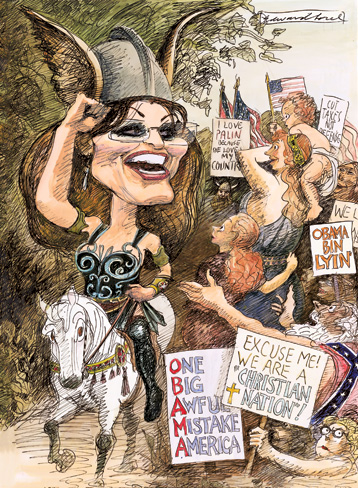
Image from Vanity Fair articleI finally got around to reading Michael Joseph Gross’s Vanity Fair piece, Sarah Palin: The Sound and the Fury, this morning. Imagine this poor schmuck, given the assignment of digging into Sarah’s life, and finding a stone wall so heavily patrolled that the only person willing to speak openly and on the record is an already-rich “matriarch of one of Wasilla’s oldest families”, Colleen Cottle.
[Palin] “had no attention span—with Sarah it was always ‘What’s the flavor of the day?’ ”; [she] was unable to take part meaningfully in conversations about budgets because she “does not understand math or accounting—she only knows buzzwords, like ‘balanced budget’ ”; and who clocked out after four hours on most days, delegating her duties to an aide—“but he’ll never talk to you, because he has a state job and doesn’t want to lose it.”
Even Cottle says she and her husband Rodney will “pay a price” for her words.
Gross claims at the beginning that he started out agnostic about The Sarah, but became hardened in his opinions about her as he dug deeper. I’ll take him at his word, but doubt his intelligent and skeptical nature if that is true. Signs are all over the place for the average outsider observer, much less the trained journalist.
The article leave us with no more information that we could have gleaned by ourselves just observing the abundant clues around her. How hard is it to figure that she doesn’t write her own speeches, Facebook entries, or even Tweets, or that she has no conception of politics, domestic or international affairs? Of course she doesn’t read and cannot think properly. Duh! She is merely a reflection of the wishes of those who project their starry-eyed hopes on her.
I’d take it even a step deeper – she has no deep and abiding faith, but rather carries with her that shrill version of Christianity that judges and proscribes without enlightening. She’s likely never thought deeply about faith or read the bible, new or old testament. She is of this life, this moment, never thinking much beyond.
It recently dawned on me that one of the most predominant types — especially among female students — has as its avatar a political celebrity who has made a raucous re-entry onto the national stage. Therefore, I’m calling it The Sarah.
The Sarah has three basic characteristics: a lack of self-evaluative skills; a tendency to parrot whatever she thinks her immediate audience wants or needs to hear to gain validation, and the mistaken belief that popularity implies importance.
Gross’s piece hit the recycle bin shortly after I finished. Nothing new there, no reason to want to know more. It’s all right in front of us. She is as she appears, shallow, phony, and mean as Michael Vick’s pit bull. She will never be president – even the slickest professional manager in the business would not be able to both manage her mercurial personality and keep her little dim bulb under a bushel basket for a full campaign.
The disconcerting thought is that so many people think she has the qualifications to sit at the helm. What the hell is wrong with us?
The above picture is a view of a channel in Louisiana near the site of the BP oil spill. It is comprised of dead fish, eels, crustaceans. There is no known connection between this kill and the oil spill. It’s a coincidence (what are you – some kind of damned conspiracy theorist?)
A while back, in a fit of angst, I said that a certain commenter who goes by the name “W******”, aka Rod Kailey, would not be allowed to post here.
That was a wrong. My bad. I was angry at him. He is welcome here, as are Max and Eric and even Crisp and Budge, Fleischman and everyone … it’s a party, full of sound and fury, signifying nothing. Banning is the a sign of both intellectual insecurity and a controlling nature. I shall never forget W.C. Fleischman’s words to me before he banned me:
i command you to silence yourself …
Kinda says it all, ya think??
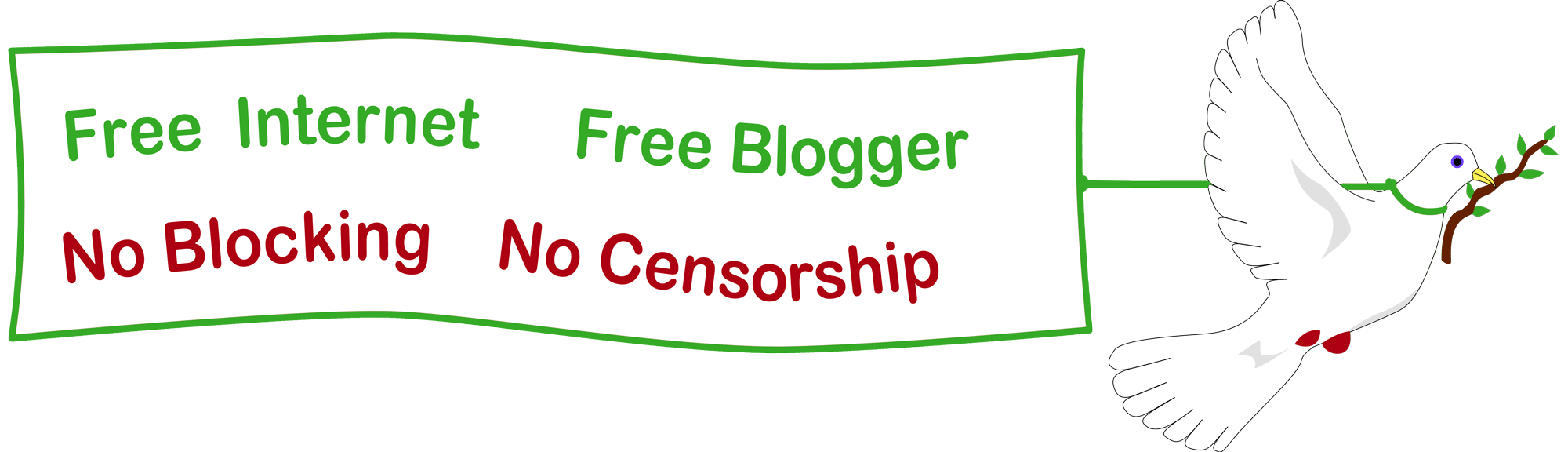
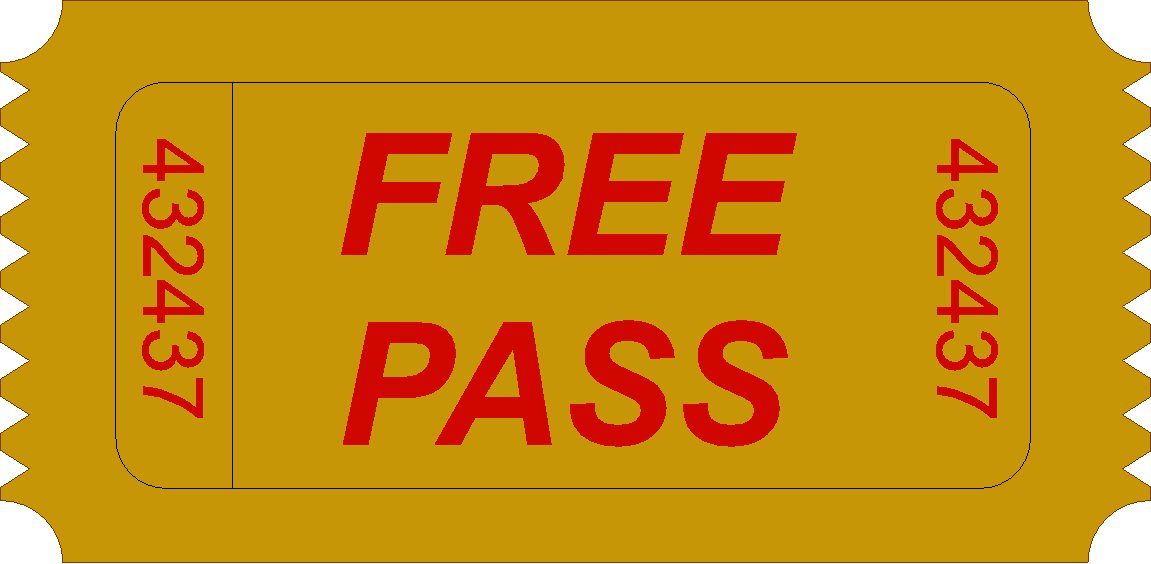
I hereby decree that all formerly banned bloggers and commenters are now free to leave their cells, congregate with others, speak their minds. Merely print the pass at the right here, and then if you continue to find yourself unable to post at LITW or 4&20 or any other tooly Democratic blog (it is a Democrat thing, this banning), merely link them to this post so that they can see that your rights have been restored. Have them contact me. I will COMMAND that they let you back in. They are decent, law-abiding folks. They’ll let you back in.
____________ Blogging is the sigh of the oppressed creature, the heart of a heartless world, and the soul of soulless conditions. (Karl Mark)
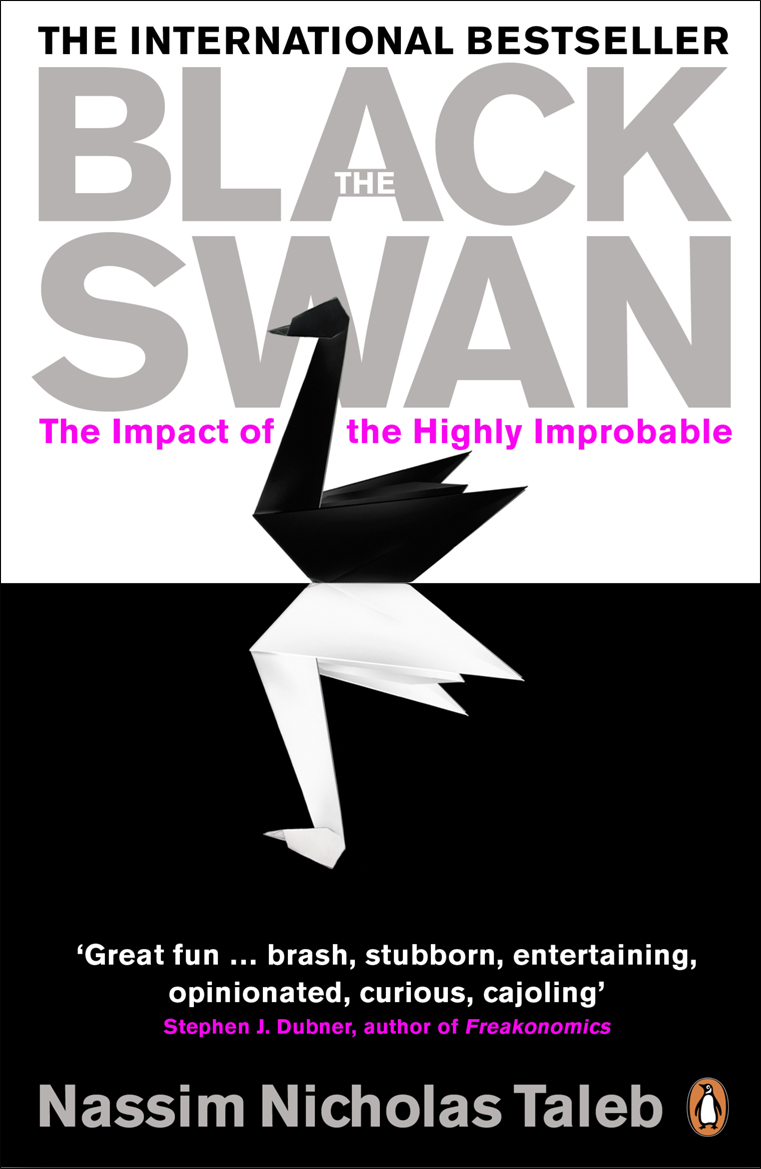
Where are the original thinkers? I just got hold of a book yesterday, The Black Swan, that I am told offers a fresh perspective on things. If you’ve read it, please give me your thoughts. I won’t get to it for a bit, as I have a couple of un-original books to finish up.
Which naturally leads to the question: What books changed your outlook on things? What writers offer up such unique and fresh insight that you altered your outlook afterward?
I’ll offer a few that have impacted me that way, and then if you are even out there, you do the same. But please take note: I am not interested in books that reinforced your existing viewpoint. Those are easy to come by. We seek them out. I want game-changers only:
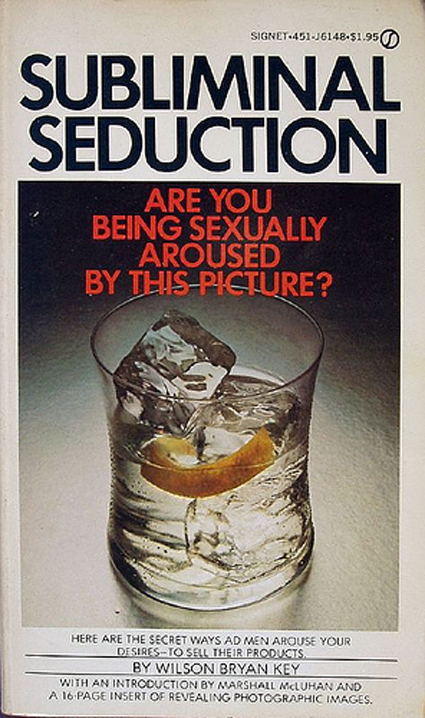
Subliminal Seduction by Brian Wilson Key. I was very young. OK? Wilson had a bonanza of ideas about how advertising messages are really embedded in the pictures and words, hidden beneath the written words. I had a fun time after that looking for embedded messages in ice cubes, but never did find anything. It did, however, change the way I looked at advertising. I have never, since that time, trusted that it is straightforward. Advertising only succeeds to the degree that it undermines our defenses.
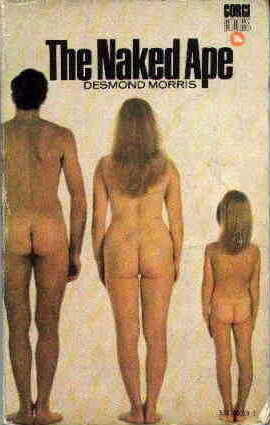
The Naked Ape, by Desmond Morris. Again, I was very young, so forgive me as I pull books off the top-seller shelf. This was the first in a long line of books that would analyze evolutionary man, and how our far-distant past has influenced our present behavior, all the way from wearing neck ties to shaving armpits. I was a Catholic at that time, and when the chapter on religion came around, I cringed. I did not want to read it. The book brought to the surface my religious doubts, and also opened up a whole new area to look at with great interest – the inner meaning of our outer behaviors.
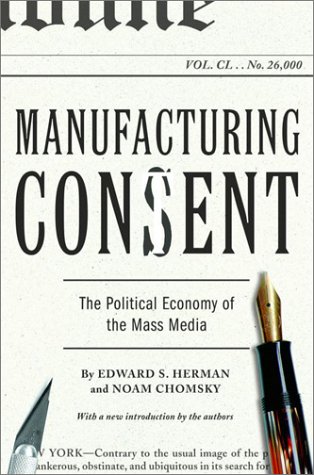
Manufacturing Consent by Noam Chomsky and Ed Herman. Keep in mind that I was in the “bounce” period, and was moving from far right to far left. But Chomsky said things I had never heard before in a way I had never experienced. It would begin a twenty-year affair with him. His mind is critical, his patterns of thought democratic and like me, always cheering for the underdog and resenting the abusers. We think alike to the degree that I think properly at all. I am an underdog kind of guy.
Anyway, this book allowed me, for the first time, to understand the nature of ‘big’ – that is, media is so big that no one person or group of people can control it. But it is subject to pressures, and does bow to power. It gave me a non-conspiratorial view on how societies function. The world is too big for small conspiracies to have an impact. But concentrated power is real.
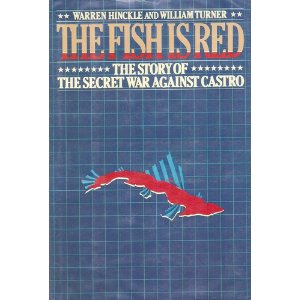
The Fish is Red, by William Turner and Warren Hinckle. This book was written in the aftermath of the Frank Church hearings on CIA activities in the Caribbean from 1959 forward, after the fall of Fulgencio Batista. (This is the only time that Congress has ever investigated CIA activities.) The words “the fish is red” was a line from a poem by E. Howard Hunt that was the encrypted signal that the Bay of Pigs Invasion was to begin. I read it as a right winger, but found it troubling that in many areas it appeared as though the only people saying things that were true were the likes of Fidel Castro. It was troubling. Very troubling.
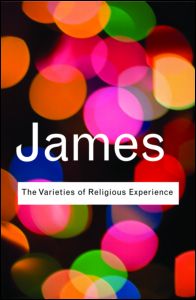
The Varieties of Religious Experience by William James. James pursued the psychological undercurrent that manifests itself in the form of religious belief, but he was not a Dawkins. He wasn’t debunking or trying to undermine religious belief. He only wanted to understand it. It created in me a respect for religious believers that I had been lacking since I lost my own ‘faith.’ James, himself not a believer, pursued knowledge as a scientist and respected the depth of human intelligence even as we pursue irrational belief systems.
Propaganda, by Jacques Ellul. He is best known for The Technological Society, but I’ve never read that one. This book slowly helped me understand that societies are not random collections of individuals with unique thoughts, but groups whose thoughts are managed by people who have studied the art of propaganda for many many decades. Not all countries engage in this nefarious activity, but ours does. In spades. This is the book that has turned me into the hated soul that I am today, as I don’t think that the original thinkers around us on the blogs have any original thoughts. That sort of thing gets me banned.
Moneyball, by Michael Lewis. I’ve never looked at baseball the same way since.
______________________
Those are the big ones. I don’t keep books forever, and give the ones of lesser influence away at book swaps and the like. This can all be very boring, so I’ll trouble you no further except to ask for books that transformed, rather than reinforced. If you say “Atlas Shrugged”, you are banned! Maybe it transformed you, but I do not want to hear about it!
Also, note that these books, with a couple of exceptions, are very popular. I hate to expose myself as being shallow, but there ya go.
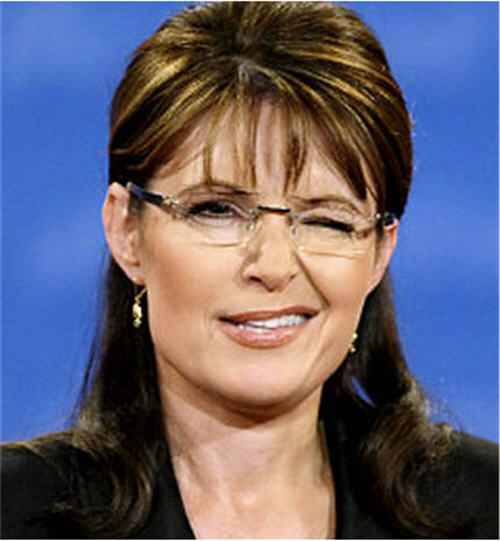
Good God! What does this say about us? 15% don’t know. How can you not know? 26% think she could do the job. How can they think that? What the hell is wrong with them?
Since I am one who thinks that the president is more a figurehead than an actual leader, I suppose she could fit in the slot, everything scripted for her, decisions made and brought to her for approval. But she might actually take the job seriously, and try to get involved in things. But wait – that would be high comedy!
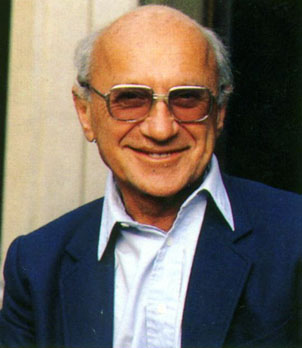
Dead weight, leech, parasite ... I thought this apropos. Thomas Geoghegan compares the life of an upper middle class American woman (Barbara) to that of her counterpart in Europe (Isabel), and both of them to Milton Freidman:
Freedom or leisure is about as cosmically important as the dark matter, or dark energy, of the universe. It’s just that our minds have been darkened by economists like Milton Friedman. Yet Friedman himself had half an idea of who is better off (Barbara v. Isabel), even when he was writing libertarian-type tracts like Free to Choose. Freidman’s very life was an indictment of the ideas in the book. As a professor with tenure, he lived like Isabel, not Barbara. He had tenure, and three months off, and no one could fire him. He had a big TIAA-CREF pension, which a teachers’ union helped expand. It was a pretty nice life, even by Isabel’s standards.To the extent that Friedman was “free to choose,” he chose to live like a European in a social democracy. I wish that every one of us was free to live like Milton Friedman.

 Corporations are considered legal “persons”, and carrying that logic to its extreme, the Supreme Court decided last year (Citizens United) that these persons should be able to engage in advocacy politics. So now more than ever before we are seeing anonymous groups with healthy sounding names like Citizens for Kindness running ad campaigns.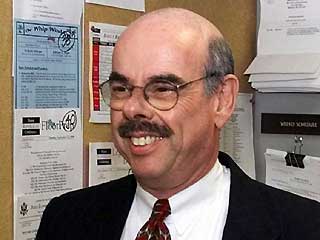



 Piece of Mindful