Listening to Obama talk about jobs and shared prosperity yesterday reminded me that we are in campaign mode and Barack Obama has started doing again what he does best — play the part of a progressive. He’s good at it. It sounds like he has a natural affinity for union workers and ordinary people when he makes these speeches. But his policies are crafted by representatives of corporate/financial America, who happen to entirely make up his inner circle.
The amazing and sad thing to watch is how his schtick works. It’s a stupid country, and The One does to even have to try hard to fool people. It’s that easy.
These people who are making a big deal out of gay marriage? I don’t give a f*** about who wants to get married to anybody else! Why not?! We’re making a big deal out of things we shouldn’t be making a deal out of.**
They go on and on with all this bullshit about ‘sanctity’ — don’t give me that sanctity crap! Just give everybody the chance to have the life they want.
(Clint Eastwood being a BAMF while discussing same-sex marriage in GQ’s October edition.)
So Dave Budge has taken a break from blogging. (His ‘hanging it up’ post disappeared, so he’ll be back. No link available.) It’s a familiar scene. We write, for me every day, and then a cloud descends, and from deep inside comes a voice asking why. Why put yourself through this? We try to be thoughtful, but I look at the number of readers, impressive, but comments are few. Any mining of the numbers only discourages. In my case, a post I wrote about Vince McMahon, of XFL fame, draws hit after hit, thank you Google. Really, it’s only a few people.
Rob Natelson offers homage to Budge in this post, and writes about a trip to Columbus, Montana from Missoula, about four hours, to talk to a small group of people. On arrival, he finds that he has to pay the gate fee of $40, and worse yet is limited to a ten minute talk! That is like asking Krakatoa to have just a little eruption.
I am only going to have one thought today. This is it:
There has been a lot of discussion here about the nature of power – why do people with money affect government policy, while people who vote don’t?
The answer is organization. Corporations and wealthy people, with the exception of “Hollywood,” do not simply throw money at candidates and hope for the best. They assemble it in large quantities, and use it as a lever. They have many other tools at their disposal, but I’ll stick to that.
Organization is effective. That’s why the notion of labor unions is so distasteful to powerful people. They don’t want working people to have real power. They want workers to vote for either party, as their whims dictate, and otherwise not meddle.
It’s going to be a long fourteen months, and I intend to ignore partisan politics. That means light traffic – the party-politics frenzy will suck up all the oxygen. Obama will win reelection easily, as he will have more money than anyone else, and so can buy more ads. That’s all that really matters. As 2008 showed us, he’s got really good advertising people behind him. His turd will blossom.
I won’t vote for him or any opponent, nor will I allow campaign rhetoric to replace reality. Elections do not affect public policy.
I did not listen to Obama’s speech on Thursday. I know he gives good speech, but there is seldom much content. I did read a summary of the “jobs” program in the Financial Times. It had some trial balloons, and one good thing – $85 billion in aid to state governments. That might help.
A serious manI watched Steven Colbert interview Tom Brokaw this evening. It was quite disgusting. The normally irreverent Colbert turned serious, and the always pompous Brokaw profundicated. Tom is a serious guy who fancies himself a “journalist.” He talked about 9/11 and the people who were harmed that day.
There’s going to be a whole lotta profound breast beating this weekend as we head into the tenth anniversary of 9/11. It’s going to be ugly. I would watch football, but all of those moments of silence are going to be too annoying.
If I were Colbert, I would ask Brokaw what it was like to be an Iraqi in Baghdad in March of 2003 when the US launched its unprovoked attack, blowing up buildings, killing innocent people. Or ask him what he thought of the mass killing spree the US went on after that day.
Brokaw, of course, would have no clue. That is his job.
George M. Dennison served on the Board of Plum Creek Timber while also serving as the president of the University of Montana. When asked how he could justify this apparent conflict of interest, he claimed not to have any such conflict, as he did his work for Plum Creek in his off hours.
He knew better, surely, as he is no fool. “Conflict of interest” has less to do with how a person spends his time than service to two masters. If the objectives of one do not line up with those of the other, then Dennison was obligated to resign one position or the other. If UofM and Plum Creek share common objectives, then UofM is obligated to watch out for Plum Creek’s bottom line. That’s the only reason the company exists.
Dennison did not resign either during his tenure. It’s emblematic of our new Gilded Age.
Avoidance of conflict of interest is why elected politicians set up blind trusts, why judges recuse themselves from certain cases, and why law firms diligently search their records for potential conflicts before taking on a new client.
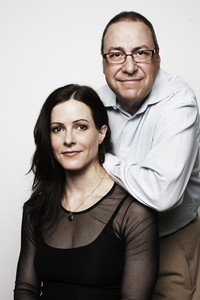
Bethany McLean and Joe NoceraThis came to mind this morning as I read the following passage from the book All the Devils are Here, by Bethany McLean and Joe Nocera. They are financial reporters who wrote about the recent financial meltdown, and the passage I cite (p 289) is about attempts by some people to stave off future losses by helping people who were under water with their mortgages:
In fact, around this time [March, 2007] there had been efforts by some of the big Wall Street firms to salvage their triple-A tranches by buying actual mortgages and preventing enough foreclosures to keep those trances from eroding. Bear [Stearns]…announced “Mod Squad”…, which was supposed to help delinquent borrowers avoid foreclosure. Other firms, including Merrill Lynch and Morgan Stanley, were meeting to see if they could do something collectively to keep homeowners from defaulting.
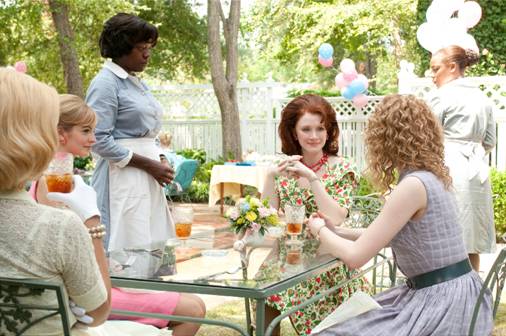
We went to see the movie “The Help” last night. It’s a good movie – the characters are caricatures and the plot is held together by a thin piece of thread (having to do with a pie), but afterwards over pizza it led to some really good conversation that would not otherwise have come about.
The movie is about black maids in the south in the early 1960’s. These women raise white children during the day and their own at night. They must endure white attitudes about black people without the ability to speak up or out, a most undignified situation. Because it is a movie, bad people get what’s coming to them, good people prevail, and the people in the middle are changed for the good.
It’s a wonderful system, this free market capitalism. So I take this opportunity to celebrate and offer examples of how it works and makes life better for all of us. Since we recently traveled from Denver to the east coast, I’ll start with the airlines in the wake of Jimmy Carter’s deregulation:
Baggage: Once airlines charged to carry customer luggage in addition to the ticket price. But one airline saw a market opportunity, and offered to carry bags as part of the ticket price. Soon all the other airlines were forced to go along. Bags now fly free. Markets work.
Legroom: Airlines once squeezed as many people on to an airliner as possible. This allowed them to run fewer flights. Then one of them saw an opportunity to increase its market share, and increased passenger comfort by increasing legroom. All the other airliners, for fear of losing market share, went along. Markets work. Continue reading “Why free markets work – examples abound”→

 This from Matt Taibbi:
 So Dave Budge has taken a break from blogging. (His ‘hanging it up’ post disappeared, so he’ll be back. No link available.) It’s a familiar scene. We write, for me every day, and then a cloud descends, and from deep inside comes a voice asking why. Why put yourself through this? We try to be thoughtful, but I look at the number of readers, impressive, but comments are few. Any mining of the numbers only discourages. In my case, a post I wrote about Vince McMahon, of XFL fame, draws hit after hit, thank you Google. Really, it’s only a few people.


 Piece of Mindful