
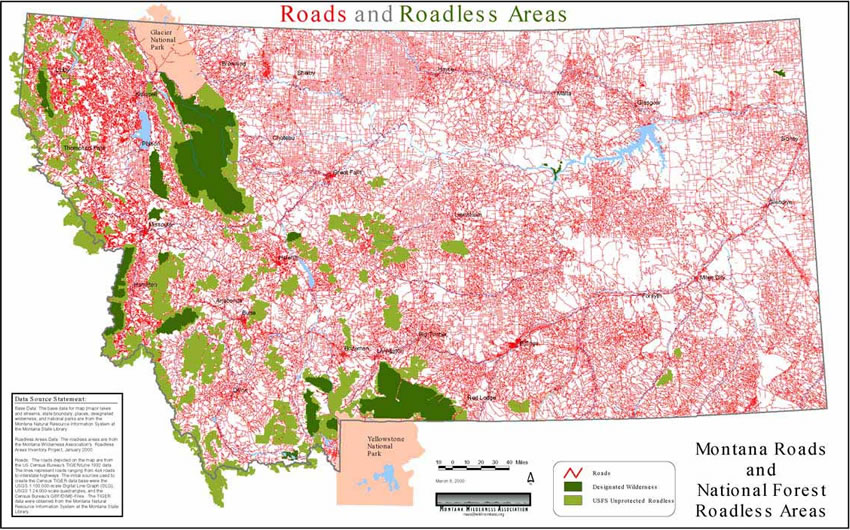
The players were:

Senator Conrad Burns: He was the focus for conservationists, as he was openly antagonistic towards wilderness, and easily adopted the posture of motorbacks that machines should go everywhere. He was a rallying point, and served the cause of preservation well by bringing various groups together in opposition.

Senator Max Baucus: He was the man who undermined any efforts to preserve additional lands. Industry had long lost interest in high and rocky lands and lightly timbered ones. Baucus gathered up all of these areas in his own Wilderness Bill, the “Rocks and Ice” Bill. Predictably, wherever there was serious movement at preservation, Baucus trotted out rocks and ice, and said “this or nothing”.
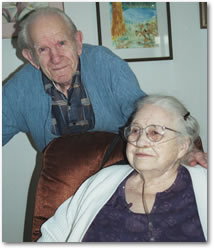
Baucus was the real enemy, yet I will never forget John Gatchell’s words to me after the 1996 election, when Max won another term: “At least we still have Max.” Gatchell is the Conservation Director for the Montana Wilderness Association, a group with a proud conservation history and founded in 1957 by Ken and Florence Baldwin, and others.
Power is dangerous, a narcotic. Proximity to power changes a person, clouds the intellect and alters perceptions. (Wasn’t there some kind of trilogy about a ring or some such thing?) Max, nominally a “Democrat”, managed the conservationists as part of a larger strategy of keeping his left flanks in line and ineffective. (I wrote an op-ed published in the Billings Gazette in which I called him a “faux bonhomme,” literally a “pretended good fellow,” or “false friend.” That is the most dangerous kind of friend to have.
When Conrad Burns left office, we lost our rallying point. Jon Tester was an unknown quantity, but did make serious attempts to reach out to conservationists in his campaign. Many progressives adopted him, placing almost blind faith in his good will as a substitute for on-the-ground organizing. That’s a dangerous situation, as there are few answers inside politics. We were effective against Conrad Burns, literally immobilizing the development forces behind him because we were organized groups with common purpose. That organization stopped the political wheels.
Danger has come to fruition. Tester has set out to achieve what Burns never could – to split environmentalist forces, bring the loggers into roadless lands, and undermine the legal concept of “wilderness” that has guided us thus far. His Forest Jobs and Recreation Act is Baucus “Rocks and Ice” redux, with huge tracts of roadless lands given over to mandated logging. What wilderness it preserves is sullied by helicopter and ATV encroachment.
At the center of this controversy are two people from years past who might now be seen as “collaborators.” They are the aforementioned Gatchell of Montana Wilderness Association (not pictured), and Tom France of National Wildlife Federation’s Missoula branch. 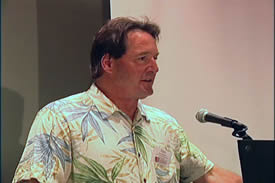
George Wuerthner, among many others, is a new prominent voice for conservation in Montana, and has done serious writing on this subject. This piece, from New West, explores the different meanings of “collaboration” and “negotiation.” He gives and example of each:
Quincy Library Group in California Here local environmental activists joined with timber industry to craft a plan that called for logging up to 60,000 acres of the Plumas National Forest annually in exchange for protection of some old growth trees and small roadless areas. Like the Tester legislation, the Quincy proposal was hailed as an example of how collaboration had achieved a resolution to a long-standing stalemate.
However, other environmentalists, including the Wilderness Society, Sierra Nevada Forest Protection Campaign, and Sierra Club among others did not support more logging on the Plumas NF and they railed against the Quincy Library Group proposal. Environmental members of the Quincy group soon joined the timber industry in denouncing the anti-corporate giveaway activists.
The collaborationists adopted the goals of their opposition in an attempt to move the process forward. In so doing, they split from their own ranks and joined the developers, and as the Little Lamb followed Mary, were soon attacking conservationists. This is the Tester Process that Gatchell and France have fostered in Montana.
Steens Mountain National Monument in eastern Oregon: First, ONDA remained very up front that their goal was to end grazing–and they were not afraid to tell the ranchers, the Congressman, or anyone else that if they had an opportunity to eliminate grazing, they would go for it. Indeed, one of the things they negotiated successfully in the Steen Mountain legislation was the first legislated cow-free wilderness. Since they were clear in expressing that their chief goal was to protect wilderness and eliminate grazing, no one, including the local ranchers had any misgivings about their motives.
The ranchers went into the negotiations with their eyes wide open. They knew where [Oregon Natural Desert Association] stood on matters. They did not think ONDA lied or deceived them when they continue to lobby to remove cows from public lands, not only on Steens, but also throughout Eastern Oregon.
However, ONDA’s goal of livestock removal didn’t keep them from working with the ranchers either. By negotiation ranchers got some things they wanted too. They were able to consolidate their private lands by land exchanges with the BLM. Some received permit buyouts, and left the business altogether, but with a golden parachute. With these negotiations, the ranchers had some control over where wilderness designations occurred.
That is negotiation, with each side sticking to principles, but understanding that they must find middle ground. In the end, ranchers and ONDA walked away from the process, neither side having lost or gained everything, but having achieved primary goals. More important, their principles were not compromised and dignity was intact.
Sen Jon Tester has done what Conrad Burns could not do – he has divided the Montana environmental community, and has set the stage for to degradation of large tracts of Montana’s roadless lands. This is why I have consistently and stridently maintained over the years that we face far more danger form Democrats in office than Republicans.

I miss you Conrad. Your replacement is far, far more dangerous than you ever dreamed to be. (In wartime, don’t they shoot collaborators?)
Anyway, as old fighters fall by the road, new ones take their place. The battle goes on. At this time the fighters for wilderness are many, and my favorite group is called “Alliance for the Wild Rockies.” To this date, they have fought for their cause, stand ready to negotiate, and have never collaborated.


Sun Valley is sold out. Still tickets in Salt Lake City. At last night’s show in Washington, DC, some key congressmen, and women, attended, heard the message loud and clear. Good news for public lands and wilderness.
LikeLike
It’s another case where no bill would be far better than a bad bill.
Roadless areas as they stand are de facto wilderness now, and will remain so unless the ‘collaborators’ manage to push something like this through. Best to kill this sucker now, and if we absolutely insist on passing some kind of bill let it be along the lines of NREPA. Otherwise leave it alone.
Amen on Alliance For The Wild Rockies.
LikeLike
Exactimento, my friends. For years and years I’ve told folks, Gatchell included, that “collaboration” was a political strategy devised to divide and conquer those who would preserve a healthy environment for the future. Now, in the fullness of time, that prediction comes to fruition with this sorry-ass logging bill and it’s even sorrier collaborators with their “timber partners.”
And of course the other side of that coin is the division — where those who don’t agree with a rocks and ice wilderness bill while the roadless areas are logged fall one and all into the “extremist” and “obstructionist” category.
Good on ya’ Geo Wuerthner, Mark, P-Bear and Matty Koehler. Proud to be with you in fighting for the future, no matter what they call us. At least we can still look our kids in the eye and tell ’em we, at least, didn’t sell them out for a few coins from PEW.
LikeLike
Apparently, you don’t really know the real Max Baucus. I live in his home state and you can read the dirt about him here:
http://identitynoise.com/blog/?p=209
garybarnes@inbox.com
LikeLike
I deleted your comments because they appeared to be spam, and not because I disliked content or anything. This comment comes through as a real person. Sorry for the misunderstanding.
Apparently you have just stumbled on this website. And it also appears that you have not read much of the content here. That’s all OK, no problem. But for starters, I know the real Max Baucus. So keep on coming back, read a few of the posts here, and contribute as you will.
Thanks …
LikeLike