
There’s a debate going on here, and here, and other places no doubt, about the worth of the Obama Administration. He hasn’t accomplished much of anything – mild credit card reform, bad health care and financial reform, and of course, the continuation of
foreign policy, running the wars, state secrets, Guantanamo, DADT, civil liberty abuses, spying, killing, renditions, etc., things that really piss off progressives, no matter who’s in power.
That’s from a comment at LITW.
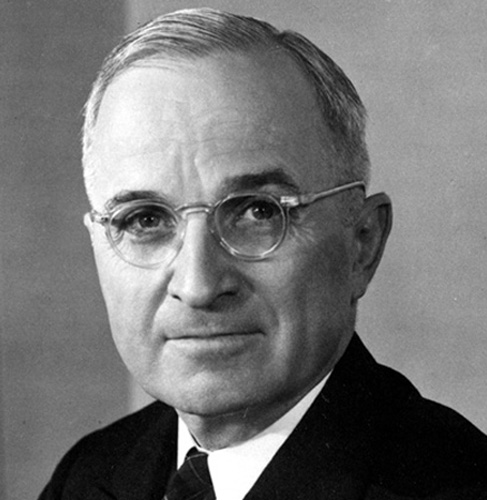
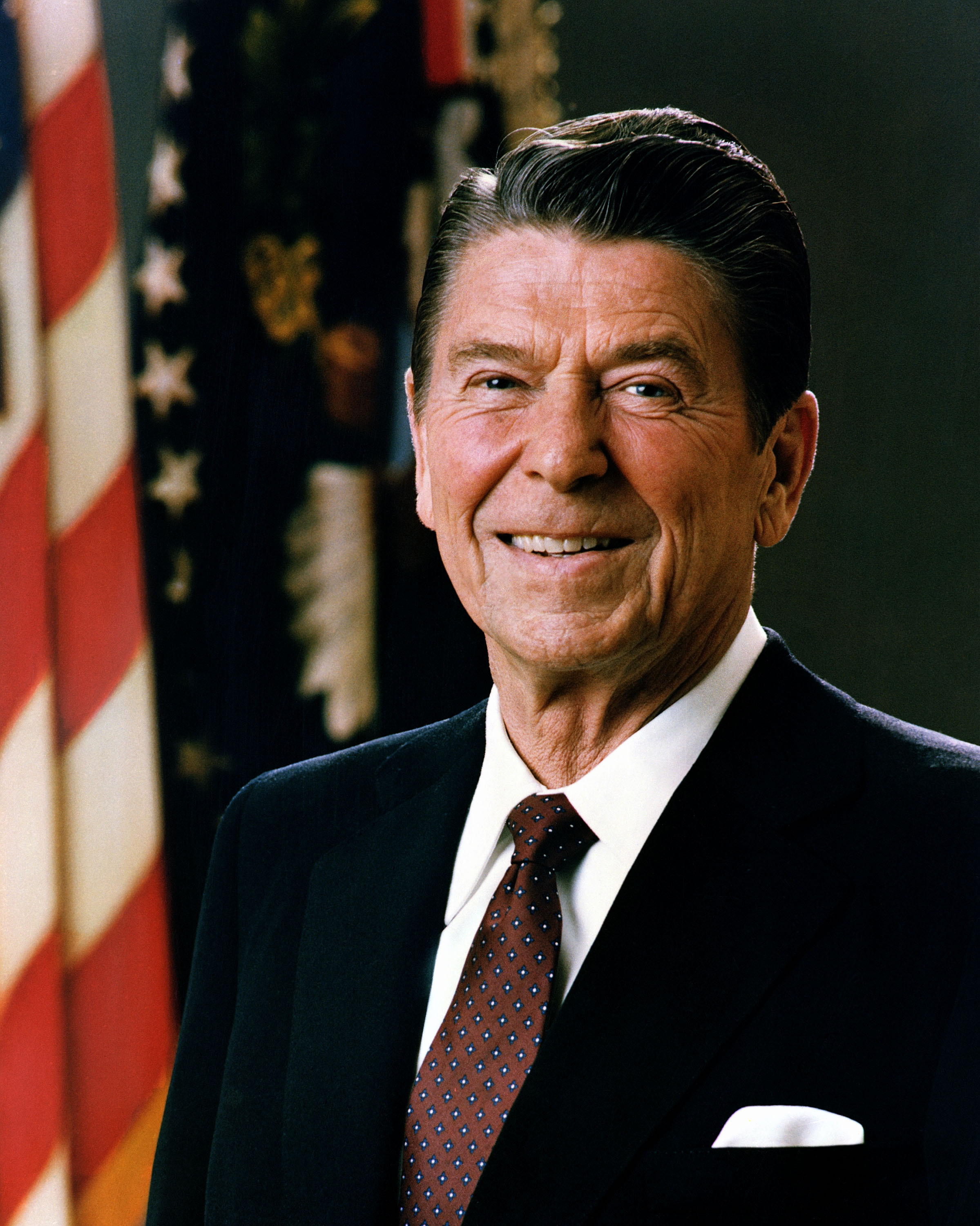
Why is that that ordinary men of limited ability and vision, like the Bush’s and Ronald Reagan, seem to be able to “accomplish” so much, while erudite men of letters, like Clinton and Obama just don’t seem to measure up, in fact, seem to be working for the other camp? The men of lesser ability make massive changes, and the men of great ability just can’t seem to get a grip on things.
The problem I have is that I cannot describe the mechanism. It is too big. It is “the oligarchy”, the thousands of wealthy people who share common interests and frame of mind. But that sounds like a conspiracy, and it is not, anymore than the fact that Britain is run by an aristocracy that only reluctantly shares some power via parliamentary government is a “conspiracy.” It is just how power plays itself out.
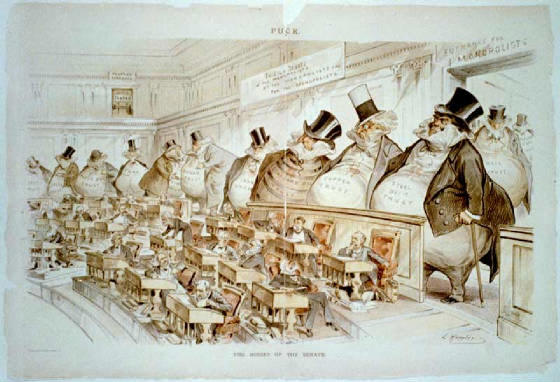 Obama happens to be a weak man, but if he were a strong man of principle who intended to use the power of the office to act on those principles, he would not be president. The oligarchy would not allow it. Candidates for office are vetted over a long period, and those who might not be manageable and predictable are, by various means (usually by media indifference), rejected for high office.
And again, I am left to describe how “the oligarchs” stop candidates from getting votes. They do. Most people don’t think their own thoughts, and follow the leaders. The idea of voting for a Dennis Kucinich, say, is considered laughable. Why? He’s certainly smarter than John McCain, and certainly braver than Obama. But a pall is cast on undesirable candidates, and they rarely rise to the stature of “viable” in the eyes of the electorate.
I see that it works, I see how it plays out. But I do not know anything about how the upper crust, the corporate CEO’s and wealthy families exert their influence to make these things play out as they do.
Eisenhower warned us about the “military-industrial complex”, a nice turn of phrase, and another word for “oligarchy.” But it was too big, even in 1960, for him to describe in a way that would allow us to grasp its depth and breadth and power.
I only know this: If your vision of the office of president is of a man in charge, then your vision is wrong. If you think that George W. Bush decided to invade Iraq, cut taxes, set up a prison in Cuba and torture people, you’re wrong. If you think that LBJ decided to invade Vietnam and kill three million of them, you’re wrong. If you think that public opinion caused the government to pull out of Vietnam, think again. If you think that Obama decided to push in Afghanistan, you’re wrong. If you think that Clinton decided to bomb Serbia, you’re wrong.
The office has power, to be sure, but the power is not exerted by the man in office. The power is exerted through the man in office. Real power lies elsewhere.
 Piece of Mindful
It lies in the CFR – they have chosen every President since Kennedy.
The challenge in rooting out the real power is that it establishes itself over a vast period of time. It moves slowly since it knows any fast maneuver will attract unwanted attention.
So we must look back decades to see who is the true beneficial owner of the Nation.
LikeLike
These “people” have no particular love for nation-states, or real national leaders. But these obstacles are easily overcome, and a nice distraction for the masses, who prefer football or reality shows to citizenship. Lemmings. Sigh!
LikeLike
I was hoping for more insight into who these “people” are rather than a garden variety exposition of the hackneyed puppet-master theory. You write with conviction on many issues, and often with a common thread of “greater powers” at work, but why not take a stab at connecting the dots that you see?
LikeLike
Because I do not know enough to connect the dots. I know that there is some order and harmony in what I see, and that power is present. Beyond that, I’m a bit flummoxed. I grew up in a town of 75000′ and it had a power structure,and most business was conducted out of sight. How that translates to 300 million is beyond me.
Try http://sociology.ucsc.edu/whorulesamerica/power/class_domination.html.
It’s Domhoff’s theory of power in this land.
Like your blog
LikeLike