
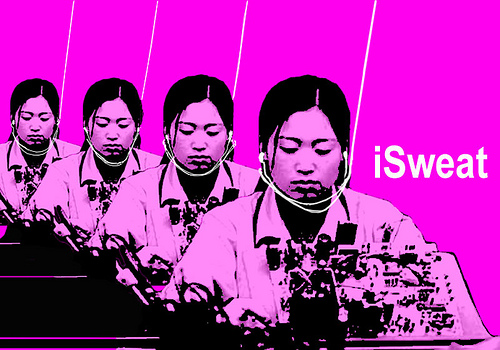
 I wrote a piece down below for the benefit of Black Flag, and my objective was merely to lay it all out, and arrogantly put up my answers without evidence. It is so because I say it is so. I wanted to engage him and have some fun. So I called it “The Final Word.”
There is no final word. I no more have answers to the hard questions of our times and all times before than does Mr. Flag. But I do appreciate his forthrightness in presenting his views as I did mine – as the final word. He’s thought it through, he says, and presents us not with the process of reasoning that got him to his answers, but just the answers themselves. He calls his answers “immutable laws”, and uses them as a fortress to protect himself from the real world, which is fraught with uncertainty.
That’s one approach. Here’s another: Sophistry. In Greece, sophists were teachers, and should have garnered high respect, but instead through the ages have earned quite the opposite. The word “sophism” is at the root of “sophistry,” “sophisticated,” and “sophomore.” The reason? Sophists taught the art of reason for the wealthy classes, and gave them the tools they needed to defend privilege.
Enter Dave Budge.
I am a special case for Budge. I know this because he refers to me as “moron accountant with the Polish sounding name” – it’s frustrating to him because he simply cannot find the words to get across the point that he doesn’t think I know anything. He wants me to know how stupid I am, and it doesn’t sink in!
I’m Czech-Irish.
Budge put up an elegant defense of sweatshops, replete with appeal to authority, false choices, emotional arguments, and drivel. It is one of his most thoughtful works to date, and as such, exposes him at last as a guy who simply has not thought things through, but quite elegantly.
Budge doesn’t like sweatshops. But he thinks of them as a stepping stone to a better life. Evil, but necessary. As evidence, he cites improvement in places where things have improved. He leaves out everything else. Sweatshops are making life better, he says, because life is getting better in some places where there are sweatshops. He also says, at another post, that my piece, “The Final Word,” was egoistic prattle with no ideological or empirical support.
Ahem. Cough. Cough. [Clears throat.]
Go read Budge’s piece (The Pulse of my Bleeding Heart, Part I), and have some fun. I’m going to point out some of the more egregious passages.
First, Budge starts with a closing statement from another post: We on the left think that “workers in developing economies don’t deserve jobs as much as American workers.” This is a technique perfected by Karl Rove – to attack an opponent at his strong point. Simply restate their argument in a way that that sounds worse – protecting American jobs and our standard of living is selfish. I mentioned in my piece that concept of having a country was weird, but a good way to protect a group of people from bad ideas. Suppose we want a higher standard of living for ourselves – Budge is saying we can’t have that because we need to worry about Chinese labor. Bad idea. We as Americans can protect ourselves from that idea by tariffs, wage and labor standards, and the Chinese must take care of themselves. Both are possible. One country must not suffer for the other to benefit. False choice.
Later he says that there is no profit if there is no sale and if there isn’t discretionary income there are no sales. (His emphasis.) If only it were that simple, as the object of capitalism is to extract profit from labor by using stored labor (capital) applied to resources … sales are going happen, but the object is not profit. The object is to corner the profit, to keep it for oneself at the expense of others. Pay each sweatshop worker twenty-five cents an hour more, and there is not less profit. Rather, there is merely a wider group of beneficiaries. That’s an essential concept that Budge has never grasped – that wages too are a form of profit. They are the part he cares little for, as it benefits the wrong people.
Budge cites Paul Krugman, a blatant appeal to authority – a man he considers a hack, but whom he thinks happens to be right on this subject. I mentioned to my son that the only reason that Krugman has his pretty perch at the NY Times is that he is a free trader, and so is not out of step with the elite. But Budge uses him for a different purpose – as evidence that he must be right, as a man he does not agree with has come to the same conclusion.
He does the same thing with Jeffery Sachs. Set them aside. Let’s get down to business. What is the essence of the debate?
(Krugman, Sachs, and Budge are all the same person now. Budge is using their words in place of his own. From this point on, their blended words are “KSB:”)
And yet, wherever the new export industries have grown, there has been measurable improvement in the lives of ordinary people. Partly this is because a growing industry must offer a somewhat higher wage than workers could get elsewhere in order to get them to move. More importantly, however, the growth of manufacturing–and of the penumbra of other jobs that the new export sector creates–has a ripple effect throughout the economy.
This is classic confirmation bias. It’s that simple. Sweatshops are not a modern phenomenon. They are with us everywhere that there is poverty. KSB have identified those places where life has gotten better, and claim that the reason is sweatshops. I’m not kidding.
More KSB:
One German company buckled under pressure from activists, and laid off 50,000 child garment workers in Bangladesh. The British charity group Oxfam later conducted a study on those 50,000 workers, and found that thousands of them later turned to prostitution, crime, or starved to death. …
University of Colorado economist Keith Maskus says the Pakistani child laborers who lost their jobs were later found begging, or getting bought and sold in international prostitution rings. …
UNICEF reports that an international boycott of Nepal’s child-labor supported carpet industry in the 1990s forced thousands child laborers out of work. A large percentage of those child laborers were later found working in Nepal’s bustling sex trade.
Are you following the specious reasoning path? The choice between crime, sex trade and prostitution and sweatshops is sweatshops. With sweatshops there is no crime, sex trade and prostitution. We know this, because ex-sweatshop workers were found in crime, sex trade and prostitution.
Therefore, sweatshops are making life better. Classic false choice reasoning.
Here’s my favorite:
Johan Norberg … writes this about a Vietnamese woman working for Nike … “when I talk to a young Vietnamese woman, Tsi-Chi, at the factory, it is not the wages she is most happy about. Sure, she makes five times more than she did, she earns more than her husband, and she can now afford to build an extension to her house. But the most important thing, she says, is that she doesn’t have to work outdoors on a farm any more.”
Are you reading that? A sweatshop worker built an extension on her house, and doesn’t have to work on the farm anymore, because as we all know, farming is harder that sweatshop work.
Words, words, words … where you are when I need you?
OK, Budge is doing drivel, but here’s the worst part of his confirmation bias. He cites as reason for the continuation of sweatshops the success stories of the Asian continent, Korea and Japan. He leaves out heavy government subsidies, import tariffs … Toyota once made wash machines, and only became the monster company it is because Japan subsidized it, protected its markets and its workers from outside capitalists who would merely export the fruit of their labor. Were there once sweatshops in those two countries? No doubt. Are there still? Most likely. What does that have to do with their development?
Precisely nothing. Budge is saying that in order for there to be development, we must start with sweatshops. That is the point that must be debated. Starting now.
Sophistry, I have met thee, and thy name be Budge. I find thy works to be …egoistic prattle with no ideological or empirical support.
And again, I’m Czech-Irish.
 Piece of Mindful
Irish workers moving — work for the same companies — to Czech, Poland and other “Eastern Block” countries make 1/2 the wage for the same job. Outsourced. But hey, the cost of living is lower, and no regulations to control profits. There is, however, that pollution thing. Happy days.
LikeLike
Mark,
Not so true.
There are an infinite number of answers to every problem.
But one problem only needs one answer.
The first answer applied solves the problem – the infinite minus one left are completely redundant and unnecessary after that.
So most of the battle is choice – which ONE answer out of the infinite is the best answer and the one we should use.
For us to evaluate those choices, we begin to measure more than the answer itself – we begin to measure the consequences beyond solving this problem to see if the answer causes worse problems.
We know all answers create new choices (or problems) but we attempt to make better problems and not worse ones.
To do this evaluation, we need to think and reason.
…and this is where you stumble occasionally.
You badly want a particular answer to be the choice, because it appears (but probably not really) solves a problem for you.
However, you do not want to see it if causes worse problems for others, such as your children.
If you are honest and admit (at least to yourself, which you’ve probably have done) that you don’t care about the causation upon others and your kids, then you’ve made a choice.
But if you are also concerned about your other interests and do not want to appear the sociopath self-centered person such a solution requires you to be, you begin trying to justify your choice as some sort of benefit to others – and you can’t – it is impossible to claim someone benefits by paying your costs where they lose and you win.
So this is Mark Stuck.
A pretty good guy with a moral attitude stuck trying to justify his egregious immoral act upon others.
So there are many answers, Mark.
Just some of them are evil.
LikeLike
Maybe there does – it has been shown to be such a path to development.
Maybe there doesn’t – the world is much more wiser over time – we can see short cuts.
I’ve pointed out before the TED video
“Let My DATASET change your MINDSET”
He shows how the West, led by the USA, established itself to be wealthy, healthy and long lived.
First came capital, then came wealth, then came health.
But now we have capital, wealth and health.
So in places like Mexico, who were a hundred years ago a backwater, and today are but a small fraction shy of the same levels of measure as the USA – did it differently; that is:
Health, then capital, then wealth.
Their infant mortality plummeted well before they became wealthy, due to the knowledge learned over the last 100 years – especially nutritional knowledge.
So such knowledge can be applied to other developing countries.
However, that does not dispute that the methods Budge suggests also work because they have been proven.
But we can use what we learned to do better, too.
LikeLike