How easy it is to make people believe a lie, and how hard it is to undo that work again! (Mark Twain)
He whose name shall not be spoken
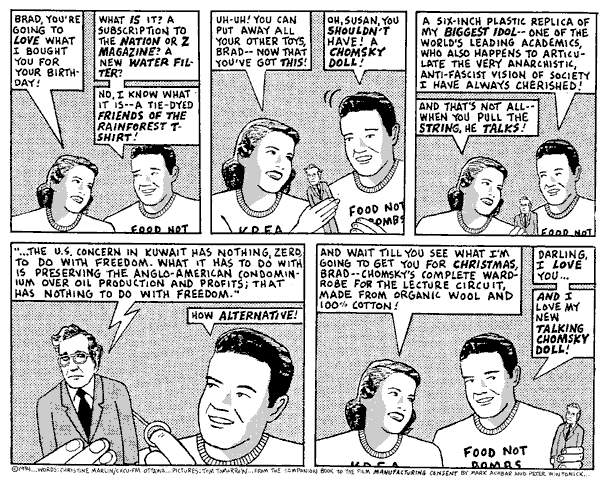
Cartoon from circa 1991, the first attack on IraqI thought he had vanished form the scene, and had long since packed away his other works too. But Noam Chomsky is still alive and hard at work. His recently published Hopes and Prospects is, like his other works, a collection of essays that are continually updated.
I first ran across Chomsky in 1988 – I’ve run across many, many authors, but this guy has the ability to reach across the divide. I was then a right-winger, but one in turmoil, as things didn’t seem right to me. He said things that others don’t say, and they resonated. I suspect that power is a good part of the reason for keeping him out of view in American media.
And probably for that reason too, he is reviled in proper circles, as the Georgetown cocktail circuit, but especially in the economics profession. The reason why is easily seen in the words that follow, from pages 75-76 of this most recent work.
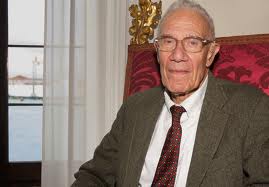
Whether neoliberalism is the enemy of development is debatable, for a simple reason: the economy – particularly the international economy – is so poorly understood and involves so many variables that even when close correlations are found, one cannot be confident about whether there are causal relations, or if so, in which direction. Robert SolowThe founder of the modern theory of economic growth, Nobel laureate Robert Solow, commented that despite the enormous accumulation of data since his pioneering work half a century ago, “the direction of causality” is unknown. It is not clear, he concludes, whether capital investments causes productivity, or productivity leads to capital investment; whether openness to trade improves economic growth, or growth leads to trade; and the same problems arise in other dimensions. One prominent economic historian, Paul Bairoch, argues that protectionism, paradoxically, has commonly increased trade. Ha-Joon ChangThe reason, he suggests, is that protectionism tends to stimulate growth, and growth leads to trade; while imposed liberalization, since the eighteenth century, has fairly consistently had harmful economic effects. The historical record provides substantial evidence that “historically, trade liberalization has been the outcome rather than the cause of economic development” (Ha-Joon Chang), apart from the “development” of narrow sectors of great wealth and privilege who benefit from resource extraction.
From an extensive review, Bairock concludes that “It is difficult to find another case where the facts so contradict the dominant theory [as the theory] concerning the negative impact of protectionism.” The conclusion holds into the twentieth century, when other forms of market interference become more prominent …
The “dominant theory” is that of the rich and powerful, who have regularly advocated liberalization for others, and sometimes for themselves as well, once they have achieved a dominant position and hence are willing to face competition on a “level playing field” – that is, one sharply tilted in their favor. This stand is sometimes called “kicking away the ladder” by economic historians: first we violate the rules to climb to the top, then we kick away the ladder so that you cannot follow us, and we righteously proclaim: Let’s play fair, on a level playing field.”*[emphasis added]
Even as an amateur observer, I cannot help but notice that proponents of “free markets” don’t know anything. Things don’t work they way they say. Their results are always theoretical, and years away, but sure to work if only given a chance. But markets are like fire, which can keep us warm, or burn our house down – as seen in the most recent collapse.
There are “free markets” indeed, but they are not at all what proponents say they are. Sweatshop laborers are subject to the whims of markets, as are all common laborers not protected by unions. Generally speaking, the less powerful one is, the more exposed one is to market forces. And those forces are devastating, which is why most large and “successful” business enterprises have found ways to insulate themselves (protectionism, incorporation, tax shelters, monopoly/oligopoly, preferred tax status, protective regulations, access to the commons, and control of government itself).
Twenty years [after the Kennedy tax cuts], when tax rates were cut even more under Ronald Reagan, federal tax revenues again soared with the “rich” paying an increasingly greater share of the income tax burden. Since it was now a Republican initiating this policy, Democrats branded it “Reaganomics” and mocked it as half-baked, “trickle-down” economics.
The problem: It’s not true. Federal tax revenues did not “soar” after the Reagan tax cuts. They shrank, precipitously, and then headed up on the same incline as before. Federal tax revenues after the Bush tax cuts exhibited the same behavior. But this is standard right-wing talking-the-talk: merely to assert that which is false to be true, without evidence. Rosen has access to the public via a large-city newspaper, and never has to document a goddammed word of what he says.
And that is true of right wing economics in general – as Chomsky notes, where relationships exist, it is hard to define causality, and where causality seems to be indicated, it is in the exact opposite direction as wealth-financed economists say. So those countries that avoid neoliberalism (or colonialism, as it was once called) tend to develop (the United States, Japan, China, the Asian rim), and those who stick to the resource/cheap-labor export model (Latin America, Africa, India) experience massive poverty and violence, and never quite seem to develop.
And this is what initially attracted me to Chomsky – in 1988, I was in limbo, trying to understand events in Nicaragua and El Salvador, among other things going on then, and along he came laying out a completely different framework than official truth laid out for us. And his version of events had explanatory power that the others lacked.
_____________
[Chomsky foonote]: *Solow, “Interview,” Challenge, January-February 2000. Bairoch, Economics and World History (Chicago: University of Chicago Press, 1993). Chang, Kicking Away the Ladder. See also, Shahid Alam, Poverty from the Wealth of Nations (New York: St. Martin’s Press, 2000). An enduring classic is Frederick Clairmonte, Economic Liberalization and Underdeveloped (New York: Asia Publishing House, 1960).
David Stockman was Ronald Reagan’s budget director from 1981 to 1985.
He did not believe that Laffer’s solution would work. He said so to Reagan.
Reagan had promised to pressure Congress to pass a law lowering marginal tax rates. He also promised to increase military spending. He did both.
Stockman kept saying that the increased revenues would not be sufficient to overcome the increase in expenditures.
Reagan vetoed no big spending bills that Congress got to his desk for a signature. Spending kept rising.
Meanwhile, Volcker’s policy of dramatically reduced rate of growth in the monetary base produced back-to-back recessions: one under Carter in 1980, which lost the election for him, and one under Reagan in 1981-82, which cut revenues.
In 1983, the Federal Deficit went over $200 billion.
There was no way that Reagan would reduce spending sufficiently to bring the budget into balance.
Your narrative is highly reductive, self-serving and self-fulfilling, and your use of the word “socialism” is fluid – why not use the word “nfgyhnt” instead. It would be as meaningful.
Chomsky is constantly on Link TV, along with remnants of Zinn and all the other proper left wing tv (Democracy Now!).
I watch him when I can. I notice he’ll make statements like, “We’re all the same, everyone has the same DNA”, which is patently false, and I detect that Chomsky doesn’t believe it.
He used to get full page + space in the LA Times back in the 70’s. I suppose tastes change, plus demographics. If his ideas are so compelling, he’s had ample opportunity to spool up support. I suspect that with a lot of left wingism, interest flagged a bit after the demise of Soviet/Chinese communism.
You should read him – not because I think he is right so much as that he is different. No one else says the things he does. He’s interesting. And that is unusual. Maybe just grab one of those skinny little books where Barsamian interviews him – he’s far easier to digest that way. Then you can disagree with him in a substantial way and we can have some fun.
See, I don’t think that Chomsky is kept off the air solely due to his viewpoints – he did get on Nightline one time, and was surrounded by three or four others who used up all the oxygen.
He cannot survive in a rat-a-tat media that demands instant thoughtless exchange in three and five-minute segments. To experience him properly, you have to read him, or listen to a lecture. And that can be tedious.
I put up a Mike Douglas spot with Martin Luther King Jr. not too long ago, just to highlight how different things were, how the three men (one a singer, Tony Martin, who was far more insightful and thoughtful than any of today’s pundits) – even though King had men on either side of him who vehemently disagrred with him, the exchange was thoughtful – he would be asked a tough question, and could reflect for a few seconds before giving a thoughtful answer. You can say of King, as of Chomsky, that his ideas (he was talking about V Vietnam, and not civil rights) are abhorrent to you, but in an intelligent setting, they can be adequately exposed as such.
We don’t have an environment in which thoughtful people can expound on their ideas. It’s not just Chomsky – it’s anyone who takes a deep breath and reflects before commenting. That’s “dead air” and is not allowed.
I agree that our media is more fractured and “sound bit-ish” today. But, we’ve got more of it: talk radio and internet have given us more boots on the ground, as it were. Journalism was more liberal back in those days you like so much. Now conservatives have more of a voice.
How much Chomsky do I need to read before I’ve had enough? He’s brilliant, yes, but he’s largely a critic. His prescriptions for bettering the situation are a little thin.
See now, if you’ve read Chomsky, the word “liberal” takes on a whole new meaning. There are two groups who work from the inside, who we brand liberal and conservative, but are basically the same upper crust, or plutocracy, and no matter who happens to hold office, they basically carry on with the same agenda.
So the “liberals” of the older era invaded Vietnam, and the “liberal” press supported them and kept the same sec rats they keeping now. I beg you tell me the difference between then and now, with a “conservative” administration invading a foreign country under false pretenses, and being supported by a more “conservative” media.
It’s far more nuanced than that, and he doesn’t take sides in partisan politics, doesn’t tout conspiracies, doesn’t care about 9/11 – it’s just a different outlook.
I beg you tell me the difference between then and now, with a “conservative” administration invading a foreign country under false pretenses, and being supported by a more “conservative” media.
Part of this is the dynamic of the two party system: we get the coke-pepsi effect. Two ice cream vendors on a large boardwalk end up side by side in the middle selling the same products. It is not necessarily corporate shadow lords.
non seqitur in the extreme – was naturally follows does not necessarily follow? How can you ignore the overlords? That takes rigid ideological discipline.
Humans naturally look to agency causes, and only with difficulty look to principle rules.
We see a termite mound, we figure termites built it. We see a tool, we figure somebody made it. We see a house, we figure somebody built it. We see a war, we figure somebody started it. We see a financial collapse, we figure somebody caused it. We see nature and all its wonders, and we figure God made it.
The other view is the iteration of underlying principles. The physical world is built up from underlying physical rules acting on the constituent matter. Human affairs is similarly ordered by underlying physical laws.
Doesn’t work with the corporate ads. Thinking is not even optional anymore. Just watch and drool. Drooling is okay, thinking is not. Juan Williams is the new boundary if “left” is even something relevant in today’s pathetic state.


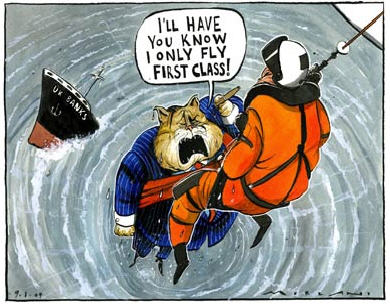 There are “free markets” indeed, but they are not at all what proponents say they are. Sweatshop laborers are subject to the whims of markets, as are all common laborers not protected by unions. Generally speaking, the less powerful one is, the more exposed one is to market forces. And those forces are devastating, which is why most large and “successful” business enterprises have found ways to insulate themselves (protectionism, incorporation, tax shelters, monopoly/oligopoly, preferred tax status, protective regulations, access to the commons, and control of government itself).
  Piece of Mindful
The problem is not with your observation, it is a problem with those the claim they support “free markets”.
If you penetrate their superficial dialogue, they really do not support “free” at all.
They support “freedom for me, but not for you” markets.
With no surprise, observant people -like you- will find ample contradictions in their position.
LikeLike
If we don’t believe in freedom …. for people we despise, we don’t believe in it at all.” -Noam Chomsky.
LikeLike
Mark
Because Reagan refused to cut government spending along with the tax cuts.
So, to fund the growing government expenditures – he borrowed from the capital markets.
With such an elephant in a china shop, the government dried up the capital in the market place – preventing businesses access.
Without capital, economic growth stagnated.
Without growth, there is no increase in revenue.
Without revenue, there is nothing new to add to the tax base.
With a lowering of taxes in a stagnant tax base, tax revenues must decline.
LikeLike
DAVID STOCKMAN’S SOLUTION
David Stockman was Ronald Reagan’s budget director from 1981 to 1985.
He did not believe that Laffer’s solution would work. He said so to Reagan.
Reagan had promised to pressure Congress to pass a law lowering marginal tax rates. He also promised to increase military spending. He did both.
Stockman kept saying that the increased revenues would not be sufficient to overcome the increase in expenditures.
Reagan vetoed no big spending bills that Congress got to his desk for a signature. Spending kept rising.
Meanwhile, Volcker’s policy of dramatically reduced rate of growth in the monetary base produced back-to-back recessions: one under Carter in 1980, which lost the election for him, and one under Reagan in 1981-82, which cut revenues.
In 1983, the Federal Deficit went over $200 billion.
There was no way that Reagan would reduce spending sufficiently to bring the budget into balance.
LikeLike
PS:
Stockman resigned from Reagan’s cabinet in moot protest over Reagan’s refusal to cut the budget along with cutting the taxes.
LikeLike
Great timing, what with the whole euro-socialist experiment collapsing into rubble. They are scrambling to get back to free markets. Wake up, Trotsky.
LikeLike
Your narrative is highly reductive, self-serving and self-fulfilling, and your use of the word “socialism” is fluid – why not use the word “nfgyhnt” instead. It would be as meaningful.
LikeLike
Chomsky is constantly on Link TV, along with remnants of Zinn and all the other proper left wing tv (Democracy Now!).
I watch him when I can. I notice he’ll make statements like, “We’re all the same, everyone has the same DNA”, which is patently false, and I detect that Chomsky doesn’t believe it.
He used to get full page + space in the LA Times back in the 70’s. I suppose tastes change, plus demographics. If his ideas are so compelling, he’s had ample opportunity to spool up support. I suspect that with a lot of left wingism, interest flagged a bit after the demise of Soviet/Chinese communism.
LikeLike
You should read him – not because I think he is right so much as that he is different. No one else says the things he does. He’s interesting. And that is unusual. Maybe just grab one of those skinny little books where Barsamian interviews him – he’s far easier to digest that way. Then you can disagree with him in a substantial way and we can have some fun.
See, I don’t think that Chomsky is kept off the air solely due to his viewpoints – he did get on Nightline one time, and was surrounded by three or four others who used up all the oxygen.
He cannot survive in a rat-a-tat media that demands instant thoughtless exchange in three and five-minute segments. To experience him properly, you have to read him, or listen to a lecture. And that can be tedious.
I put up a Mike Douglas spot with Martin Luther King Jr. not too long ago, just to highlight how different things were, how the three men (one a singer, Tony Martin, who was far more insightful and thoughtful than any of today’s pundits) – even though King had men on either side of him who vehemently disagrred with him, the exchange was thoughtful – he would be asked a tough question, and could reflect for a few seconds before giving a thoughtful answer. You can say of King, as of Chomsky, that his ideas (he was talking about V Vietnam, and not civil rights) are abhorrent to you, but in an intelligent setting, they can be adequately exposed as such.
We don’t have an environment in which thoughtful people can expound on their ideas. It’s not just Chomsky – it’s anyone who takes a deep breath and reflects before commenting. That’s “dead air” and is not allowed.
LikeLike
I agree that our media is more fractured and “sound bit-ish” today. But, we’ve got more of it: talk radio and internet have given us more boots on the ground, as it were. Journalism was more liberal back in those days you like so much. Now conservatives have more of a voice.
How much Chomsky do I need to read before I’ve had enough? He’s brilliant, yes, but he’s largely a critic. His prescriptions for bettering the situation are a little thin.
LikeLike
See now, if you’ve read Chomsky, the word “liberal” takes on a whole new meaning. There are two groups who work from the inside, who we brand liberal and conservative, but are basically the same upper crust, or plutocracy, and no matter who happens to hold office, they basically carry on with the same agenda.
So the “liberals” of the older era invaded Vietnam, and the “liberal” press supported them and kept the same sec rats they keeping now. I beg you tell me the difference between then and now, with a “conservative” administration invading a foreign country under false pretenses, and being supported by a more “conservative” media.
It’s far more nuanced than that, and he doesn’t take sides in partisan politics, doesn’t tout conspiracies, doesn’t care about 9/11 – it’s just a different outlook.
How much is a enough? Some.
LikeLike
I beg you tell me the difference between then and now, with a “conservative” administration invading a foreign country under false pretenses, and being supported by a more “conservative” media.
Part of this is the dynamic of the two party system: we get the coke-pepsi effect. Two ice cream vendors on a large boardwalk end up side by side in the middle selling the same products. It is not necessarily corporate shadow lords.
LikeLike
non seqitur in the extreme – was naturally follows does not necessarily follow? How can you ignore the overlords? That takes rigid ideological discipline.
LikeLike
How can you ignore the overlords?
I thought you were the atheist here.
Humans naturally look to agency causes, and only with difficulty look to principle rules.
We see a termite mound, we figure termites built it. We see a tool, we figure somebody made it. We see a house, we figure somebody built it. We see a war, we figure somebody started it. We see a financial collapse, we figure somebody caused it. We see nature and all its wonders, and we figure God made it.
The other view is the iteration of underlying principles. The physical world is built up from underlying physical rules acting on the constituent matter. Human affairs is similarly ordered by underlying physical laws.
LikeLike
Doesn’t work with the corporate ads. Thinking is not even optional anymore. Just watch and drool. Drooling is okay, thinking is not. Juan Williams is the new boundary if “left” is even something relevant in today’s pathetic state.
LikeLike