
 There is much to learn from American news coverage, but not in the news that is covered. Most of what passes by us in the cycle is waste product, or filler. They are trying to generate interest in order to attract readers and viewers and thereby sell advertising. Audiences are the product, content the bait.
“News” coverage merely focuses our attention on places that the power centers want our attention focused. What is not covered is always more interesting, but takes conscious effort to find. When certain stories are covered and attention is highly focused, there is usually an unstated reason.
Take two examples: Dead Muslims as they appeared in legions in Iraq, and in small numbers in Syria. The Iraqi dead elicited not much coverage, and few Americans have any idea of the extent of that massacre, 1991 forward. When there were attempts to get a sense of the numbers, as with Johns Hopkins on two occasions, those attempting to count the bodies were vilified and marginalized.
Syrian deaths, on the other hand, elicit wide coverage appearing in lead stories and on the front pages of some newspapers. We get exact numbers, and officials in Washington are crying in the morning cappuccinos about it.
There could be a number of reasons for this – maybe there just aren’t any other conflicts that warrant coverage. But there are similar events happening in Bahrain, Yemen, Egypt, Honduras, Colombia and Afghanistan, for instance, but these elicit no interest. So that cannot be the reason.
It could be that the deaths are happening in a place that has an oppressive government …. nah. Set that aside.
It could be that the murders are being committed by non-American actors. This has some weight – the American media does not cover American crimes. Only those of others … not any other, but of “others” who happen to be others our government does not like. If a Russian bomb blew up a wedding in Afghanistan, it would be all over the news here.
Only one problem with that – I am not convinced that there are no Americans behind the riots, deaths and bombings in Syria. Use of agents provocateur is right out of our playbook and a large part of the mission of the CIA and special op forces. But if there are Americans behind the Syrian uprising and brutality, Americans don’t know it, so that the idea that Syria is enjoying wide coverage in the American media because the American government wants to put an America-friendly regime in charge there holds water.
That is, in my view, why we get to know about the Syrian deaths and riots. The government is trying to raise awareness here to help us know that we should stand behind them for yet another regime change.
The new regime may be as brutal, maybe even more so than the current one. That’s not important.
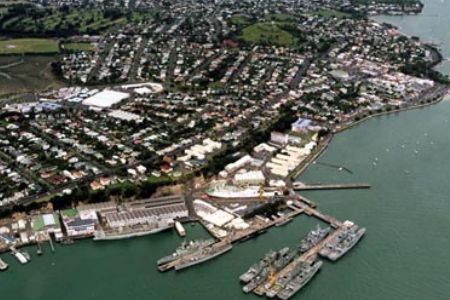
Why Syria? The picture of the naval base above is at Tartus, and is owned and operated by the Russians. They announced recently that they will be refurbishing that base, adding weaponry, perhaps even running aircraft carriers out of there.
Look no further. An American-friendly Syrian government will expel the Russians. This gives the American government a strong incentive to either start a Syrian uprising or play it to its advantage.
That’s why dead Syrians matter, dead Iraqis don’t.
 Piece of Mindful
CIA agents are buzzing around every foreign oil play in the world. Russians (banks, construction, KGB) have also invested heavily in oil pipeline networks that run through Syria that connect to Iran and the Caspian region. Naval bases protect long-term capital investments (banks) in natural resource extraction, infrastructure and export. Who says the Cold War is over?
Boiled down into proper Katie Couric vernacular: Saudis Royals good, Syrian dictator bad. American tv loves the garb. Bashar al-Assad should get with the dress code. Second thought, it didn’t work that well for Muammar Gaddafi. Scratch that one.
LikeLike
Thanks for the bigger picture.
LikeLike
What I’m wondering is when the news will figure out that there are fewer deposits being discovered, more depletion in known deposits, and increasing global demand. Food production, transportation, storage and processing is almost totally oil based. Banks are still racing to create middle-class consumers in every corner of the world. Potable water supplies may collapse before oil does. The long view, like the bigger view just doesn’t seem to register — yet.
LikeLike