
It is not a matter of what is true that counts, but a matter of what is perceived to be true. (Henry Kissinger)
The simple fact is that we are almost all subject to the wisdom of others, and none of us are original thinkers. Following is not by itself a bad thing as long as judgment is present. But that has to do with thought, and not perceptions.
 What little most of us know of the big world out there comes to us via six sources – television, the Internet, newspapers, movies, radio and books. I list those in diminishing order – almost everyone watches TV, hardly anyone reads. TV wins the battle for minds. Anyone with political power understands that, so that TV would never be allowed to be a free medium. It has to be under state control, or it would be dangerous.
 Reading is the best way to go, even as I know that we can be misled and conned by authors too. But there is a difference between information delivered by visual media and printed word. Television uses pictures to tell stories. The words that accompany the images evaporate into air. Pictures go straight to our brain unfiltered. Books, on the other hand, must put ideas into interpretive symbols we call our alphabet.
 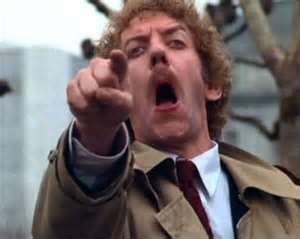 The images become ideas, and the ideas are then filtered and weighed. Of course our book stores are full of stupid books that merely satisfy vanity. That is what they call “current events,” “politics,” “history” and “biography.” At least authors of fiction don’t have to pretend.
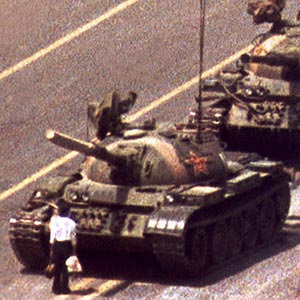
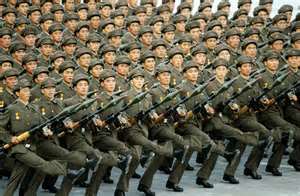
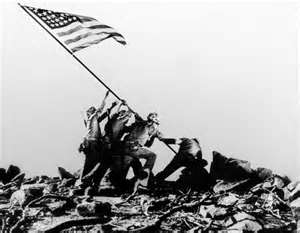
 So TV is our reality. What we see there is what we think about things. We know that China is an oppressive culture because of Tank Man, and that we are a free culture because of Iwo Jima. We know that North Koreans are regimented because we see pictures of soldiers in line.
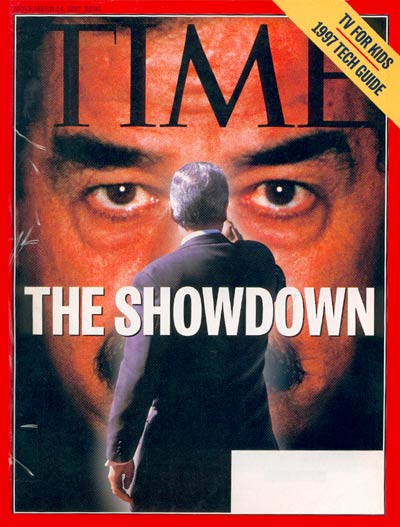
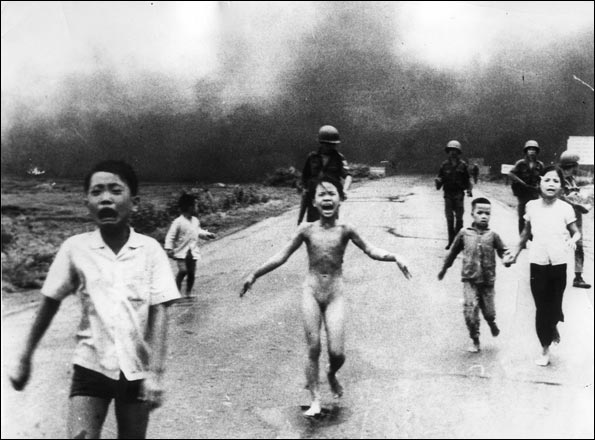
 Iranians are angry and irrational, according to the images shown to us in the agitprop movie “Argo.” We know something was wrong in Vietnam because of Napalm Girl (which slipped through the filters that were not so pervasive then as now), and that the Iraq War was not that bad because we never saw the coffins. We know that Saddam Hussein was evil because he had a mustache and looked menacing.
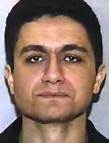
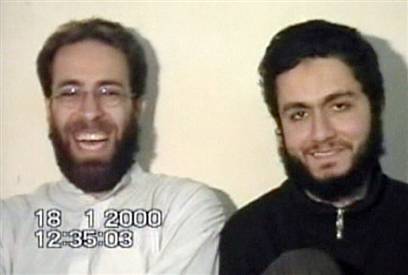
  Osama bin Laden became our nightmare, as did Mohammad Atta. We “saw” planes go through buildings. When the president speaks, the camera is always angled up. We don’t think those things. Those images become our thoughts by osmosis.
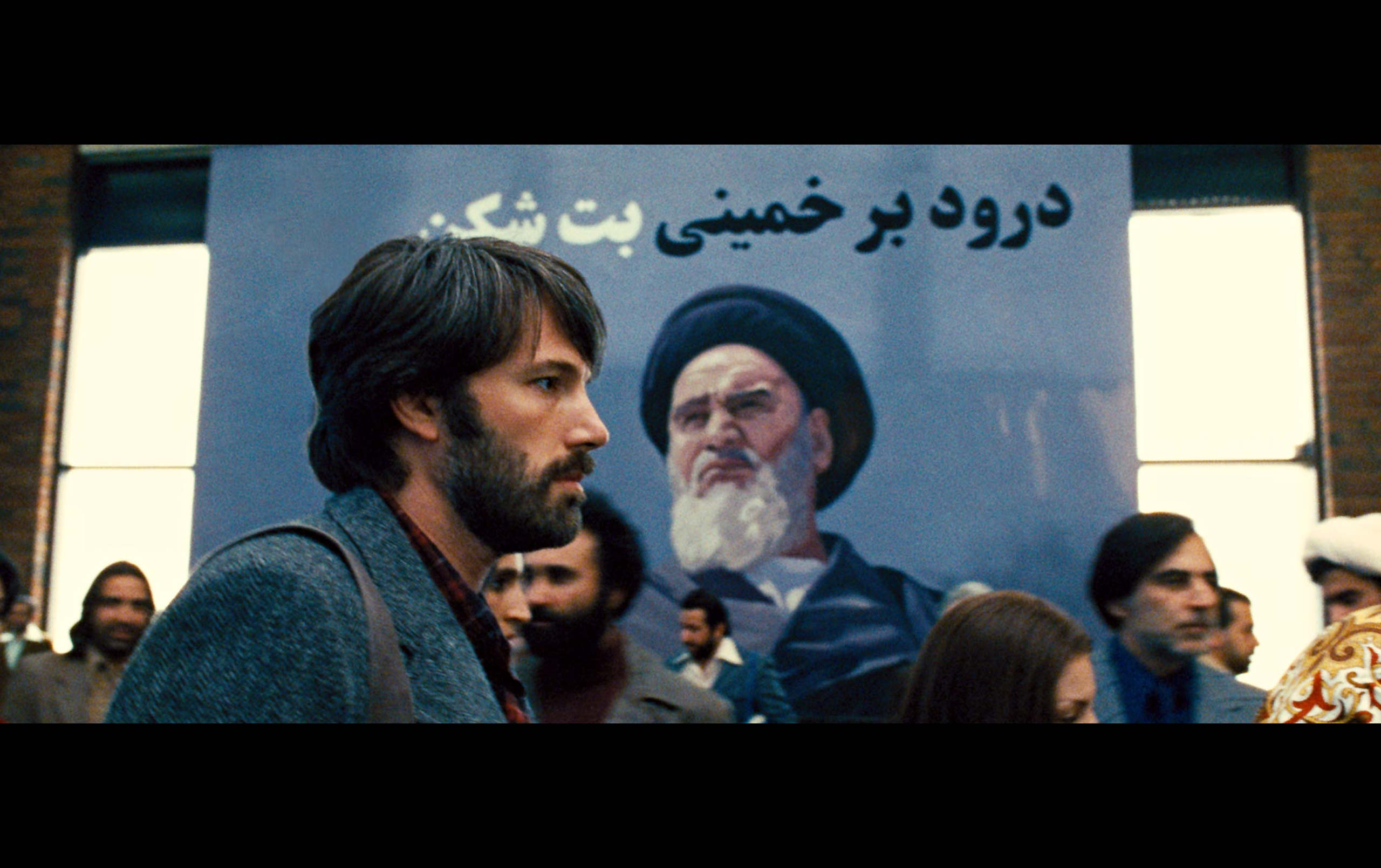
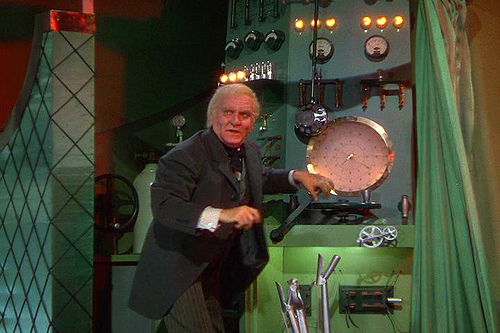 But these words cannot defeat those images. Television owns our reality. It is our truth.
It is easy to defeat a thought control regime: Be aware of it. Once we are aware, it goes “Poof!” It only has power over us because we don’t know that it is there. Another movie, the Wizard of Oz, carries this same message. Know it is there, and it loses its power, and even goes away.
 Piece of Mindful
Certain images never go away, they are recorded in the unconscious portion of our psyche. Symbols — these special images that we carry around with us, whether we know it or not, whether we like it or not — are known inside and out to propagandists, and relatively unknown to most of us. We are as incurious about our psyche as we are about events, natural and man-made, that shape the function and future of our society. Poets and artists know the power of symbols, and are feared by governments as a result. Unlike journalists, who are paid by media producers, and edited and censored routinely, artists and poets are free to express unconscious thoughts for those who care to embibe.
LikeLike
Would it be a reach here to mention Jung and his archetypes?
LikeLike
No reach at all. The collective unconscious Jung describes reveals itself in symbols. Few have dared to dive headlong into mythology, religion, and philosophy across cultural barriers quite like Jung. He read intellectual works and lived among people of different cultures looking for common threads. Practitioners of his work will exploit the hell out of the masses and Earth until his findings become common knowledge. We know more about the rules of football, our beloved cars and Hollywood stars than we know about our own bodies — brain included.
As long as we remain mysteries to ourselves, we are pawns living at great risk.
LikeLike
You might enjoy Acharya S, as she calls herself, a woman who has spend her career researching religions across cultures and finding commonalities in all going back to early humans trying to figure it all out, using the sun and the stars, naturally, as Gods. It is still going on though we have given them all human forms and names. She confuses me, as she doesn’t seem that organized at times and relies heavily on a few others of her ilk, but is interesting nonetheless.
LikeLike
There has been some work done as well on how the belief in conspiracy theories (excuse the term) is rooted in a psychological need to bring order and meaning to an otherwise chaotic and random world.
Is there anything to indicate that the man named Mohammed Atta who (may) have attended training at Maxwell AFB was anything other than just another guy with the same name? Which is the situation with the other individuals who popped up after 9/11 with the same names as the alleged hijackers by the way.
LikeLike
I removed Max Bucks from spam, so it should not trouble you again. He’s not been around.
Regarding Atta, we just don’t know, but in the spook business, names are often just designated patsies, one spook managing the name and several people using it. “Lee Oswald” was all over Dallas before the assassination (his operator was George de Mohrenschildt), and the “Osama” tapes given us after December of 2001 are doppelgangers. It really is a puzzle palace.
It is a chaotic and random world, but don’t excuse yourself from the duty to think because you assume everything is random. That is, as my son would say, a cop-out. Power does not know the future, but power works its magic. Rumsfeld directly threatened Syria in 2003 in a “you’re next” fashion, but before Iraq became a quagmire, which I think they did not anticipate, (I think. Iraq was cleansed of resistance in the ensuing years, which is why all of the deaths not reported. Maybe that was the intention from the beginning.) Syria was one of seven countries mentioned by Wesley Clark as ones that would be brought down in the wake of 9/11.
LikeLike
Whoops, i went and used M A X in a post again my bad.
LikeLike