
“Something stinks in Boston,” I was told. That’s a really interesting statement, as it is sensual but avoids mention of what the eyes have seen.
I went back to a Marshall McLuhan’s Understanding Media (a critical edition edited by Terrence Gordon) the other morning to try to get better grasp of what is unfolding here before us. I realize that not too many readers are familiar with McLuhan (1911-1980), so just briefly, he was a darling of the intelligentsia in the 1960’s and 70’s*, but even beyond that was an insightful man whose contributions to understanding the interplay between media and consciousness were groundbreaking. His famous expression was that “the media is the message.” The same depiction of reality given to us in print, on radio, in animation, in a movie or on television each carry a different meaning. Movies, for instance, are a subtle and friendly medium requiring little investment by the viewer, as the pictures are clear and precise, wide and focused.** Television, during his time anyway, was two-dimensions and very fuzzy (even though we didn’t realize it) and required a huge investment by the viewer to participate.
Some media offered low information and required high participation by the viewer – speeches, cartoons, television, for instance. Others required low participation – radio and movies. Each media affected us in a different manner.
Examples:
- Radio: Each listener is in a personal dialogue with the radio voice, reacting, often viscerally, to the words. It’s an ideal medium for agitation propaganda, which is why the Reagan people immediately removed the Fairness Doctrine on taking office. They opened the door for Rush Limbaugh and all that followed. The angry right wing had its birth in that decision. It was not an accident. The power of radio was well understood even by the 1930’s.
- Cartoons: The characters in South Park are mere circles on paper, but each one has a distinct personality. The South Park viewer has to invest his own senses heavily in the show to produce this result. McLuhan called the cartoon personas “do-it-yourself” characters. When watching that show, reader, in some fashion you are viewing yourself. I hope you’re not Cartman.
- Print: The important transition was from images, such as a drawing, to use of meaningless symbols, as the letters in the word “tree,” to represent reality. It’s a startling step forward in human development, creating the ability to store and disseminate information in symbols. As with cartoons, ultimately the reader has to invest heavily in the images to understand the ideas in transmission. We who read like to consider ourselves literate, but we all read all the time. Subversive ideas can be smuggled in through books as easily as in movies, so that a series of novels by Tom Clancy is an ideal medium for achieving the same end as blunt propaganda contained in high school history books. Supposedly we are more critical as we read. But not really.
The medium is the message. Patriotic ideas spewed by a radio host enflame our emotions. The same message given to us by a dying solider on a movie screen, a heroic character in a Clancy book, or a dry rendition in a history text, all carry with them a different experience of the same event.

But what is it that makes me part of that “fringe”? It’s simple. I don’t watch television news, so I am not invested in that reality. A certain commenter who harangued below another post, and who obviously places high value on his ability to interpret sensory input, said the following:
“Everyone who denies your evidence is in mainstream media, self deluded denial.
His use of language is densely packed, so that it’s hard to draw out meaning, but here it is clear. “Evidence is in mainstream media.” Set everything else aside. He saw it on TV. It’s reality.
McLuhan (remember his era):
Perhaps it was the Kennedy funeral that most strongly impressed the audience with the power of TV to invest an occasion with the character of corporate participation. … It revealed the unrivaled power of TV to achieve involvement of the audience in a complex process. … By comparison, press, movie and even radio are mere packaging devices for consumers. [His emphasis]
During the 1950’s our opinion managers had already begun to understand the power of television, via the Kefauver Hearings on organized crime in 1951. Frank Costello agreed to appear but asked that his face not appear on TV to protect his identity. So the TV screen showed only his hands. But mere hands carried the message! The televised hearing as a propaganda device was born. Later, during the McCarthy hearings, the idea of cells and foreign agents in government was implanted in mass consciousness. Even as McCarthy was ridiculed, his message hit the mark. Anti-communism became our national cause.
Later we would be subjected to the long drawn out hearings about Watergate, incessant drum beating, so that Nixon’s resignation for no crime at all produced relief. Information that came out of those hearing had no meaning or importance. The real message was incessant drum beating. We were literally bludgeoned into a forced resignation of a man who had done nothing unusual while in office.
But TV as a propaganda tool had yet to reach its highest and best use.

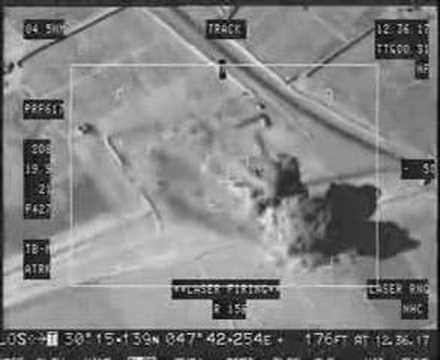
By the time of the 1991 Iraq attack, war had been repackaged as a television show with strict controls on what we saw. All images were sanitized, and the now-common video game aspect came into use with the pilot’s voice, the bomb, and “boom!” on the ground. There was, however, no bloodshed or suffering. We were merely destroying buildings. Word of massive casualties eventually got through via other media, but never registered in the mainstream.
The second attack on Iraq produced the “embedded” reporter, allowing the re-introduction of the illusion of journalism to accompany the usual images. War was now a TV show, complete with a script and actors.
__________________
It should come as no surprise then that they have taken the next logical step – not to just contain the power of TV news, but to get proactive about it, actually creating the events. We are spectators, but also heavily invested in TV images. They are reality. So with 9/11, the medium under control of government, we were given manufactured images of a jet aircraft doing something impossible – flying into a building and being totally absorbed without resistance.
That’s utterly impossible, but don’t dare suggest to anyone that it’s not real! It was on TV.
And don’t tell anyone that Boston was not real. It was on TV.
That’s all that’s going on here at the blog these days – I am arguing with reality. It’s painfully obvious that Boston was staged, but the power of TV is such that it has complete power over our minds. People now tell me “something stinks” about Boston. But that’s the far edge of skepticism in our society – a reference to smell.
Images, after all, do not lie.
__________________
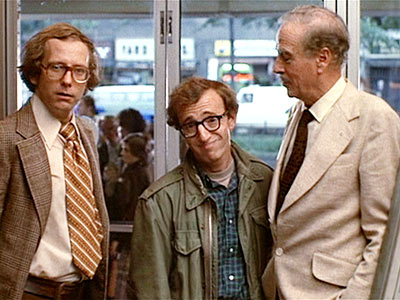
*McLuhan was featured in Woody Allen’s 1977 movie, Annie Hall. Allen’s character is in line at a movie as a blowhard in front of him wildly misinterprets McLuhan, who then steps out from behind a placard to set him straight.
**Does anyone share with me a sense of fatigue after sitting through a 3D movie? Too much of reality is presented, there’s too much to take in visually, so that I am not allowed to passively view.
 Piece of Mindful
How important is tv? It took 18 years to allow media outlets to show flag-draped caskets being unloaded back on U.S. soil. Nice coincidence that it was former CIA chief and former Pres. Bush I who initiated the blackout. I can see why doctored video of staged events is hard to most people to “see.” It’s a key element of the greater global CIA-media collaboration that also hides in plain sight. There is no better place to hide unfathomably big lies.
LikeLike
Here’s the link I forgot. What’s life without links? http://abcnews.go.com/US/story?id=7265545&page=1#.UajCZdiXQaM
LikeLike
That article is a blog post all by itself, littered as it is with distortion, converting a dead soldier into an icon. No wonder they have “reversed” the policy. It now serves a propaganda function.
LikeLike
6 female amputees from the Boston bombing were featured on NBC’s Rock Center tonight.
LikeLike
I do hope you see, after thousands of words exchanged, that no one disputes that they are amputees. It’s just when.
LikeLike
Those 6 women must have friends and family, jobs, local pharmacists, dentists, and such. How do they keep all those people from pointing out that they were already amputees long before Boston?
I’m sure there has to be a way to do that if in fact they were all amputees prior to Boston. I mean, you don’t want the local doctor standing up on Oprah and saying, “i knew Jane all of her life and she was a single amputee since 2003!” for example.
Maybe they are all simulacra. That is, maybe they never existed at all before Boston? So that would mean all their so-called current families and friends are simulacra also.
That way there isn’t anybody from the near or far past to show up and ask questions. Maybe they are all holographs or androids?
I can’t see any other way to do it if one presumes that they didn’t get their injuries at the marathon. Why stop at fake injuries? Why not just build fake people who then experience fake injuries. That could explain the similarities to other pre-existing amputees. They just used them as models, as short cuts.
Speaking of simulacra, have you read much Philip K Dick? He’s one of my favorite authors.
LikeLike
I have a Dick book here and need to get back into it.
I have thought a lot about your questions, which are perfectly reasonable and skeptical. I am satisfied that all of the amputees – maybe ten – who appear in public were chosen from other parts of the country, paid well, given fake names and families. Everyone assumes that even though they don’t know them, they are part of some community somewhere else. They were pasted into photos of fake families that could very well be agency employees – the photo work is mostly atrocious and not even slightly convincing unless you are pre-schooled in what you expect to see, in which case you are not suspicious.
For instance, here is a “pre-Marathon” portion of a photo of Adrianne Haslet-Davis, where she is supposedly part of a dance group. Look at the sloppy work attaching a new leg to her,
perhaps just her other leg reversed and attached in Photoshop:(The flesh tone is darker, shape different. It is someone else’s leg.)In the larger photo its apparent that her face and body have been superimposed.
No one who stands up to ‘out’ them in public would ever be allowed in mainstream media, as “conspiracy theory” discipline forbids that, and anyway, there are so many moles in media now that the stories don’t make the cut. For instance, NY Times reporter Mark Mazetti is apparently on the CIA payroll.
But a small group of relatives and friends will know and rumors will spread. But it is not necessary to fool everybody. Just fooling most of us works quite well.
LikeLike
I think they are real amputees. In the US, there are 500 lower limb amputations per day. The vast majority are for childhood cancers and diabetic complications. Some sadly are repeats due to diabetes, either higher up the leg or for the opposite leg. The vascular system has been compromised by the ravages of the disease (Mary Tyler Moore, a long-term type 1 sufferer was facing amputation and blindness because of her long term illness; her son, who was also diagnosed with the disease, did not want the same hassles, so he committed suicide), which is also very expensive medically. The prostheses are also required for those injured in car wrecks and motorcycle accidents (I remember sitting in a waiting room and talking with a woman who was waiting to hear if the surgeons could save her motorcycle riding husband’s hand – his companion had been killed). These huge traumas involve amputations and the prosthetics technology isn’t as good as people need it to be. On the Diane Rehm show recently was a woman who said she needed to travel with several different ones for different activities. She said a good one would cost her $100,000.
Let us suppose the true identities of these amputees place them in military families or in other contexts where their identity is not generally known. Let us assume some of their operations are recent – but not caused by the bombings.
The Boston One fund is a kind of Robin Hood thing – it’s deceptive, but apparently intended to pay for the huge amounts of money required to put these people right. They may not be eligible for Defense Department veterans funds to the amounts that they require.
The pasting on of the Chechen thing is another story, but here’s one thing I know: appropriations in government often have irrelevant riders – pork as they call it – and maybe this is one example. I can see demonizing Chechens by Dems to get out of supporting rebels in Syria (something Republicans want to do).
Therefore, this affair is like legislation – it contains cryptic stuff, “hidden Mickeys”, which people sign onto without realized the full implication. Happens all the time.
The problem is, this secret needs to be told, no matter where it takes us. Otherwise, we are ruled by a government like the old Soviet Union. And we don’t want that, do we?
LikeLike
An angle I had not considered, one of many no doubt. The actors are being paid with access to prosthetics. That’s creepy, but health care in our country is cordoned off by the insurance companies who restrict access and limit payments. So it makes sense that we have thousands of amputees in need of prosthetics.
Nice addition, and thanks. We have been spinning circles here.
LikeLike
Why not just build fake people? Been there, done that. “Re-borns” are causing havoc at airport security checkpoints — you can’t just run them through the luggage machine, now can you, and they look real. Check it out. http://www.youtube.com/watch?v=klmhNSu2ZbY
LikeLike
Why am I not surprised?
LikeLike