

I am very excited to welcome our old friend Kevin Starr back to the blog. My taste in music is pedestrian, right Karen and Richard? Keven is a student of rock and roll. He’s got more, much more to offer. Have fun!
___________________________________________
___________________________________________
Welcome to Starr Tracks! I’m Kevin Starr, your fearless (and totally amateur) guide on a mission to rank the top-selling music year by year, starting in 1971 and going… well, until I run out of steam.
“Who is Kevin Starr?” you ask. Well, I’m not a musician, nor a professional critic. I’m 62 and have spent decades listening to music and forming highly debatable opinions.
Thanks to modern technology, we now have access to the kind of epic record collection we could only dream about back in the day. In the ’70s, before the internet was even a twinkle in anyone’s eye, listening to music required buying a big, unwieldy contraption called an LP (short for long player). These discs spun at a mesmerizing 33 1/3 RPM and played sound using a tiny needle, or “stylus”—which was basically like playing music with a sewing machine, if you think about it.
For this project, I listened to over 60 albums, which is something that would have been totally out of reach on my humble paperboy salary. Back then, I could barely afford a record or two, let alone binge an entire year’s worth of rock history. But now, with all this music at my fingertips, I figured it was time to revisit these classic LPs, dust off the cobwebs (and questionable fashion choices), and finally give them the proper evaluation they deserve—or at least categorize them according to their appropriate hazmat warning label.
I chose 1971 as the starting point for this musical journey because it marked a turning point in popular music. Before this time, bands often leaned heavily on blues influences, covering each other’s songs and relying on session musicians with recording quality that left something to be desired. FM radio, developed in the 1930s, didn’t reach its full potential until the early ’70s, making way for the era of the singer-songwriter and vastly improved sound quality. Music didn’t just expand in those years—it thrived. I was nine in 1971, and I still remember the aura of these songs as they filled the air. While the British invasion of the ’60s was revolutionary, the true origin of modern popular music happened here… in 1971.
Of course, opinions are like armpits—everyone’s got them, and they all smell a little different. Music is wildly subjective, and I’ll admit that if I were to rank these albums again next week, the order would probably change. That said, I did listen (or at least made a heroic attempt) to every song on every album, so I feel pretty good about the general placement here. My rankings are mostly based on how much I enjoyed each album, but I also considered musicianship, creativity, and cultural impact.
But enough rambling. A big thanks to Mark for letting me use his platform for this list—definitely a lighter project than the usual fare, but hopefully a fun detour!

#65) LOVE STORY – Andy Williams—Listening to “Love Story” feels like being serenaded by your great-uncle after he’s had one too many glasses of sherry at a family reunion—sincere, but maybe a little out of touch with what was happening in music in 1971.

#64) SHE’S A LADY – Tom Jones—This feels like it was engineered specifically for middle-aged women in the early ‘70s who needed something to play while dusting off their vinyl collection of Sinatra and Engelbert Humperdinck.
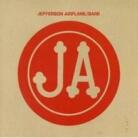
#63) BARK – Jefferson Airplane
This album is like a relic of a bygone era—a psychedelic postcard from a band that lost the map to the counterculture party.
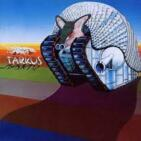
#62) TARKUS – Emerson, Lake & Palmer—Less of an album and more of a 20-minute musical fever dream about an armadillo-tank hybrid. It’s almost as if the band wanted to see how many time signatures they could squeeze into one song before someone got dizzy. By the end of it, you’re left wondering if the album was actually a bet to see if they could stretch one riff into an entire side of a record.
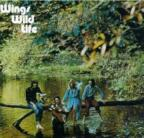
#61) WILD LIFE – Paul McCartney—It’s like you’ve walked into a jam session at Paul’s country house, where everyone’s too relaxed to bother with silly things like song structure or rehearsals. It’s charming in its own scrappy, ramshackle way, but it’s hard to ignore that it sounds like a rough draft of an album rather than a finished product.
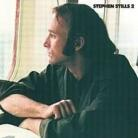
#60) STEPHEN STILLS 2—This album is a reminder that even a talented artist can occasionally get lost in the weeds of their own creativity. It’s a bit disjointed, a bit overcooked, and at times feels like listening to someone’s overly ambitious home demo tape.
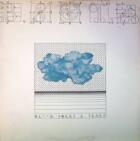
#59) B,S & T 4 – Blood, Sweat & Tears—Tracks like “Go Down Gamblin’” and “John the Baptist (Holy John)” try to recreate the soulful vibe of their earlier hits, but end up sounding like they’re playing a greatest hits set at a county fair, with a horn section that decided it’s their time to shine, whether you like it or not. In the end, B, S & T 4 feels like a well-meaning, overly enthusiastic jam session that got out of hand.
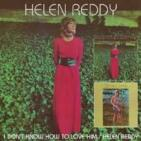
#58) I DON’T KNOW HOW TO LOVE HIM – Helen Reddy—A mix of covers and original songs that sound like they were chosen by a committee whose main goal was to offend absolutely no one. It’s pleasant, it’s safe, and it’s perfect for anyone who thinks James Taylor is just a little too intense.
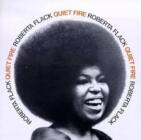
#57) QUIET FIRE – Roberta Flack—Listening to “Quiet Fire” is like being wrapped in a warm, velvety blanket while someone whispers sweet nothings in your ear—maybe we needed a little more fire and a little less quiet. If this album were any quieter, it would be a meditation soundtrack.
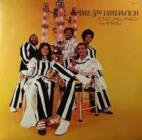
#56) LOVE’S LINES, ANGLES AND RHYMES – The 5th Dimension—Listening to “Love’s Lines, Angles and Rhymes” is like being stuck in an elevator that’s permanently set to “Easy Listening FM.” It’s all slick harmonies and lush production, but sometimes you can’t help feeling like the band is trying just a little too hard to convince you that these songs are profound.

#55) LEON RUSSEL AND THE SHELTER PEOPLE—In the end, “Leon Russell and the Shelter People” feels like a musical road trip where you keep taking wrong turns but end up finding a dive bar that’s kind of amazing—if you don’t mind the sticky floor and questionable characters. It’s a fun, ramshackle listen, but you might need a map and a strong drink to make it through the whole album.
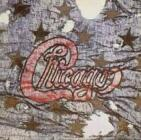
#54) CHICAGO III—This feels like the soundtrack for a very intense parade that never ends. The band seems determined to throw every instrument they have into the mix, whether the song calls for it or not. It’s fun, it’s bombastic, and it’s got more horns than a herd of stampeding cattle—but maybe that’s exactly why it’s not higher on the list!
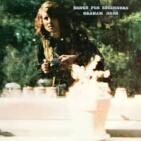
#53) SONGS FOR BEGINNERS – Graham Nash—A heartfelt collection of tunes that maybe needed a bit more edge, but it’s also a gentle reminder that sometimes simplicity can come off as a little too… well, simple. It’s a pleasant listen, but it’s probably not going to spark a revolution—unless that revolution involves everyone getting together for a peaceful sing-along with some herbal tea.
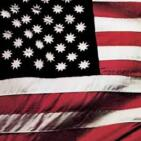
#52) THERE’S A RIOT GOIN’ ON – Sly and the Family Stone—It’s as if Sly decided to throw a party, but forgot to tell everyone that the theme was “funky despair.” This record is the sound of a band that used to be all about positivity and good vibes, only now they’re hungover, disillusioned, and someone just turned out the lights. It’s like Sly locked himself in the studio with a drum machine, turned everything down to a simmer, and said, “We’re not leaving until this album sounds as worn out as I feel.”
And let’s talk about that title: “There’s a Riot Goin’ On”. For an album with such a bold statement, it sure feels like the riot took a nap halfway through. It’s more of a slow-motion protest where everyone’s just lying on the ground, staring at the sky, wondering how things got so weird. It’s a masterpiece, sure, but it’s a masterpiece that feels like it might collapse under its own existential weight if you play it too loudly.

#51) FIREBALL – Deep Purple—This album sounds like it was recorded in a whirlwind of leather pants, wild hair, and questionable life choices, with the band trying to prove just how fast and loud they can play—whether the song calls for it or not. Ranking “Fireball” at #51 is a nod to the fact that while Deep Purple’s energy is undeniable, the album feels like it’s fueled by caffeine and chaos. It’s fun, it’s loud, and it’s more than a little over-the-top.
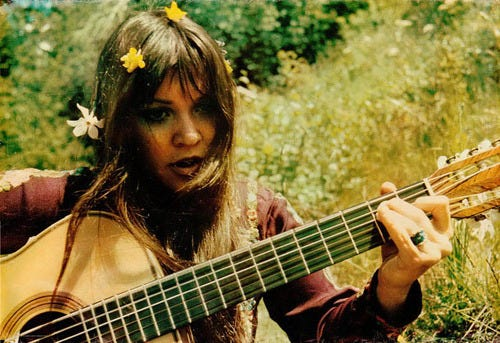
#50) GATHER ME – Melanie—I was nine years old in 1971, living in a house where music was more of an occasional visitor than a permanent resident. My parents had a record collection—though why they had one is still a mystery to me. I bring it up only because every now and then, one of Melanie’s records would somehow find its way to the turntable, possibly because my parents wanted to seem cool and “down with the kids.”
Now, Melanie was a hippie, but let’s be honest, she wasn’t exactly leading the revolution. More like she was hanging out near it, maybe offering emotional support with a tambourine. This album was her last big commercial hit, and some critics will tell you it’s her finest work. Between this and “Candles in the Rain” from 1970, you’ve probably got all the Melanie any one person would ever need.
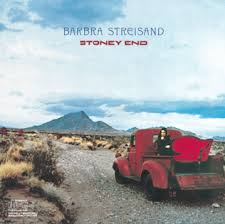
#49) STONEY END / BARBRA JOAN STREISAND – Barbra Streisand—I’ve never been a fan of Carole King’s singing voice, but her songwriting is undeniably top-notch. So when I started listening to these “pop” albums by Streisand, I couldn’t help but think how amazing it would’ve been if a singer of Streisand’s caliber had recorded Tapestry instead of King. However, it didn’t take long to realize that Streisand struggles to “dial it back” for this kind of music. No matter how impressive her voice is, she just lacks the pop sensibility to really make this material shine.

#48) POEMS, PRAYERS & PROMISES / AERIE – John Denver—“Take Me Home, Country Roads” and “Sunshine on My Shoulder” were always on the radio when I was a kid, and I still love those tracks. But a lot of Denver’s other songs can best be described as “tepid,” as one reviewer put it. His choice of cover material doesn’t help either—did we really need another version of James Taylor’s “Fire and Rain” in 1971? That same reviewer also said, “If James is a wimp, John is a simp, and that’s even worse.” I have to admit, that pretty much sums up my feelings on these two albums.
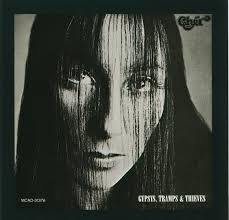
#47) GYPSYS, TRAMPS & THIEVES – Cher—The title track, “Gypsys, Tramps & Thieves,” is pure storytelling gold—like a three-minute, mini-musical set to a catchy, unforgettable melody. You can almost see Cher in her fringed outfit, gesturing dramatically as she sings about a life on the road filled with colorful characters and questionable morals. Tracks like “The Way of Love” have her belting out heartbreak with a theatrical flair that makes you want to grab a feather boa and sway along. The album is filled with just the right amount of kitsch, camp, and undeniable vocal talent, making it impossible not to appreciate.
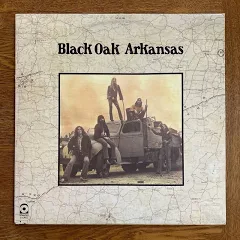
#46) BLACK OAK ARKANSAS—It’s the kind of record that grabs you by the collar, drags you through the backwoods, and leaves you covered in mud with a grin on your face. Sure, it’s rough around the edges, but that’s exactly the charm. Jim “Dandy” Mangrum’s vocals sound like he gargled gravel before stepping up to the mic, and you can practically hear the sweat flying off his sideburns. He doesn’t so much sing as he hollers and hoots, as if he’s trying to scare off the local wildlife.
It’s not sophisticated, it’s not pretty, but it’s got more heart and raw energy than half the polished albums that came out that year
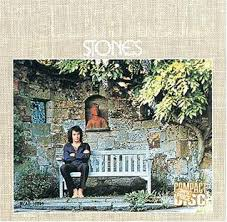
#45) STONES – Neil Diamond—One thing that always bugged me about 1960s music was how albums were stuffed with cover songs, like they were trying to hit a word count on an essay they forgot to write. I assume it was just to stretch out the run time, because why else would they keep borrowing someone else’s homework?
That said, when a cover is actually well-chosen and performed with a bit of flair, it’s pretty impressive. This album pulls that off, and naturally, it’s helped along by Diamond’s golden voice, which could probably make a grocery list sound like a classic hit.

#44) ALL DAY MUSIC – War—Overall, “All Day Music” feels like a jam session that got polished up just enough to put on an album. It’s an easy listen, with plenty of good vibes but maybe not enough urgency to make it higher on the list. Ranking it at #44 feels like a fair middle ground—you can appreciate the chill, laid-back energy, but it’s also the kind of album that might be best enjoyed when you’re not paying too close attention. It’s perfect background music for a long summer day, which, to be fair, might have been exactly what War was aiming for.
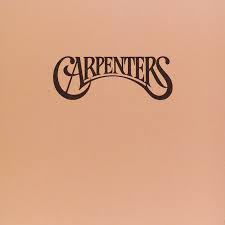
#43) THE CARPENTERS—Karen Carpenter’s voice is undeniably gorgeous, but it’s so smooth and pure that it’s like she’s serenading you with a lullaby while you’re desperately trying to stay awake. You almost want to shake the band and say, “Okay, but what if we turned the volume up past 5 just this once?” Tracks like “Rainy Days and Mondays” are beautifully melancholic, but they’re also delivered with such a gentle touch that it’s like being comforted by a really nice cardigan. It’s as if the whole album was recorded inside a perfectly vacuumed living room, with Karen singing while fluffing the throw pillows.

#42) MANNA – Bread
Much like “The Carpenters”, everything here is as soft and squishy as a loaf of Wonder Bread—light, fluffy, and not a single crunchy edge in sight.
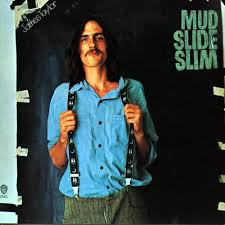
#41) MUD SLIDE SLIM – James Taylor—This album practically oozes relaxation. The opening track, “Love Has Brought Me Around,” feels like the musical equivalent of sipping a glass of iced tea on a slow summer day. You can almost hear James saying, “Take it easy, folks. We’re in no rush here.” By the time you get to “You’ve Got a Friend,” you’re so mellowed out, it’s like you’re ready to fall into a gentle, acoustic-induced trance.
Of course, it’s no secret that Taylor was wrestling with heroin use during this period, and you can kind of tell—some of these tracks are so slow and relaxed, you half expect him to nod off mid-song.
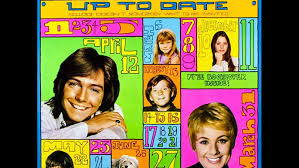
#40) UP TO DATE / SOUND MAGAZINE – The Partridge Family—There’s a slick, manufactured feel to these albums, but that’s part of the charm. It’s like they took the essence of early ’70s pop and distilled it into the most marketable product possible. And yet, you can’t help but give them credit—these songs are well-crafted earworms that stick with you whether you like it or not. The Partridge Family might have been a made-for-TV band, but they knew how to deliver a hook that could rival even the most serious pop acts of the day.
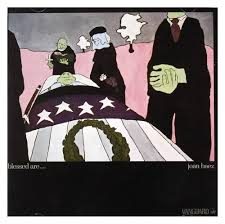
#39) BLESSED ARE – Joan Baez—This has some wonderful tracks—“The Night They Drove Old Dixie Down” is a standout—but it’s padded with enough filler that you start to suspect Joan just didn’t want to leave the studio. It’s like she looked at the clock, saw she had time left, and said, “Quick, let’s add a few more covers, just in case anyone wasn’t fully saturated with folk music yet.” You can almost picture her saying, “No, no, we need that 12th take of the Dylan cover—it’s essential.”
By the time you get to the end of the album, you’re either feeling blessed or completely overwhelmed, depending on your tolerance for Baez’s intense sincerity.

#38) E PLURIBUS FUNK / SURVIVAL – Grand Funk Railroad—Grand Funk’s brand of rock isn’t about subtlety; it’s about chest-thumping bravado and riffs you can feel in your bones. Listening to these albums is like being at a high school keg party in 1971 where everyone’s wearing bell-bottoms and flexing for no apparent reason. Tracks like “Footstompin’ Music” and “People, Let’s Stop the War” sound like they were written by guys who’ve spent a little too much time at the gym and not enough time on their lyrics. It’s loud, it’s proud, and it’s got more testosterone than a GNC vitamin aisle, but that’s exactly why it’s a guilty pleasure we can’t help but love.

#37) IF I COULD ONLY REMEMBER MY NAME – David Crosby—There’s a certain mystique to this album—it’s the sound of a man wandering through the remnants of the ‘60s, trying to piece together what’s left. Compared to the earnest simplicity of Nash’s Songs for Beginners and the self-indulgent soloing on Stills’ Stephen Stills 2, this album feels like a chaotic but inspired fever dream. It’s as if Crosby looked at his bandmates’ solo efforts and said, “I can out-weird both of you—watch this.” It’s better than the Nash and Stills records, if only because it feels like Crosby was having the most fun getting lost in his own strange, beautiful world.
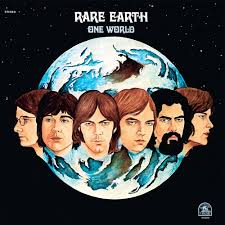
#36) ONE WORLD – Rare Earth—Rare Earth’s slick production and crowd-pleasing sound give off strong “focus group-approved” vibes, like they were put together in a Motown boardroom with a flowchart that said, “Step 1: Cover ‘Get Ready.’ Step 2: Add lots of congas. Step 3: Profit.” It’s hard not to appreciate their skill, but you also get the feeling that they were assembled with the same precision as a well-oiled marketing campaign.

#35) FUTURE GAMES – Fleetwood Mac—It’s funny to think that this album didn’t go gold until the late ’90s, long after Fleetwood Mac had become a household name. It’s as if the world collectively woke up one day and said, “Wait, there was another Fleetwood Mac album we forgot about? The album meanders a bit, with songs stretching out as if the band was content to jam until someone remembered they were recording. It’s less about big hooks and more about the vibe. Listening to Future Games is a bit like time-traveling back to a version of Fleetwood Mac where they’re still figuring out who they want to be.
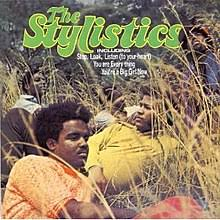
#34) THE STYLISTICS—The album features timeless hits like “You Are Everything” and “Stop, Look, Listen (To Your Heart),” where Russell Thompkins Jr.’s falsetto soars above the lush, string-heavy arrangements. It’s almost too smooth, like they dipped the entire album in honey before sending it out. You can practically feel the polyester suit and smell the cologne wafting off the record as it plays.
Every track on this album is a slow dance waiting to happen. It’s the kind of music that could make even the most stoic person reconsider lighting some candles and pouring a glass of wine. Sure, it’s sentimental, and sometimes it borders on being syrupy, but that’s part of the charm. It’s like they took the pure essence of romantic balladry and turned it into an art form.
UP NEXT: THE TOP “33” ALBUMS OF 1971.
 Piece of Mindful
What’s with the Apollo snap between #42 & #41?
LikeLike
A fun reminder of 1971? Or I’m promoting NASA as real…your choice.
LikeLike
This post is a very enjoyable walk down memory lane for me, and I look forward to seeing where Kevin goes with this series.
I’m a couple of years older than Kevin, and a lot of my contemporaries thought that one song by Melanie was more than enough. But as a shy and introverted boy who hated school, listening to her in the dark is one of the things the got me through adolescence, and I collected around of a dozen of her albums. I would cycle between Melanie, Joni Mitchell, Carole King, and Carley Simon depending on my mood. Of course, one could never admit this kind of habit to one’s friends, especially the heavy rock fans. They would have mocked me piteously.
LikeLike
Thank you! I’m happy to hear you enjoyed it. As for the series, I’ve realized it needs a broader scope—continuing with this current approach would take far too long to wrap up.
Back in the early ’70s, female artists made up only about 10% of top-selling music. It’s striking to think about, especially when you consider how much conversation there is today about white male privilege. Back then, it was truly in full effect.
LikeLike
Those are some good picks and i’ve listened to a few of those albums. We really don’t know how much of the material was written by the artist or hired studio guns. With all the musicians that promoted the vaccine it kinda put a damper on my enjoyment for some bands. I won’t even listen to a Rolling Stones or KISS song anymore. I wonder if they were told the vaccines were harmless and forced to make statements or just crappy people trying to keep their status. Dolly Parton was rewarded and became an overnight sensation once again with a new album and she’s over 70 years old. I’m sure her granma fanbase followed her orders and pulled up their sleeves right away.
LikeLiked by 1 person
I agree with your comment completely. Neil Young and Joni Mitchell’s vaxx stance was particularly repugnant.
I have realized that it would be better to do a top 50 or 100 albums of each decade, so back to the drawing board…what was I thinking? I’m gonna try to write about something else (more cynical) in the meantime. Thanks for the comment.
LikeLike
It’s not news to anyone that the lyrics to popular music are filled with “neurolingistic programming” of course, or certainly appear to be on any close reading.. for instance I happened to hear the “baby shark” song recently that’s popular among the pre-school set and started wondering at those lyrics. A “baby shark” might be cute, but what is one to make of repeating “daddy shark” and “mommy shark” over and over.. along with shark attacks annually in the news, and children maimed and missing limbs. Am I reading too much into it?
LikeLiked by 1 person
I remember singing joyfully, “I’m a loser baby, so why don’t you kill me?” over and over in the 90s?
LikeLike
I was about to post something about 90s music. That was probably the worst decade of music. So many songs about heroin and being miserable, like the highly overrated Nirvana.
Best albums on the list are Sly, John Denver, and Carpenters. And I also can’t listen to Kiss or the Stones anymore either, complete poseurs.
LikeLiked by 1 person
Agreed. Look at all the “alleged” tragedies: Cobain, Staley, Cornell, Weiland, plus the dudes from Sublime and Mother Love Bone. I can’t listen to any of that sludge anymore.
LikeLike
“I was about to post something about 90s music. That was probably the worst decade of music.”
You should define “music”, because you obviously know NOTHING about “rock”.
LikeLike
I agree with both of you guys…is that possible? After the nihilistic 80s, the 90s seemed refreshing. I recall thinking that “rock” was not dead after all. I also didn’t realize that “the system” wants me in a perpetual “left-right” paradigm.
LikeLike
I know nothing about “rock”. OK sure. Are you suggesting there was some good rock music in the 90s? Yes I agree, there was some good indie stuff I liked, for example My Bloody Valentine, Mercury Rev, early White Stripes. Anyhow as Mark said musical taste is subjective, and so called classical music is far superior to most crap from the 20th century. It’s on my to get back into listening to it as I get older.
LikeLike
Each and every decade of music has the exact same ratio of hit and miss…mostly miss. Just history repeating, as always.
LikeLike
The 1990s brought back a lot of memories. That was when I was in my twenties. I wanted to list the live music I saw that period, it was a great decade for that. I will list in chronological order.
Yes (Old Orchard Beach Maine, blew me away), Pink Floyd, Sonic Youth, Social Distortion, Neil Young, Jeff Beck (best guitarist I’ve seen big fan), Stevie Ray Vaugh (one month before he died, did a dueling guitar onstage with Jeff Beck), Ozzy, Motorhead, Primus (45 minutes, way too short), Allman Brothers, Meat Puppets, Sleater-Kinney, Slim Cessna’s Auto Club (highest recommendation, met the band, got autographs, amazing guys), and finally Man or Astroman? on December 31, 1999 in the Middle East downstairs in Cambridge. Was higher than a kite on Peruvian marching powder that night, we were waiting for Y2K to initiate the apocalypse. Didn’t happen of course, but I remember Man or Astroman set of fireworks right at midnight inside the basement, we ran out into the night and celebrated.
LikeLike
If you want to see what Man or Astroman? is like check out link below. I still have the tee shirt i bought from that night.
Man or Astro-man? – Live Full Concert (2011)
LikeLike
Kevin, I am so happy to have you helping out with the neurolingistic programming efforts here, quite unsuccessful. (TimR, no offense, you’re among my favorites.) Since all of the music you’ve written about here is from the vinyl era, I imagine you have a valuable collection. And you’ve listened in depth to them. That’s a really nice and fun avocation. [I just read your opening remarks, and see you don’t have a vinyl collection.]
For myself, music has just sort of gone by me over the years. Typical of my era I over-Beatled in high school and for the years after, letting some really good and talented musicians go by unnoticed. I’ve mentioned this before, but at my age people understand – at our gym is a man even older than me who worked for a music store in LA and traveled the western states selling both music and equipment. I mentioned we lived in Bozeman, and he knew the store there … like he knew everywhere out west. Anyway, he said as technology advanced, his store was able to lend equipment to guitarists to make their own demo tapes. I offered that he must have spent a lot of time listening to low quality stuff, and he said no, much of it was very good, done by kids who could not catch a break. A lot of talent out there among people who end up as carpenters and mechanics, or as the guy who cleaned our wood stove, a frustrated drummer.
LikeLiked by 1 person
Thank you, Mark. I think you know me well enough to understand that I’m fully aware the music we were sold often came from “club members” who, frankly, couldn’t play a note. Meanwhile, countless incredibly talented session musicians stayed behind the scenes, content to let the so-called stars revel in their excess.
It’s astonishing how much money was thrown away on subpar music, much like the examples I’ve highlighted here. Even the most prolific “artists” were frequently batting below the Mendoza line, if you know what I mean. Yet, the public continues to devour it.
I believe the music we have been fed is just another part of the overall psyop leading society down that proverbial primrose path of dumbed down degradation. How to present that belief in an entertaining and informative manner is a daunting task.
LikeLiked by 1 person
If you want to talk about Neuro-linguistic programming, I can personally vouch the power of it. I have memories on 1972, when I was 2, driving around in my moms Oldmoboat convertible listening to the radio with the top down. Particularly I can remember hearing After the Gold Rush (Neil Young), Summer Breeze (Peaches and Croft), Up Up and Away and Age of Acquarius by the 5th Dimension. And hundreds or thousands of songs from that period, which when I hear now I know note for note in my head.
LikeLike
FYI if you want to decode YCCMRay, look at my avatar. My college fraternity room was painted in 1971 using themes from Jefferson Airplane’s “Blow’s Against the Empire” (quite bad album to be honest) and “Wizard of Oz” by ROTC members who had joined to be officers to avoid the Vietnam draft. My room had Black lights (was called the black light room) and would glow with them on, which I had on nearly every night, of course. And Gin and Tonics, or Vodka and Tonics would light up (quinine fluoresces heavily under black light (300 nm), so whenever we had a party i would serve Gin and Tonics. Good times.
LikeLike
Music from past decades—especially from the 60s, 70s, and 80s—has achieved a sort of cultural immortality in many public spaces. Part of it might be nostalgia or the perceived “universal appeal” of those tracks, but there’s an almost eerie persistence to them.
LikeLike
“Kevin, I am so happy to have you helping out with the neurolingistic programming efforts here, quite unsuccessful. (TimR, no offense, you’re among my favorites.)”
Well, I can’t really take offense since I’m not clear what you’re saying here, heh.
LikeLike
it Might’ve sounded like I was mimicking Repeating your words.
LikeLike