
The twentieth century has been characterized by three developments of great political importance: the growth of democracy, the growth of corporate power, and the growth of corporate propaganda as a means of protecting corporate power against democracy. (Alex Carey, Taking the Risk out of Democracy: Propaganda in the U.S. and Australia, 1995) [This is the opening citation in Potter’s book.]
 One of the nagging questions about health care “reform” is “Why now?” Health care reform has been one our primary concerns for decades. The problems we face now were minor when Clinton proposed his plan in the early 1990’s. It was a festering problem in 2004 when John Kerry avoided it. Why now?
 We drove into Denver last night to hear Wendell Potter discuss the issues. Potter was a PR executive for CIGNA, but also a man with a conscience who, in the end, did the right thing, the costly thing. He walked away from CIGNA and turned against his former employers. He became an advocate for true reform.
He answered the question, though I did not like the answer. I paraphrase: Wall Street is making severe demands of health insurance companies. They have to deliver excellent returns to investors, or the investors flee. In 1993, when Clinton proposed his plan, the “medical loss ratio” (“MLR” – the amount that insurance companies pay out in actual medical expenses for clients) was around 95%. Most companies were not-for-profit.
Then the for-profits moved in.
Most of the not-for-profits are gone now, and the industry is driven by Wall Street. MLR now hovers around 80%. Insurers are looking for new and better ways to squeeze more profit out of this system. Their long-term plan is to force us all into crappy high-cost high-deductible policies, and sell junk insurance for the more destitute (these are plans that cover some in-system doctor bills, but not hospitalization). But they know that the fallout for this will be more pressure for true reform, even single payer (or at least a public option).
So they went to Obama and the Democrats for “reform.” That’s why it finally became a campaign issue. The lobby called “AHIP” (America’s Health Insurance Plans) wanted it.
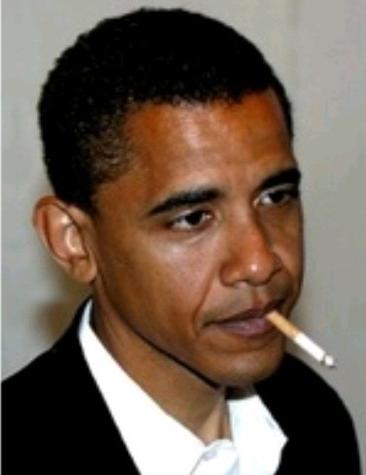
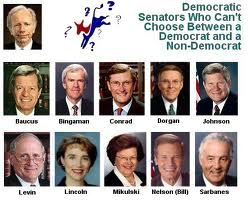
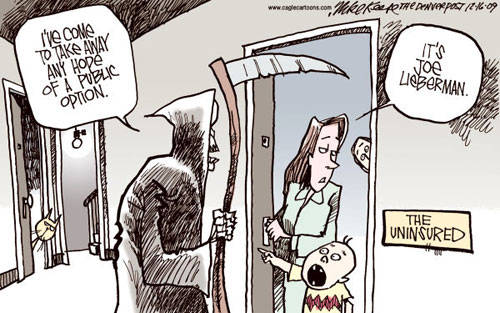 AHIP went into the game knowing exactly what they needed, and got it. One, they want a private mandate – the ability for force us to buy their products. Second, they wanted no government competition, no public option. In the reform charade, the Kabuki theater that Obama, Baucus, Lieberman, Nelson and the other Democrats put us through in 2009, it had already been decided that there would be no public option and a private mandate. The insurers bought Obama, and Obama delivered.
That’s why we finally got reform. Wall Street decided it was time.
____________________
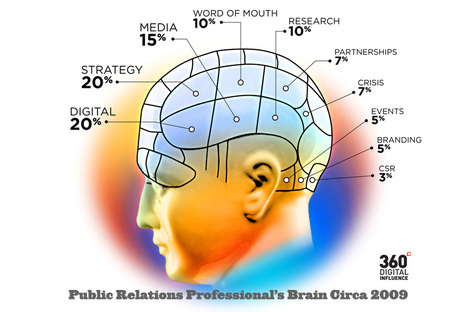 Potter is at heart a journalist who lost his way, finding his way back after decades of public relations. He watched the health care debate unfold, and understood the forces at work. Phrases like “death panels,” “government takeover,” and “job killing” are professionally crafted, the specialty of the PR industry. They are planted in the dialogue, and then spread like viruses. They are short and memorable, and pack emotional punch. That is usually all that is needed to win a debate in our shill-infested environment. (Isn’t it interesting that the Democrats can never manage to come up with a good hard-hitting name for the things they supposedly favor? S-CHIP anyone?)
Potter is on a book tour now, which is why he was in Denver. Most of his talk was Q&A, and there were very good questions.
Here’s his take on what is unfolding right now: While the health insurers got most of what they wanted out of Obama’s bill, there were some unpleasant features that they want eliminated. One, they want the 80% cap on medical losses eliminated. (As outrageous as that number is, it merely froze them in time – that’s where they were already at.) There’s also a provision in the law that mandates basic benefits that must be covered, basically outlawing junk insurance. They have bought the companies that sell the junk, and so want that provision gone.
There is also a provision in the bill (coupled with the private mandate) that prohibits insurers from denying coverage for “preexisting conditions” starting in 2014. Right now these poor schmucks are being sent to state exchanges that are adversely selected and prohibitively expensive. (Potter did not talk about this, but surely the “reform” that now exists is useless – about 8,000 people nationwide have taken advantage of the exchanges.)
“This legislation will set into motion several key reforms. First, it will eliminate the possibility that individuals can be denied coverage because they have a preexisting medical condition. Second, it will require insurance companies to sell coverage to small employer groups and to individuals who lose group coverage without regard to their health risk status. Finally, it will require insurers to renew the policies they sell to groups and individuals.”
Those words are from Bill Clinton’s signing statement for HIPAA, the portability act passed in 1996. The insurers merely countered by making portable insurance unaffordable. I do not believe that there is a real fix in Obamacare for preexisting conditions because there were no cost controls. Nonetheless, expect that the preexisting condition mandate scheduled to take force in 2014 will disappear. Already the PR industry is hard at work – they are saying that we who have preexisting conditions are actually people who wait to buy insurance until we get sick. That’s how they are selling the repeal. It invokes the notion of freeloading, and so has emotional punch.
Anyway, Potter’s message was that current bill that passed the House, the title of which actually contains the PR-written catchphrase “jobs-killing”, is a smokescreen. Of course it won’t pass, but the real negotiating is going on elsewhere. AHIP is under incredible pressure to produce more profit for the investors. Expect that the few actual reforms that were included in reform will disappear.
And Obama will not stop them. He’s no friend of Jack.
__________________
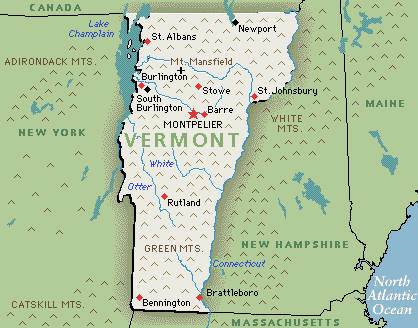
In the board game Monopoly, there comes a point late in the game when so much power has acceded to one player that he can easily overwhelm all the others. We are probably at that point in the health care game, when our best hope is that a tiny state might boot the for-profits. But it might be our green sprout, our lifeline, a sliver of light in our darkest hour before dawn.
Let’s hope so, as it is all we have right now.










 Piece of Mindful