
Vandalism as a worthy cause

The above 1821 painting is called The Hay Wain, by John Constable, a British artist. I have deliberately kept the reproduction above small to preserve some of the integrity, but of course computer screens do not begin to be faithful to originals, much less iPads or, God forbid, iPhones. I would love to be able to stand in front of it. It is kept at the National Gallery in London.

In July of 2022 this painting was vandalized, a triptych overlaid placing modern civilization atop, and the vandals gluing themselves to the painting. The vandalism was done by a group called Just Stop Oil, the subject of this post, but first more about the article I am citing from, a work by Fred Bauer. It is called Vandals of Civilization, and is in the March, 2025 edition of National Review. Unless you buy the magazine from a newsstand, or subscribe, you’ll not have access. I am a longtime subscriber to NR, since my youth with an extended interruption … I read it in my early 20s and forward, and now read it with a far more skeptical eye. So much of it is good, so much less so in my view, but the people there always adhering to the principles of its founder, William F. Buckley, Jr., a man I deeply admired.

Continue reading “Vandalism as a worthy cause”

On re-reading the Cultural Cold War

I first read The Cultural Cold War  in 2019. Written by Frances Stonor Saunders, it was highly recommended to his readers by Miles Mathis. I gave my copy away. It is one of those books that should be kept on hand for reference. Saunders is surprisingly (to me) young to have published such a book. She would have been 33 when it was first published in 1999. I am rereading the 2013 edition. (Saunders is currently 58.)
I am only 30 pages into the book. I ordered it while we were in Europe, as the only reading I did over there was of the beach variety, Brooklyn, by Colm Toibin, and The Woman in Cabin 10, by Ruth Ware. I started reading another book by Ware, The Lying Game, but opted not to finish it as I felt it was going to be very dark and depressing. After exposure to those three books, I longed for substance, not looking down my nose by any means, but rather preferring nonfiction over popular fiction.

Continue reading “On re-reading the Cultural Cold War”

An open letter to Mike Williams, Sage of Quay

Mike Williams is also known (musically, I think) as Sage of Quay, and runs a website by that name. He puts out videos, and since I have been traveling, suffering jet lag and that sort of thing, I’ve watched a few of them. They are quite long, and in my opinion, very good. I will link to some of them at the end, but not run them here.

Generally when someone does an “open letter”, get ready for a takedown. That is not my purpose. Mike does a few common themes which cause me to avoid him, such as the idea that Paul McCartney died in 1966 and was replaced by a person known as Billy Shears. He and I have been around the block on that, and I am not going to rehash, as it serves no purpose. The whole of the McCartney business was covered here in my post, Sir Faul. His side, my side, and a group that first performed on Ed Sullivan in 1962, 62 years ago!

Continue reading “An open letter to Mike Williams, Sage of Quay”

The world of modern art exposed

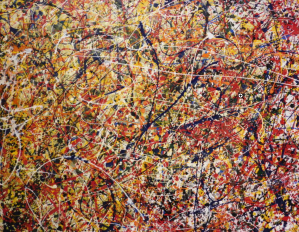
Miles Mathis recently came out with a piece, Andy Warhol, The Second Biggest Fraud in Art History. It was Mathis who suggested to his readers years ago that they read The Cultural Cold War: The CIA and  the World of Arts and Letters. In that book Frances Stonor Saunders details how the modern art movement, even the creation of the Museum of Modern Art (MoMA), the advancement of frauds like Jackson Pollack and Warhol were backed by CIA and British Intelligence and the Rockefeller’s.

Continue reading “The world of modern art exposed”

Fat chicks

The Louvre Museum holds something like 380,000 pieces of art, with 35,000 on display. Over 15,000 people visit it every day. It is overwhelming.

Yesterday was my second visit to the place, and I was determined it would be better than the first. We had a list of maybe twenty works we wanted to see, including the stele of the Code of Hammurabi. But the place is only generally organized, and lacking expertise we were quickly lost. It is maybe a few football fields long (guessing),two wings and two floors per wing with many side rooms and a basement. There is no centralized location to look up various works, no computerized guides. In a constant roar of people, fatigue quickly sets in. After maybe 90 minutes, I thought Hammurabi was not a big deal, not worth the trouble.

Continue reading “Fat chicks”