A new attack on Social Security is mounting

Most of us have seen the above video, where we diligently count the number of times a basketball is passed unaware that a gorilla has just walked before our eyes.

This is an apt metaphor for our two-party system. The “gorillas” are the wealthy corporations and individuals who govern us. Distraction is the game. We are usually busy counting passes as they go about their business.

Social Security has long been on their hit list. And since I watch the “two” parties closer than most, I know that if the program goes down, it will be Democrats, and not Republicans, who do it. They are gorillas in human suits.

Bill Clinton had a plan to privatize Social Security, and it was in an advanced stage when the Monica crisis set upon him.

Monica saves Social Security - her weapon of choice: a cigar
His personal reputation, his presidency was at stake, and in one of the most fortunate of unintended consequences of his seedy administration, Social Security was spared. His sorry philandering ass was saved, and the fight to privatize Social Security was temporarily shelved.

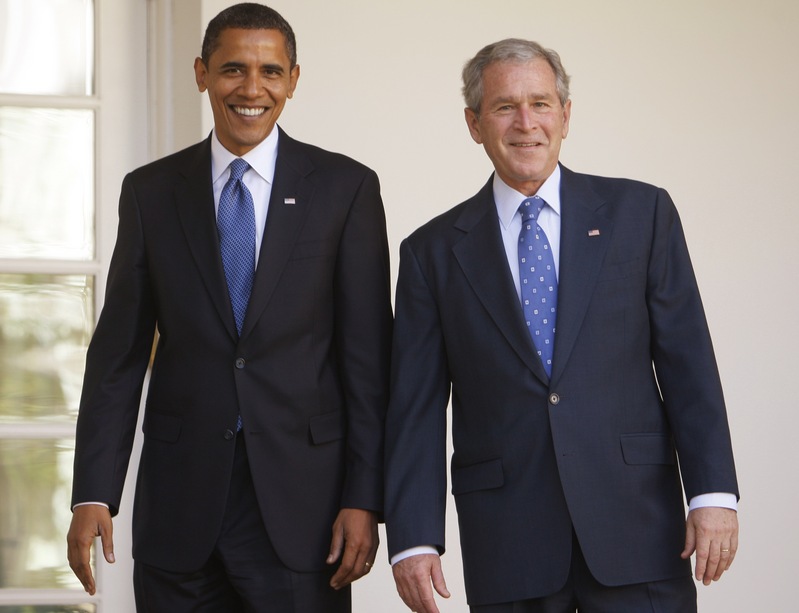
It appears that Obama has a plan as well, and sadly for us, his personal habits appear clean. So we will have to hit the streets to save Social Security, and there is a big problem: Democrats will be busy watching the basketball as the gorilla mingles among them.

The plan is unfolding via a group called “America Speaks,”behind which lurks the Pew Charitable Trusts. They are running public forums.

Dress well, be civil, ask questions, present facts. (Drives them nuts!)
They most likely will try to make their top-down plan to privatize Social Security seem like our idea. We will be told that we have to scale it back, lower our expectations, and perhaps, maybe, well you never know … might have to privatize it.

When George W. Bush went after Social Security in 2005, he had his hat handed him. This time might be different, as the gorilla has put on his Democrat suit. Because President Obama is a Democrat, and because Democrats do not see gorillas when Democrats are in office, we could well be in deep trouble.

The faces change, but not the agenda
The reasoning behind the “crisis” in Social Security is specious. They merely add up projected expenses in the long haul, and revenue in the short run. Then they say that the program is “unsustainable.”

If one were to apply this financial model to any other government or corporate enterprise, whether it is the Iraq and Afghanistan wars, the space program, subsidies for oil and gas and sugar or the bailouts, none would pass. But Social Security is an egalitarian program that manages billions and billions of dollars. It is well-managed with low overhead. Not one Wall Street banker receives an obscene bonus from it. Therefore, it is targeted.

Politics in America is one scam after another. We get tired of fighting the corporate PR machine, we get lazy. But it takes fighters, and we need fighters most when Democrats are in office. That’s when the worst damage happens. The National Committee to Preserve Social Security and Medicare is one of many groups that are fighting this fight. There are others – join any or many, and remember that the best way to do politics in our country is away from the two corporate political parties.

They have a plan. This time, we need to be the gorilla.

Why the frankness, part dieux

Down below I wondered why the frankness about the abundance of natural resources in Afghanistan. As a matter of propriety, we are never told about real objectives of war. (And often we learn later that within power centers there are a myriad of objectives, and even confusion about them. There is just one consistency: They lie, they lie, they lie.)

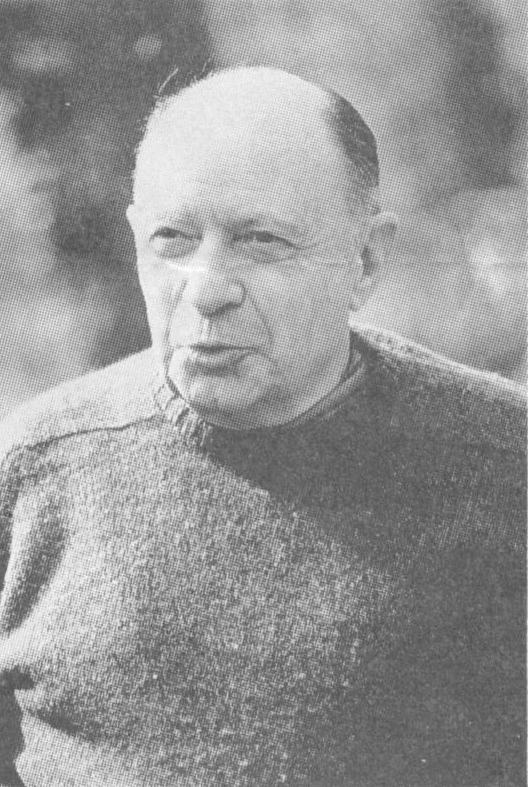
Jacques Ellul

So I reviewed my text on modern public relations techniques to see if there is a role for truth in propaganda. I vaguely remembered that Goebbels preferred that public pronouncements be true, and that if the truth was not useful, that there simply be silence. That technique is widely used today. Here’s a brief compilation of Ellul’s discussion of the role of truth in propaganda:

The idea that propaganda consists of lies (which makes it harmless and even a little ridiculous in the eyes of the public) is still maintained by some specialists … but it is certainly not so. For a long time propagandists have recognized that lying must be avoided. “In propaganda, truth pays off” – the formula has been increasingly accepted.

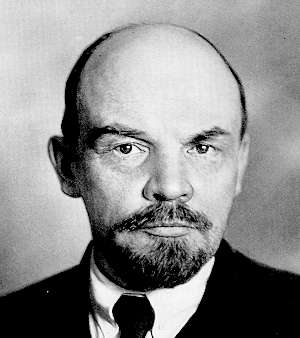
Vladimar Lenin, public relations specialist

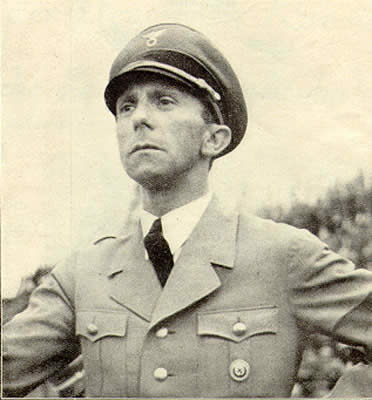
Lenin proclaimed it. And alongside Hitler’s statement on lying* one must place Goebbels’s insistence that facts to be disseminated must by accurate.

Josef Goebbels, early PR man

How can we explain this contradiction? Ellul says that lies can discredit propaganda, and that “the truth that pays off is in the realm of facts.” Lies pay off as well, but if exposed can be damaging. The essential features of modern public relations are are in the realm of intentions and interpretations.

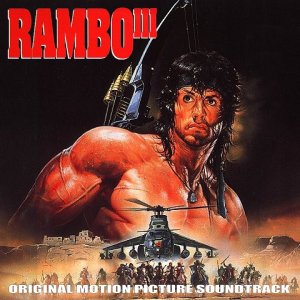
So we have been told the truth about the existence of vast mineral resources in Afghanistan, resources that the military-industrial complex has likely known of for decades. We could have been told that in the 1980’s, but we weren’t officially there in the 1980’s until Sly Stallone told us about it in Rambo III,. Bush could have told us in 2001, but at that time the American public was so angry that he could have invaded Denmark and it would have succeeded.

John Rambo was our news source for the 1980's war in Afghanistan

A decision was made to share the information with us. The information has been set free, and the press has dutifully reported it and then discarded it. But it has entered the public consciousness.

So the question to ask is this: What interpretation do we give it, and what are the intentions of those who allowed the information to be set free?

¶Everything we do, we do it for them

The interpretation is easy: Various media elements have emphasized that these minerals will be a boon for the Afghan people. As resource colonies go, that’s not true. But it feels good to say it.

Intentions? I can only guess, as there is so much that is kept secret from us, but I posit that the information will be used in the future to help the government maintain the fiction that we are there for lofty motives – to help them develop their minerals.

Now Panamanians, Grenadans, Libyans, Palestinians, Vietnamese, Kosovans, Iraqis and residents of Diego Garcia might be screaming at the top of their lungs to the Afghans … Please! Please! Don’t let them “help” you! But the opinions of these people do not matter. The whole of this interesting release of information is intended for domestic consumption.
__________
*The larger the lie, the more believable it is

Reality bites, but has no teeth

The aide said that guys like me were ”in what we call the reality-based community,” which he defined as people who ”believe that solutions emerge from your judicious study of discernible reality.” I nodded and murmured something about enlightenment principles and empiricism. He cut me off. ”That’s not the way the world really works anymore,” he continued. ”We’re an empire now, and when we act, we create our own reality. And while you’re studying that reality — judiciously, as you will — we’ll act again, creating other new realities, which you can study too, and that’s how things will sort out. We’re history’s actors . . . and you, all of you, will be left to just study what we do.” Ron Suskind quoting an anonymous “Bush aide” (probably Karl Rove) in a 2004 New York Times Magazine article.

The above quote came to mind as I read today that a British panel has concluded that the scientists whose emails were released in the “Climategate” “scandal” have been vindicated.

Here’s an NPR link, among scads of others. NPR was unable to voice any healthy skepticism or do any thoughtful analysis in real time, when it mattered, but now performs “journalism” by telling us what reality really was. In the U.S., there are no meaningful barriers against the public relations industry. These are the engineers who manufacture our reality, giving us WMD’s and incubator babies, Tweets from Iran and yellow ribbons tied to trees. News and public relations are virtually indistinguishable.

The revelations of the British panel do not matter. The “scandal” oddly resembled a high-level covert operation, with sophisticated hacking and thousands of hours spend poring over emails to find those perceived as damaging. It was a considerable investment of time and money by unknown actors, and the release date was timed to foreshadow the Copenhagen conference, where nothing got done.

Vindication is a clean-up operation. Operation Climategate achieved its purpose. They created the reality, and it is even somewhat interesting now that we are now studying that reality. In the meantime, the engineers have moved on.

Hamid Karmai receives death threat from Obama

The U.S. is running a “counter-insurgency” campaign in Afghanistan on the heels of the mostly-successful one in Iraq. Such campaigns are brutal and can be devastating for local populations. They involve targeting and murder of people hostile to U.S. occupation, and terror. The terror is brought about by indiscriminate bombing and killing of civilians, as seen below, and Gestapo-like house-to-house raids in the early morning hours, and, of course, torture as seen at Abu Ghraib.

The objective is to kill as many young men in resistance forces as possible, and to terrorize those who might consider joining. Those who make it through the Abu Ghraib compounds (there are many such compounds) are sent back to the neighborhoods with tales of indecency, terror and indignation. Word spreads among the young, and joining the resistance is thereby discouraged. Large segments of the population flee – over two million people fled Iraq, and another 2.7 million were uprooted. In Vietnam, hundreds of thousands were put in concentration camps, known in propaganda parlance as “fortified villages,” or “secure hamlets,” and in counter-insurgency as “draining the swamp.”

It’s Orwellian. The peasants were protecting the insurgents, and so the U.S. sought to remove the protection the insurgents were getting from the local populace. Hence, concentration camps.

In the meantime, at least of what we know, The CIA was conducting “Operation Phoenix,” in which suspect insurgents were murdered. The number commonly given is 40,000 murders. I think it is just a number.

Terror works.

The ability to engage in such behavior requires a concerted effort to lie to us, and to keep images of the reality of war from entering the mainstream.

In Vietnam, it was the occasional image (tiger cages, little girl fleeing a napalm attack, the bullet-in-the-brain boy) that undermined the terror effort there. Part of the problem was returning conscripts and their stories. Conscripts are notoriously weak when it comes to inhumane activity. Hence a decision by Nixon in the early 1970’s to eliminate conscription.

Beginning with experiments in the attack on Granada under Reagan, the Pentagon reformed the management of the media during war time. Reporters who covered that invasion were “mushroomed” – kept in the dark and fed shit, and were not allowed to take pictures until the business at hand was done. This was also the model used for the first Gulf War. It was largely successful, as the U.S. public to this day knows little, if anything, of the barbaric nature of that 1991 attack.

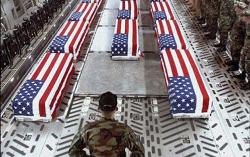
In the second Gulf War, pictures and images again were strictly controlled (even censoring flag-draped coffins), but the Pentagon also experimented with the idea of “embedding” correspondents. The idea was that the reporters themselves would become part of the band of brothers, and would be part of the war effort. It worked: The public wrongly perceived that it was getting actual on-the-ground coverage of the war, and images were still contained.

Still, the war effort requires total control of information flow. All mail and Internet activity from Iraq and Afghanistan is monitored, and returning soldiers are kept in line by threats of loss of benefits. (There is no mainstream outlet for their stories anymore anyway.) Further, more than half of the boots-on-the-ground in those countries are private Blackwater-like mercenaries. They present no security threat, as killing is their business.

____________

In Afghanistan, the counter-insurgency proceeds largely as scripted. But there is a nettlesome problem in the form of President Hamid Karzai. He has repeatedly claimed that the U.S. is killing too many civilians in his country, and has further stated that Iran is a friend of his country. He doesn’t get it at all. Killing civilians is the terror objective, and Iran can never be talked about in a positive light.

Karzai’s days are numbered.

So now we learn that the U.S. is concerned about his personal drug use, and also that the election that brought him to office was not legitimate.

The leaders in the Pentagon, the Obama Administration, do not give a rat’s ass about a man’s personal habits so long as a man does what he is told and cooperates. The U.S. does not care about the fairness of an election so long as the election produced results that the U.S. can tolerate.

And so it is necessary to connect the dots … this, and this. Karzai is being afforded the courtesy of a warning. If he does not step down, and soon, he will be assassinated.

Expect him to leave office soon, either to retirement or the next world.

_____________

Update: Hillary Clinton on Face the Nation tells us that Karzai is “reliable.” Much to make of this: She is either saying he has capitulated, and will be a team player, she could be reading a death warrant, or there could be an internal split between intelligence and the White House. No way to know. There are many factions here, and frankly, Obama has little to do with it, despite the title above.

Rule by the arrogant elite

The author/historian Stuart Ewen was writing a book in the late 1980’s about public relations – he had done research before about different decades of the twentieth century, and no matter where he turned, he met “the father of public relations,” Edward Bernays. He was astounded to learn in 1990 that he could meet Bernays in the flesh, as the old man still tottered about at age 99. Bernays lived to be 105, dying in 1995.

The essence of the interview was this: Public relations defines reality. It does not lie to people. It guides them to the proper destination. The average citizen has an IQ of 100, and is not capable of fathoming the depths of policy formation. There is only a small class of people of higher intellect capable of dealing with such matters, and they must do so even as a recalcitrant citizenry is brought along.

Over time, and with the advent of mass media, the elite have settled on the public relations industry to guide the public.

I’ll concede all of that to a point. The public is largely uneducated, even those who go through 16 years of education, as I did. The public is emotional. The public has a short attention span. The idea that the public can rule by voting on occasion does not begin to pass the sniff test. Voting has become an end in itself, while governing goes on in private.

Behind every major issue of the day, if we unbolt a few doors, we will find public relations people. They are manipulating our opinions via images and skilled sophistry. They are allowing us to think we govern ourselves even as they guide us to the ‘right’ outlook. We are allowed to fight out intense and meaningless battles between the “two” parties that are really one. It’s all good fun. The outcome does not matter. It’s merely our playground, a place where we are kept occupied while parents go on about their business.

This is reality. This is necessary as well. It can be no other way. But there are pitfalls with this system – that we exist as we are, weak and malleable, is our greatest defect. We are necessarily governed by people who want power for its own sake, otherwise they would not be governing.

But these are not our best people. Far from it. The best leader is the Cincinnatus, the reluctant general called into service who did his duty, and then returned to farming. Our system demands that we force leadership out of reluctant people of high quality, and then as quickly force them out of service before they become enamored of power.

That’s another reality. It works on a small scale, absent mass media, absent public relations. In this mass reality we are governed by an elite – take George W. Bush as an example, even if he was only a front man for a power bloc. He is a man of privilege, and a man not given to contemplation of important issues. He was granted access to elite universities, forgiven all of his sins, and then steered towards the presidency as if by birthright.

“He”, who really represents a whole class of people of similar privilege and birthright, led us from one calamity to another. This is the problem of aristocracy – excellent people are cast aside, privileged people allowed to govern. These privileged people never give up power. Though they are given our best in terms of “education”, they cannot guide us well, as that education only leads them to carry out their base instincts and motives with a flowery cover of high-sounding words. They are stupid people, but appear otherwise. (I like the phrase “supremely stupid,” borrowed from one of my daughter’s high school teachers.)

Bernays, the nephew of Sigmund Freud, lent his high intellect to this class; was actually part of this class. Even at age 99 he self-justified without honest reflection on the results of his life’s work. Far from honor, we need to bestow something less on his legacy – utter contempt.

A mind game

I was having a debate with my mother many years ago about Iraq and Saddam Hussein. This was during the time of the sanctions, when thousands of kids over there were dying each month at the hands of the Clinton Administration. During the course of that debate I tried to get across the point that even though Hussein was not a desirable person, that we did not offer the Iraqis a viable alternative, and had in fact had deliberately put Saddam back in power after the 1991 U.S. attack on that country. As an aside, I mentioned a story, possibly apocryphal, about Saddam in a staff meeting one day. He got upset with one of the staff members and asked him to step outside the room. He shot and killed him, and then returned to the meeting.

Some time later my mother and I returned to the conversation, and she repeated the story about the shooting. I thought that was interesting as in all of the debate that we endured, that was the only thing that registered with her. Everything else bounced off the surface.

Mom was a smart person and has long since gone under to Alzheimer’s. I mean no disrespect here. It’s the psychological phenomenon that makes me curious. In my years of debating on the Internet, I notice that there are certain “facts” which do not penetrate consciousness. They don’t compute, and hence the mind merely sets them aside. Osama bin Laden is dead, has been for years. The U.S. keeps him “alive” because he’s useful in scaring the American people. It is as if a speaker is speaking and no words leave the mouth.

Anyway, I just embedded three thoughts in the above paragraphs that will not compute with most people. I am wondering, without going back and re-reading, can you tell me what they were? What did those words say that did not penetrate? I’ll bet you remember the story about Saddam shooting the guy. It’s not one of the three.

The origins of the two-party system

If ever I come across an old National Geographic, I am most interested not in the stories, but rather the advertisements. They give me insight into what people were seeing and thinking more than any writing. In my wildest dreams, I have descended back in time, back into 1968 or 1960, and tasted the hamburgers and listened to the sights and sounds. Just as everything around us now is brand new and modern, so was it then. Progress is nothing but an illusion. (Carole at Missouaplois showed a YouTube of a film taken from inside a car driving around Missoula in 1968 – fascinating – the other cars, the signs and businesses. I think I saw my girlfriend’s VW bug.)

So I am reading now, for the third time, a book from 1965 called “Propaganda, The Formation of Men’s Attitudes”, by Jacques Ellul. It is a gold mine, and every trip down the shaft brings up new nuggets. Ellul was himself detached from propaganda, and so was able to give a dispassionate description of the art/science from its early formal incarnation during the time of Napoleon to the highly sophisticated versions he saw around at that time – Chinese, American, French, Soviet. These were the countries that were actively engaged in deliberate propaganda at that time.

Since that time, it has only gotten worse.

In Ellul’s time, the most sophisticated propaganda was Soviet, as seen by the attempts by them and the Americans to bring Vietnam into their respective systems. So successful were the Communists that even South Vietnam, supposedly the American puddle and subject to American propaganda, wanted Ho Chi Minh as its leader. In the end, the Americans had no choice but to attack the country, kill those infected the the disease, and leave it wasted as an example to the rest of the world of what happens to those who go their own way. Where propaganda fails, brute force must take its place.

Others have written about various specific propaganda campaigns, like those that led the American public in to the great wars of the 20th century, or more recently our Iraq and Afghanistan campaigns. Ellul takes it much deeper, talking about the destruction of the individual and the intellect, the need that people feel for propaganda, how it fills their voids, provides meaning, about how without it they are lost.

As I look at our two-party structure, the Tea Party movement, the submissive media, our very baseline notions that private property and capitalism are natural systems, that absurd notion that advertising is a neutral force that merely dispenses information … I realize that we are so deep in it, so deeply indoctrinated, that our daily lives have lost most meaning. We work and we shop. We are political eunuchs incapable of changing either our leadership, way of life, or our form of government. We are as regimented and enslaved as any population in modern history, more so than the Soviets who, one might notice, actually broke their chains. (Soviet propaganda lost its allure as people living in those countries realized that they were materially disadvantaged compared to their western counterparts. This was simply a product of natural subterfuge brought about by improvements in electronic communication. The U.S. never intended, never wanted the Soviet Union to fail. Isn’t it amazing that once they awoke, their horrible and oppressive communist governments simply dissolved? It seems impossible that such a thing could happen under our bubble.)

Here is today’s nugget, one that I overlooked in my first two passes through this book, as the two-party system was not much on my mind than in past readings.

A party or a bloc of parties almost as powerful as the would-be runaway party starts big propaganda before it is pushed to the wall. This is the case in the United States, and might be in France if the regrouping of the Right should become stabilized. In that situation one would necessarily have, for financial reasons, a democracy reduced to two parties, it being inconceivable that a larger number of parties would have sufficient means to make such propaganda. This would lead to a bipartite structure, not for reasons of doctrine or tradition, but for technical propaganda reasons. This implies the exclusion of new parties in the future. Not only are second parties progressively eliminated, but it becomes impossible to organize new political groups with any chance at all of making them heard; in the midst of the concerted power of the forces at work, it becomes increasingly difficult to establish a new program. On the other hand, such a group would need, from the beginning, a great deal of money, many members, and great power. Under such conditions, a new party could only be born as Athena emerging fully grown from Zeus’ forehead. A political organism would have to collect money for a long time in advance, to have bought propaganda instruments, and untied its members before it made its appearance as a party capable of resisting the pressures of those who possess the “media.”*

Not just the mere organization of a new party is becoming increasingly difficult – so is expression of a new political idea or doctrine. Ideas no longer exist except through the media of information. When the latter are in the hands of the existing parties, no truly revolutionary or new doctrine has any chance of expressing itself, i.e, of existing. Yet innovation was one of the principle characteristics of democracy. Now, because nobody wants it any longer, it tends to disappear.

One can say that propaganda almost inevitably leads to a two-party system. Not only would it be very difficult for several parties to be rich enough to support such expensive campaigns of propaganda, but also propaganda tends to schematize public opinion. Where there is propaganda, we find fewer and fewer nuances and refinements of detail or doctrine. Rather, opinions are more incisive; there is only black and white, yes and no. Such a state of public opinion leads directly to a two-party systems and disappearance of a multi-party system.

The effects of propaganda can also be clearly seen in view of what Duvenger calls the party with the majority mandate and the party without that mandate, which originally should command an absolute majority in parliament, is normally the one that has been created by propaganda. Propaganda’s principal trumps then slip out of the hands of the other parties. All the latter can do then is make demagogic propaganda, i.e., a false propaganda that is purely artificial, considering what we have said about the relationship between propaganda and reality. (In other words, the party out of power must pick an artificial issue.)

In that case, we find ourselves faced with two completely contradictory propagandas. On one side is a propaganda powerful in media and techniques, but limited in its ends and modes of expression, a propaganda strictly integrated into a given social group, conformist and statist. On the other is a propaganda weak in regard to media and techniques, but excessive in its ends and expressions, a propaganda aimed against the existing order, against the State, against prevailing group standards. (Emphasis added)

In other words, the Republicans, out of power, tend to go extreme on us as a means of regaining power, while the Democrats, out of power, appeal to more progressive roots, also perceived as extreme by the other side. Neither has any implications regarding how each parties governs once in power.

We cannot avoid propaganda, we are all subject to it. To the degree we think ourselves immune, we are its slaves. To be aware of it is to be free of it to some degree. And, of course, just like a teen horror movie, in backing away from it, we fail to notice that it is lurking behind us too.

But most important is this: propaganda, while seemingly tied to various ideologies, is apolitical. It is solely structured to control the behaviors of men and women in large societies. In our case, neither our Democrats or Republicans represent an ideology of any coherence, but rather only seek to organize voting blocs based on various sales pitches aimed at various interest groups. Once elected, each party governs in the same manner, following the dictates of the powerful forces of finance and industry.

Most interesting to me is this: “Propaganda,” per se, is not taught in our universities, and yet skilled practitioners emerge as if deeply trained in the art. It appears to be a protégé system. Goebbels did not study it, nor did Bernays or Rove, yet each was/is highly skilled. Go figure.

———————————
*This is perhaps why Nader’s most recent book it titled “Only the Super-rich Can Save Us,” why only extremely rich men like H. Ross Perot or Michael Bloomberg can ignore the two-party structure.

Public opinion …

I ran across a footnote this morning that referenced an out-of-print publication and an article published in 1954: Saturday Review, “Who Tells the Storytellers”, by Elmo Roper. I vaguely remember a thing called a”Roper Poll.” Elmo Roper was a leader in the field of market research and public opinion polling. The article is not available, and (maybe a comment on modern culture) the rights to it and all of the old Saturday Review articles is owned by Penthouse publisher Bob Guccione.

The footnote caught my eye because it was an observation about American society from 56 years ago:

Elmo Roper’s classification of influential groups in the United States is well known: about 90% of the population is “politically inert”; they become active only accidentally, when they are set into motion, but they are normally “inactive, inattentive, manipulable, and without critical faculty.”

In other words, only about ten percent of us are paying attention. Once every two years the 90% are shaken awake and inoculated with intense agitation propaganda otherwise known as the “political ad” – sound and image-bytes meant to appeal to prejudice and emotion, constructed to manipulate, carrying no substance, and made with the understanding that the viewer is clueless but will soon vote. We then head in masse to the polls and present our views to our leaders, and our media dutifully analyze what the public “thinks.”

Let’s be honest – we can talk freely here, as that 90% of public will not be found reading political blogs. I noticed this as I went door-to-door night after night in 1996 in my run for state legislature – the faces were vapid, the “issues” meaningless, and the arbiter of all that was going to happen on election day was the television, always in the background. That 90% is a whale on the beach, breathing but unable to move.

The “public mind” is a joke – it “thinks” in the same manner as a voice recorder. It plays back the opinions of leaders (with a great deal of background interference). The methods by which opinions spread are subtle and covert. Only rarely does a voice on television say something meant for the value of its content. Virtually all news and commentary is meant for subtle effect. (Thus we have the apparent contradiction wherein most of the American public, and virtually all of the Fox News viewership, thought that Saddam Hussein was behind the 9/11 attacks. It was no accident – that message was sent out in subterfuge and coded clues, very deliberately. That is how public opinion is formed. There is virtually no useful information dispersed by television.)

There is manipulation going on right now – agitprop and an angry segment of the voting public being activated – to what purpose I do not know. But the “Teabaggers” are about as spontaneous as a prom dance. They are interesting not for the content of their message, which is typically muddled and incoherent. They are interesting because some group, some moneyed interest, plans to use them for some nefarious purpose. Stay tuned.

The Citizens United decision tosses another spice into our stew. It is based on the premise that “advertising” and “speech” are synonymous. That is a ludicrous notion. Advertising is subversion of the individual, psychological manipulation. It has power because it is effective to the exact degree that we think it is not. If we think ourselves immune to advertising, we are its slaves.

Now given the power to spread their message with virtually unlimited funds on a population that is “politically inert, inactive, inattentive, manipulable, and without critical faculty,” we are pretty much screwed. Public opinion is now owned by corporate masters, and by extension, so are all virtually politicians (with the exception of odd and out-of-the-way places like Boulder, Missoula, and Vermont).

Citizens United is a master stroke, a calculated pandering to power masked as reasoned jurisprudence. It will plunge us into darkness.

Where is hope, oh gloomy one? Certainly it is not in that 90%. C/U merely formalized the ownership of them and electoral politics by the corporations.

But we are still left with the 10%.

But who are “we”? We are intellectually alive, diverse, and stuck in the mud. Assume that every living is ideology expressed to some degree within our numbers. What is the mainstream of thought among the thoughtful? Right now it is “free markets,” but that cannot last as it relies on the fictional man as its mainstay. We are not the simple economic beings they think us to be. Soon to return is the community man, the generous and caring citizen, the man willing to give of himself in return for the good of his family and friends and community. That is our better nature. These are indeed dark times, but that nature does not change. We have been sidetracked by free market economics, but will get back on track after another economic disaster or two. Takes time …

In the long run we are all dead, and yet, in the long run, there has always been progress towards a better society.

The power of images …

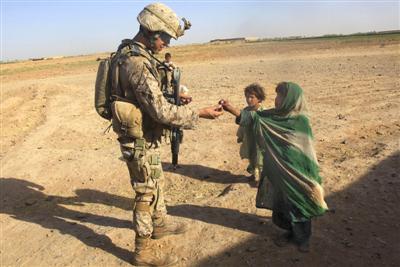
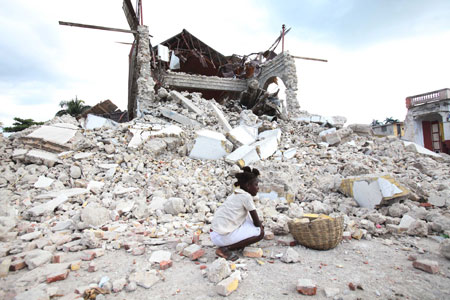
Below are some pictures taken of the tragedy that is Haiti and the recent earthquake. The suffering is immense, and the outpouring of charity from the American people is, as usual, immense. It’s a question of logisitics and timing. Can we help them in time? It is not for lack of trying.

Images have power.

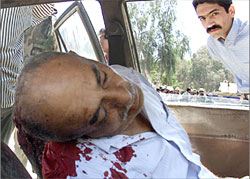
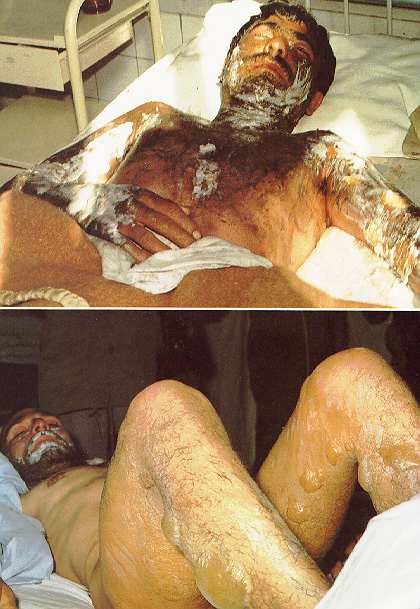
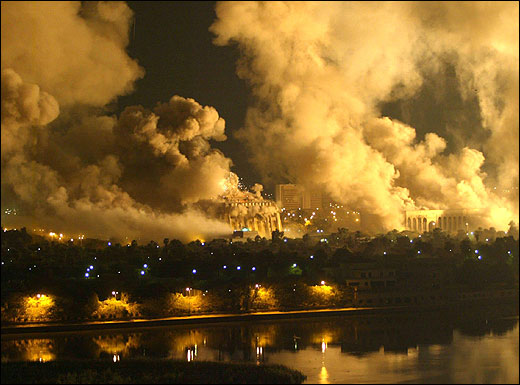
Tricked you. The last four images are casualties and damage inflicted by Americans on Iraq and its inhabitants. These are not about random violence. The man in the car was shot by Americans, the man salved with burn cream was the victim of attempted cremation – by Americans. It’s grotesque, and it would invoke outrage … if we were allowed to see it. The control of imagery is efficient, and unlike the 60’s and 70’s, where a compliant media nonetheless allowed truth to escape now and then, a whole country is kept in the dark.

We have the Internet. I can show these pictures. I am a guy in Boulder, Colorado. The Internet has vast reach, and yet, we do not not reach people. Our message is not musical, not about celebrities, and the images are too real for video games. We’re not even allowed to see this:

Ever so gingerly, they allowed this one image to escape. And then they clamped down again. Obama is Bush II.

It’s thought control. Face it.

We’ve been flocked over once again …

I keep going back to Edward Bernays … the process I see around me now, with passage of the Senate health care bill, is much like soldiers inspecting bodies on the battlefield after the conflict and finishing off any that are still alive.

The victory achieved by AHIP and PhRMA is monumental, but won’t go down easy unless people are convinced that something good has happened. The usual suspects, the Democrats, are now starting to ridicule people who oppose the bill, which is pretty much in its final form now.

These passages are taken from Bernays’ writings in 1928. He is considered the father of modern public relations, and his early work was on the Committee on Public Information (The “Creel Committee”), that notorious group that led a reluctant American public into involvement in a war that was none of their concern. It was that group that first discovered the power of public relations -the ability of group leaders to shape and manage opinions.

Small groups of persons can, and do, make the rest of us think what they please about a given subject. But there are usually proponents and opponents of every propaganda, both of whom are equally eager to convince the majority.

The systematic study of mass psychology revealed to students the potentialities of invisible manipulation of motives which actuate man in the group. … Trotter and Le Bon, who approached the subject in a scientific manner, and Graham Wallas, Walter Lippmann, and others who continued with searching study of the group mind, established that the group has mental characteristics distinct from those of the individual, and is motivated by impulses and emotions which cannot be explained on the basis of what we know of individual psychology. So the question naturally arose: If we understood the mechanism and motives of the group mind, is it not possible to control and regiment the masses according to our will without their knowing it?

This general principle that men are very largely actuated by motives which they conceal from themselves is as true of mass as of individual psychology. It is evident that the successful propagandist must understand the true motives and not be content to accept the reasons that men give for what they do.

No serious sociologist any longer believes that the voice of the people expresses any divine or specially wise and lofty idea. The voice of the people expresses the mind of the people, and that mind is made up for it by group leaders in who it believes and by those persons who understand the manipulation of public opinion. It is composed of inherited prejudices and symbols and cliches and verbal formulas supplied to them by the leaders.

Political campaigns today are all side shows, all honors, all bombast, glitter and speeches. These are for the most part unrelated to the main business of studying the public scientifically, or supplying the public with party, candidate, platform and performance, and selling the public these ideas and practices.

The important thing for the statesman of our age is not so much to know how to please the public, but how to sway the public. In theory, this education might be done by means of learned pamphlets explaining the intricacies of public question. In actual fact, it can be done only by meeting the conditions of the public mind, by creating circumstances which set up trains of thought, by dramatizing personalities, by establishing contact with the group leaders who control the opinions of their public.

The name of the book, “Propaganda“, doesn’t set well anymore. It was written before World War II, when the word still had a certain functionality without negative connotations. But Bernays lays out the strategy for selling public policy in the same manner that toothpaste and fashions are marketed. People form opinions in a pyramid, each group looking to the group above to know what to think about the important issues of the day. The Democrats are now looking up to their party leaders, and forming opinions about the health care bill accordingly.