I had an interesting discussion this morning that really boiled down to “Who are ‘they’?” and “Why?” As important as it is to establish some “What?’s” in our outlooks before moving on the “Who?” and “Why?”, the questions asked there are the major stumbling blocks to reaching people, or even attaining a coherent world view for myself.
I generally refrain from trying to reach people, and just do my own thing here, letting them come to me. Most criticism I get is knee-jerk and emotional, and that is too bad, as really constructive (and painful) criticism would be useful. I am capable of the mirror experience, and do reflect when called out on legitimate grounds. It is the only reason I’ve been able to move forward in life. If I ever stop and think OK, now I have it figured out, I’ll turn smug, cold, indifferent to the views of others, and will eventually join the circus of yappers of no substance, hard-wired into certain beliefs exclusive of all others, also known as American political discourse.
So the questions who and why, while extremely difficult to understand, much less to communicate, have to be addressed.
Who?
“The CIA.”
“The oligarchy.”
“The trillionaires.”
“Intelligence.”
“Spooks.”
“Lizards.”
“The Jews.”
“Illuminati.”
“Overlords.”
Add your own.
Each of those answers is a “turtles-beneath-turtles are holding up the planet” type of endless non-answer. They are all another way of saying
“?”
“Why” might have a bit of a more substantive answer. For control. To keep us thinking alike. To keep us in a state of fear. To keep us divided among ourselves. To prevent awakening, constructive revolution.
The questions my friend brings up are important. “What?” is fun. Learning that Janis Joplin became Amy Goodman surprised me right out of my chair. It does not get much better! There are only a few ways I can think of to have more fun than that.
“Who?” and “Why?” … much more difficult, less rewarding, and yet, a place that I have to move towards. Otherwise, I am just diddling around, like a drug addict, having a pointless but fun existence.
So readers, please, 1) Have at me. 2) If you can take us beyond the “What?” and into “Who?” and “Why?” even if your own thoughts are as clouded as mine, please do so.
No one ever said it would be easy. Given time and allowance for mistakes, we can figure this thing out.
There is a swirling controversy about Ed Abbey. Was he an alcoholic? He died of a condition related to cirrhosis of the liver, a bleeding esophagus. His friends are highly defensive of him, almost making him out to be a teetotaler.
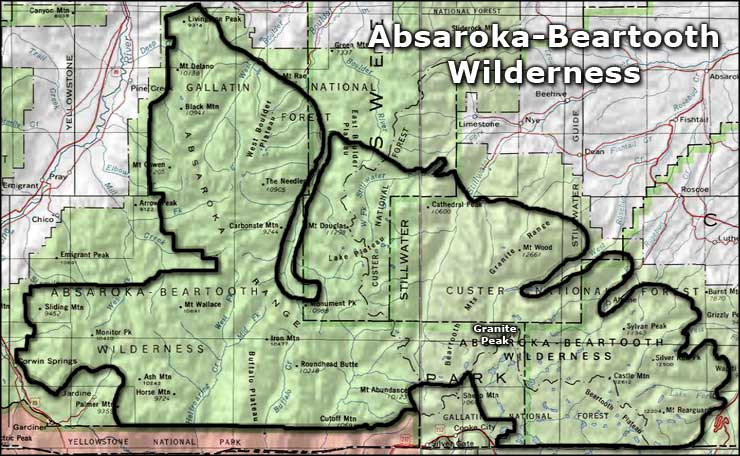
But wait! Who was Ed Abbey? I spent quite a few years in Montana Wilderness Association, before it was body snatched, and during that time everyone I knew had read Abbey, or claimed to have read him. During and since that time I have read most of his work.
Abbey died in 1989, at age 62. By literary standards, he left behind only a modest body of work, fiction and essays. His most famous was The Monkey Wrench Gang (1975). It’s forgettable, in my view. The Brave Cowboy (1956) is better, as the characters are more real and less caricature. The Cowboy in that work reappears in later works, but is never named as such. Fools Progress, I am told, is modeled on Don Quixote, so that if you have read the latter you’ll see it in the former. I have not read the latter.
Sometime in the early 90s a friend of mine in California just up and surprised me with a book in the mail, one called Desert Solitaire. It’s a collection of essays by Abbey published in 1968. I had never heard of it or him. It is riveting. In part of it crews are staking out roads for Arches National Monument. Abbey, working the booth at the entrance, would go around behind them, and pull their stakes out. Whatever Arches was, when the roads came, he knew it would be no more.
Desert Solitaire is a lamentation of the disappearance of the American West. It’s one of those books that can be read again and again, never losing flavor. Maybe like Jim Bouton’s Ball Four, maybe … Abbey had no idea he was writing a classic. He was just writing.
I learned to love Abbey. I found his essays, especially his river trips, far more enjoyable than his fiction. I found him brutally frank. Honest is the word I am looking for. He pursued truth. His motto was to do that, to follow truth, no matter where it takes you. I think that is my motto too, though I do not know that I have one. I do pursue truth. I do not care where it takes me. Maybe I am like Edward Abbey. That would please me immensely, even to be somewhat like him.
Ed Abbey went to Missoula to speak one time. He spoke out against welfare ranchers, the men in big hats and egos with big fat subsidies. Like every town, the power structure in Missoula is built around land and private wealth. People are allowed to imagine their town to be characterized by the people that live there. Missoula is perceived to be liberal, as are many of its residents.
But Missoula is right wing and redneck. Abbey learned that. No. Abbey already knew that. He just did not care to be polite to the power structure while there. He left a mark.
Abbey always managed to have an existing wife and prospective one at once. He complained of population as he fathered five children. He confessed to being “manic depressive” in his private journal. He is sometimes credited with founding Earth First!, though he did not. I have long suspected that EF! served government interests more than environmental, serving to brand the movement as violent, behaving as agents provocateur. But what do I know?
I have a computer file full of Abbeyisms … “Growth for the sake of growth is the ideology of the cancer cell'” “It is true that wolves eat sheep. They question is, do they eat enough sheep?” Or coyotes. He once observed that losing a few Boy Scouts each year in the wilderness was a necessity … if it was not dangerous, it was not truly wilderness.
I was told one time that Aldo Leopold did the best justification for having wilderness in his Sand County Almanac. I read it, found it syrupy, even wimpy. Abbey, I suppose, has specific words on the subject, but testimony to wilderness is his life in and near it. He never compromised. It challenged him, he never backed away from the challenge. He said earth had nurtured his body for six decades, and he owed earth a meal. His own body.
When he died his friends and family put his body in a pickup truck and took him to an undisclosed location in his beloved desert and buried him under a pile of rocks. His hand-carved headstone reads “Edward Abbey 1927-1989. No Comment.” It’s location is still unknown to any but friends and family.
I am reading “Finding Abbey,” by Sean Prentiss, a Montana State University graduate with Colorado roots. It is a search for self, Abbey’s grave as the metaphorical destiny. Abbey affected Prentiss just as he affected me and so many others, knocking our city comforts aside, making us long for the rugged life outside of the confines of civility and law. I suppose you could call it anarchism – in fact, Abbey’s friend and editor claims his greatest achievement to be the marrying wilderness and anarchy.
Oh – I almost forgot – was Ed Abbey an alcoholic? I don’t know. Who cares.
I think about writing this post now and then and back off, as it is much like lecturing the tides. Nonetheless, it does no harm to discuss things as they really are. The way things “ought to be” is a life on a different planet. We have to live on this one.
People are herd animals, or more politely, tribal beings. We value belonging far more than any other psychic reward. Consequently, there is very little interest in knowing anything that does not settle well with mainstream views. For most people, not belonging is too painful to endure. So they only know what the group knows. (How else do you explain religions?)
People have layers. The outer shell claims to think, read, explore. That’s a false front. Most people do none of those things. There are layers beneath the public self, and there is the “self” that our leaders speak to. They know we don’t read. They know when we enter the voting booth, for example, that we haven’t done anything more than view a few TV commercials and don’t even know the names on the down-ballot. They also know to flatter our phony selves while dealing seriously with the one hidden from view.
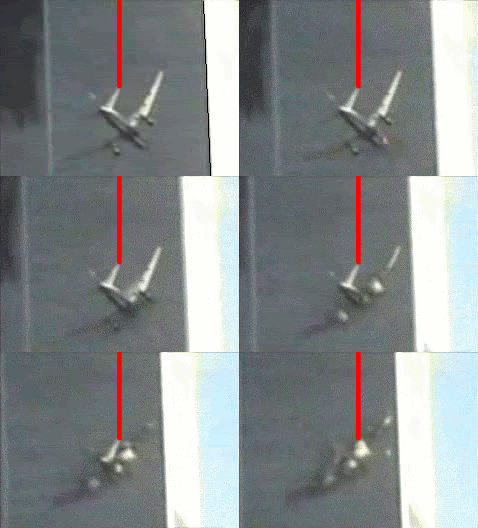
This is the essence of advertising, public relations, politics, and propaganda – the knowledge that people do not think, evaluate evidence, explore, or use critical thought. For example, even as your brain might tell you that what is happening to the left here is physically impossible, the leaders and the group tell you it really happened. The group rules. Reality is cast aside. It does not matter.
Some of us are different. In a comment in a prior post, I recalled an event wherein I participated in group ridicule of some kids that were exhibiting nonconformist behavior.* I remember feeling revulsion at my behavior even at that time, in high school, when peer pressure was very high. (Why else would I remember it now?) I also was a very bad Boy Scout, to the point where the group leader finally took me aside to tell me “We don’t talk like that here.” (We were asked to come up with a game to play during a meeting. I had suggested “Ring around the Rosie.”) I lasted all of six months in that group. What a waste of my parents’ money to buy a uniform!
Am I different from most people? Yes. Am I better? Please consult the opening paragraph above. I am merely describing reality.
That does not matter. The larger point, the one I wrestle with is this: Is there any point to knowing what I know, of being different?
The answer is not satisfying, but must suffice: Individuals can make a difference. But it is hard, and along the way, we have to somehow work the herd to our own advantage. This skill is called “politics.” I do not know how to do that. I refuse to pretend to be something I am not merely to win the favor of a group. That is demeaning.
_______________
*John Bragg, if you ever by chance read this, even though you don’t know I was part of that group, please accept my sincere apologies.
I had breakfast yesterday morning in a small restaurant nearby, and sat with my back to the wall, as is my custom. I like to watch people. At the table next to me was a couple, obviously not married, as they were conversing. She spoke in a loud voice, self-assured and used to commanding attention. She calmly explained to her partner that the reason for current low gas prices was a plot to put the Bakken producers out of business, so that the United States would not attain energy independence.
As the conversation went on she tossed out some technical jargon, and I realized that she was probably a CPA, or somehow connected to taxes and finance.
She’s part of the best and the brightest, I suppose. I don’t think she has a clue, but she operates on that high level of cluelessness that insulates her from reality, probably reading the Wall Street Journal, Financial Times, and Forbes. Those are all good publications, of course. They are just not enough of the world.
I spent most of my career on the perimeters of the oil and gas business, among small producers. These are smart and technically gifted people, engineers, land swappers, geophysicists, and yes, even geologists. I started out knowing nothing, of course, and learned a lot from them.
But a man has to be a man, at least once in a while. The adhesive glue that binds those people together is no different from that which binds teachers, Democrats, or the Ku Klux Klan: groupthink.
These men and women, called “independent oil and has producers,” need a huge gift from the public, access to our commons. To approach the public with that idea and to say “we want to do it because we hope to get rich” does not fly. They need a cover story, so they use energy independence.
What a crock. Higher up the line, in the real oil business, the one where they talk about “elephants” instead of the small pockets of hydrocarbons that independents chase, there are no national boundaries. None could care less whether or not the United States makes enough oil and gas to feed itself. There’s no need to let these people onto our lands, building their roads and pads and pipelines. They like to imagine they have no impact, but that is only true in the same sense that the impact of the desk sitting here in my office is measured only by the small footprint the four legs have.
Anyway, I did something both stupid and smart at once … there was a meeting held by the supervisor to the Lewis and Clark National Forest in Billings one night, a woman who stood up against the oil and gas people and was eventually hounded (and personally threatened) out of her job. That night I sat on the side of the room with some fellow Montana Wilderness Association members, and spoke against allowing these people on to the Rocky Mountain Front. I’ll never forget the palpable greed and anger that filled that room, the searing glances … “He spoke against us” said a fellow named Mac the next day. I’d never have a another client in that room, and shortly thereafter took a hefty pay cut from one for whom I did work.
Eventually I would ease out of Billings entirely, make my way to Bozeman, and eventually Colorado. This is not a straight line, a linear progression. I was changing in so many ways, and was unknowingly easing myself out of that business. To that point it was all I knew, but my world was getting bigger by the day. Many things were going on in my life, but from an economic standpoint, having so few ties to the business in Billings certainly helped make it easier to decide to move on.
Some might say I did a stupid thing. In retrospect, I suppose it isn’t that big a deal, and did not make that much difference. I was a well-known progressive anyway, so that my words that night were not a coming-out so much as pure defiance. And, I did OK after, not like I entered a monastery.
But group pressure and financial incentives are a driving force that will eventually destroy everything around us. It can be no other way. Anything that has the potential to produce private wealth, no matter its aesthetic value, will be destroyed by incessant pressure of unrelenting commerce. Roadless lands, wilderness, even national parks will come under pressure, and never a true word will be said about the reason for their destruction – greed. All other supposed motives are window dressing.
The only thing that stands between assets of high non-monetary value and the Philistines of the world of commerce is government. So it should come as no surprise that “gubbmint” is a hated evil, one that industry despises. They will always despise government until they take complete ownership. They are very close to their goal.
There is a new book out, Keeping the Wild, a compilation of essays and articles edited by George Wuerthner, Eileen Crist, and Tom Butler. I have not read it but will, and wanted to promote it here as it was recommended to me by a rock thrower over the weekend.
I used to be a volunteer for Montana Wilderness Association. This was the period from perhaps 1992 to 2000 or so – I am not clear. I sat through endless meetings, but it was a learning process more than a time when I was doing effective work. It was like being dropped in the middle of the Keebler Elf cookie factory, a buzz of activity and left to me to figure out who’s doing what and who is in charge. I joined because I like the product.
I do remember a trip to Great Falls in the early 1990’s with the Eastern Montana organizer, Tammy, to meet with people from the Pew Charitable Trusts and try to get some financial support. I was determined at that time to try to understand Max Baucus, and so took with me a yellow legal pad so that I could jot down thoughts as we traveled. I remember that. That was just a beginning, of course, and a long period of self-education followed, still going on. But I did ask a question.
In the aftermath, and memories are not clear, I do know that we were turned down by Pew, and that Tammy was disappointed. A young fellow from back east, John Adams, the successor organizer for the Eastern office, would later tell me that he was of the impression Pew was trying to take over the program for MWA, and offered grants only if the organization conformed to its objectives, abandoning its own.
At that time, I recall MWA having three paid staff in Helena, Bob Decker, Executive Director, John Gatchell, Conservation Director, and Susan, the administrative assistant. There were also paid field offices in Great Falls, Billings, and a couple of other places. It had a host of volunteers*, the old guard, the men and women who formed the organization and fought and won many of the wilderness areas that Montana still enjoys. These men, like Joe Gutkowski, Don Mazola, and two I never met, the Baldwins, and a host of others whose faces I know but names I’ve lost, formed a backbone of directed energy that accomplished goals over a long-term. I do hope that in writing this people come along and refresh my memory, as too much time has passed since my involvement. I would like that list of names, as I could not find it at the MWA website.
An important feature of MWA was poverty. Bob Decker, an engineer by trade, along with Gatchell and Susan, made very little money despite having good skills and talents. That’s a hard way to live, but is part of the deal in the environmental movement ethos – there isn’t a lot of money to be had. Poverty draws out the dedicated souls who are more concerned about mission than comfort. But that’s easy to say of other people. I always wanted to make enough money to be comfortable. So did they. So do we all.
Decker left. Susan probably retired. Gatchell is still there. Pew moved in. Pew won. Here’s a list of current staff of MWA:
Bryan Sybert, Executive Director
Carl Deitchman, Finance Director
Laura Parr, Business Manager
Amanda Hagertym, Administrative Assistant
Sarah Shepard, CFRE, Development Director
Kassia Randzio, Development Coordinator
Molly Severtson, Donor Relations Manager
Denny Lester, Communications Coordinator
Gabriel Furshong, State Program Director
Mark Good, Central Montana Field Director;
Casey Perkins, Rocky Mountain Front Field Director
Zack Porter, NEXGen Program Director
Amy Robinson, Northwest Montana Wilderness Field Director
Cameron Sapp, Eastern Montana Field Representative
John Todd, Southwest Montana Field Director
John Gatchell, Conservation Director
Shannon Freix, CDT Montana Program Director
Meg Killen, CDT Montana Field Crew Leader
Sonny Mazzulo, CDT Montana Field Coordinator
Cedron Jones, GIS Mapping Specialist
Good heavens! That’s not a dedicated group of volunteers – these are mostly degrees and salaries and the hubris that goes with that. Quite a few are dedicated to “development,” or keeping the engine going that pays the salaries. It’s become a self-feeding machine that needs a continual source of new food to keep going.
Wilderness has always been a tough fight, but the fighters left MWA as the Pew children moved in. The culture changed. These folks, one in particular, refer to the old guard as “rock throwers.” The new guard are well paid I assume, and comfortable with development of donors instead of wilderness. These are our “collaborators.” They throw rocks at outfits like Alliance for a Wild Rockies, the men and women who fight the fights that MWA used to help out with.
I once referred in a blog comment to a similar experience that Trout Unlimited experienced, an influx of foundation money, as “Invasion of the Body Snatchers.” These people talk like wilderness advocates, and they all attach their canoeing and hiking affectations to their resumes. Perhaps they’ve noticed, then, as I have, that the back country is virtually empty these days, as are parking lots at trail heads. That was our constituency, wilderness users. Without them, it will soon be rolled over by ATV’s and snowmobiles and loggers, the people whom MWA collaborates with.
MWA website is littered with pictures of cherished areas. Gone are any references to the founders, any history. If anyone criticizes them for selling out, as they surely have, they are likely to get that piercing and deeply disturbing scream that Donald Sutherland did so well in the 1978 movie about moving automatons into the bodies of real people.
These people, the current staff of MWA, and there are two that were there when I was there, will never know the thrill of a victory. They don’t try to win anything. But they also don’t know the other part of being alive, as essential as an occasional victory, the pain of defeat. Since they don’t try to win, by definition, they don’t know what it is to lose. So life is good for them.
It’s always been easy to call losing something else. But that’s what they do for living.
___________________
*Do not confuse “volunteers” with “membership.” There were perhaps thirty hard-core volunteers even as MWA listed thousands of members. The requirement for members was a $35 annual contribution, and it had a four-fold effect, that is, if you sent them that, they would assume you had a spouse and two children, and add four people to their rolls. I assume that chicanery goes on throughout the not-for-profit world, as there’s very little active volunteer activity in this country outside churches.
If ever you wanted a primer on the nature of the political debate we’re all engaged in, it is uncovered here. That thread has it all – declared enemies, Trojan horses, agents provocateur, collaberators, stooges, spear chuckers and a few who want to die with sword in hand.
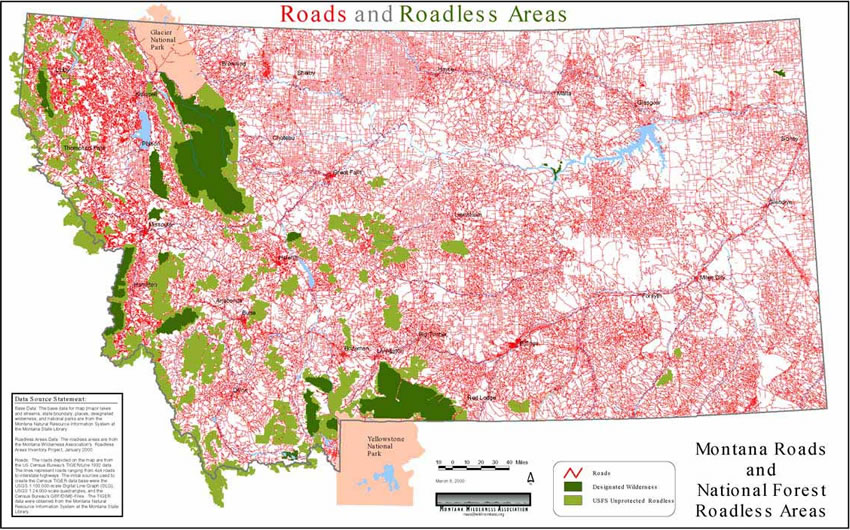
The stakes a very high. When the roadless lands are gone, even if we come to our senses, they are still gone.
We are in Connecticut for a few days, and it is indeed a beautiful place. There might be roadless lands here for all I know, but it is civilized and there is no danger anywhere. As Ed Abbey reminded us, wilderness ought to be dangerous, a few people ought to die there every year. Sleeping on the ground there ought to be a a frightening experience. Montana ain’t Connecticut. Parts of it still cause nightmares for collaberative souls.
The following is a comment that Matt Koehler left on a post down below.
I had to chuckle a little when I read the comments from Mr. Gabriel Furshong, MWA’s Forest Jobs and Recreation Act Campaign Director, over at George Wuerthner’s excellent perspective piece on Tester’s bill over at NewWest.net titled “Tester’s Response Poor Strategy“:
Mr. Furshong stated:
“Wilderness philosophers from other states can postulate all they want about Montana politics – such chatter will never result in actual legislation to protect 500,000 acres of ground in the largest National Forest in the lower 48 states and create new jobs at Montana mills that have a record of stewardship best practices.”
You know what? Mr. Furshong’s dismissive comment is striking when compared with the fact that just this week the Senate’s Energy and Natural Resources Committee approved 26 bills establishing new Wilderness areas and dealing with other public lands issues. Those 26 bills were approved by the ENR Committee en bloc, by unanimous consent.
Somehow, Mr. Furshong's predecessors pulled this off!
Tester publicly promised in 2006 to protect Montana's roadless lands
Reader’s will recall that Senator Tester’s FJRA [Forest Jobs and Recreation Act] is currently before this same Senate ENR [Energy and Natural Resources] Committee. Sometime in May, the ENR Committee sent Senator Tester a draft revision of this bill, which his office shared with the collaborators. Once the media questioned Senator Tester about the ENR’s draft he proclaimed it “Dead on arrival.”
So now, on June 20, the Senate ENR Committee approved 26 bills dealing with Wilderness and public lands issues
Something I’d encourage Wilderness supporters to consider is the very likely fact that if Senator Tester and the collaborators (Mr. Furshong and MWA included) would have accepted the ENR Committee’s draft revisions when they were shared about a month ago, it too would have been approved by the Committee this week.
So despite Mr. Furshong’s claim that “such chatter will never result in actual legislation” it sure seems to me that MWA and the other collaborator’s insistence on mandated logging and motors in Wilderness might have cost all of us the opportunity to designate over 660,000 acres as Wilderness and get some good restoration and fuel reduction work accomplished as proposed in the ENR Committee’s draft.
Some details of the ENR Committee’s draft:
* It would protect over 660,000 acres in Montana as Wilderness. However, it doesn’t undermine Wilderness by allowing military helicopters to land in Wilderness or ranchers to ride their ATV’s in Wilderness, as Senator Tester’s draft allows.
* It drops the controversial and unprecedented mandated logging levels on the Beaverhead-Deerlodge and Kootenai National Forests. It adds language requiring that any project carried out under the bill must fully maintain old growth forests and retain large trees, while focus any hazardous fuel reduction efforts on small diameter trees.
* It would also establish a “National Forest Jobs and Restoration Initiative” that would “preserve and create local jobs in rural communities…to sustain the local logging and restoration infrastructure and community capacity…to promote cooperation and collaboration…to restore or improve the ecological function of priority watersheds…to carry out collaborative projects to restore watersheds and reduce the risk of wildfires to communities.” Much of this work would be carried out through stewardship contracting.
Senatorial candidate Jon Tester promised, before witnesses, that he would …work to protect all of Montana’s remaining roadless areas.” What we got instead is mandated logging, violations of the spirit of the Wilderness Act itself, and Baucus-style ‘rocks and ice’ wilderness designations. This is not a nuanced interpretation of what the candidate said versus what reality dictates to the Senator. It a broken promise.
Period.
Something should be done here about MWA’s name – perhaps a contest and a new name for this once-proud defender of Montana wild lands. Here are some suggest new names:
Pew Charitable Trusts, Montana Logging Division
Montana Facilitators Association
The Baucus (Jr.) Caucus
Collaborators Roundtable
Paul Richards pulled out of 2006 Senate race based on a Tester promise to protect roadless areas
Other names will surely occur to me later today …
Now we all know how long it takes for an honest farmer from Big Sandy, Montana, to transform into a Machiavellian and dishonest Washington DC politician. (Paul Richards a Boulder, Montana, former candidate for U.S. Senate)
Light green areas are remaining roadless landsI was very active in Montana wilderness issues up until about ten years ago. At the time I withdrew, I was convinced that there would never be anymore new wilderness in Montana, and that worse than that, in the future we would be fighting to preserve what we had. I had visions of developers banging on the doors of national parks and existing wilderness areas. The motorbacks were just coming into their own, and were making “share the trails” demand much in the same way that smokers might demand to “share the air” in our restaurants. The idea of saving any of our then-roadless lands seemed out of reach.
The players were:
Sen Conrad Burns and his replacement, Jon Tester Senator Conrad Burns: He was the focus for conservationists, as he was openly antagonistic towards wilderness, and easily adopted the posture of motorbacks that machines should go everywhere. He was a rallying point, and served the cause of preservation well by bringing various groups together in opposition.
Senator Max Baucus, faux bonhomme Senator Max Baucus: He was the man who undermined any efforts to preserve additional lands. Industry had long lost interest in high and rocky lands and lightly timbered ones. Baucus gathered up all of these areas in his own Wilderness Bill, the “Rocks and Ice” Bill. Predictably, wherever there was serious movement at preservation, Baucus trotted out rocks and ice, and said “this or nothing”. MWA Founders Ken and Florence Baldwin ... wherefore art thou?
Baucus was the real enemy, yet I will never forget John Gatchell’s words to me after the 1996 election, when Max won another term: “At least we still have Max.” Gatchell is the Conservation Director for the Montana Wilderness Association, a group with a proud conservation history and founded in 1957 by Ken and Florence Baldwin, and others.
Power is dangerous, a narcotic. Proximity to power changes a person, clouds the intellect and alters perceptions. (Wasn’t there some kind of trilogy about a ring or some such thing?) Max, nominally a “Democrat”, managed the conservationists as part of a larger strategy of keeping his left flanks in line and ineffective. (I wrote an op-ed published in the Billings Gazette in which I called him a “faux bonhomme,” literally a “pretended good fellow,” or “false friend.” That is the most dangerous kind of friend to have.
When Conrad Burns left office, we lost our rallying point. Jon Tester was an unknown quantity, but did make serious attempts to reach out to conservationists in his campaign. Many progressives adopted him, placing almost blind faith in his good will as a substitute for on-the-ground organizing. That’s a dangerous situation, as there are few answers inside politics. We were effective against Conrad Burns, literally immobilizing the development forces behind him because we were organized groups with common purpose. That organization stopped the political wheels.
Danger has come to fruition. Tester has set out to achieve what Burns never could – to split environmentalist forces, bring the loggers into roadless lands, and undermine the legal concept of “wilderness” that has guided us thus far. His Forest Jobs and Recreation Act is Baucus “Rocks and Ice” redux, with huge tracts of roadless lands given over to mandated logging. What wilderness it preserves is sullied by helicopter and ATV encroachment.
At the center of this controversy are two people from years past who might now be seen as “collaborators.” They are the aforementioned Gatchell of Montana Wilderness Association (not pictured), and Tom France of National Wildlife Federation’s Missoula branch. Tom France of NWF: Collaborative participantThere are others, but these two are my focus, as they have seemingly traveled to the other side. (Gatchell’s 1996 statement of fealty to Baucus indicates that for him, at least, it was a short trip.)
George Wuerthner, among many others, is a new prominent voice for conservation in Montana, and has done serious writing on this subject. This piece, from New West, explores the different meanings of “collaboration” and “negotiation.” He gives and example of each:
Quincy Library Group in California Here local environmental activists joined with timber industry to craft a plan that called for logging up to 60,000 acres of the Plumas National Forest annually in exchange for protection of some old growth trees and small roadless areas. Like the Tester legislation, the Quincy proposal was hailed as an example of how collaboration had achieved a resolution to a long-standing stalemate.
However, other environmentalists, including the Wilderness Society, Sierra Nevada Forest Protection Campaign, and Sierra Club among others did not support more logging on the Plumas NF and they railed against the Quincy Library Group proposal. Environmental members of the Quincy group soon joined the timber industry in denouncing the anti-corporate giveaway activists.
The collaborationists adopted the goals of their opposition in an attempt to move the process forward. In so doing, they split from their own ranks and joined the developers, and as the Little Lamb followed Mary, were soon attacking conservationists. This is the Tester Process that Gatchell and France have fostered in Montana.
Steens Mountain National Monument in eastern Oregon: First, ONDA remained very up front that their goal was to end grazing–and they were not afraid to tell the ranchers, the Congressman, or anyone else that if they had an opportunity to eliminate grazing, they would go for it. Indeed, one of the things they negotiated successfully in the Steen Mountain legislation was the first legislated cow-free wilderness. Since they were clear in expressing that their chief goal was to protect wilderness and eliminate grazing, no one, including the local ranchers had any misgivings about their motives.
The ranchers went into the negotiations with their eyes wide open. They knew where [Oregon Natural Desert Association] stood on matters. They did not think ONDA lied or deceived them when they continue to lobby to remove cows from public lands, not only on Steens, but also throughout Eastern Oregon.
However, ONDA’s goal of livestock removal didn’t keep them from working with the ranchers either. By negotiation ranchers got some things they wanted too. They were able to consolidate their private lands by land exchanges with the BLM. Some received permit buyouts, and left the business altogether, but with a golden parachute. With these negotiations, the ranchers had some control over where wilderness designations occurred.
Wuerthner: Carrying on the Baldwin legacy
That is negotiation, with each side sticking to principles, but understanding that they must find middle ground. In the end, ranchers and ONDA walked away from the process, neither side having lost or gained everything, but having achieved primary goals. More important, their principles were not compromised and dignity was intact.
Sen Jon Tester has done what Conrad Burns could not do – he has divided the Montana environmental community, and has set the stage for to degradation of large tracts of Montana’s roadless lands. This is why I have consistently and stridently maintained over the years that we face far more danger form Democrats in office than Republicans.
Join AWR, donate, attend a concert, have some fun
I miss you Conrad. Your replacement is far, far more dangerous than you ever dreamed to be. (In wartime, don’t they shoot collaborators?)
Anyway, as old fighters fall by the road, new ones take their place. The battle goes on. At this time the fighters for wilderness are many, and my favorite group is called “Alliance for the Wild Rockies.” To this date, they have fought for their cause, stand ready to negotiate, and have never collaborated.
Clipped from a longer entry by Mathew Koehler over at 4&20: Identical entries from three different sources, all posted within one hour of each other. The third is from a most interesting source:
What public land managers and public land advocates have failed to understand for so many years is that public land is about partnership. Senator Tester gets it. He doesn’t take the myopic view that our forests are just about wilderness, or timber harvest, or recreation. He is working hard to reward partnerships that take a more integrated view of the forest – a forest where you can get a paycheck, ride your snowmobile, and hunt world class elk across vast tracks of roadless land. (June 18, 2010, 12:14 pm)
What public land managers and public land advocates have failed to understand for so many years is that public land is about partnership. Senator Tester gets it. He doesn’t take the myopic view that our forests are just about wilderness, or timber harvest, or recreation. He is working hard to reward partnerships that take a more integrated view of the forest – a forest where you can get a paycheck, ride your snowmobile, and hunt world class elk across vast tracks of roadless land. (June 18, 2010 12:17 PM)
Gabriel Furshong, MWA Forest Jobs and Recreation Act Campaign Director
gfurshong said:
What public land managers and public land advocates have failed to understand for so many years is that public land is about partnership. Senator Tester gets it. He doesn’t take the myopic view that our forests are just about wilderness, or timber harvest, or recreation. He is working hard to reward partnerships that take a more integrated view of the forest – a forest where you can get a paycheck, ride your snowmobile, and hunt world class elk across vast tracks of roadless land. (June 18, 2010, 1:12 pm)
The phrase “Senator Tester gets it” is a little troubling. It has that insipid, hollow PR ring about it, like a paid staffer brainstormed with others to come up with a three or four word phrase that encapsulates the essence of their campaign. Expect to see it elsewhere.
(Other phrases considered and rejected: “I’m lovin’ it”, “But wait! There’s more!,” “It’s all about you,” and “Where’s the beef?” They briefly considered “Keep it wild,” but decided it was trite, and even counter-message.)
Carole King and James Taylor are on tour and will be playing at the Pepsi Center in Denver soon. As I read it, the “VIP proceeds” for each concert will be going to the Alliance for the Wild Rockies. This is a Montana environmental group that has steadfastly fought for “NREPA”, the Northern Rockies Ecosystem Protection Act, over the years, never losing sight of that goal, never selling out in backroom deals, never taking Pew money.
AFWR is a loose group without a hierarchy, so loose in fact that they forget to tell the members that their dues are up.
Carole King and Rep Carolyn Maloney, a Democrat from upstate New York are friends. Maloney is a steadfast supporter of wilderness and a backer of NREPA in congress. This is the connection that has kept NREPA alive all these years.
I hope that AFWR makes a bundle on the concert tour. They are worthy.








 Piece of Mindful