Most of us have seen the above video, where we diligently count the number of times a basketball is passed unaware that a gorilla has just walked before our eyes.
This is an apt metaphor for our two-party system. The “gorillas” are the wealthy corporations and individuals who govern us. Distraction is the game. We are usually busy counting passes as they go about their business.
Social Security has long been on their hit list. And since I watch the “two” parties closer than most, I know that if the program goes down, it will be Democrats, and not Republicans, who do it. They are gorillas in human suits.
Bill Clinton had a plan to privatize Social Security, and it was in an advanced stage when the Monica crisis set upon him.Monica saves Social Security - her weapon of choice: a cigar His personal reputation, his presidency was at stake, and in one of the most fortunate of unintended consequences of his seedy administration, Social Security was spared. His sorry philandering ass was saved, and the fight to privatize Social Security was temporarily shelved.
It appears that Obama has a plan as well, and sadly for us, his personal habits appear clean. So we will have to hit the streets to save Social Security, and there is a big problem: Democrats will be busy watching the basketball as the gorilla mingles among them.
The plan is unfolding via a group called “America Speaks,”behind which lurks the Pew Charitable Trusts. They are running public forums. Dress well, be civil, ask questions, present facts. (Drives them nuts!)They most likely will try to make their top-down plan to privatize Social Security seem like our idea. We will be told that we have to scale it back, lower our expectations, and perhaps, maybe, well you never know … might have to privatize it.
When George W. Bush went after Social Security in 2005, he had his hat handed him. This time might be different, as the gorilla has put on his Democrat suit. Because President Obama is a Democrat, and because Democrats do not see gorillas when Democrats are in office, we could well be in deep trouble.
The faces change, but not the agenda The reasoning behind the “crisis” in Social Security is specious. They merely add up projected expenses in the long haul, and revenue in the short run. Then they say that the program is “unsustainable.”
If one were to apply this financial model to any other government or corporate enterprise, whether it is the Iraq and Afghanistan wars, the space program, subsidies for oil and gas and sugar or the bailouts, none would pass. But Social Security is an egalitarian program that manages billions and billions of dollars. It is well-managed with low overhead. Not one Wall Street banker receives an obscene bonus from it. Therefore, it is targeted.
Politics in America is one scam after another. We get tired of fighting the corporate PR machine, we get lazy. But it takes fighters, and we need fighters most when Democrats are in office. That’s when the worst damage happens. The National Committee to Preserve Social Security and Medicare is one of many groups that are fighting this fight. There are others – join any or many, and remember that the best way to do politics in our country is away from the two corporate political parties.
They have a plan. This time, we need to be the gorilla.
The following is a comment that Matt Koehler left on a post down below.
I had to chuckle a little when I read the comments from Mr. Gabriel Furshong, MWA’s Forest Jobs and Recreation Act Campaign Director, over at George Wuerthner’s excellent perspective piece on Tester’s bill over at NewWest.net titled “Tester’s Response Poor Strategy“:
Mr. Furshong stated:
“Wilderness philosophers from other states can postulate all they want about Montana politics – such chatter will never result in actual legislation to protect 500,000 acres of ground in the largest National Forest in the lower 48 states and create new jobs at Montana mills that have a record of stewardship best practices.”
You know what? Mr. Furshong’s dismissive comment is striking when compared with the fact that just this week the Senate’s Energy and Natural Resources Committee approved 26 bills establishing new Wilderness areas and dealing with other public lands issues. Those 26 bills were approved by the ENR Committee en bloc, by unanimous consent.
Somehow, Mr. Furshong's predecessors pulled this off!
Tester publicly promised in 2006 to protect Montana's roadless lands
Reader’s will recall that Senator Tester’s FJRA [Forest Jobs and Recreation Act] is currently before this same Senate ENR [Energy and Natural Resources] Committee. Sometime in May, the ENR Committee sent Senator Tester a draft revision of this bill, which his office shared with the collaborators. Once the media questioned Senator Tester about the ENR’s draft he proclaimed it “Dead on arrival.”
So now, on June 20, the Senate ENR Committee approved 26 bills dealing with Wilderness and public lands issues
Something I’d encourage Wilderness supporters to consider is the very likely fact that if Senator Tester and the collaborators (Mr. Furshong and MWA included) would have accepted the ENR Committee’s draft revisions when they were shared about a month ago, it too would have been approved by the Committee this week.
So despite Mr. Furshong’s claim that “such chatter will never result in actual legislation” it sure seems to me that MWA and the other collaborator’s insistence on mandated logging and motors in Wilderness might have cost all of us the opportunity to designate over 660,000 acres as Wilderness and get some good restoration and fuel reduction work accomplished as proposed in the ENR Committee’s draft.
Some details of the ENR Committee’s draft:
* It would protect over 660,000 acres in Montana as Wilderness. However, it doesn’t undermine Wilderness by allowing military helicopters to land in Wilderness or ranchers to ride their ATV’s in Wilderness, as Senator Tester’s draft allows.
* It drops the controversial and unprecedented mandated logging levels on the Beaverhead-Deerlodge and Kootenai National Forests. It adds language requiring that any project carried out under the bill must fully maintain old growth forests and retain large trees, while focus any hazardous fuel reduction efforts on small diameter trees.
* It would also establish a “National Forest Jobs and Restoration Initiative” that would “preserve and create local jobs in rural communities…to sustain the local logging and restoration infrastructure and community capacity…to promote cooperation and collaboration…to restore or improve the ecological function of priority watersheds…to carry out collaborative projects to restore watersheds and reduce the risk of wildfires to communities.” Much of this work would be carried out through stewardship contracting.
Senatorial candidate Jon Tester promised, before witnesses, that he would …work to protect all of Montana’s remaining roadless areas.” What we got instead is mandated logging, violations of the spirit of the Wilderness Act itself, and Baucus-style ‘rocks and ice’ wilderness designations. This is not a nuanced interpretation of what the candidate said versus what reality dictates to the Senator. It a broken promise.
Period.
Something should be done here about MWA’s name – perhaps a contest and a new name for this once-proud defender of Montana wild lands. Here are some suggest new names:
Pew Charitable Trusts, Montana Logging Division
Montana Facilitators Association
The Baucus (Jr.) Caucus
Collaborators Roundtable
Paul Richards pulled out of 2006 Senate race based on a Tester promise to protect roadless areas
Other names will surely occur to me later today …
Now we all know how long it takes for an honest farmer from Big Sandy, Montana, to transform into a Machiavellian and dishonest Washington DC politician. (Paul Richards a Boulder, Montana, former candidate for U.S. Senate)
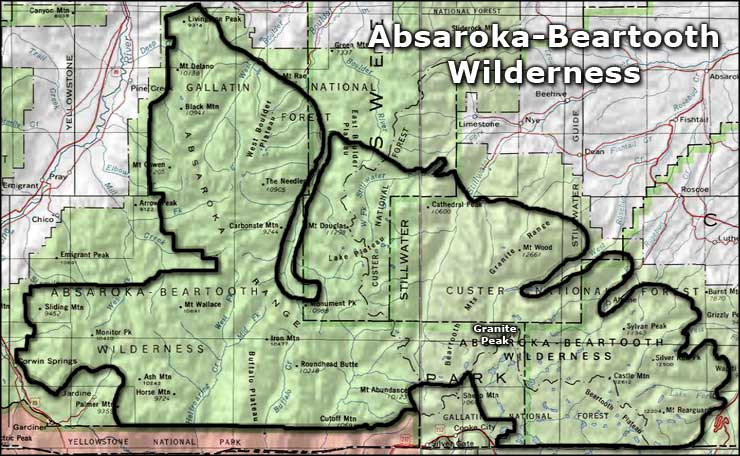
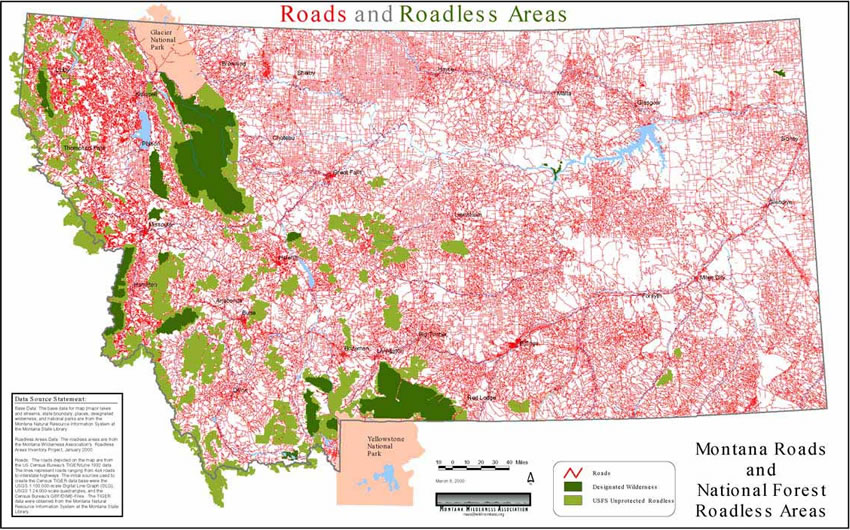
Light green areas are remaining roadless landsI was very active in Montana wilderness issues up until about ten years ago. At the time I withdrew, I was convinced that there would never be anymore new wilderness in Montana, and that worse than that, in the future we would be fighting to preserve what we had. I had visions of developers banging on the doors of national parks and existing wilderness areas. The motorbacks were just coming into their own, and were making “share the trails” demand much in the same way that smokers might demand to “share the air” in our restaurants. The idea of saving any of our then-roadless lands seemed out of reach.
The players were:
Sen Conrad Burns and his replacement, Jon Tester Senator Conrad Burns: He was the focus for conservationists, as he was openly antagonistic towards wilderness, and easily adopted the posture of motorbacks that machines should go everywhere. He was a rallying point, and served the cause of preservation well by bringing various groups together in opposition.
Senator Max Baucus, faux bonhomme Senator Max Baucus: He was the man who undermined any efforts to preserve additional lands. Industry had long lost interest in high and rocky lands and lightly timbered ones. Baucus gathered up all of these areas in his own Wilderness Bill, the “Rocks and Ice” Bill. Predictably, wherever there was serious movement at preservation, Baucus trotted out rocks and ice, and said “this or nothing”. MWA Founders Ken and Florence Baldwin ... wherefore art thou?
Baucus was the real enemy, yet I will never forget John Gatchell’s words to me after the 1996 election, when Max won another term: “At least we still have Max.” Gatchell is the Conservation Director for the Montana Wilderness Association, a group with a proud conservation history and founded in 1957 by Ken and Florence Baldwin, and others.
Power is dangerous, a narcotic. Proximity to power changes a person, clouds the intellect and alters perceptions. (Wasn’t there some kind of trilogy about a ring or some such thing?) Max, nominally a “Democrat”, managed the conservationists as part of a larger strategy of keeping his left flanks in line and ineffective. (I wrote an op-ed published in the Billings Gazette in which I called him a “faux bonhomme,” literally a “pretended good fellow,” or “false friend.” That is the most dangerous kind of friend to have.
When Conrad Burns left office, we lost our rallying point. Jon Tester was an unknown quantity, but did make serious attempts to reach out to conservationists in his campaign. Many progressives adopted him, placing almost blind faith in his good will as a substitute for on-the-ground organizing. That’s a dangerous situation, as there are few answers inside politics. We were effective against Conrad Burns, literally immobilizing the development forces behind him because we were organized groups with common purpose. That organization stopped the political wheels.
Danger has come to fruition. Tester has set out to achieve what Burns never could – to split environmentalist forces, bring the loggers into roadless lands, and undermine the legal concept of “wilderness” that has guided us thus far. His Forest Jobs and Recreation Act is Baucus “Rocks and Ice” redux, with huge tracts of roadless lands given over to mandated logging. What wilderness it preserves is sullied by helicopter and ATV encroachment.
At the center of this controversy are two people from years past who might now be seen as “collaborators.” They are the aforementioned Gatchell of Montana Wilderness Association (not pictured), and Tom France of National Wildlife Federation’s Missoula branch. Tom France of NWF: Collaborative participantThere are others, but these two are my focus, as they have seemingly traveled to the other side. (Gatchell’s 1996 statement of fealty to Baucus indicates that for him, at least, it was a short trip.)
George Wuerthner, among many others, is a new prominent voice for conservation in Montana, and has done serious writing on this subject. This piece, from New West, explores the different meanings of “collaboration” and “negotiation.” He gives and example of each:
Quincy Library Group in California Here local environmental activists joined with timber industry to craft a plan that called for logging up to 60,000 acres of the Plumas National Forest annually in exchange for protection of some old growth trees and small roadless areas. Like the Tester legislation, the Quincy proposal was hailed as an example of how collaboration had achieved a resolution to a long-standing stalemate.
However, other environmentalists, including the Wilderness Society, Sierra Nevada Forest Protection Campaign, and Sierra Club among others did not support more logging on the Plumas NF and they railed against the Quincy Library Group proposal. Environmental members of the Quincy group soon joined the timber industry in denouncing the anti-corporate giveaway activists.
The collaborationists adopted the goals of their opposition in an attempt to move the process forward. In so doing, they split from their own ranks and joined the developers, and as the Little Lamb followed Mary, were soon attacking conservationists. This is the Tester Process that Gatchell and France have fostered in Montana.
Steens Mountain National Monument in eastern Oregon: First, ONDA remained very up front that their goal was to end grazing–and they were not afraid to tell the ranchers, the Congressman, or anyone else that if they had an opportunity to eliminate grazing, they would go for it. Indeed, one of the things they negotiated successfully in the Steen Mountain legislation was the first legislated cow-free wilderness. Since they were clear in expressing that their chief goal was to protect wilderness and eliminate grazing, no one, including the local ranchers had any misgivings about their motives.
The ranchers went into the negotiations with their eyes wide open. They knew where [Oregon Natural Desert Association] stood on matters. They did not think ONDA lied or deceived them when they continue to lobby to remove cows from public lands, not only on Steens, but also throughout Eastern Oregon.
However, ONDA’s goal of livestock removal didn’t keep them from working with the ranchers either. By negotiation ranchers got some things they wanted too. They were able to consolidate their private lands by land exchanges with the BLM. Some received permit buyouts, and left the business altogether, but with a golden parachute. With these negotiations, the ranchers had some control over where wilderness designations occurred.
Wuerthner: Carrying on the Baldwin legacy
That is negotiation, with each side sticking to principles, but understanding that they must find middle ground. In the end, ranchers and ONDA walked away from the process, neither side having lost or gained everything, but having achieved primary goals. More important, their principles were not compromised and dignity was intact.
Sen Jon Tester has done what Conrad Burns could not do – he has divided the Montana environmental community, and has set the stage for to degradation of large tracts of Montana’s roadless lands. This is why I have consistently and stridently maintained over the years that we face far more danger form Democrats in office than Republicans.
Join AWR, donate, attend a concert, have some fun
I miss you Conrad. Your replacement is far, far more dangerous than you ever dreamed to be. (In wartime, don’t they shoot collaborators?)
Anyway, as old fighters fall by the road, new ones take their place. The battle goes on. At this time the fighters for wilderness are many, and my favorite group is called “Alliance for the Wild Rockies.” To this date, they have fought for their cause, stand ready to negotiate, and have never collaborated.
Glenn Greenwald has written persuasively that the Office of the President is a powerful force in affecting bills that are being debated on Capitol Hill. I have seen the same thing, witness health care: The president was helpless, sat on his hands, as progressive ideas such as Medicare opt-in, Public Option were being discussed. (In fact, he had bargained away a public option before the process even started, but that is off-topic.)
When all that was left was a bad bill, when Public Option was gone, when cost controls were gone, when AHIP and PhRMA had everything they wanted, the president flexed his muscles, threatened, cajoled, bribed …anything and everything to get his bad bill passed.
Obama's search for a family dog finally ended
To those liberals and progressives who are still waiting for his little light to shine from under that bushel basket, please. Accept reality. He’s powerful, he’s interested, but he’s a Blue Dog – a Conservadem. We’ve got ourselves another Clinton.
From Greenwald:
Here’s Politico today on last night’s victory of Blue Dog Democratic incumbent Rep. Jim Matheson in Utah over his liberal primary challenger:
He was the beneficiary of late support from Organizing for America, President Barack Obama’s grassroots organization, which used e-mails, text messages, and campaign mailers to urge Democrats pull the lever for the incumbent.
Progressive Claudia Wright falls to an Obama-backed Blue Dog in Utah
Similar to what they did for Blanche Lincoln, the Obama White House unleashed its OFA Army to help protect a Blue Dog incumbent against a progressive challenger. Being able to do that, or not do it, or doing it in the other direction (i.e., to support the primary challenger) sounds to me like some pretty substantial leverage to use over members of Congress.
We are seeing it here in Colorado, where Obama is doing everything he can to support the campaign of Conservadem corporatist Michael Bennet over Andrew Romanoff.
A crudely crafted sign to progressives put up by Emanuel
And this is not new, nor recent. It started on November 8, 2008, with the appointment of conservative Rahm Emanuel as Chief of Staff. From there we got appointment of Conservadems to fill vacant senate seats (with the exception of Illinois’ Roland Burris, appointed as a slap in the face of Obama by Rod” Blagojevich. Conservadem Tammy Duckworth was slated to take that seat. Burris has been squeezed out now by this supposedly weak and ineffective president.)
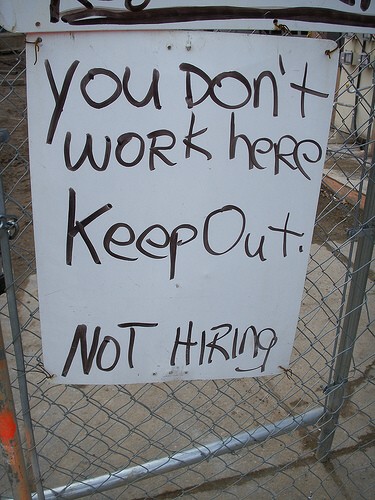
Progressives need not apply for work in this administration. That’s all.
Down below I wondered why the frankness about the abundance of natural resources in Afghanistan. As a matter of propriety, we are never told about real objectives of war. (And often we learn later that within power centers there are a myriad of objectives, and even confusion about them. There is just one consistency: They lie, they lie, they lie.)
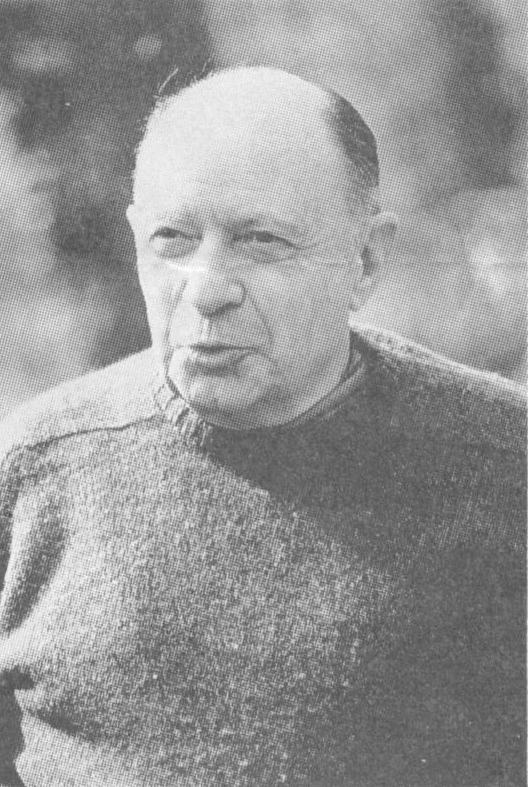
Jacques Ellul
So I reviewed my text on modern public relations techniques to see if there is a role for truth in propaganda. I vaguely remembered that Goebbels preferred that public pronouncements be true, and that if the truth was not useful, that there simply be silence. That technique is widely used today. Here’s a brief compilation of Ellul’s discussion of the role of truth in propaganda:
The idea that propaganda consists of lies (which makes it harmless and even a little ridiculous in the eyes of the public) is still maintained by some specialists … but it is certainly not so. For a long time propagandists have recognized that lying must be avoided. “In propaganda, truth pays off” – the formula has been increasingly accepted.
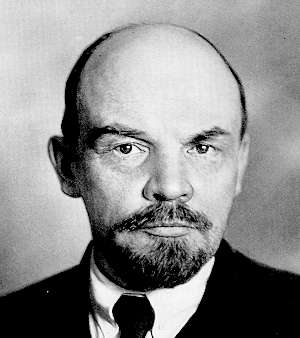
Vladimar Lenin, public relations specialist
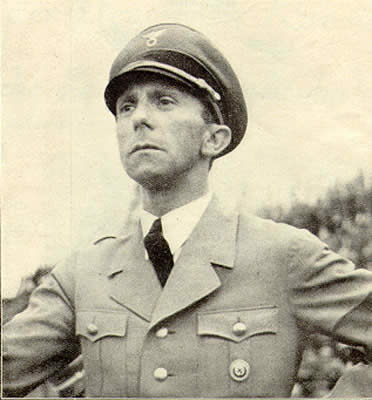
Lenin proclaimed it. And alongside Hitler’s statement on lying* one must place Goebbels’s insistence that facts to be disseminated must by accurate.
Josef Goebbels, early PR man
How can we explain this contradiction? Ellul says that lies can discredit propaganda, and that “the truth that pays off is in the realm of facts.” Lies pay off as well, but if exposed can be damaging. The essential features of modern public relations are are in the realm of intentions and interpretations.
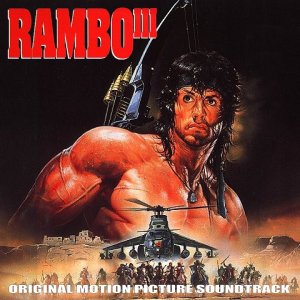
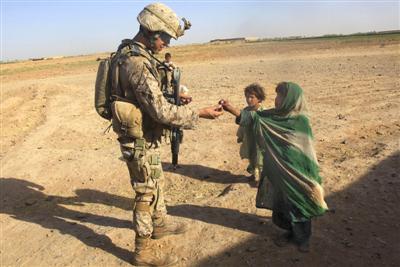
So we have been told the truth about the existence of vast mineral resources in Afghanistan, resources that the military-industrial complex has likely known of for decades. We could have been told that in the 1980’s, but we weren’t officially there in the 1980’s until Sly Stallone told us about it in Rambo III,. Bush could have told us in 2001, but at that time the American public was so angry that he could have invaded Denmark and it would have succeeded.
John Rambo was our news source for the 1980's war in Afghanistan
A decision was made to share the information with us. The information has been set free, and the press has dutifully reported it and then discarded it. But it has entered the public consciousness.
So the question to ask is this: What interpretation do we give it, and what are the intentions of those who allowed the information to be set free?
¶Everything we do, we do it for them
The interpretation is easy: Various media elements have emphasized that these minerals will be a boon for the Afghan people. As resource colonies go, that’s not true. But it feels good to say it.
Intentions? I can only guess, as there is so much that is kept secret from us, but I posit that the information will be used in the future to help the government maintain the fiction that we are there for lofty motives – to help them develop their minerals.
Now Panamanians, Grenadans, Libyans, Palestinians, Vietnamese, Kosovans, Iraqis and residents of Diego Garcia might be screaming at the top of their lungs to the Afghans … Please! Please! Don’t let them “help” you! But the opinions of these people do not matter. The whole of this interesting release of information is intended for domestic consumption.
__________
*The larger the lie, the more believable it is
Clipped from a longer entry by Mathew Koehler over at 4&20: Identical entries from three different sources, all posted within one hour of each other. The third is from a most interesting source:
What public land managers and public land advocates have failed to understand for so many years is that public land is about partnership. Senator Tester gets it. He doesn’t take the myopic view that our forests are just about wilderness, or timber harvest, or recreation. He is working hard to reward partnerships that take a more integrated view of the forest – a forest where you can get a paycheck, ride your snowmobile, and hunt world class elk across vast tracks of roadless land. (June 18, 2010, 12:14 pm)
What public land managers and public land advocates have failed to understand for so many years is that public land is about partnership. Senator Tester gets it. He doesn’t take the myopic view that our forests are just about wilderness, or timber harvest, or recreation. He is working hard to reward partnerships that take a more integrated view of the forest – a forest where you can get a paycheck, ride your snowmobile, and hunt world class elk across vast tracks of roadless land. (June 18, 2010 12:17 PM)
Gabriel Furshong, MWA Forest Jobs and Recreation Act Campaign Director
gfurshong said:
What public land managers and public land advocates have failed to understand for so many years is that public land is about partnership. Senator Tester gets it. He doesn’t take the myopic view that our forests are just about wilderness, or timber harvest, or recreation. He is working hard to reward partnerships that take a more integrated view of the forest – a forest where you can get a paycheck, ride your snowmobile, and hunt world class elk across vast tracks of roadless land. (June 18, 2010, 1:12 pm)
The phrase “Senator Tester gets it” is a little troubling. It has that insipid, hollow PR ring about it, like a paid staffer brainstormed with others to come up with a three or four word phrase that encapsulates the essence of their campaign. Expect to see it elsewhere.
(Other phrases considered and rejected: “I’m lovin’ it”, “But wait! There’s more!,” “It’s all about you,” and “Where’s the beef?” They briefly considered “Keep it wild,” but decided it was trite, and even counter-message.)
Civil libertarians (should that not be all of us?), Democrats and democrats, patriots and citizens of all stripes were rightly enraged that the Bush Administration used its sharp elbows to usurp power and encroach on personal liberty. It made up a new power- to kidnap a foreign citizen, take him anywhere in the world, torture him, and be accountable to no one. (It was done routinely before, but never openly acknowledged. The real usurpation there was to create acceptance of totalitarian behavior by the American public.)
That’s some pretty bad behavior, and there was pushback. In 2004,Bush probably lost the election, but another of his innovations, the paperless and unauditable voting machine, handed him the win. (Oddly, Democrats never offered up resistance to the machines, and the reason is likely that both parties want the power to alter election outcomes at will. The recent Arkansas senatorial primary is … suspicious.)
In 2008, in an oddly clean election, there was overwhelming push back, and Barack Obama assumed office. A new day in America, blah blah blah. And here is the problem with our one-financier-two-parties system: when Bush got out of hand, the partisans of the Democratic Party were enraged. Now that Obama is president, and has invented for himself the right to assassinate an American citizen without trial, without evidence, much less proof of guilt, and you hear …. [chirp].
This is the worst aspect of the Democratic Party – their indifference to the behavior of Democratic presidents. Once a Democrat assumes power, they fall asleep. The president from their party has to be vetted by the same power centers as the other party. He has to pass muster in the corporate media. He has to be glamorous and well-spoken. He has to speak vaguely and carry a small stick.
In other words, as Alexander Cockburn said about Obama long before he was elected, whatever bomb was ticking between his ears had long since been defused. He presented no threat to power.
What we have as a result of this indifference is not a mean old Republican Party and a somewhat good Democratic Party. It is quite the opposite. The Democrats present far more danger to our former Republic. They can get away with things the Republicans cannot. HICPA*, the Health Care Reform Bill, is a Christmas tree for the insurance industry, reinforcing their power over us and profits for them in perpetuity. Could the Republicans have passed such an outrageous insult to intelligence? No way.
I often say that “Democrats are the problem,” but seldom take the time to explain the concept. It is this: We need organized opposition to concentrated power in this country. Democrats assume that mantle, and then do nothing with it. In fact, as with Obama pronouncing the death sentence on American citizens, they often run further and faster than Republicans can.
I am often countered with the notion of “gradualism,” which Martin Luther King called a “tranquilizing drug.” Were it just that, it might be bearable. But it is worse than just a tranquilizer. It is an illusion. There is no gradual progress with Democrats. Concentrated power advances with them in office. It is the opposite of gradualism. It is erosion.
So to those who say that third parties are futile, that we get most of what we want from Democrats, I say nonsense! We do not get less than what we want, we get none of what we want, most of what THEY want, and we are gelded in the process.
I am not a Democrat. I am not a “progressive” if Democrats have usurped that name. I am not a “libertarian,” though I like their independent spirit. I am a NOT. I am waiting for NOT to be a viable alternative. I support all NOT candidates who fight Democrats and Republicans to get on ballots.
But more than that, I support movement politics. The ballot box is a nice illusion, but once elected, if an office holder lacks a support base, nothing happens.
It all starts on the streets and in the neighborhoods. Democrats exist to stop movement politics, to absorb movements and suffocate them with the pillow of gradualism. Democrats are the problem.
___________________
*HICPA = Health Insurance Company Protection Act
The link down below is to a podcast/mp3 by Dan Carlin. Yes, I know no one will go there, and that’s OK. I wouldn’t either. The thing is over an hour long and only suitable for treadmill listening.
The thing that grabbed me about it is that Carlin embraces my whole outlook on the D vs R phenomenon. He says it so much better than me, but takes us back to 1992, and H. Ross Perot. Agree or disagree with Perot, he did one important thing: He showed the nation that the two parties were really in agreement on virtually every important issue. Campaigns were about silly stuff, because the big issues were already settled.
After 1992, the parties got together and vowed “Never again.” The requirements for entry into presidential debates were made so stiff that no one besides one of the two could ever hope to make it in, and more importantly, were flexible, so that if there was a threat of a third party rising, they could simply raise the bar.
And sure enough, in 1996, Perot didn’t qualify for the debates. No one ever has since. Having a third party shatters illusions.
Carlin made another point that has me scratching my head – can it be so? Here’s a hypothetical: Suppose Max Baucus, who hired Liz Fowler of Wellpoint to write the Health Insurance Company Protection Act (HICPA), aka “Health Care Reform”, owned a bunch of stock in Wellpoint. He would be in an insider’s position on that company, and would be able to buy low and short as he pleased based on his inside information.
That should be illegal. Right? It’s not. According to Carlin, citing a Wall Street Journal article, insider trading is perfectly legal for Congresspeople and Senators. There’s a bill that has languished now for four years to make it illegal.
It’s amazing corruption. It is a fouled, dirty, rotten and contaminated system of government. None can join it without being sullied.
“The greatest opportunity in American history to educate the voters by debating the large issues of the campaign failed. The main reason … was the compulsions of the medium. “The nature of both TV and radio discussion programs are compelled to snap question and answer back and forth as if the contestants were adversaries in an intellectual tennis match. Although every experienced newspaperman and inquirer knows that the most thoughtful and responsive answers to any difficult question come after long pause, and that the longer the pause the more illuminating the thought that follows it, nonetheless the electronic media cannot bear to suffer a pause of more than five seconds; a pause of thirty seconds of dead time on the air seems interminable. Thus, snapping their two-and-a-half minute answers back and forth, both candidates could only react for the cameras and the people, they could not “think.” Whenever either candidate found himself touching a thought too large for two-minute exploration, he quickly retreated. Finally, the television-watching voter was left to judge, not on issues explored by thoughtful men, but on the relative capacity of the two candidates to perform under television stress.”(Daniel J. Boorstin)
Thus we entered the age of actor as politician, and politician as rock star.








 Piece of Mindful