Group dynamics in Orwellian thought-controlled societies

Imagine that it is virtually impossible to make a call from a cell phone to the ground below from an aircraft traveling at high altitude.

As I read it, it is indeed virtually impossible. Aircraft have to be equipped with special communication equipment to achieve this feat, and hardly any are, none in 2001. And, in my routine flights here and there over the last ten years, I have tried to do so. I often made contact – that is, the phone tells me that I have a connection, but it does not complete the call. It is just dead air.These days we we can be fined, even arrested for trying to do so, and it is odd, as it does not interfere with the aircraft in the least.

Anyway, set that aside. Religious groups insist on adherence to dogma, as do political groupings. And yet, internally, most people know that group dogmas are false, that two plus two does not equal five. They internalize such dogma to achieve harmony, as it is important to belong to a group structure. So people who profess otherwise know that there was no rising from the dead or walking on water or virgin birth. They are merely submitting to group dominance.

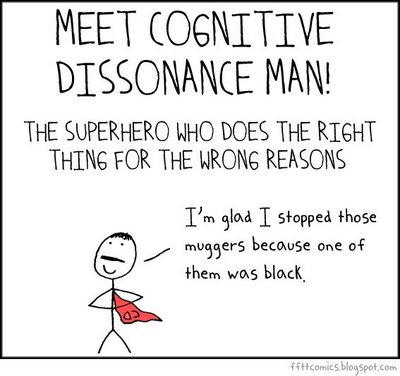
The suppression of the knowledge that the beliefs are false is often described as “cognitive dissonance,” which is simply the ability to adhere to irreconcilable beliefs.
Some of us do not bond easily to groups, and suffer accordingly. But we learn to live on our own, without approbation. The odds of us meeting are slim, as most people meet other people via membership in various groups. But the blogs are a good way to meet outliers.

A nasty aspect of my personality is to hold in disdain those who define themselves by group membership. I rebel when groups try to bind me and force me to conform to group norms. I was never a good employee,and never happy as an employee. I was not a good Republican, and was horrible Democrat. I even found the Greens restrictive – they more than any party have a large share of nonconformists, but it was a little bit oppressive.

Cell phones work on airplanes ... got that?
What is the mechanism by which groups enforce cohesion? I think there are two elements: One is a need in each of us to belong, and the other are enforcers who patrol the fringes of groups to make sure that none leave the herd. These are self-appointed sheepdogs.

In real life, I am a nice person and indistinguishable in a crowd. I do ordinary work for ordinary pay, watch football with family on Thanksgiving, smile and joke and do all of the normal things. But on the blogs I am impatient, condescending, snippy, and even mean at times. The people who have been on the receiving end of this negative torrent are genuinely nice and caring of the people around them. But on the blogs, they too exhibit different characteristics.
Hex! Hex!
These are the sheepdogs. They patrol the edges of groups, and define what is acceptable and what is not. Or so I perceive. each of them, as I perceive them, is so caught up in group insight that they have lost track of what is real, in fact, have no desire to know what is real.

And so they literally whip people, citing grouptruth, using absurdly tedious reasoning to force reality into a square box. “It is so, as my words force it to be so.“ The act of banning is a sheepdog at work, patrolling the outer perimeters of the group. Mormons call it shunning.


Noam Chomsky (NBC file photo)
The whole of the allowed political spectrum in the U.S. is right-leaning. In such an environment, Republicans are free to explore as far into the extremities of thought on that parameter as they please. Thus we have our Beck’s and Coulter’s, each day bringing us new outrageous thoughts, never disciplined. Lefties, on the other hand, are not even seen. Noam Chomsky* is not allowed on the airwaves. But even those who we perceive to be leftist – right-leaning centrists like Ed Schultz or Paul Krugman, have to constantly watch their words and mind their manners, as jobs are lost, promotions denied … there is no easy way for even a right-leaning centrist to make it in this in mad mad city called Rightwingville.

Have Democrats become boring?
Democrats who hold steady to party doctrine know this, and so internalize massive contradictions and acknowledge 2+2=5. To do so as well requires enormous self-persuasion and internal denial, a need to belong to a group that runs so deep that they cannot embrace the idea of not belonging.

So what has all this to do with the ability to make a cell phone from a jet aircraft? There is a mechanism in place that forces group adherence. It is accomplished by sheep dogs riding the perimeter. When you read that cell phones cannot make phone calls from airplanes, you immediately felt the pressure of the group and thought to yourself … “oh god, he’s not going there, is he?” That, my friend, is group pressure at work, the power of conformity. You just experienced it.

I don’t know what happened that day, and am missing so much information that I cannot begin to ever know what happened that day. I merely doubt the official conspiracy theory – the one about 19 Arabs.

I refuse to waste my time worrying about this, as whoever had enough power to unleash that event controls perceived reality. There’s no changing that. Essential information is missing, and will not appear in my lifetime, if ever.

Let's roll, patriots!
But inside, when I think of the official explanation of the events of that day, I sort of doubt it all. There were no phone calls, there was no “Let’s roll!” The aircraft that crashed in Pennsylvania was surely shot down.

But I know nothing of demolition dynamics or the behavior of metals at high temperatures. I cannot begin to parse together the behaviors of thousands of people in utter chaos. It’s too much for me. It is madness. And compared to the crimes my own country has committed against others in response, it is minor.

My only point here is that it isn’t just me, but you too, who doubts the official version of events on 9/11, and the only difference between us is that you will never say so publicly, because you know you will be ridiculed and brought back into line by group strictures.

Life in America
I don’t cotton to sheep dogs, I guess. It is not necessarily a good thing. It is what it is. So now, at this time, group member,, your appropriate response to this post and the thought crime contained therein is … ridicule. Have at it.

________________

*PS: I hasten to add here that Professor Chomsky does not disparage the official version of events on 9/11. He is not guilty by the fact that he is mentioned here. He merely exemplifies official “shunning” as practiced in the U.S.
Homeward!

I love Alaska! We are for sure coming back. The road into Exit Glacier from Seward has little pull-offs are regular intervals specifically designed to allow a larger vehicle pull in and spend the night. No charge. The larger pull-offs, the gravel pits, the parking lots are full of campers and tents, all at no charge. The place is made for free-wheeling, away from KOA’s. Next time here, we will rent a conversion van and camping equipment, all of which is much cheaper than a rental car and motel.

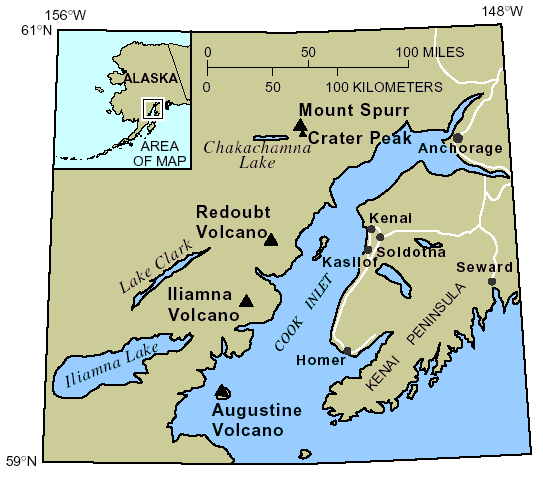
This was a learning trip for us, what to do, what not to do. We loved Kenai in all its magnificence, and riding with a hungover bush pilot was a trip in its own, in addition to being a real trip. We saw the great brown bear, flew up and around a volcano, saw a pod of whales down below. There are very few airstrips up here, so when it is time to land, they look for an open stretch of gravelly beach. Quite a surprise to those of us expecting a runway.

We are on the Glenn Highway, away from the big attractions. There are some massive glaciers here, and the whole area is sculpted by glaciation in addition to ancient volcanism. But the hiking is sparse, and we were warned about bear activity, advised to stay close to people. We drove into Lake Louise, not THE Lake Louise, and there was eighteen miles of paved road leading to a small resort and some houses. The road is four years old and wavy, badly in need of repairs. The resort owner wants the state to fix it for her.

How did these fortunate few people get a million dollar highway to their (probably summer) homes?

Can’t say for sure but I’ve a hunch. Ted Stevens, the man they named the airport after, the guy who wanted to build that bridge to nowhere that Sarah belatedly opposed.

Not much time, and my reflections on what I’ve seen are like those of a mosquito on a moose. There is so much more here. Tonight we board a plane at 10:30 PM and fly to Denver. It will be 102 in Boulder tomorrow.

Seward, Alaska

We have Internet today. We are at a B&B north of Seward, on the east side of the Kenai Peninsula. We met a nice group of folks from Ohio at breakfast, and are headed out to hike up to “Lost Lake.” Since there are so few names to give lakes, they chose that one. Timber, Jewel, and Hidden were taken.

Sarah Palin is very popular up here, it seems. And our Ohio breakfast companions spent quite a bit of time in Wasilla trying to find her house. She’s kind of a phenomenon, a showgirl kind of appearance, full of folksy wisdom. It will be interesting to see if money actually backs her up in a run for president. In my view it is unlikely, as she cannot be controlled on stage, and at times her ignorance is painfully obvious even to supporters. Money tends to like the Reagan/Obama type – handsome, well-spoken, and easily managed.

Off and running. Hi David.

Homer, Alaska

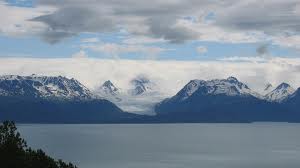
The view out our window is simply stunning – a long string of mountains across Cook Inlet. Take the view of the Tetons across Jackson Lake, multiply if by five, add the massive Grewingk Glacier, and that is what we see.

Homer proper
We aren’t paying very much for this view. It’s expensive to be here, but more money does not buy more view. It’s all the same up and down the streets of this town, the whole peninsula, in fact. Everyone gets a piece of it.

I did not bring the cord that allows me to upload pictures from the camera, so someone else took these photos. Our motel room is a square box facing the inlet, simple and functional. The only thing interfering with the few is another set of boxes like ours fifty yards away.

Grewingk Glacier
We are animal-starved. We’ve been up and down the highway looking for moose and bear with no luck. We hiked in a nature preserve yesterday with no sign of bear – no scat, no tree scratches. The brown bear only occasionally wander through and are rarely seen, but black bear are common – to everyone but us. And moose – you’d think they’d offer up one lousy moose.

The drive up the other sided of the peninsula last “night” was uneventful. The area is one suburb, Alaska-style, with houses on five and ten and thirty acres lots instead of quarter-acres. We went sixteen miles, and in all those miles did not see one convenience store. The area is a rain forest with houses every few hundred yards. It covers an area perhaps the size of Spokane, but with only a small fraction the number of people.

The houses are all functional, no McMansions. The essential businesses are located in the little town that started this place. People drive many miles for a quart of milk. The roads are good, and the winters mild by Alaska standards, we are told. It’s an idyllic life, on the surface, but there’s a veneer of faux wealth over the poverty of the area. You can see it in the old cars and in the businesses that have not done a face-lift in decades. Occasionally there is a 20×20 box-style two-story house, and a few people living on buses. The only industries are fishing and tourism, both tough ways to make a living. There isn’t much prosperity here.

We were to fly over the inlet to see some brown bear yesterday, but everything was socked in. They said they would call if it opened up, but cell phones only work in town proper, and we weren’t about to sit around waiting for it to ring. So we headed out to see some country on foot. And, sure enough, around 4PM they called telling us to come on down and hop a flight. But we didn’t get the message until 5PM. So we are set to go Wednesday morning, our last chance at seeing the famous brown bear before we head north to Seward Wednesday afternoon.

We did go on a short flight out and back yesterday – the pilot, Scooter, from Boulder, CO, was just checking to see if he could land across the inlet. It was only my second time on a small plane, and exciting. In the next life … gonna get me a plane. A friend in Bozeman owns, or owned, a small plane. He could not afford to keep it post-retirement. It is expensive, and if you do not turn those machines into cash flow, they will consume your IRA in a hurry.

Oh yeah – the “Spit” – a five mile landing strip jutting out into the inlet. It’s in the photo above. There’s a large marina, and maybe a hundred little businesses, mostly fishing-related. There’s the usual gift shops, and all of those bear things – watch chains and statuettes that are made in China and sold in every part of the country that has a bear. Nothing is fancy here, but everything is expensive. We paid $22 for a cheese pizza out there. It’s a tiny building. We paid downstairs and then went up a flight of stairs outside the building to a small sun room overlooking the Inlet. Very nice.

Two days ago we went down to the ‘beach’ below our motel room. It’s rough and unwalkable, made of rough rocks and littered with natural debris. There’s a makeshift hut up a few hundred yards, and nearer us were two young boys who had ridden their motorcycle and ATV down there and built a fire. They were friendly, but talked about how “punks” and “hippies” come down there at night and build bonfires and drink beer. I told them that every beach in the world is a magnet for young people to build fires and have parties. But they only know this beach, and are already developing a redneck attitude. But the boys were tan and muscular specimens for twelve-year olds. They are Alaskans, through and through.

So today we aging punk-hippies are going to walk the beach – maybe get ten slow meandering miles in. We can’t drink beer, as we might stumble and fall and break something. We didn’t come here to fish or hunt – just to see the place and walk some trails. But the forest here is very thick, and trails are a rarity. Not that we care – we would walk the highway just to feel the breeze and smell the flowers and trees and salt air. This is Alaska!

Flying up here, looking out over the Canadian Rockies, was reassuring. As far as I could see was nothing but snowy peaks jutting through the clouds. No one lives there! May it always be so.

Forecast: Dumb and dumber

Here’s a post by “HoHo Mustachio” over at LITW excoriating Rep Dennis Rehberg for missing three votes to tend to personal business. The margins for the votes in question: 360-26; 264-114; 379-0.

This is, to date, the dumbest post they have ever put up over there.

Here’s a little dose of realpolitik: Most votes in the House and senate are lopsided and foreordained. Members of either party are free to vote either way without affecting the outcome. They can thereby manufacture voting records to please their various constituencies.

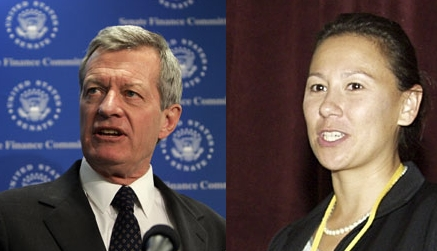
I do remember one very important vote on an national forest issue that was up in the Senate some years back. I was still active in Montana Wilderness Association. It was very close, so close that the deciding vote would be cast by Sen Max Baucus, who was away on business. So they held the vote back until his return. John Gatchell of MWA was sure that Max would come down on the environmental side of the issue. I was equally sure that he would not. I do wish I could remember more than this.

Anyway, Max voted Nay, killed the bill, I was right, Gatchell wrong. Truth. And more than that, I imagine that Baucus was really pissed at being exposed like that. Normally he would have been able to cast a cosmetic “Yea” that did not affect the outcome of the bill.

I am sometimes amazed that the transparent theater of politics is not obvious to those who take a sincere interest in issues. HoHo Mustachio, I hope, learns something today. Just sayin’.

Bribe, thy name be “research paper”

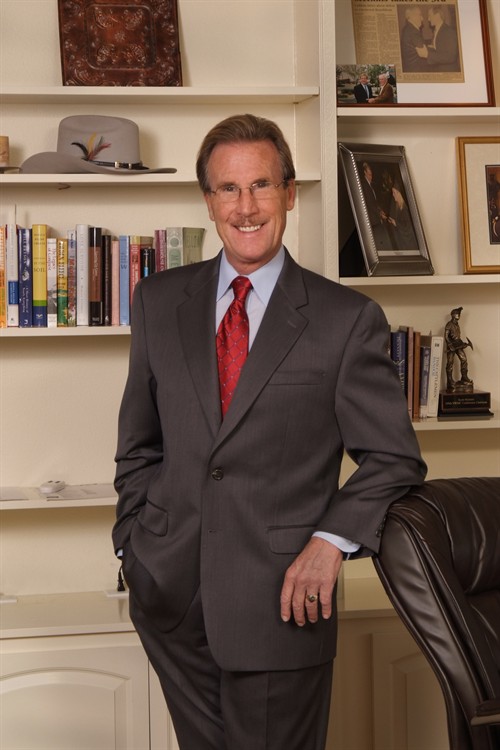
Scott McInnis: A disguised bribe?
Here in Colorado we are having quite a kerfuffle over “plagiarism” involving Scott McInnis, Republican candidate for governor. It seems that a while back a private foundation run by the Hasan family paid him $300,000 to write a policy paper on water issues. He gave back “Musings on Water.” It turns out that his musings were actually the musings of other people, notably a sitting judge. He lifted not a passage or two, but whole pages of material.

When exposed, McInnis said that he had depended on a paid researcher, and that this researcher was the real plagiarizer, and not him. Today the assistant said (Denver Post) that the McInnis people had crafted a letter having him take responsibility for the whole mess, but that he had refused to sign it. So now we have McInnis not only plagiarizing, but also pissing downhill. What a guy!

Hickenlooper
McInnis is toast. His likely opponent in November, Denver Mayor John Hickenlooper, is no prize himself. It’s not like we are faced with momentous choices. As so often happens in this country, our choice is one of method of screwing: Do we prefer Phillips, or standard screws?

Something far more interesting and revealing happened here. McInnis’s “Musings on Water” is not an important document, and was read only by a few people and then filed away. Because we live in the Google age, someone was able to nail him for the passage lifts. Stuff like that goes on everywhere. Scott’s lesson to the rest of the political class is they need to be more careful in the art of disguised bribery.

Buying politicians?
Far more important is this: McInnis was a fair-haired boy, no towering intellect, but a man seen with statewide potential for higher office. The Hasan Family Foundation was not buying “research” from him. They didn’t care about his ideas on water policy. Surely they were smart enough to see that he was no policy wonk. They were buying him. They were buying influence, maybe even lodging themselves as his own personal closet skeleton.

Three hundred thousand dollars! It is not peanuts, and it was not for research. It was a disguised bribe.

Scott McInnis is nothing, was nothing, and will be a well-paid something in the future, just not holding public office. In the meantime, there are quite a few Colorado politicians of “both” parties hitting the Ambien at night as they try to keep their minds off the payments they received for fake work done for people who have an unseen interests in public policy.

This whole affair reminds me that while we need campaign finance reform, corruption will not ever be easily undone.
______________________________

By the way, this train of thought was triggered by a few words from a much smarter guy than me, David Sirota, who wondered about the bribery aspect this on AM760 this morning. It is a very confusing set of circumstances until put in that framework. Did not mean to pull a McInnis on Sirota.

Brzezinski: U.S. lured Soviets into Afghanistan

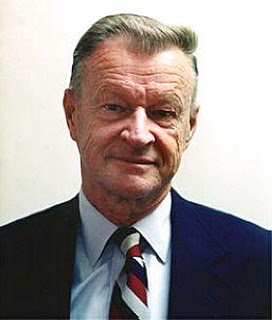
Zbigniew Brzezinski
The following interview was published in France but has never seen the light of day in the U.S.

The CIA’s Intervention in Afghanistan
Interview with Zbigniew Brzezinski
President Jimmy Carter’s National Security Adviser

Le Nouvel Observateur, Paris, 15-21 January 1998
Posted at globalresearch.ca 15 October 2001

Question: The former director of the CIA, Robert Gates, stated in his memoirs [“From the Shadows”], that American intelligence services began to aid the Mujahadeen in Afghanistan 6 months before the Soviet intervention. In this period you were the national security adviser to President Carter. You therefore played a role in this affair. Is that correct?

Brzezinski: Yes. According to the official version of history, CIA aid to the Mujahadeen began during 1980, that is to say, after the Soviet army invaded Afghanistan, 24 Dec 1979. But the reality, secretly guarded until now, is completely otherwise. Indeed, it was July 3, 1979 that President Carter signed the first directive for secret aid to the opponents of the pro-Soviet regime in Kabul. And that very day, I wrote a note to the president in which I explained to him that in my opinion this aid was going to induce a Soviet military intervention.

Q: Despite this risk, you were an advocate of this covert action. But perhaps you yourself desired this Soviet entry into war and looked to provoke it?

B: It isn’t quite that. We didn’t push the Russians to intervene, but we knowingly increased the probability that they would.

Q: When the Soviets justified their intervention by asserting that they intended to fight against a secret involvement of the United States in Afghanistan, people didn’t believe them. However, there was a basis of truth. You don’t regret anything today?

B: Regret what? That secret operation was an excellent idea. It had the effect of drawing the Russians into the Afghan trap and you want me to regret it? The day that the Soviets officially crossed the border, I wrote to President Carter. We now have the opportunity of giving to the USSR its Vietnam war. Indeed, for almost 10 years, Moscow had to carry on a war unsupportable by the government, a conflict that brought about the demoralization and finally the breakup of the Soviet empire.

Q: And neither do you regret having supported the Islamic fundamentalism, having given arms and advice to future terrorists?

B: What is most important to the history of the world? The Taliban or the collapse of the Soviet empire? Some stirred-up Moslems or the liberation of Central Europe and the end of the cold war?

Q: Some stirred-up Moslems? But it has been said and repeated Islamic fundamentalism represents a world menace today.

B: Nonsense! It is said that the West had a global policy in regard to Islam. That is stupid. There isn’t a global Islam. Look at
Islam in a rational manner and without demagoguery or emotion. It is the leading religion of the world with 1.5 billion followers. But what is there in common among Saudi Arabian fundamentalism, moderate Morocco, Pakistan militarism, Egyptian pro-Western or Central Asian secularism? Nothing

Note that neither the interviewer nor Brzezinski had any thoughts about the effects of a ten-year war on the Afghan people. Also note that Brzezinski has little respect for the supposed world-wide Islamic threat.

He’s baaaaaack …

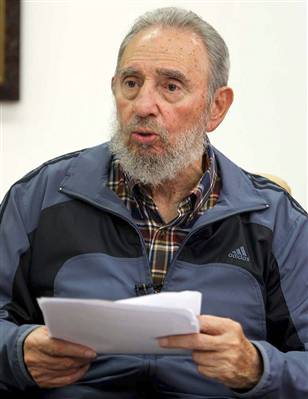
I reprint below an article by Paul Haven, Associated Press Chief in Havana. Like anyone else interested in U.S. history in the Caribbean, I read it carefully looking for hints and clues of what is going on with Fidel. I am also interested in his world view.

There isn’t much there – that is, the interview lasted over an hour, but Castro is quoted only once. The article speculates on his health, and the reporter did go out in the street to get reactions to the TV appearance, one negative, one positive.

Overall, the reporter did a credible job, though the “worthy of contempt” phenomenon is at work. This is facet of American journalism that keeps reporters restrained when reporting on powerful Americans, but unleashes them when they report on weak Americans or powerful enemies of the state. Castro, along with Hugo Chavez, is a legitimate target then for confrontational reporting in a way that, say, Ronald Reagan was not.

American journalism critiqued
Imagine that Reagan in his final years in office was scrutinized for hints of his advancing Alzheimer’s disease. Imagine the reporters critiqued him on his stuttering or loss of train of thought or misplacement of various countries.

It wasn’t done. Reagan was surrounded by powerful people, and any reporter who got aggressive with him would have been punished. He was presented to us as lucid to his final day in office, at which point he disappeared from view, never again interviewed or photographed. He ceased to exist.

Political prisoners
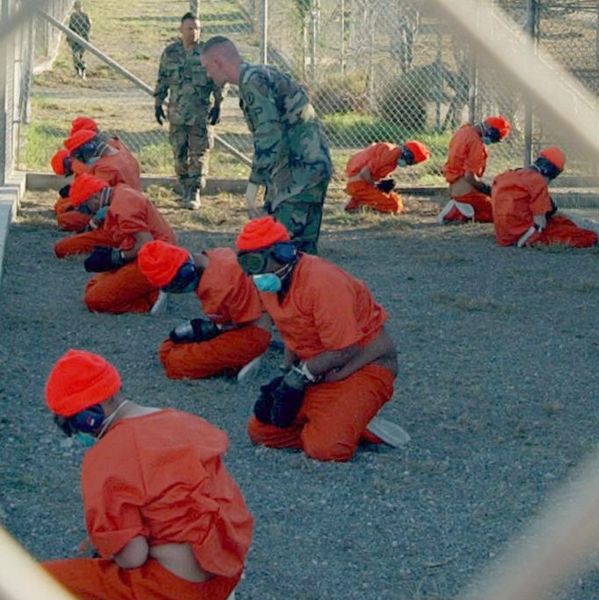
I wonder what Castro talked about in that hour and fifteen minute discussion. In the American press, we’ll never know. The reporter did strain to take note of Cuba’s pending release of 52 “political prisoners,” a phrase never used to describe U.S. detentions of anyone anywhere in the world, least of all at a place on the island of Cuba, occupied by force by the U.S., called “Gitmo.”

___________________________________

Fidel Castro warns U.S. against war with Iran

HAVANA — A relaxed and lucid Fidel Castro returned to the limelight Monday after years spent largely out of public view, discussing world events in a raspy voice in his most prominent television interview since falling seriously ill four years ago.

The 83-year-old former president talked about how tension between the United States and both North Korea and Iran could ultimately trigger a global nuclear war, in an interview on “Mesa Redonda” — or “Round Table” — a daily Cuban talk show on current events.

The conversation ranged widely, from Pakistan’s need for energy to America’s out of control defense spending and China’s decision to lend Cuba money to buy energy efficient light bulbs.

One thing Castro did not discuss were events in Cuba, where the government on Monday released and sent into exile the first of some 52 political prisoners they have promised to free in coming months.

The interview lasted about an hour and 15 minutes — but much of that time was spent with either Castro reading essays by someone else or having his own words read back to him by presenter Randy Alonso.

The scene at a sparsely lit office at an undisclosed location was slightly surreal, even in a country that often feels stuck in a 1950s time warp. It was even unclear whether the interview was live or when it might have been taped.

At one point, Castro referred to a July 5 article as having been published six days ago, which would mean the show was taped on Sunday. Later, however, the program’s host read from an essay published Sunday evening, referring to it as having come out “last night.”

The revolutionary leader wore a dark blue track suit top over a plaid shirt as he took questions. Three academics sat silently nearby as Castro spoke, sometimes nodding in agreement.

Castro warned that an attack on Iran would be catastrophic for America.

“The worst (for America) is the resistance they will face there, which they didn’t face in Iraq,” he said.

As the interview progressed, Castro at times showed flashes of his prowess as a powerful speaker. At other points, however, he paused for lengthy periods and shuffled pages of notes he kept in front of him. Later, he listened as the host read back long tracks from essay’s Castro himself wrote recently.

The former Cuban leader has shunned the spotlight since undergoing emergency intestinal surgery in July 2006. The illness forced him to step down — first temporarily, and later permanently — and cede power to his younger brother Raul. His recovery has been a closely held state secret, and his health has been the subject of persistent rumors among exiles in Florida.

Castro remains head of Cuba’s Communist Party and continues to publish his thoughts on world events in opinion pieces.
While Cubans have become accustomed to reading Castro’s writings, he has stayed largely out of the public eye since ceding power, helping Raul Castro solidify his place as the country’s leader after a lifetime spent in his more famous brother’s shadow.

Monday’s highly anticipated interview was announced in a front-page story in the Communist-party daily Granma earlier in the day. Castro has appeared in videotaped interviews with Cuban television in June and September 2007, but Monday’s appearance was the most advertised and extensive.

Cuban media later showed footage of workers watching the elder Castro on large screens set up at their workplaces.
Photos of the elder Castro greeting workers at a science center were published in pro-government blogs and on state media over the weekend, the first time he has been photographed in public since his illness.

Cubans reacted with surprise to word of Castro’s relative media blitz.

“I think it will have a positive effect on people,” 21-year-old student David Suarez told the AP. “It will give hope that once again he will help to solve our problems.”

Magaly Delgado Rojo, a 72-year-old retiree in Havana’s Playa neighborhood, said the appearances must have been carefully thought out by Cuban leadership.

“The photos and now the ‘Round Table’ appearance are meant to send a message: ‘I am here and I am on top of everything. … I am a part of every decision that is being made,'” she said. “This is not casual at all. This is calculated.”

The two Castros have ruled Cuba since overthrowing dictator Fulgencio Batista in 1959. Fidel’s health has for years been the subject of frequent rumors — particularly among exiles in Florida, and his television appearance will undoubtedly be scrutinized for signs of his aging.

The photographs of Fidel published this weekend were taken on Wednesday at a scientific think tank in Havana. He is shown smiling and waving at workers, appearing relaxed and happy, but somewhat stooped. Granma republished the photographs on Monday under the story about his upcoming television appearance.

Cuba has occasionally released pictures showing Castro in private meetings with dignitaries, most recently during a visit in February by Brazilian President Luiz Inacio Lula da Silva. But he had not been photographed in a public setting since 2006.

Castro appeared in a 50-minute taped interview with Alonso of “Mesa Redonda” in June 2007 to discuss Vietnam and other topics. He also appeared on Cuban television for an hour-long interview in September of that year, knocking down a slew of rumors of his death.

A month later, he phoned in to a live broadcast featuring Venezuelan President Hugo Chavez, a close Castro ally who was visiting Cuba. Castro sounded healthy and in good humor, but he was not seen.

Castro has appeared with other visiting presidents and dignitaries in video clips and photographs.

Crips or Bloods (The Athena Paradox)

Why only two parties? There’s a reason, and that reason is systemic, and stems from the workings of financial power. Like Crips and Bloods, there’s only two choices, and each mirrors the other.

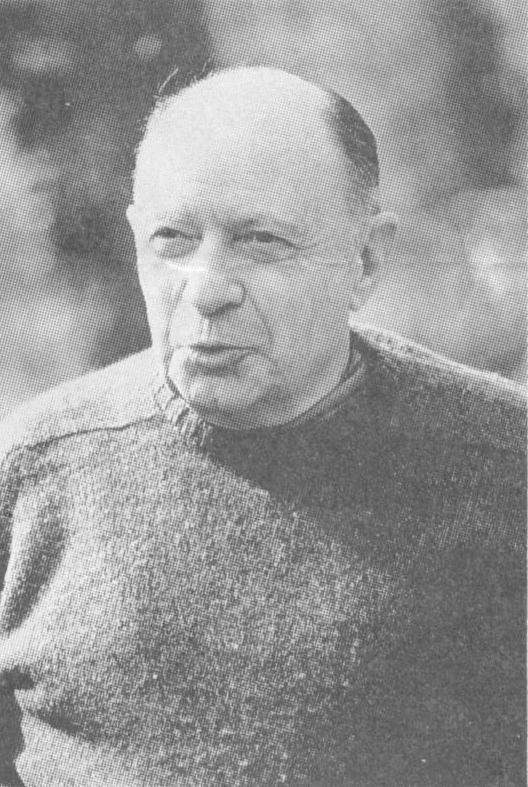
One of my favorite books was written in 1965 by Jacques Ellul, and called “Propaganda”. I have never met another person who has read it, or will read it. Perhaps it is the name – “Propaganda” calls up images of Korean indoctrination camps, Soviet commissars and Mao’s Great Leap Forward.

Ellul wrote on a very high level, detached from the power centers, and so described public opinion management not just in the totalitarian centers, but also in the democracies of that time.

Jacques Ellul (1912-1994)
The U.S. was not exempted form his analysis, and “United States propaganda” was just another type alongside French, Soviet, Chinese, Vietnamese, and others. Further, Ellul was not a man given to emotional outbursts about human nature or democratic governance. He even thought that propaganda was inevitable in societies using mass communication methods, and so ought to be constrained to serve our broader interests.

This did not sit well with American elites, who would not even acknowledge propaganda’s existence on this side of the pond. It was only something that happened beyond the Iron Curtain. The idea too that it could serve egalitarian purposes must have chafed.

One of Ellul’s observations was that we suffer from illusions, one of which is “progress.” We buy electric razors because they are “better” than the old blades. They are not, but they are newer, and thus represent progress. In fact, he said, progress doesn’t really exist even as technology improves.

One face of propaganda ...
So I assume, if he is right, that our current cloud computing web-based society is essentailly no different than the one he wrote about in the early 1960’s. Then, as now, we were a two-party state, and most people thought that was the normal state of affairs.

Ergo:

Of course, the political parties already have the role of adjusting public opinion to that of the government. Numerous studies have shown that political parties often do not agree with that opinion, that the voters – and even party members – frequently do not know their parties’ doctrines,

... and another
and that people belong to parties for reasons other than ideological ones. But the parties channel free-floating opinion into existing formulas, polarizing it on opposites that do not necessarily correspond to the original tenets of such opinion. Because parties are so rigid, because they deal with only part of any question, and because they are purely politically motivated, they distort public opinion and prevent it from forming naturally.

Two parties then existed, and people cling to them because they know no other way. They don’t even represent our opinions.

A party or a bloc of parties as powerful as a would-be runaway party starts big propaganda before it is pushed to the wall. This is the case in the United States, and might be in France if the regrouping of the Right should become stabilized. In that situation one would necessarily have, for financial reasons, a democracy reduced to two parties, it being inconceivable that a larger number of parties would have sufficient means to make such propaganda. This would lead to a bipartite structure, not for reasons of doctrine or tradition, but for technical propaganda reasons. This implies the exclusion of new parties in the future. Not only are secondary parties progressively eliminated, but it becomes impossible to organize new political groups with any chance at all of making them heard. … On the other hand, such a small group would need, from the beginning, a great deal of money, many members, and great power. Under such conditions, a new party could only be born as Athena emerging fully grown from Zeus’ forehead.

There were three candidates. Only one was sane.
Ross Perot’s American Independence Party was such a manifestation of Athena, as he had millions to invest and a strong message that resonated well. Perot was crushed, of course, and to this day if asked, most people will offer up some version of “he was on target, but crazy.”

Ross Perot is not crazy. That people think he was is the power of propaganda. Since his time, our two parties have fixed the system so that no future Perot will ever upset them as the one of the 1990’s did.

Ralph Nader’s futile attempts in 2000 through 2008 prove Ellul’s point. It will never happen. There isn’t enough money to overcome the big two. So, no surprise, Nader’s latest book is called “Only the Super Rich Can Save Us.” He too has realized the Athena paradox.

What to do? That’s a question often asked. Over at 4&20 over the weekend, they wrestled with immigration … what to do? The author of the post is a Democrat, and had harsh words for Republicans, who are not ‘offering solutions’ to that problem.

We now have 11.5 million illegals here. Most are here due to Bill Clinton’s NAFTA, also supported by the ‘other’ party. They are not going anywhere. We need to melt them in with us, bring them under our laws, and adapt. But bringing them under our laws would not be enough, as our laws are designed to thwart popular organizations. The illegals have to be blended into the current propaganda structure, and so must be shut out until they adapt. So the two parties are merely fighting for the votes of the Hispanic population while not doing anything concrete about the ‘problem.’

There is no solution to be had, or alternately, the ‘solution’ to the ‘problem’ of immigration is, like so much else, an illusory goal. There is no electric razor that will fix that problem.

And so that’s the way it is in the bipartite state. We must seek solutions that cannot be had until we break from the two parties, and the two parties are too powerful to break.