Happy New Year to my reading friends

The phonetic alphabet is a unique technology. There have been many kinds of writing, pictographic and syllabic, but there is only one phonetic alphabet in which semantically meaningless letters are used to correspond to semantically meaningless sounds. This stark division and parallelism between a visual and an auditory world was but crude and ruthless, culturally speaking. The phonetically written word sacrifices worlds of meaning and perception that were secured by forms like the hieroglyph and Chinese ideogram. These cultrually richer forms of writing, however, offered men no means of sudden transfer from the magically discontinuous and traditional world of the tribal word into the hot and uniform visual medium. (Marshall McLuhan, The Written Word: An Eye for an Ear)

Marshall McLuhan is a man whose words I cherish, as he was so able to communicate complex ideas in an understandable manner. A tribute to his genius is that while reading his words it is as if the sun pokes between the clouds, yet shortly after I lose that light. I have to continually revisit him.

Consequentially, his major essays, collected in Understanding Media: The Extensions of Man, sits atop my shelves here among pictures of my mother and grandmother and others – I didn’t realize as I placed that and two other books there that I was reserving a place of honor for him. I just wanted his book to be handy.

Love of the written word takes many forms. Some prefer fiction writers, and I tend to agree that fiction in the proper hands conveys important truths in a manner that non-fiction cannot. (See, for example, “The New Testament” by various anonymous authors.) Others prefer poetry, but I’ve never been able to sit and look at a it long enough for it to penetrate this thick cranium. Hearing poetry is another experience entirely.

I read mostly non-fiction. But my most recent experience with fiction, The Stranger by Camus, left me wanting more. It was so deeply moving. In the same manner, On the Road by Kerouac moved me … “That’s not writing. That’s typing!” scorned Truman Capote, but Kerouac had managed to convey to me the emptiness felt by the Beat Generation in the post-war years in a manner that no historian could touch.

So as a reader of non-fiction, I doff my cap tho those who prefer fiction. Their pathway to truth is less littered with lies than my own.

As we head into a new year, I take a moment now to offer tribute to those who read this blog and bring their own ideas and experiences here. There is nothing new or original under the sun, of course, but there is the human mind. We are capable exchanging complex notions of great value.

It is always obvious to me in blog exchanges whether or not I am dealing with someone who reads, and even more, the type of reading done. It takes a lot of reading over time before things can settle in and begin to paint a picture of the world that has some consistency around the edges.

As a young man raising kids and working full time, I managed to read maybe three books a year, and consequently each had disproportionate impact on me. So it was that I read, for example Milton Friedman’s Free to Choose, and Dare to Discipline by James Dobson. Without broader experience, the effect of these men was disproportionate.

So too is it with so many of recent generations who have read Atlas Shrugged, and then stopped. It’s good to read Ayn Rand, and then even better to throw her aside with great force later on. It’s a liberating feeling.

Before we settled in the house we now occupy, we looked at maybe thirty others in this area and up around Boulder. I was always curious about the people who lived in those houses, so as we went room-to-room I looked for the book shelves or stacks. What I generally found was no shelves or stacks, maybe a few travel guides or a beach book or two. Dan Brown probably accounted for 60% of book sales in this land a few years back. It’s a desert out there, I realize.

But then I recall that Allen Dulles, who sat on the Warren Commission, reminded the other Commission members that even though the final Report would contain gaping holes and contradictions, that they should not worry about it because Americans do not read.

That was 1964 and true then as now.

As McLuhan reminds us, what is more meaningful on a wall? An American flag, or the words “American flag”? While phonetic symbols store a great wealth of information, symbols impart far more and with immediate impact. Consequently, the power of television and movies, and now the images on the screen of our computers, own the American mind.

There is a vast treasure trove of truth and lies out there waiting to be assembled and easily accessible to all of us. But it is hidden away in books, and so will never be found.

Oliver Stone, be wary

@the OliverStone: A dirty story & in the aftermath the West maintains the dominant narrative of “Russia in Crimea” – the true narrative is “USA in Ukraine.”

@shaymultimedia: @TheOliverStone Shame on you Stone! How much is the Kremlim paying you? You are what Lenin used to refer to as a “useful idiot.”

@AlexandrNevskij: @The OliverStone I know my history, and Putin is a thieving murderous war-mongering thug, pure KGB filth!

@mpthct: @shaymultimedia @AlexandreNevskij @TheOliverStone Odd that people who claim to know their history are the ones that don’t know their history.

________________________
stoneI listened to NPR’s Wait Wait Don’t Tell Me podcast over the weekend. It is called the “NPR News Quiz” and I listen because they have some really funny people on their panels. But it can be annoying too. It is, after all, NPR, and so the “news” it quizzes panelists about is mostly lies. Host Peter Sagal made jokes and references to our official and given truth in this last show, that Vladimir Putin is an evil man, that the Russians invaded Crimea, and that the Ukrainian coup d’état earlier this year was a triumph for democracy in which the US played only a small part, if any. That is the official and dominant narrative, and Sagal, of course, is too … NPRish … to know any better.

Oliver Stone is now making a documentary about the Ukrainian coup d’état and Maidan massacre, and it will be out soon enough and opening at a theater anywhere but near you. Here’s a part of his description:

“Details to follow in the documentary, but it seems clear that the so-called ‘shooters’ who killed 14 police men, wounded some 85, and killed 45 protesting civilians, were outside third party agitators,” he said. “Many witnesses, including Yanukovych and police officials, believe these foreign elements were introduced by pro-Western factions – with CIA fingerprints on it.”

My only question, and why I reprinted the Tweets above, is … how can anyone not know this? How?

The massacre during demonstrations is a CIA specialty repeated elsewhere, for instance in Venezuela in 2002, and of course in countless coups d’état wherein any government that demonstrates any left-leaning sympathy or, more importantly, charts a course independent of US dominance, is targeted for regime change. Of course, the @AlexandrNevskij’s of this world who know their history so well don’t know this, and neither do most Americans.
______________

This may seem a disjointed post, but all of this came full circle this morning for me as I reviewed a murder in Washington DC in 1964, that of Mary Pinchot Meyer, one of JFK’s lovers, but oddly, one with whom he was truly in love and with whom he shared deep secrets. Her ex-husband, Cord Meyer, was high up in the CIA and so had to sit in silence as CIA murdered her. The murder took 6-8 people to carry out, not counting those who planned it. It included

  • surveillance for weeks to choose the murder spot;
  • a planted broken-down car so that a tow truck was called, to make sure witnesses were on hand;
  • a patsy selected that very morning, a young black man who was sleeping off a drunk after having had a tryst;
  • a wardrobe department at CIA that supplied the clothing for a a man looking like the patsy to be seen near the body by witnesses;
  • two people, a man and woman strolling through the park – actually doing surveillance;
  • a “witness,” a young army officer who appeared and offered incriminating testimony against the patsy and then disappeared into the shadows;
  • and of course, the shooter himself, a mere mechanic, a paid killer, who performed his job with cold calculated efficiency, even eliciting a scream from his victim before dispatching her. (He could have killed her silently but wanted attention drawn to the event so that the man imitating the patsy could be seen walking away from the scene.)

It’s just one more murder. CIA has done thousands of them. But look at the attention to detail in the staging, the thoughtful setup for the sake of investigators. They are professional murderers, and their art is to make murders look like something else – accidents, random acts of inexplicable violence, car accidents, plane crashes large and small, suicides, drownings, lone nuts in windows overlooking motorcades … there is always the act itself, but then something else too, some distraction to draw our attention away from the real murderers and motives.

James Jesus Angleton was one of the early henchmen in the organization as it found its wings in the post-war era. Like most psychopaths, he found little joy in life beyond the game, and spent his closing days drinking himself into oblivion, perhaps even demonstrating elements of a conscience in these words spoken close to the end of his life.

Fundamentally, the founding fathers of U.S. Intelligence were liars. The better you lied, the more you betrayed, the more likely you would be promoted. These people attracted and promoted each other. Outside of their duplicity, the only thing they had in common was a desire for absolute power. I did things that, in looking back on my life, I regret. But I was part of it and I loved being in it. … Allen Dulles, Richard Helms, Carmel Offie, and Frank Wisner were the grand masters. If you were in a room with them, you were in a room full of people that you had to believe would deservedly end up in hell.

I guess I will see them there soon.

I bring this up because Oliver Stone, in being openly hostile to CIA and having power in his filming skills and reputation, is putting his life in danger. Discussions are likely going on as we speak about the wisdom and possible means of dispatching him. If he knows this, and I assume he does, then he is a man of honor and rare courage. We all gotta go sometime, and his body of work, especially the movie JFK, is an enormous and important contribution to the preservation of truth, that thing that American historians* are so very bad at.
__________________
* As Senator Frank Church discovered during his investigation into CIA activities in the late 1970’s, CIA has paid writers on staff whose job it is to rewrite history in the making so that researchers looking for source material in college libraries and other archives will find only official history, and not the real stuff. Thus are the bookshelves of Barnes and Nobel, history and current events section, littered with bullshit.

Martin Luther King assassination … hidden in plain sight

I am busy today transcribing a one-hour interview by Len Osamic of William Pepper, currently serving as defense attorney for Sirhan Sirhan, but before that the attorney for James Earl Ray. And I have to chuckle a little bit because commenter Fred has said to me on occasion that the government cannot keep secrets and that secrets get out, and that’s why he doesn’t believe these fantastic stories of conspiracies and cover-ups, Martin Luther King being a big one.

Well, information did get out there. In 1999 the family of Martin Luther King sued Lloyd Jowers and “other unknown conspirators” in the death of Dr. King, forcing a public trial in Memphis. It was the trial of the century, and no one showed up. To this day if you ask any newspaper reporter or journalist in this country about that trial, you’ll get a blank stare. But for a week Three weeks in 1999 seventy witnesses were called and testified about the events surrounding King’s death. The verdict was that Lloyd Jowers, a minor player, was found guilty, as were the FBI, Memphis Police, and U.S. Army.

The trial is public record, and I intend somehow to get hold of the transcript. William Pepper and company have done a remarkable job of uncovering witnesses and evidence. It seems they know everything now except the name of the actual shooter. Lloyd Jowers, who had ulterior motives for approaching the King family to confess his guilt, was not a shooter, but took care of the rifle after King was gunned down from the bushes below the rooming house where the shot “officially” was fired. He knows who fired the killing shot, but refused to give up a name because, as Pepper says, he feared for his life. The actual murderer of King, a hired gun, a mechanic, was a very dangerous man, and was still alive in 1999.

It gets even more interesting. There were levels of organization in the shooting, with the U.S. Army providing backup snipers in case King survived. (Andrew Young was also to be killed that day but was not.) The Army also provided a photographic team, two still photographers who were atop the fire station nearby taking pictures of everything. From them we heard testimony that James Earl Ray was not present at the time of the shooting. But is that not weird, that the Army took the trouble to photograph the event? Would we not want to see those photos now? Were they produced at trial? Subpoenaed?

Here’s part of the Pepper interview, as it relates to Colonel John Downie, who was in charge of the military side of the shooting:

That entire Army unit, those soldiers, the ones from Psychological Operations and the other Special Ops came out of Camp Shelby, Mississippi early that morning, was designated, authorized under the control of Colonel John Downie. John Downie was the head of the 902nd Military Intelligence Group that was based in the Pentagon reporting directly to the Assistant Chief of Staff for Intelligence of the United States Army. And that’s the only MIG, Military Intelligence Group, that is based in the Pentagon. John Downie controlled it, he was brought back to take it over and run it in June of 1967, and he was given his marching orders to begin to organize the military side of that operation as opposed to the civilian side, which was handled separately.

Downie was organizing the military side in ’67. He’s an interesting character, and was a man, strangely enough, that one had to have some respect for as a patriot who believed what he was doing was right. Because, he was Lyndon Johnson’s briefer. He was also CIA. He was Lyndon Johnson’s briefer on the Vietnam War. And he would come back into Washington on a regular basis and meet with the President to give him a briefing on the war and continually question the president as to what we were doing there, saying this was a ridiculous waste of blood and treasure, and that we had no business being there. And why are we there? And he kept pounding out this fact to Johnson and finally one day Johnson pounded the table and said to him “John, I can’t get out of this war. My friends are making too much money.”

Now that is one of the most outrageous and revealing statements about war and the waging of war that any head of state in the history of this republic has ever made. And he made it to John Downie, and I learned about that subsequently with an interview of John Downie’s daughter, who remembers him coming home that day very upset and saying to his wife “Pack your bags. We’re going to Canada.” And he had himself transferred up to the embassy in Canada and wanted nothing more to do with being a facilitator for the war in Vietnam.

So that taught me something about the character of this man who originally was from Pennsylvania, and in terms of his perceived actions in terms of patriotism. And I believe – this is the quandary one gets into – I believe that he had no doubt that Martin King was an enemy of the state and that what he was doing was correct. Of course, however, it was wrong and illegal and criminal and immoral. With that assessment, one has to put the whole story out there so that it’s clear where this guy was coming from. He ran the military side of things. He ran the military side.

I find that intriguing, that the assassination of Martin Luther King can be traced to within shouting distance of Lyndon Johnson. Of course, we have no evidence that Johnson ordered it or even knew about it. But his military briefer sure did.

Pepper will put out a book that summarizes all of this, to be coordinated with a movie, in the near future. He has written two previous books on this subject, Orders to Kill: The Truth Behind the Murder of Martin Luther King (1995), and An Act of State: The Execution of Martin Luther King (2003, revised 2008). These will be folded into the final book, which also includes “devastating information that I have been able to acquire in the fifteen years following the civil trial.”

So there ya go, Fred. Information got out, it’s hidden in plain sight, and still no one knows about it! That’s thought control in our democratic society, at its finest.

Coming to grips with ignorance … loose screws

Veracity: “Not entertaining any proposition with greater assurance than the proofs it is built upon will warrant.” (Locke)

U.S. variation: If something is on TV and called “news” it is true. No proof need be offered.

Bertrand Russell:

“[Locke’s] definition is admirable in regard to all those matters as to which proof may reasonably be demanded. But since proofs need premise, it is impossible to prove anything unless some things are accepted without proof. We must therefore ask ourselves: What sort of thing is it reasonable to believe without proof?

I should reply: The facts of sense experience and the principles of mathematics and logic – including the inductive logic employed in science. These are things which we can hardly bring ourselves to doubt, and as to which there is a large measure of agreement among mankind.

But in matters as to which men disagree, or as to which our own convictions are wavering, we should look for proofs, or, if proofs cannot be found, we should be content to confess ignorance.” (The Listener, 1947)

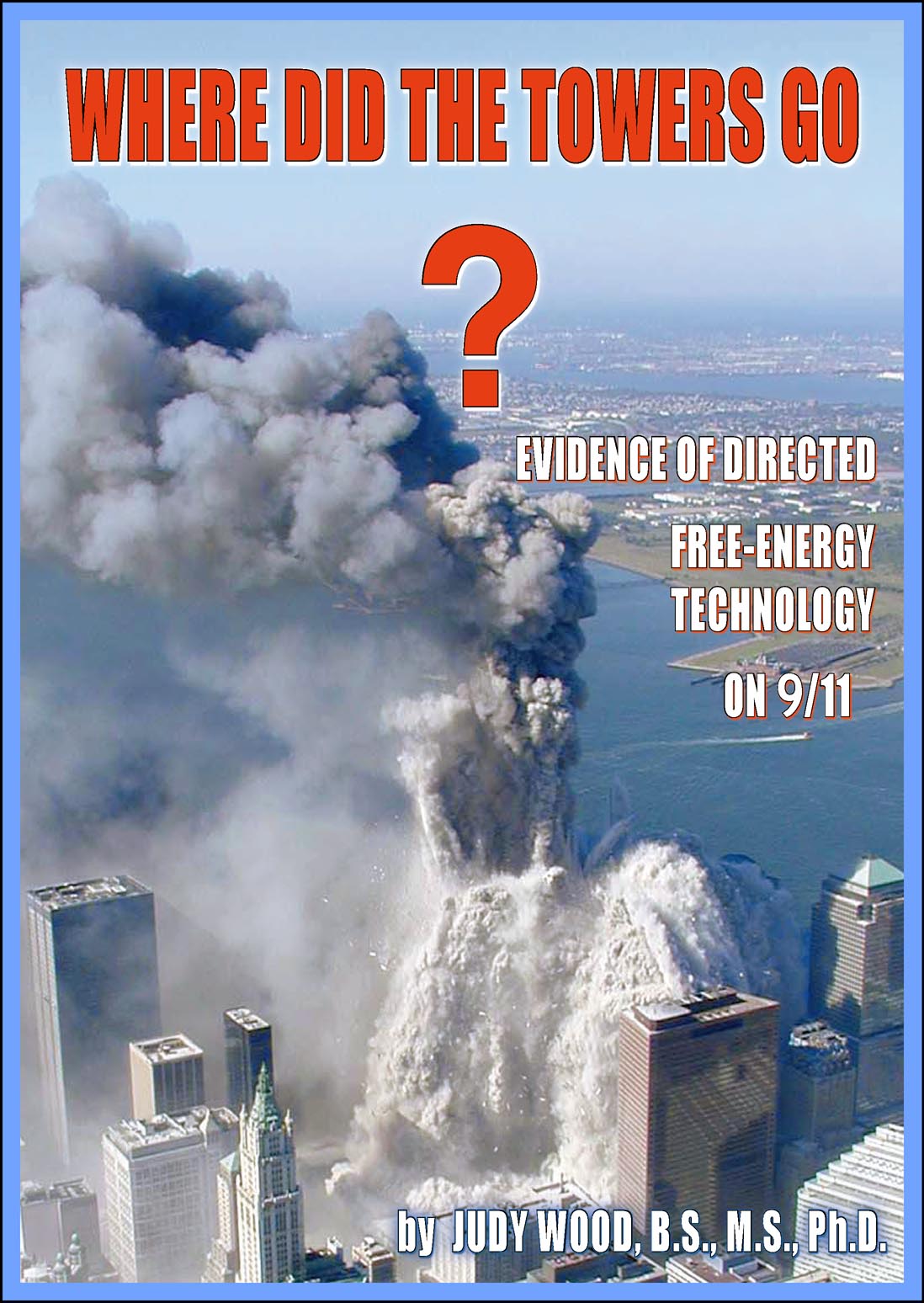
The major event of our time for most Americans, 9/11, is surrounded by so-called evidence with little or no science behind it.

  • Jet aircraft cannot behave in that manner, cannot fly at 500+ mph in dense atmosphere;
  • The odds of 19 supposed hijackers all having success with minimal tools at their disposal are phenomenal …
  • … and then to fly the aircraft (which cannot fly at that speed anyway) unerringly to their targets … unlikely.
  • Large jet aircraft cannot fly through small holes without meeting resistance and leaving debris.
  • Light posts would not have been severed by aircraft wings – quite the opposite, the wings would have been severed by a denser metal.
  • Cell phone calls from aircraft were impossible then, as now.
  • The notion that an aircraft sunk in an abandoned mine and that no effort was made to recover it is … indescribably ludicrous.
  • That a group of people ascertained the plans of supposed hijackers and then voluntarily committed suicide to save others … Disneyesque, vain, patronizing and stupid.
  • That national defense responders all at once screwed up is so … highly unlikely …
  • … that fighter aircraft needed for national defense conveniently were out of position – highly coincidental.
  • The large number of military drills going on, easily ‘flipped live” to avail plotters of vast government resources, was too coincidental to be taken without serious skepticism.
  • The presence of an unreported large hurricane off the shore of Long Island that day … hmmmm.

These are the facts of sense experience, but also principles of mathematics and logic. Those of us who look at the events of that day with high skepticism are the ones who employ the skills of reason and logic, and are also the ones not so susceptible to TV truth. We are the sane ones. The rest of you … you seem to have some screws loose.

I do not understand the power in place that causes ordinarily sensible people to believe such monstrous lies. It’s really weird that all of the above, easily seen to be false, even ludicrous, are accepted without proof.

What the hell is wrong with you people?

In praise of rock throwers

9781610915588There is a new book out, Keeping the Wild, a compilation of essays and articles edited by George Wuerthner, Eileen Crist, and Tom Butler. I have not read it but will, and wanted to promote it here as it was recommended to me by a rock thrower over the weekend.

I used to be a volunteer for Montana Wilderness Association. This was the period from perhaps 1992 to 2000 or so – I am not clear. I sat through endless meetings, but it was a learning process more than a time when I was doing effective work. It was like being dropped in the middle of the Keebler Elf cookie factory, a buzz of activity and left to me to figure out who’s doing what and who is in charge. I joined because I like the product.

I do remember a trip to Great Falls in the early 1990’s with the Eastern Montana organizer, Tammy, to meet with people from the Pew Charitable Trusts and try to get some financial support. I was determined at that time to try to understand Max Baucus, and so took with me a yellow legal pad so that I could jot down thoughts as we traveled. I remember that. That was just a beginning, of course, and a long period of self-education followed, still going on. But I did ask a question.

In the aftermath, and memories are not clear, I do know that we were turned down by Pew, and that Tammy was disappointed. A young fellow from back east, John Adams, the successor organizer for the Eastern office, would later tell me that he was of the impression Pew was trying to take over the program for MWA, and offered grants only if the organization conformed to its objectives, abandoning its own.

At that time, I recall MWA having three paid staff in Helena, Bob Decker, Executive Director, John Gatchell, Conservation Director, and Susan, the administrative assistant. There were also paid field offices in Great Falls, Billings, and a couple of other places. It had a host of volunteers*, the old guard, the men and women who formed the organization and fought and won many of the wilderness areas that Montana still enjoys. These men, like Joe Gutkowski, Don Mazola, and two I never met, the Baldwins, and a host of others whose faces I know but names I’ve lost, formed a backbone of directed energy that accomplished goals over a long-term. I do hope that in writing this people come along and refresh my memory, as too much time has passed since my involvement. I would like that list of names, as I could not find it at the MWA website.

An important feature of MWA was poverty. Bob Decker, an engineer by trade, along with Gatchell and Susan, made very little money despite having good skills and talents. That’s a hard way to live, but is part of the deal in the environmental movement ethos – there isn’t a lot of money to be had. Poverty draws out the dedicated souls who are more concerned about mission than comfort. But that’s easy to say of other people. I always wanted to make enough money to be comfortable. So did they. So do we all.

Decker left. Susan probably retired. Gatchell is still there. Pew moved in. Pew won. Here’s a list of current staff of MWA:

  • Bryan Sybert, Executive Director
  • Carl Deitchman, Finance Director
  • Laura Parr, Business Manager
  • Amanda Hagertym, Administrative Assistant
  • Sarah Shepard, CFRE, Development Director
  • Kassia Randzio, Development Coordinator
  • Molly Severtson, Donor Relations Manager
  • Denny Lester, Communications Coordinator
  • Gabriel Furshong, State Program Director
  • Mark Good, Central Montana Field Director;
  • Casey Perkins, Rocky Mountain Front Field Director
  • Zack Porter, NEXGen Program Director
  • Amy Robinson, Northwest Montana Wilderness Field Director
  • Cameron Sapp, Eastern Montana Field Representative
  • John Todd, Southwest Montana Field Director
  • John Gatchell, Conservation Director
  • Shannon Freix, CDT Montana Program Director
  • Meg Killen, CDT Montana Field Crew Leader
  • Sonny Mazzulo, CDT Montana Field Coordinator
  • Cedron Jones, GIS Mapping Specialist

Good heavens! That’s not a dedicated group of volunteers – these are mostly degrees and salaries and the hubris that goes with that. Quite a few are dedicated to “development,” or keeping the engine going that pays the salaries. It’s become a self-feeding machine that needs a continual source of new food to keep going.

Wilderness has always been a tough fight, but the fighters left MWA as the Pew children moved in. The culture changed. These folks, one in particular, refer to the old guard as “rock throwers.” The new guard are well paid I assume, and comfortable with development of donors instead of wilderness. These are our “collaborators.” They throw rocks at outfits like Alliance for a Wild Rockies, the men and women who fight the fights that MWA used to help out with.

I once referred in a blog comment to a similar experience that Trout Unlimited experienced, an influx of foundation money, as “Invasion of the Body Snatchers.” These people talk like wilderness advocates, and they all attach their canoeing and hiking affectations to their resumes. Perhaps they’ve noticed, then, as I have, that the back country is virtually empty these days, as are parking lots at trail heads. That was our constituency, wilderness users. Without them, it will soon be rolled over by ATV’s and snowmobiles and loggers, the people whom MWA collaborates with.

MWA website is littered with pictures of cherished areas. Gone are any references to the founders, any history. If anyone criticizes them for selling out, as they surely have, they are likely to get that piercing and deeply disturbing scream that Donald Sutherland did so well in the 1978 movie about moving automatons into the bodies of real people.

These people, the current staff of MWA, and there are two that were there when I was there, will never know the thrill of a victory. They don’t try to win anything. But they also don’t know the other part of being alive, as essential as an occasional victory, the pain of defeat. Since they don’t try to win, by definition, they don’t know what it is to lose. So life is good for them.

It’s always been easy to call losing something else. But that’s what they do for living.
___________________
*Do not confuse “volunteers” with “membership.” There were perhaps thirty hard-core volunteers even as MWA listed thousands of members. The requirement for members was a $35 annual contribution, and it had a four-fold effect, that is, if you sent them that, they would assume you had a spouse and two children, and add four people to their rolls. I assume that chicanery goes on throughout the not-for-profit world, as there’s very little active volunteer activity in this country outside churches.

Noises in the night

This is a most revealing conversation from two days ago at 4&20:

Commenter: Count me among the many who can’t process the thought that elites were behind 9/11.

Me: Totally understandable thought. I do hope, however, that it represents the beginning, rather than the end, of your search for truth.

Commenter: Actually, I’m not much of a seeker. Most of the time I’m willing to settle for appearances. They’re damning enough.

Me: Until scrutinized.

Imagine laying in bed at night and hearing noises in the house. Perhaps the hardest thing we all have to do in growing up is to summon the courage to go find out what is going on. It requires every ounce of steel we have accumulated to that point. (We could just grab a gun, a substitute for courage.)

Here’s another exchange, from this blog:

Commenter: I’m looking for a cause to which I can become a lackey and sycophant. I’m considering the conspiracy theory world. The problems I have with it are:

)there are multiple threads to follow. It would seem things would begin to converge after a while.

)there are as many holes in the proposed alternatives than in the official line.

)the personnel in the genre often have quirks that overshadow the scholarship

Me: As to your first point, it is true, you do have to use your brain.

As to your second point, utterly false. You’ve obviously never looked at any evidence.

As to your third point, such observations are generally made by people who have not used their brains or looked at the evidence.

You can solve this crime … millions of other have. It was essentially solved back in the 60’s. What scares you?

Commenter: Comes the hour, comes the man. Why don’t the millions rise up, empower some leaders, and prosecute the wrongdoers? Probably because there is less there than you think.

Me: Darting, dodging, weaving, ducking, refusing to look at the evidence. You’re scared of what you might find, I suppose. That’s why they got away with it. People are just like you. People don’t want to believe our country is just like every other country, run by thugs. America is exceptional, we are told. Look into this crime … and your eyes will be opened. That’s rare. Few have the balls to do that. Few transcend the barrier of fear.

That’s really all that is going on. People are afraid of facing their darkest fears. I am like everyone else except that, by chance, perhaps being blind and naive, I got up and stumbled around the house and came face to face with reality.

It made a difference. It changed me.

The intruder is American exceptionalism … that is, we need to come to grips with what is not there. We are just like every other country on earth, not different or better. Just suffering deeper delusion.

Outliers 2

The posts below, Outliers, as expected, drew few reads and but one comment. Perhaps the biggest deterrent to anyone reading it is that it is long. But beyond that, there is a divide, and it is an interesting one to observe. Americans are kept under a bubble and fed shit, and have so learned to trust what they are fed that they regard anything outside it as aberrant. (“Conspiracy theory,” they are taught to think.) There is precious little freedom of thought in this country, and the most astounding thing is that this is so even as people are free to access any and all information from any and all sources … and don’t! They wait to have it dropped in their lap.

And then I realized because I have stepped out of traffic and read and read and tried to figure things out … that I am an outlier. I am not a radical in that I don’t have any solutions to our problems, and so have no proposals. There is no ‘ism’ that will fix us. I don’t support anarchists or syndicalists or libertarians or any of that nonsense, and certainly do not think that either of our two parties, the People’s Front of Judea or the Judean People’s Front, are any kind of solution.

So screw ideology. I just operate on a different set of evidence-backed convictions.

If more people were to free their minds, we might have meaningful change. But I don’t see it ever happening. The forces of thought control as manifested by news and entertainment and schooling is far too powerful to overcome. We’ll just have to see where it takes us. We have not really suffered much, not as suffering goes on a world-wide scale anyway. Other countries have suffered deeply because of American insulation. Millions have died, millions more are homeless and trapped in poverty. But we have not suffered. So I guess there’s not much hope for change from within.

Outliers

Malcolm Gladwell in his book Outliers talks of the need to devote 10,000 hours to any activity to become really good at it. He’s talking, of course, about violinists and chess masters, people who stand out, but it struck me the other day, looking back over my life since 1988, that I have 10,000 hours of reading in the bank, or an average of an hour a day during that time. That does not count the hours spent writing on this blog these last eight years, a form of self-guided learning. That’s more time than I spent studying in college.

It does not begin to equate to the number of hours I spent in classrooms, however. Most of that classroom time was spent absorbing material that I would later have to recite back on a test before permanently forgetting it. How that qualifies as “education” – I haven’t a clue.

Looking back at my graduation from college, I am embarrassed at how little I learned. True, I passed the CPA exam, but on-the-job training is where that expertise comes from. I could have skipped most of college. Everything I know I learned since. There was very little learned in school that was truly useful later on.

My wife’s son runs a small business with quite a few employees. I asked him about the value of a college degree in his hiring practices. He didn’t think there was much value except for this: A person with a college degree can undertake a large project and see it through to the end. But honestly, there’s got to be better, cheaper ways of attaining that end than those thousands of hours wasted in classrooms. Can we not find a more visionary rite of passage into adult life?

It is our self-guided learning that matters most, because it is driven by interest. We tend to remember it. In my case, The lessons I had absorbed in sixteen years of classroom learning were those most Americans learn: Religious faith, false history, some numbers, some literature … drawing a blank here. What did I do all those years?

Let’s see: In college I studied …

  • statistics for three semesters. I cannot tell you a thing about it.
  • I studied marketing, but didn’t learn how it is really done, as no one will ever admit they deceive for a living.
  • I studied governmental accounting, and during that semester fell for a really hot girl. What I remember from that class: Betsy.
  • From my college history courses I remember some tidbits, like the type of landing craft used on D-Day, the first American victory in World War II at Al Alamein.
  • Dr. Aaron Small and Shorty Alterowitz, two professors at Eastern Montana College, left a positive lasting impression. They were really smart guys who seemed to like students – they brought some passion to the game.
  • A non-teacher came in and taught a course on insurance and investments, and his stuff stuck with me because it was counter-intuitive. He taught me the life insurance game, indeed a con game. That was a really useful information when I later encountered “experts.” That’s how I learned about snake oil.
  • Real estate – again, non-teachers taught the course, and they were all about closing deals, getting people to commit to borrowing large amounts of cash and thereby turning six percent over to them. The teacher, J. Cody Montalban, was a rich and eccentric character. He did not play it straight, and I really liked him. He died young.

That paragraph above, 233 words, is all that comes to mind as I think back on four years of post-secondary education. There’s more, but I’d have to work at it. Oh yeah: Randy Howard, accounting professor, was considered an excellent teacher because he laid out information in such an organized manner that you could remember it when tested. Mostly, though, here merely brought some humor to the dreary profession. He made a risqué joke one day about early withdrawals. I remember that.

Born in 1950, entered school in 1956, but it was not until 1988 that I started my own education, the self-guided type, following my real interests. It wasn’t an organized program of learning. I did not know the final objective. But I was interested. That year was the 25th anniversary of the death of JFK. I thought I might just solve that crime. I had done well in school, so thought I was able. So I asked the question.

Here’s what it has taken 10,000 hours and 25 years to understand: All of our glorified institutions, including our courts, law enforcement and news media, formed a circle around the criminals who committed the murder of JFK, and protected them. They are still doing so to this day. They do so in an instinctual manner, fulfilling their true function.

Every institution in our land has both a stated function and a real function. The real function is usually so seedy that it is not discussed, even privately. For example, the FBI acts as political police, CIA as professional murderers. Both are charged with watching the population, ferreting out and undermining democratic movements, murdering the leaders if necessary. It’s not just that one murder that one day. Thousands of people have been killed in every way imaginable, from poison to heart attacks to cancer to downed planes to car wrecks to gunshots in an open plaza … god it’s disgusting. Murder, murder everywhere, Michael Hastings recently, for example. And just as with JFK, people know instinctively not to ask questions. Another cover-up.

If it were that one crime … but and it crosses all affairs of our glorious state. Everything about us is a lie.

Nothing changed on that day, 11/22/63. Had the crime been carried out as planned, had Lee Harvey Oswald been murdered by JD Tippet so that he never have uttered those four words “I’m just a patsy”, had not John Connally also been shot, we would not know as much as we do about that day. They bungled the job. The cleanup and coverup have been operations of brute force. Part of our patriotism now demands that we believe the impossible, the Magic Bullet, 2+2=5. Our leaders and institutions were left naked before us that day … for eyes that can see.

JFK does not matter. No matter his glorious intent, one way or another he would have been thwarted. He was just a man, and a deeply flawed one at that. But asking the question – who killed him – leads to other questions leads to answers and more questions, and finally, enlightenment.

Since I know that no others are going to take my journey, I’ll slip you the answer: The United States of America is a totalitarian state hidden behind the thinnest veil of democracy imaginable. In order to maintain the illusion of democracy, the bulk of the population has to be kept in a state of unenlightened patriotism, or deep indoctrination.

That’s what formal education does for us; that is its primary function. It keeps us willfully blind an unknowingly stupid. News and entertainment follow up in our post-education years to reinforce the blindness and stupidity. Teachers, journalists, cops, judges … all of them have to buy into the system and be as stupid and blind as the rest of us. Any who are enlightened are soon jettisoned. Or disgraced. Or murdered.

When I left college with a decent GPA and hours of study and classrooms behind me, the best words that described me were blind and stupid. Formal education had worked its magic on me.

Twenty-five years, 10,000 hours made me an outlier. I overcame my education; I learned things. I asked the question.

Elections: “A form of public self-worship”

The paradox of education is precisely this — that as one begins to become conscious one begins to examine the society in which he is being educated. (James Baldwin)

Dangerous psychopath?
The above quote came to me via Joseph McBride, and reminded me of something George Carlin use to say in his act. He, like me and McBride, was a product of Catholic schools, but Carlin’s education was progressive. He was not taught to be a Catholic. The assumption was that he would come around on his own by his own internal light as he grew in ability.

…somehow we got lucky, y’know. Got into a school where the pastor was kinda into John Dewey and progressive education and he talked the parish…talked the diocese, rather, into experimenting in our parish with progressive education and whipping the religion on us anyway and see what would happen with the two of them there. And [it] worked out kinda nice; there was a lot of classroom freedom. There was no…for instance, there were no grades or marks, … no report cards to sweat out or any of that. There were no uniforms. …there was no sexual segregation; boy and girls together. And the desks weren’t all nailed down in a row, y’know. There were movable desks and you had new friends every month. It was nice; like I say, a lot of classroom freedom…in fact there was so much freedom that by eighth grade, many of us had lost the faith. ‘Cause they made questioners out of us and … they really didn’t have any answers …

george-carlin-84

While the world is crawling with ex-Catholics like Carlin, McBride and myself, Catholic education these days does not mess around. They go for the mind, take ownership, and leave no doubt that Catholic is the righteous path.

I am reading McBride’s Into the Nightmare. It is about his growing up and coming of age after the Kennedy assassination. He and I have much in common, being about the same age, taking the same publications in our homes as youths, twelve years of Catholic schooling, and having the assassination as the lever by which were launched into the grown-up world.

JFK was just a man who tripped over real power. I seriously doubt he could have changed very much, as the office of president, while powerful, is not the center of power in this land. But the assassination is a focal point. If we examine it closely, we can come to grips with that power, educate ourselves, and free our minds of the deep indoctrination that is American education. It is a lever by which we learn to view the world with unfiltered eyes. It can help us grow up.

Don Draper: Grew up in whorehouse
If was often said over the years that Europeans were not surprised at how JFK was murdered, that such intrigue is common and accepted over there. Americans still cling to childish beliefs about leaders and countries and systems of government. I know I did, so that finally coming to realize that JFK was murdered by Americans, and that the whole of our collective institutional structures formed a circle around the murderers was deeply shocking. I had to throw out my education and beliefs and start over from scratch. I realized that I had grown up in a whore house. (This is, I suspect, the underlying message of the TV series Mad Men, as Don Draper comes to grips with his life and real identity. The TV series is smuggling some truth to to us.)

The Saker wrote a nice short piece on this country called “Hillary, Jeb, Rand – does it make a difference anyway?”

[I] see the USA as run by a tiny elite which is good at “pretend democracy” but which makes darn sure that the people vote the “correct” way. I consider the primaries, conventions, caucuses, and elections themselves as a mix between a farce, a form of entertainment, a re-legitimization of a system and a secular liturgical act (a form of public self-worship). There is no “democracy” in the US and there probably never was. However, if the regime does not change, the specific clans within the 1% do fight each other and struggle for control of the regime.

Second, there are different clans, interest groups, factions who fight *within* the top 1% and they can, and do, make use of the electoral process not as a means of popular expression, but as a way to impose their agenda and interests. I often speak of the “old Anglo guard” (best represented by the Bush clan before Dubya) and the “Neocons”, but there are many more interest group[s] (oil, banking, military, drug warriors, big pharma, etc.) who all participate in the internal struggle for power.

Thus, there is no real difference between the Republicrats and the Demoblicans, they are all part of the same elite, but there are differences between different political figures who are more, or less, aligned with any specific interest group. Thus Greenwald is correct when he identifies the various groups who would support a Hillary Presidency. This has nothing to do with democracy, the political parties or even her own views and everything to do with which interest groups she sold out to.

The Saker, as a legal alien educated elsewhere, came to this country with a fully formed cerebral cortex. Unlike products of our own education system, he is a grown-up. Later in his short essay he says that given a choice we might be better off “having a generally mentally sane Jeb Bush (and his staff) … than a clearly rabid Hillary (and her staff).” This feeds my own sensibilities, affirms my own judgment to a degree.

My impressions of people that we only know via media and print is flawed, of course. Over the years I have come to view George H.W. Bush as a dangerous psychopath, for example, and Ronald Reagan as a dunce and the mere vehicle by which (the unelectable) Bush was handed the presidency (on March 30,1981). George’s son George W. is a ninny. Richard Nixon was a complex and intelligent man who, like JFK, thought the power of the office of president could be exercised roughshod over the other factions within the 1% who have different objectives. He failed to grasp the nature of the makeup of our oligarchical structure. Fortunately for him, his removal from office was bloodless.

And yes, Hillary, like George H.W. Bush, scares the crap out of me. She’s unprincipled and ruthless, and smart only to the degree that she can see up to, but not around the bend. Having no emotions or concerns about human suffering, she might indeed think war with Russia is a smart move, for example.

Why do only the good ones get taken down? Where are those damned hidden gunmen when we really need them?

My little GMO

We are in Oregon visiting family. This state, like others, had a GMO labeling issue on the ballots. It was instructive.

Labeling is harmless information. But Monsanto, the prime mover behind GMO’s, does not want information out there. So they managed to frame the debate as “GMO’s are evil and cause cancer” versus “we are solving world hunger.” Both are false, no doubt surreptitiously planted by Monsanto PR agents to control the parameters of the debate.

Debate framing is done so that no matter which “side” you are on, you’re not debating the real issue. The grand objective appears to be “out of sight, out of mind.”

We need to discuss GMO’s because they are a means by which Monsanto and others can put a fence around the food system, charging entry to all farmers. That’s the objective of all capitalist monopolists, always everything, never enough.

It’s a very dangerous practice, as we become overeliant on a few food strains, exposing ourselves to potential humanitarian disaster – diversity is our security, not GMO’s.

That’s the conversation Monsanto does not want us to have. They managed the Oregon debate beautifully. And won. Framing works. There’ll be no further discussions here.