
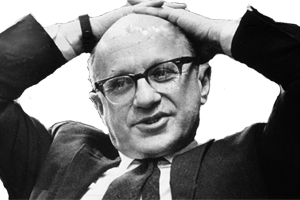
 This from John T. Harvey, economist, at Forbes Blogs:
…I wonder how many people know the formal Monetarist (Milton Friedman’s school of thought) explanation of how the Great Depression occurred? Their analysis depends on the existence of something called money illusion on the part of workers. The idea is that laborers are never quite certain what the current cost of living is since they do not keep a careful accounting of their expenditures. Meanwhile, firms are pretty darn sure what prices are because it is so important to their livelihood to pay close attention. Now imagine the following. Let’s say there is a massive collapse in the supply of money, leading to a fall in prices … The fall in prices, because it means they are earning lower profits, leads firms offer lower wages to their employees. But–and here’s what they say happened in the Great Depression–workers, not realizing because of money illusion that the cost of living has declined (and that firms’ offer is therefore not unreasonable), quit their jobs. And that, apparently, is how unemployment rose to 25% in the 1930s: the money supply fell, lowering prices, leading firms to offer lower wages, and causing workers to VOLUNTARILY QUIT THEIR JOBS!
I’ve heard this before – the monetarist explanation for the Great Depression, but had no idea it was mainstream neoclassical thought.
Read the whole article here.










 Piece of Mindful