I want to get this up for consideration, as it makes sense to me. Thom Hartmann, the liberal radio chatterbox, has speculated that the financial attacks on Wikileaks did not start until the group announced that they had collected a large cache of documents on a Wall Street bank, thought to be the Bank of America. The day after that announcement, in short order, Amazon, PayPal, VISA, Mastercard and others pulled the plug.
Someone is obviously lying, and my initial gut reaction was that it must be the State Department. Everyone lies all the time about everything – that’s not my concern. But consider the possibilities:
PP telling truth, SD lying: This would mean that the U.S. government is orchestrating the attack on Wikileaks. Since Wikileaks has committed no crime, this is tyranny.
PP lying, SD telling truth: This would mean that the attack on Wikileaks is orchestrated from another source, possibly Wall Street, and Hartmann’s speculation factors in.
PP and SD both telling the truth: This would indicate a scam or covert operation against PayPal.
PP and SD both lying: This is unlikely but would indicate a covert operation with involvement by both PP and SD.
Wikileaks is doing important work, and I find it hard to imagine how they can be stopped short of executions and imprisonment. That would really expose our government’s true nature. As it stands, however, and totally out of the blue, a huge blow has been struck for freedom of speech. That the guy that did it is in jail? Read history. Rights are never given. They are taken, and it usually requires force. (The only exception I know of to this rule – a peaceful transition from tyranny to representative government, was the fall of the Soviet Union. Factor that into your thinking, report back.)
WikiLeaks coined a new type of journalism: scientific journalism. We work with other media outlets to bring people the news, but also to prove it is true. Scientific journalism allows you to read a news story, then to click online to see the original document it is based on. That way you can judge for yourself: Is the story true? Did the journalist report it accurately?
The cables also contain a fresh American intelligence assessment of Iran’s missile program. They reveal for the first time that the United States believes that Iran has obtained advanced missiles from North Korea that could let it strike at Western European capitals and Moscow and help it develop more formidable long-range ballistic missiles.
From Counterspin, December 3, 2010: (I’m summarizing, as it is an audio broadcast): The Times faithfully gave the U.S. side of Iran’s weapons program, as cited in the leaked memo, but failed to tell the whole story. In the memo, which the Times refused to publish, representatives of Russian intelligence doubt that Iran has such missile capability, and note the North Korea has never successfully tested such a missile. Other news outlets cite American sources that downplay any Iranian missile threat.
In other words, the New York Times, in giving only half the story, is again lying to us about the weapons capability of a country that, as it so happens, our government (and the military-industrial complex behind it) want to attack. Seems we’ve been through this before.
If, as the jailed Assange asserts, “scientific” journalism should now show us the source of stories being reported on, the Times story would have immediately been seen as a lie. Ergo, the Times refused to allow access to the memo, which Counterspin obtained at the Wikileaks site.
The committee noted that the CIA had moles in most of our large newspapers, and even then, pre-Bush, maintained surveillance of members of congress, the White House and cabinet departments. They plant stories in the media (a favorite technique is to plant a story in a foreign newspaper so that it can be “discovered” by an American news source).
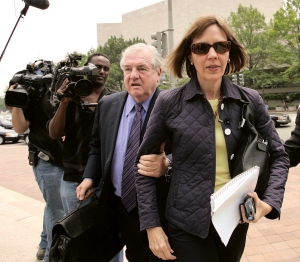
The Times' Miller: She lied, she lied, she liedThey have “journalists” who work as operatives for them, and operatives that work as journalists. (No doubt the Times’ Judith Miller, who fed a pipeline of lies to us about Iraq before the invasion, is such an operative. The Times, which noisily beat its breast in public about its integrity in firing low-level journalist Jayson Blair for plagiarism, never repudiated Miller.)
The Church Committee found 500 editors, journalists and publishers to be supported by the CIA. The CIA had subsidized publication of hundreds of books, and even owned wire services, newspapers, magazines, a publishing complex. It had recruited 5,000 or more academics around the country as spies and researchers, secretly financing them as they present themselves as independent scholars to the media.
As the Church Committee fades into history, the New York Times carries on with its disinformation, and Julian Assange is in jail for a broken condom.
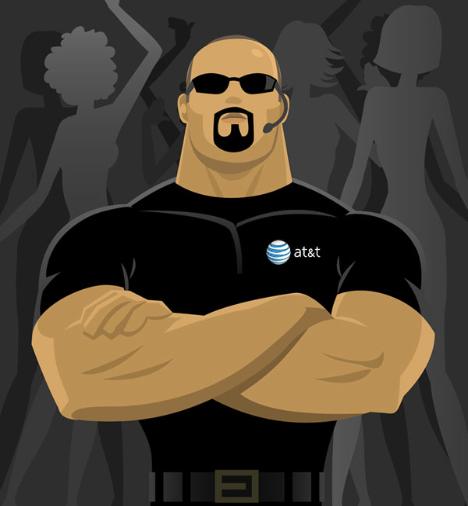
Wall Street is yet to get past the bouncer, but he is wearing down[Sigh] – this is tedious, but must be done. I have had yet another “debate” with a person regarding Social Security. The trouble with the “debate” concept is that the person in question, assured of the rightness of his convictions, hasn’t a clue about the nature of the system. I’ll describe the nature of the system here yet again.
Social Security is not “retirement.” The “I” in FICA stands for “insurance.” That’s an important distinction. If I were to buy a life insurance policy and then die the next day, the company would have to pay off in full. If insurance were like retirement, the company would refund my premium plus earnings minus expenses.
Social Security is a “defined benefit” system. The private sector hates defined benefits, and insists on “defined contributions” like IRA’s and 401K’s and the like. With the latter, retirees are always in fear that their funds will expire before they do. Social Security benefits are available for so long as people live. That’s why it’s called “Security.”
Social Security is also survivor and disability payments – as much as a third of the payments are for widows and orphans and disabled people. Private plans offering such payments are not affordable for ordinary people. And there is nothing in the private sector that offers defined benefit retirement, survivor and disability benefits. It’s not feasible.
The private sector cannot afford to fund a program like Social Security. That sector is laden with bureaucrats, administrative costs, and high-bonus executives along with the regular assortment of Wall Street criminals who recently brought down the banking system. The boom-bust cycle means that a large percentage of privatized retirees would be regularly wiped out.
Social Security, in its eighty years, has never had a scandal or failed to pay a benefit. People have ripped it off, but the people who run the program have been remarkably honest, and (!!!) have not gotten rich off the system.
Social Security is affordable. It has survived for eighty years without debt (it is illegal for it to go into debt.) It is not in debt now, nor will it be for decades.
Social Security is paid for by the people who benefit from it. The tax is applied only against wages and current recipients, and not against corporate profits, dividends, rents and royalty and interest. There is no transfer involved from the wealthy sector to workers. It is entirely self-funded.
Social Security does not add to the deficit. Over the past thirty years, due to accounting legerdemain, the program has been used to mask the true size of general fund deficits. The government spends all excess Social Security funds, but using an accounting trick called the “Unified Budget” (where Social Security surpluses are combined with general fund deficits), funds borrowed from Social Security are not reported as such. The true general fund deficit over the last 30 years is $3 trillion higher than reported.
That $3 trillion is called the “Trust Fund.” Unlike generations before us, we baby boomers were asked, by Ronald Reagan and the Democrats in the early 1980’s, to pre-fund our Social Security benefits. We have been paying in excess tax for thirty years now based on his promise that those excess taxes would fund our own benefits.
Repayment of the debt to the Trust Fund is not Peter paying Paul. We boomers are now in a position where we expect all taxpayers, including those who live off the dividends and corporate profits etc. that have not been taxed, to repay the money borrowed from us, most of which was used to finance their Pentagon and its many wars.
The $3 trillion will be repaid over the come 20-30 years. Our country can easily afford it. (If not, we’re all sunk anyway.)
After we boomers are gone, Social Security will again be on pay-as-you-go funding, with no need for a Trust Fund. (Think of the boomers as a snake swallowing a pig. We will pass.) It will, in theory, survive indefinitely. However, it is constant need of adjustment. That’s all it takes to maintain it.
The Trust Fund is a legal obligation. In order to walk away from that obligation, the government is going to have to legally renege on us. Even though the reneging will be “legal,” it will be highly immoral and disreputable. The people who know how the systems works and still want to renege on us are the Wall Street bankers and their allies in both parties. They are criminals who never have to pay for their crimes.
Ronald Reagan was the first president to openly challenge Social Security. He fell on his face – the program is wildly popular. On failing to undo it, “he” (“he” being his people, as he was clueless) jacked up the FICA tax to recoup some of the massive revenues lost with his tax cuts for the wealthy. That was the “Trust Fund” promise. Many of us felt that he was lying at the time, and that there was never any intention of honoring the bargain.
The only way the bargain will be honored is if we, the people who fund the system, hold them, the people who want to plunder and loot the system, to our bargain. That takes organization and effort. A contract means nothing if there is no will to enforce it.
I expect to see no comments beneath this post for the following reason: I will insist on integrity. I will not suffer ignorance or empty arguments based on the false “facts” that are regularly spread about how the system is going to fail, how it “won’t be there for me when I need it” as young people have been taught to believe. If such comments are put up, I will not take them down, as I don’t do that. But I will edit the comment, not to change content, but only to embolden the part that has no substance. If you see a comment below and part or all of it is in bold, that is the part that has no substance.
Well, Obama has abused his base yet again, this time an open-handed bitch slap. Anyone with half a brain could see that the tax cuts were going to be extended, and the only question was how the Democrats would be made to fold their tent. Now we are going to see something that ought to bring to mind the word “contradiction” – Obama, the man who doesn’t know how to negotiate, who punts on third down, who expects the Republicans to repay his gestures of conciliation, will become a new man. He did this after the bad health care bill was a done deal. He becomes a street fighter. He’s tough, fights dirty, and is clever, kind of like a guy we would want fighting for us, instead of against us.
If they cannot see, as with Clinton, that he is a faux bonhomme, there is no hope for them. They are too stupid to live.
Until the Obama people shut it down, it is still possible to make contributions to Wikileaks via Xipwire.
Said co-founder Sibyl Lindsay today,
“We do think people should be able to make their own decisions as to who they donate to. The fact that people can’t donate to where they’d like to and make that decision for themselves does bother us.
The company has offered to process all contributions to Wikileaks free of fees. I just made a donation, and (hee-hee), charged it to my MasterCard.
Taking his cue from Chinese dictators, Senator Joe Lieberman is said to have immediately called for Lindsay’s arrest. There is also talk that she might be hauled up on a jaywalking charge in Milwaukee from 2003 – city authorities there, who say it is entirely coincidental that the matter is coming up now, have issued arrest warrants for her in Federal District Court. Attorney General Holder is said to have taken an interest in the case, saying “far too often scofflaws are allowed to walk free. I only want to see our sacred laws upheld.” Conviction could involve time at Guantanamo, and torture.
“When the people fear their government, there is tyranny; when the government fears the people, there is liberty.” (Thomas Jefferson)
Wow – have you ever seen such a flexing of fascist muscle as with Assange and the Wikileaks affair? Imagine what is going on behind the scenes – death threats, trumped up “rape” charges, arrested in London, and Amazon.com, PayPal, and now VISA* trying to shut down his cash flow. Assange is fighting extradition to Sweden, as he believes that that country is merely acting as an intermediary for the Obama Administration, which wants to bring him here and imprison him. Said Assange’s attorney, Mark Stephens,
‘It doesn’t escape me that Sweden was one of those lick-spittle states which used its resources and facilities for rendition flights.
And I say “fascist” not because I like to hurl epithets, but rather because we are witnessing the results of the “marriage of corporation and state, ” Mussolini’s definition of that benign form of governance. Assange exposed state secrets that should not be secret, and the government is hounding him, including the “black-ops” people who are slamming his websites. And now come the corporations, as if they and government are the same entity. (They are, Benito. They are.)
Did any in the mainstream media take note that Obama’s recent Asian trip included forty aircraft, six armored vehicles, and 200 corporate executives? If indeed the junket did cost $200 million a day, it’s just another subsidy.
If Wikileaks achieves nothing else, it is the exposure of this unholy inbreeding that has always been going on, but has happened in spades during the last thirty years. We all know now that the corporations and the state act as one to shut down freedom of speech, because the former now controls the latter. And for that we can thank the soon-to-be-imprisoned Assange.
________
Just to toss in a little optimistic news, there are cyberhacks all over the globe, and the best that can happen with the current Obama crackdown on Wikileaks is to enrage them, to organize them. “I am Wikileaks” is encouraging people all over the globe to stand up and be counted. (Will Facebook take them down?)
Raw Story has revealed that one of Assange’s accusers in the Swedish case has CIA connections. (He is not accused of rape, but rather, for failure to use a condom, a unique Swedish interpretation of rape).
The web is a cranky beast, hard to cage. In the United States, net neutrality is a dead letter. Corporations cannot shut down annoying websites due to the first amendment, which still has window-dressing force. But they can marginalize them. And that has been the whole battle – an equal playing field … you know, liberty and justice for all. Quaint.
_____________
_____________
*VISA went after Ralph Nader in 2000, forcing him to take down an effective TV ad that portrayed Bush and Gore as part of the same apparatus. He used VISA”s word, “priceless,” and laughed afterward at the high absurdity of suing over ownership of that word.
And then, there’s this: Operation Payback threatens to hack any company’s website that acts against Wikileaks, and has already shut down the Swiss bank PostFinance, which froze Wikileaks funds. They are threatening to go after PayPal as well. Can’t wait.
The Swiss government is resisting pressure from Obama and the French government to shut down the Wikileaks.ch site running in that country. Perhaps they have leverage via their banking laws by which so many American criminals hold secret accounts there.
The website of the Swedish prosecutor’s who is going after Assange was taken down today. Too funny.
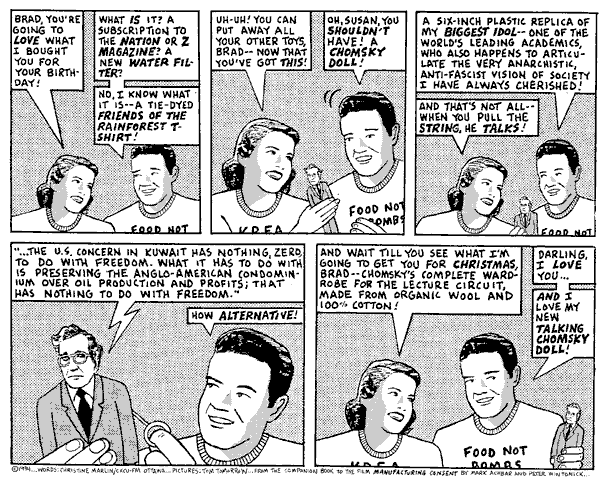
Cartoon from circa 1991, the first attack on IraqI thought he had vanished form the scene, and had long since packed away his other works too. But Noam Chomsky is still alive and hard at work. His recently published Hopes and Prospects is, like his other works, a collection of essays that are continually updated.
I first ran across Chomsky in 1988 – I’ve run across many, many authors, but this guy has the ability to reach across the divide. I was then a right-winger, but one in turmoil, as things didn’t seem right to me. He said things that others don’t say, and they resonated. I suspect that power is a good part of the reason for keeping him out of view in American media.
And probably for that reason too, he is reviled in proper circles, as the Georgetown cocktail circuit, but especially in the economics profession. The reason why is easily seen in the words that follow, from pages 75-76 of this most recent work.
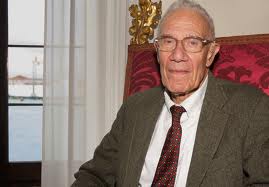
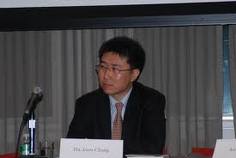
Whether neoliberalism is the enemy of development is debatable, for a simple reason: the economy – particularly the international economy – is so poorly understood and involves so many variables that even when close correlations are found, one cannot be confident about whether there are causal relations, or if so, in which direction. Robert SolowThe founder of the modern theory of economic growth, Nobel laureate Robert Solow, commented that despite the enormous accumulation of data since his pioneering work half a century ago, “the direction of causality” is unknown. It is not clear, he concludes, whether capital investments causes productivity, or productivity leads to capital investment; whether openness to trade improves economic growth, or growth leads to trade; and the same problems arise in other dimensions. One prominent economic historian, Paul Bairoch, argues that protectionism, paradoxically, has commonly increased trade. Ha-Joon ChangThe reason, he suggests, is that protectionism tends to stimulate growth, and growth leads to trade; while imposed liberalization, since the eighteenth century, has fairly consistently had harmful economic effects. The historical record provides substantial evidence that “historically, trade liberalization has been the outcome rather than the cause of economic development” (Ha-Joon Chang), apart from the “development” of narrow sectors of great wealth and privilege who benefit from resource extraction.
From an extensive review, Bairock concludes that “It is difficult to find another case where the facts so contradict the dominant theory [as the theory] concerning the negative impact of protectionism.” The conclusion holds into the twentieth century, when other forms of market interference become more prominent …
The “dominant theory” is that of the rich and powerful, who have regularly advocated liberalization for others, and sometimes for themselves as well, once they have achieved a dominant position and hence are willing to face competition on a “level playing field” – that is, one sharply tilted in their favor. This stand is sometimes called “kicking away the ladder” by economic historians: first we violate the rules to climb to the top, then we kick away the ladder so that you cannot follow us, and we righteously proclaim: Let’s play fair, on a level playing field.”*[emphasis added]
Even as an amateur observer, I cannot help but notice that proponents of “free markets” don’t know anything. Things don’t work they way they say. Their results are always theoretical, and years away, but sure to work if only given a chance. But markets are like fire, which can keep us warm, or burn our house down – as seen in the most recent collapse.
There are “free markets” indeed, but they are not at all what proponents say they are. Sweatshop laborers are subject to the whims of markets, as are all common laborers not protected by unions. Generally speaking, the less powerful one is, the more exposed one is to market forces. And those forces are devastating, which is why most large and “successful” business enterprises have found ways to insulate themselves (protectionism, incorporation, tax shelters, monopoly/oligopoly, preferred tax status, protective regulations, access to the commons, and control of government itself).
Twenty years [after the Kennedy tax cuts], when tax rates were cut even more under Ronald Reagan, federal tax revenues again soared with the “rich” paying an increasingly greater share of the income tax burden. Since it was now a Republican initiating this policy, Democrats branded it “Reaganomics” and mocked it as half-baked, “trickle-down” economics.
The problem: It’s not true. Federal tax revenues did not “soar” after the Reagan tax cuts. They shrank, precipitously, and then headed up on the same incline as before. Federal tax revenues after the Bush tax cuts exhibited the same behavior. But this is standard right-wing talking-the-talk: merely to assert that which is false to be true, without evidence. Rosen has access to the public via a large-city newspaper, and never has to document a goddammed word of what he says.
And that is true of right wing economics in general – as Chomsky notes, where relationships exist, it is hard to define causality, and where causality seems to be indicated, it is in the exact opposite direction as wealth-financed economists say. So those countries that avoid neoliberalism (or colonialism, as it was once called) tend to develop (the United States, Japan, China, the Asian rim), and those who stick to the resource/cheap-labor export model (Latin America, Africa, India) experience massive poverty and violence, and never quite seem to develop.
And this is what initially attracted me to Chomsky – in 1988, I was in limbo, trying to understand events in Nicaragua and El Salvador, among other things going on then, and along he came laying out a completely different framework than official truth laid out for us. And his version of events had explanatory power that the others lacked.
_____________
[Chomsky foonote]: *Solow, “Interview,” Challenge, January-February 2000. Bairoch, Economics and World History (Chicago: University of Chicago Press, 1993). Chang, Kicking Away the Ladder. See also, Shahid Alam, Poverty from the Wealth of Nations (New York: St. Martin’s Press, 2000). An enduring classic is Frederick Clairmonte, Economic Liberalization and Underdeveloped (New York: Asia Publishing House, 1960).
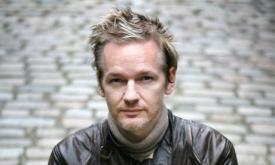
Julian Assange participated in an on-line interview that I found gripping. I don’t mean to lionize the man, but he has become the face of Wikileaks, which is the work of over a hundred thousand people*, many of whom are risking their lives, fortunes and our sacred honor.
The organization offers hope that democratic governance can reassert itself due to the Internet. Obviously the U.S. government wants to shut it down and murder Assange, but he seems to have anticipated this, and more encouragingly, says that the organization will go on without him should be be imprisoned or killed.
Read and judge for yourself, of course. Here are a few snippets that gave me that surge of warmth in my belly as I read:
tburgi: Western governments lay claim to moral authority in part from having legal guarantees for a free press. Threats of legal sanction against Wikileaks and yourself seem to weaken this claim. (What press needs to be protected except that which is unpopular to the State? If being state-sanctioned is the test for being a media organization, and therefore able to claim rights to press freedom, the situation appears to be the same in authoritarian regimes and the west.) Do you agree that western governments risk losing moral authority by attacking Wikileaks? Do you believe western governments have any moral authority to begin with? Thanks, Tim Burgi Vancouver, Canada.
Julian Assange: The west has fiscalised its basic power relationships through a web of contracts, loans, shareholdings, bank holdings and so on. In such an environment it is easy for speech to be “free” because a change in political will rarely leads to any change in these basic instruments. Western speech, as something that rarely has any effect on power, is, like badgers and birds, free. In states like China, there is pervasive censorship, because speech still has power and power is scared of it. We should always look at censorship as an economic signal that reveals the potential power of speech in that jurisdiction. The attacks against us by the US point to a great hope, speech powerful enough to break the fiscal blockade.
In hiding ... Indeed, we should look to states like Ecuador, Turkey, or Venezuela for our modern-day examples of free speech and voting actually impacting the behavior of governments. The word “freedom” has been debased in this country. It has no substance or meaning. People who talk about it have no clue what it really means.
When speech matters, power tries to suppress it. Wikileaks matters, and accordingly, the U.S. government wants it shut down.
rszopa: Annoying as it may be, the DDoS seems to be good publicity (if anything, it adds to your credibility). So is getting kicked out of AWS. Do you agree with this statement? Were you planning for it? Thank you for doing what you are doing.
Julian Assange: Since 2007 we have been deliberately placing some of our servers in jurisdictions that we suspected suffered a free speech deficit in order to separate rhetoric from reality. Amazon was one of these cases.
See how it works? Amazon.com kicked Wikileaks off its servers at the behest of the U.S. government. The company seems to exist in a free speech environment, but when some meaningful free speech actually broke out, Amazon.com shitcanned it.
Finally, this:
distrot: The State Dept is mulling over the issue of whether you are a journalist or not. Are you a journalist? As far as delivering information that someone [anyone] does not want seen is concerned, does it matter if you are a ‘journalist’ or not?
Julian Assange: I coauthored my first nonfiction book by the time I was 25. I have been involved in nonfiction documentaries, newspapers, TV and internet since that time. However, it is not necessary to debate whether I am a journalist, or how our people mysteriously are alleged to cease to be journalists when they start writing for our organisaiton. Although I still write, research and investigate my role is primarily that of a publisher and editor-in-chief who organises and directs other journalists.
This is perhaps the most exemplary Orwellian exchange I have read in all of the days since I first learned how to use the word “Orwellian.”
Assange is 28 years old. How does a man become so world-wise at such a young age? I wonder, if Alexis de Tocqueville were to re-visit America in 2010, what he might call his book.
_____________
*Various cables heretofore unreleased are in the hands of this many people, and will be released if the bodies of people like Assange or others turn up in a gutter one morning. It’s an insurance policy, but the U.S. is very powerful, so it is at best weak protection.
PS: Amazon.com is now joined by PayPal in cooperating with the U.S. Government in shutting down Wikileaks. I don’t do business with the former, and just canceled by PayPal account. I’m nobody, but principles matter.
For those with any interest in the subject, I mentioned below that we cannot make jumps in understanding, that we have to progress along natural lines. I think that this applies to religion as well, and offer up five levels of passage into and through and then back to religion. No doubt others have described this better than me. But I’ll give it a shot anyway. It goes like this:
Level one: The words of holy texts are accepted as true without question, and the mythology, no matter how bizarre, accepted as reality. This is childish religious belief, or in adults, a kind of fundamentalism. It offers great comfort.
Level two, Path A: Cynical non-believers see the vulnerability of children and fundamentalists, and exploit them for financial gain. These are people like Pat Robertson, Swaggart, Haggard and Roberts and all the others. The low-hanging fruit is irresistible.
Level two, Path B: A less cynical setting aside of childhood fantasies without further research or wonder. Most people who call themselves religious are really in arrested development, having stopped believing, but also, sadly, having stopped wondering as well. People in arrested development often still feel a need for religious belief in others, for all our good. This is the stage where Catholic parents, for instance, send their kids to Catholic schools, even though they are too sophisticated to accept Catholic teaching for themselves.
Level three: Complete rejection of religious belief. For those like me, deeply indoctrinated in religion as a child when I was too young to reason, this rejection can be coupled with condescension and antagonism towards those who have faith, and especially towards those who who did the indoctrinating. (The “recovering Catholic.”) This is where we find Richard Dawkins and Sam Smith.
Level four: Reaching an understanding that people who are not fundamentalist and yet religious are as smart and thoughtful as non-religious ones, and perhaps even know a thing or two that non-religious people do not. This creates cognitive dissonance.
Level five: Resolution of dissonance, reaching an understanding that the search for truth has many forms, and that science is only one.
The progression through the levels ends with the elimination of antagonism between science and religion. Each is a search for truth. The scientific method is one way to advance knowledge, but mythology is also a vessel that carries important truths.
For myself, I cannot dwell in mythology, just as I cannot read fiction. I cannot be religious in that sense, and I like my Sundays too much anyway. But I do accept that those who are religious may well know more about life and living than my sterile science will ever give me.

 I want to get this up for consideration, as it makes sense to me. Thom Hartmann, the liberal radio chatterbox, has speculated that the financial attacks on Wikileaks did not start until the group announced that they had collected a large cache of documents on a Wall Street bank, thought to be the Bank of America. The day after that announcement, in short order, Amazon, PayPal, VISA, Mastercard and others pulled the plug.