We’ve been flocked over once again …

I keep going back to Edward Bernays … the process I see around me now, with passage of the Senate health care bill, is much like soldiers inspecting bodies on the battlefield after the conflict and finishing off any that are still alive.

The victory achieved by AHIP and PhRMA is monumental, but won’t go down easy unless people are convinced that something good has happened. The usual suspects, the Democrats, are now starting to ridicule people who oppose the bill, which is pretty much in its final form now.

These passages are taken from Bernays’ writings in 1928. He is considered the father of modern public relations, and his early work was on the Committee on Public Information (The “Creel Committee”), that notorious group that led a reluctant American public into involvement in a war that was none of their concern. It was that group that first discovered the power of public relations -the ability of group leaders to shape and manage opinions.

Small groups of persons can, and do, make the rest of us think what they please about a given subject. But there are usually proponents and opponents of every propaganda, both of whom are equally eager to convince the majority.

The systematic study of mass psychology revealed to students the potentialities of invisible manipulation of motives which actuate man in the group. … Trotter and Le Bon, who approached the subject in a scientific manner, and Graham Wallas, Walter Lippmann, and others who continued with searching study of the group mind, established that the group has mental characteristics distinct from those of the individual, and is motivated by impulses and emotions which cannot be explained on the basis of what we know of individual psychology. So the question naturally arose: If we understood the mechanism and motives of the group mind, is it not possible to control and regiment the masses according to our will without their knowing it?

This general principle that men are very largely actuated by motives which they conceal from themselves is as true of mass as of individual psychology. It is evident that the successful propagandist must understand the true motives and not be content to accept the reasons that men give for what they do.

No serious sociologist any longer believes that the voice of the people expresses any divine or specially wise and lofty idea. The voice of the people expresses the mind of the people, and that mind is made up for it by group leaders in who it believes and by those persons who understand the manipulation of public opinion. It is composed of inherited prejudices and symbols and cliches and verbal formulas supplied to them by the leaders.

Political campaigns today are all side shows, all honors, all bombast, glitter and speeches. These are for the most part unrelated to the main business of studying the public scientifically, or supplying the public with party, candidate, platform and performance, and selling the public these ideas and practices.

The important thing for the statesman of our age is not so much to know how to please the public, but how to sway the public. In theory, this education might be done by means of learned pamphlets explaining the intricacies of public question. In actual fact, it can be done only by meeting the conditions of the public mind, by creating circumstances which set up trains of thought, by dramatizing personalities, by establishing contact with the group leaders who control the opinions of their public.

The name of the book, “Propaganda“, doesn’t set well anymore. It was written before World War II, when the word still had a certain functionality without negative connotations. But Bernays lays out the strategy for selling public policy in the same manner that toothpaste and fashions are marketed. People form opinions in a pyramid, each group looking to the group above to know what to think about the important issues of the day. The Democrats are now looking up to their party leaders, and forming opinions about the health care bill accordingly.

The Sarah

Mark Moe stirred up a hornets’ nest with a recent Denver Post piece talking about “The Sarah”.

In more than 30 years of teaching, I’ve seen all sorts of student “types,” from the manic grade calculator, to the obsequious over- achiever, to the brilliant but dysfunctional slacker.

It recently dawned on me that one of the most predominant types — especially among female students — has as its avatar a political celebrity who has made a raucous re-entry onto the national stage. Therefore, I’m calling it The Sarah.

The Sarah has three basic characteristics: a lack of self-evaluative skills; a tendency to parrot whatever she thinks her immediate audience wants or needs to hear to gain validation, and the mistaken belief that popularity implies importance.

I’ve only been around 59 years, and throughout all that time I am at a loss to come up with a politician/celebrity as dumb as Palin. What does it say about us? As I remember it, “The Sarah” types were relegated to sitcoms, and ridiculed by the writers. These types included Betty White as Sue Ann Nivens on the Mary Tyler Moore Show, Lisa Kudrow’s Phoebe Bouffay in Friends, and Shelley Long as Diane Chambers on Cheers.

But never in real life have the truly stupid taken such prominence on the serious stage or in politics.

The Sarah also craves acceptance and validation from whomever happens to be her audience at the moment. Thus, The Sarah attends to information not to necessarily evaluate it critically, but so that she remembers to parrot it later to seem knowledgeable to the right people. Student essays are rife with this sort of confused regurgitation of lecture notes and secondary source material.

Many times The Sarah believes that repeating whatever the teacher or critic said is sufficient to earn a good grade, even if the context is wrong or, worse, its use is contradictory.

This tendency to parrot for validation with imperfect understanding of the information is one of the real Sarah’s hallmarks, seen in her many interview retractions, Facebook flip- flops, “death panel” rants, and her recent confusion over the cause of global warming.

If I say something that is obviously true about Palin at a conservative website, they rise to her defense. Her popularity transcends common sense. She’s hitting a nerve. What is it about her that so captivates them?

Finally, The Sarah believes that popularity implies importance. It’s been my experience that certain high school girls view popularity as a way to gain preferential treatment, the benefit of the doubt, and a kind of unspoken “rounding up” of their efforts, especially grades. They confuse popularity with the kind of status that can only be earned by hard work and actual accomplishments. Sarah herself is similarly confused. Her current media blitz and Facebook shout-outs, while bolstering her popularity with her base, aren’t nearly as important as finishing the hard work of governing Alaska would have been.

I am scratching my brain to come up with a political player in American history that was such an obvious buffoon. Spiro Agnew was a source of ridicule, as was Thomas Eagleton. But these were intelligent men. George Wallace certainly appealed to base instincts, but the man was nobody’s fool.

I know that others don’t see Palin as I do. Certainly she has gumption and a kind of flair, even if that flair is more celebrity than cerebral. But if The Sarah in her is dominant, and I think it is, then her rise in the serious business of governance seems more like a deluded teenage girl’s bid for acceptance to a position of authority for which she is neither ready nor qualified.

One blogger said that Palin was more likely aiming for a shot at a FOX News show than political office. That may be, but I cannot see even that having much success, as FOX viewers would shortly realize that there is not much there there.

I don’t recall in all my years either the right or the left reveling in someone so truly stupid.

P.S. No sooner did I put this up than did I remember “The Jane.” Fonda was a prominent figure during the Vietnam war, but I recall her on the Tonight Show one night claiming that the U.S. had no foreign assistance during our revolution. The audience laughed at her. Fonda was a sponge – an attention-craving Daddy-starved starlet with a fabulous body. She went from Roger Vadim, who made her a sex goddess, to Tom Hayden who turned her political activist, to Ted Turner to Christianity and every liberal cause in between.

I suppose you could say that Sarah is a right-wing Jane, though I feel obligated to defend Jane as more intelligent and courageous.

Reality in its many disguises …

Every now and then I come face-to-face with a contradiction. Usually, I look at it and do something else. Contradictions are difficult things, in that they force us to confront errors in our thinking. Since none of us ever admits to error except Sarge in Beetle Bailey (“I thought I was wrong about something once. Turns out I wasn’t.”), we have these protracted debates where we continually butt the same heads with the same points. It’s time for some new sauce.

I am writing here not to set others straight. I am more interested in straightening out my own mind.

I came to butt heads with Carol at Missoulapolis over a problem that liberals of old were loathe to admit, and that modern liberals simply don’t care about: The underclass. It’s mostly black. There doesn’t seem to be much progress. There seems to be mobility in the other minorities – Chinese and Vietnamese and Koreans come here and make new lives and commerce percolates among them. The blacks don’t much change, generation generation, except on TV where they are erudite, brilliant, insightful, and often own chains of laundries.

At Carol’s blog, I tried to address the problem as best I was able at that time, as I was hesitant to say what I just said above. It’s a touchy area, as racist attitudes which exist in all of us often surface and have to be quashed again. But I let go with a private thought:

I believe in the basic equality of people – not the lovey-dovey stuff that liberals preach, but rather in our basic equality of abilities. We’re pretty much of the same basic package. There are exceptional people on the far edges of the Bell Curve, but the curve itself is only as steep as it is because of our early-life experiences, in my opinion.

Our brain is comprised of switches that get turned on at various times during our development. The early years are critical. In a loving supporting and stern environment, children develop their talents and become mature and functioning adults.

But too many home environments are harsh places where kids learn early on defensive survival skills. The ones they need to survive in our world don’t develop. It passes on generation to generation, and goes all the way back to the days of slavery. Instead these kids develop street skills, and get subsumed into the underground economy you talked about.

As I said, I have no answer for this. I only want to make the point that we white guys who discuss this stuff, in their environment, would be them. It takes smarts to survive there too. We’re not that special. We’re just more fortunate.

Truthfully, the thing that was swirling in my head as I wrote this was the TV series I am watching, The Wire, and an interview I listened to with one of its creators, David Simon. That was mixing up with a movie that Denzel Washington directed in 2002, Antwone Fisher. I am all about popular culture.

The Wire is about street life in Baltimore, and that portion of the population that we have no use for, the black street people. “The Wire” itself is a wiretap where other people are employed in trying to convict the street people of crimes so they can imprison them. The weapon of choice for imprisonment are our onerous drug laws. They are enforced against minorities, and that’s about it.

The Wire shows the futility of the ongoing battle. Drugs are not interdicted, addicts are not cured, and for every one imprisoned, at least one other takes his place. The cops are cynical, trying to “juke” the numbers of arrests to get a promotion and better pay.

It’s all pointless. Shut out of the white economy, blacks have their own – the drug culture. Black kids go through school, some finish, but their real education is on the street. They look at white society and realize there is no place for them. They take their place on “the corners”, replacing their parents.Their kids will replace them.

The movie Antwone Fisher attacks the problem from another angle – a young man raised by a brutal aunt who knows nothing of kindness. He enters the military as damaged goods, and doesn’t play well. He is on his way out, but instead is interdicted by a kind counselor who leads him, by means of subtle prodding, to confront his past. It’s a little maudlin, as Antwone finds his real family, and they are right out of Little House on the Prairie. But in the process of moving from brutal aunt to kind family, Antwone learns about “slave behavior,” and that is the message in the movie.

Slaves were subject to abuse by masters, and had no way to pay it back. So they paid it downward, and abuse within families created a whole society so dysfunctional that they could in no way survive in white society. Families were broken, hope was a joke, cruelty was part of everyday existence. Then we set them free.

Patterns repeat from generation to generation. Parents that abuse their kids raise kids who abuse their kids. The dysfunction wrought by slavery is still apparent all around us. And rather than attack the problem head-on, our answer has been to make certain drugs that blacks are likely to use, like coke and heroin, illegal. We then attach monstrous jail sentences to their use as a means of putting them away and out of sight. Pot laws are another manifestation of this phenomenon. It’s about control of the underclasses.

I remember the words of John Taylor Gatto, the New York City school teacher who quit in utter frustration shortly after winning Teacher of the Year award. I can’t cite him other than a vague memory. He talked about New York police routinely swooping down through the neighborhoods and arresting the fathers for drug violations. That’s business as usual. They are juking the numbers. It’s a game, nothing more.

So what’s the solution? Other than taking all of the money we throw at drug enforcement and use it instead for rehab and job training and education, which is David Simon’s solution, I don’t have one.

What’s the contradiction? It’s the two faces of government – the iron fist, and the nurturing hand.

That contradiction surfaces in every debate I have -the government that kills millions in the Middle East and sends my mother her Social Security check. Right wingers are generally so fearful of that government that they insist that the Social Security check is a trap, and yet say that imprisonment of minorities for illusory offenses is a legitimate function.

In answer to my comment to Carol at Missouapolis, she went right to the lazy whites she encounters at the Post Office and the problems of people getting something for nothing. That’s indeed a problem. But the problem of the blacks goes so much deeper.

We’re all wrong about something. I’m trying to do my part here, and embrace my own internal contradictions. It’s part of a general revulsion I am having against Democrats. Major changes are rumbling deep inside. I’m about to go rogue. As if …

More later. I’m grappling and ask anyone reading this to carry forward with this.

Are you seeing the docked tails?

I’m getting an oppressive sense of encirclement with the Democrats now in power. There’s a famous scene at the end of Orwell’s Animal House where the farm animals look in the window of the farm house and realize that the humans and the pigs were actually the same:

Twelve voices were shouting in anger, and they were all alike. No question, now, what had happened to the faces of the pigs. The creatures outside looked from pig to man, and from man to pig, and from pig to man again; but it was already impossible to say which was which.

Our republic is a fragile thing – that is, the powerful forces that govern are well-kept, but the democratic freedoms we enjoy are fragile. The only thing that keeps power in check is public awareness. The American public is actually the first enemy of the concentrated centers of private wealth that rule behind the scenes of elected government. And while we may be crude and uneducated, susceptible to superstition and easy to manipulate by means of fear, there is power out here. It’s just not focused.

When Barack Obama first assumed power, he made an unusual gesture, one that set me back a bit. He appointed Mike Lux “progressive liaison.” That was a clear message – progressives would be on the outside looking in. Lux only lasted a couple of months, and there is no liaison now, no pretense. The administration has dropped any progressive cloaking, and is aggressively pursuing Bush policies in every area, from monstrous deficits to aggressive war to subsidizing of favored industries. Citizens are still held in indefinite detention, secret prisons still exist, torture goes on as before. It has just gone underground again, as before 9/11.

Perhaps he will become a focal point of resistance, but political prisoner Don Siegelman, former governor or Alabama, will go back to jail for the crime of dissing Karl Rove. In the meantime, Ted Stevens walked.

It’s a dangerous time, more so than under Bush and the Republicans, as so many people who might oppose Bush policies have gone into the house with the pigs and humans to wait tables and serve drinks. Liberals are a malleable bunch, oblivious to much of what goes on under their noses. Take the health care bill: it is a crushing defeat at the hands of AHIP and PhRMA, and yet they are embracing it.

I have said to the point of obnoxious annoyance that “Democrats are the problem,” and people thought I was being hyperbolic or demonic. Those words say exactly what I mean. They are not clever. In a forced two-party state where both parties have essentially the same financiers, it is the job of the ‘soft’ party to absorb discontent and render it impotent. Obama has been harsher than Clinton in 1992 in slamming the door on us. He’s taken no quarter.

And that’s where my feeling of encirclement comes from. The pigs and the humans, they are all looking like pigs at this point.

It’s interesting to watch activities on capitol hill right now. The Democrats are lockstep behind their leader, and whatever resistance there is will be crushed. The House “Progressive Caucus” is a cruel joke, so impotent that Nancy Pelosi laughed when she heard that they would vote against a health care bill that did not have a public option. There’s no resistance there of any note.

But there’s some quibbling among Republicans. It’s not a threat to power, but is nonetheless interesting to watch. In the recent pro forma committee hearings to publicly approve Ben Bernancke for another term as head of the Fed, only one Democrat objected, and probably at great cost. But seven Republicans did.

Before we take refuge in that party, however, remember that this is minority behavior. These were genuine and honest votes, but also an exhibition of the freedom that senators have when they are out of power. They can freely speak their minds. Were the tables turned, were the Republicans in power, immense pressure would be brought to bear on these men, and their votes would have turned.

So we will see, in the coming years, who are honest men and women, and who are swine. Montana’s Tester and Baucus have already shown their little docked tails. Colorado’s Udall is an interesting man, and his family has a long and noble history of independence, but he’s shown no inclination to buck Obama. New Colorado Senator Michael Bennett was, like every appointed replacement senator after the election except Roland Burris, carefully vetted to be sure that he had no progressive leanings. He’s a dock-tailed tool.

Is this depressing? Not really. It’s kind of exciting. It’s a time for people to bolt, hopefully into activism, though many will simply go back to sleep. It was eight years of Clinton that produced the Nader surge, and I will never forget the ugly seething contempt for Nader that liberal Democrats exhibited. I never feel that kind of hatred from Republicans. It was intense. It could be that only four years of Obama will produce a new surge of resistance and threaten his presidency. There’s always hope.

Who will lead? I do not know. It will not be Nader. He doesn’t even like running. He just does it because no one else will. That’s kind of sad – not that he runs. He’s a courageous man. It’s that no one else will.

In the meantime, I’m quoting someone – I don’t remember who and don’t feel like looking it up. No linky-think today. It goes like this:

We must embrace pessimism of the intellect, and optimism of the spirit.

The most dangerous times for our fragile liberties are times like these, when ordinarily vigilant people are lured to sleep by the soft lullaby of Democrats, who rock us to sleep while holding a gun behind their back. Some say that Democrats act merely as a ratchet – that they exist to prevent backsliding after a Republican Administration. There’s something to that. But keep in mind, this awful health care bill that is going to pass and be signed could not have happened under Republican rule. There would have been too much resistance.

And remember that before the 2005 Bush attempt, the last serious attempt to destroy Social Security was set to be from … Bill Clinton. Only the chubby little tart Monica saved us.

Democrats are the problem.

Max Jr.

It’s bad enough they are screwing us. Now comes the PR blitz. They are hitting the airwaves, all the Clintonites Obamanites are out talking up this horrible bill.

This is an unsolicited email I got from Tester today.

Think I’m gonna puke.

Dear Mark,

As the holidays arrive, we are hard at work in the U.S. Senate passing a health care reform bill that will save lives, save money, and save Medicare.

There’s a lot of information going around about what’s in the bill and what it does. While some of the information out there is good, some of it is unreliable or flat-out false.

Here are a few key things you should know about the bill:

– It *keeps the government out* of your health care decisions

– It *stops insurance companies from denying coverage* for pre-existing conditions or illnesses in new plans

– It *lowers the national deficit* by hundreds of billions of dollars

– It *cuts waste and fraud in Medicare*, which will ensure that Medicare is around for future generations

– It *drives down the cost of health care* by providing more competition

– It *limits out-of-pocket expenses* for new insurance plans

I explained my support for health care reform — and shared real stories from Montanans — on the floor of the Senate today.

*Click here to watch my speech.*

The bottom line is, without this bill, we will keep paying too much for health insurance and for health care. Without it, too many will be left out, without any options if they get sick. And without it, insurance companies will continue to run roughshod over the system. You can find the whole text of the bill on my website at tester.senate.gov/health.

As always, thanks for your interest.

Senator Jon Tester

This man is going down in two years. I can feel it. Partisan politics is shown now to be a complete sham. Therefore, it will not hurt to elect a Republican. Nothing will change.

Republicans, have you got a candidate lined up? There’s a lot of beef on the hoof here. He should be an easy target.

Man bites dog: A journalist says something nice about blogging!

I listened in part to an interesting interview this morning on the Sirota show out of Denver. His guest was Jay Rosen, a professor of journalism at New York University.

One snippet sticks with me. He said something kind about bloggers. Most journalists hold us in low regard. And I don’t hold blogging to be anything important, but I guess there are national blogs that do command attention.

But what he said was more local in color – he said that there had always been bright and thoughtful people who saw through journalism and its pretensions. But they were never organized – just a voice here and there, and we all know what the lone voice who speaks out of turn more than once is: a crackpot. So critics of journalism were always demeaned. In their tight circle, journalists could self-gratify. They looked on us with some mild amusement.

The Internet and blogging has allowed us to band together, and now all the cacophony is sounding more like a chorus of complaints about journalists, who can no longer hide behind the green curtain. They are getting called out daily, and the voices, distant in the beginning, get louder every day.

I recognize the shortcomings of blogging – we don’t report on events, but rather comment on them. We don’t do primary research. We are, in short, not journalists. I cannot argue with those points, as they are simply true.

But who is there to talk about the shortcomings of journalism? When they get together, it is invariably to hand out awards to one another and talk about how precious they are to our republic. Do they talk about their own failure to report on events or do primary research? Do they talk of sycophancy? The replacement of hard-nosed reporting with detached (and safe) neutrality?

In the past, it was an occasional letter to the editor, and we all know, snark snark, that LTE’s are not to be taken with the gravitas of true journalistic endeavors. Blogs are the new LTE’s I guess, with one exception – we do not need approval to appear in print.

The world is changing. Newspapers are changing. Time magazine is edging towards People, the best news reporting is done on comedy shows. True journalists – those who work their trade, investigate powerful people and report back to us – the current model does not support them. What will we do for news?

A new model will form. The glimmerings out there – Huffington and foundations financing investigative journalism – it has potential. Like health care, journalism and profit don’t mix well. Investigative reporting never did threaten paycheck-signers or advertisers.

For the time being, how nice it must be to run a government or corporation without having to answer to the news media.

Kill Bill, Volume 3

Every now and then, in all of our blog discourse in this small small blogging community, I stumble on something worthwhile -that is, something outside of the normal give and take and repetitive nonsense. It’s rare, and even more rarely comes from me.

Anyway, today it is this, and this may wrap it up for me, so far as wisdom goes, for the year 2009: In matters of public policy, such as health care reform, it is essential to follow power to its source if one is to understand what is going on.

So in the health care debate, forget abut Max Baucus, or even Obama/Lieberman/Conrad/Nelson/Emmanuel. They are mere players. Real power lies elsewhere.

In the case of the bill before the senate, and the one that will ultimately pass, power lies with AHIP and PhRMA. They wrote the bill, and have been guiding us slowly to it by use of politicians as actors. The create imperatives (must have 60 votes!) and bad guys to set up fake showdowns. Harmful amendments (state-level single payer or drug reimportation) simply disappear without public debate. All towards a final goal.

Where is public power? What can we do? Given that politicians are useless and the pwer behind them is hidden, we can only mount enough pressure on them by forging alliances among natural enemies, to kill the bill. It has to be negative power. They do not respond to anything else.

For that reason, progressives, teabaggers, fiscal conservatives, libertarians, socialists and people who fear socialism and objectivists, among other, all need to join forces to kill this bill.

Politicians live by divide and conquer, and die when forces unify against them. We have a common goal. It is time for progressives to show up at a teabag rally – not to ridicule them, but to join with them. We need a visible coalition.

When “Terrorists” were called “Communists”

I ran across a fascinating interview at “Against the Grain” with Elaine Elinson and Stan Yogi, authors of the book Wherever There’s a Fight. The book in general is about the ongoing fight for civil liberties in California. I am most interested in their comments about the activities of the House Committee on Un-American Activities in the early 1950’s, the Red Scare, and the so-called “Hollywood Ten.”

After World War II, the U.S. was under new rule, and like a kid in a candy store, had at its disposal all of the assets of the collapsed British and French empires. The country would soon embark on imperial adventures, the first the disrupting of the Greek Resistance movement and subverting their elections. President Truman signed into law the National Security Act, the CIA was born, the Department of War was renamed “Department of Defense” (meaning we were going on the attack) and we entered a state of permanent war.

But the whole world was not our footstool, as parts of it were dominated by the Soviet Union, and were thereby made inaccessible to American business penetration. A long protracted struggle was in store. (China was “lost” in 1948, but was not expansionist, so not as great a concern as the USSR.)

To prepare the American people for the long struggle, a massive indoctrination campaign went in to motion. We had to be injected with fear, a fear so great that it would allow our leaders to set aside the Constitution with its attendant Bill of Rights. The object of our fear was to be our former ally, Russia, without whom we would not have won the European war. Russia itself had undertaken imperial expansion after the war, mostly to protect its borders from yet another western invasion. It had renamed itself the “Soviet Union,” later the “evil empire,” our eternal enemy. (Russia had always been our enemy, we would learn.)

The propaganda campaign was intense. I lived through it as a young child. We were taught in school that communists were everywhere, met in secret cells, and were plotting to overthrow our country (much as we are taught about “terrorists” these days.) These were the days of fallout shelters, air raid drills, and “duck and cover.” (Because television was black and white, the current threat-level color code was not useful.) A whole generation was injected with a dose of fear meant to last for decades.

Joe Stalin’s crimes were finally exposed too- when he was our ally, these were ignored.

A small part of the larger fear campaign was the HUAC Red Scare hearings, the purpose of which were, in my view, the put out the word that there were communist cells around, in our neighborhoods, on campus, in government at all levels, and in the world of entertainment.

The Hollywood writers were selected for special prosecution. They were

* Alvah Bessie, screenwriter
* Herbert Biberman, screenwriter and director
* Lester Cole, screenwriter
* Edward Dmytryk, director
* Ring Lardner Jr., screenwriter
* John Howard Lawson, screenwriter
* Albert Maltz, screenwriter
* Samuel Ornitz, screenwriter
* Adrian Scott, producer and screenwriter
* Dalton Trumbo, screenwriter

The HUAC dragged each of these men before them, the objective being to get them to “take the fifth”, which would incriminate them in the eyes of the American public. The Ten were too smart for this, and instead “took the first” and invoked their right to free speech. The committee did not take kindly to this,and eventually the Ten were accused and convicted of contempt of Congress, and went to jail. Dmytryk later turned on them to gain his freedom. The rest, in addition to jail time, were “blacklisted”,and never allowed to work again in the motion picture business.

An interesting footnote to this episode is that much of the work of these ten happened during World War II when Hollywood was a propaganda outlet for the war effort, and Russia was an ally. Their work in sympathy with our ally was also in service of our government, and was cynically used against them as part of the propaganda effort.

HUAC of course, was engaged in a much larger scare effort, and the Hollywood Ten were only minor victims. Ronald Reagan, Jimmy Stewart and Walt Disney, among others, were cowardly quislings in working for the committee and against their fellows.

But in the end, we were all victims. The “Red-baiting” did not stop after the committee’s business, but rather went on for years. The U.S. would use the Soviets as casus belli for a host of adventures costing millions of lives.

Many say that the 1950’s,with HUAC and McCarthy and all that went on, is one of the most disgraceful periods in our history, when our constitution was shredded, propaganda ran amok, and ordinary decent people thrown in jail for thought crimes.

Not hardly. It’s fairly typical.

PS: The interview I cited above was not the one I thought it was. It’s interesting, but the HUAC/Hollywood Ten was something else,and I cannot find it again.

They got their sixty … we’re stuffed

Think Progress has a long list of bills that were passed by means of reconciliation, including the Bush tax cuts for the wealthy:

Omnibus Reconciliation Act of 1980
Omnibus Budget Reconciliation Act of 1981
Tax Equity and Fiscal Responsibility Act of 1982
Omnibus Budget Reconciliation Act of 1982
Omnibus Budget Reconciliation Act of 1983
Consolidated Omnibus Budget Reconciliation Act of 1985
Omnibus Budget Reconciliation Act of 1986
Omnibus Budget Reconciliation Act of 1987
Omnibus Budget Reconciliation Act of 1989
Omnibus Budget Reconciliation Act of 1990
Omnibus Budget Reconciliation Act of 1993
Balanced Budget Act of 1995 (vetoed)
Personal Responsibility and Budget Reconciliation Act of 1996
Balanced Budget Act of 1997
Taxpayer Relief Act of 1997
Taxpayer Refund and Relief Act of 1999 (vetoed)
Marriage Tax Relief Act of 2000 (vetoed)
Economic Growth and Tax Relief Reconciliation Act of 2001
Jobs and Growth Tax Relief Reconciliation Act of 2003
The Deficit Reduction Act of 2005
Tax Increase Prevention and Reconciliation Act of 2005

Reconciliation rules are rather complex- the senate and house pass a budget resolution, a long and complex process, but ultimately requiring only a majority vote and no presidential signature to pass. Then various committees are instructed to propose legislation to bring spending and taxation in line with that resolution. Any bill that falls in line with the budget resolution can be passed by mere majority vote.

So, with a little advance planning, it appears as though the budgeting for health care reform could have been part of the resolution process, and passed with 51 votes.

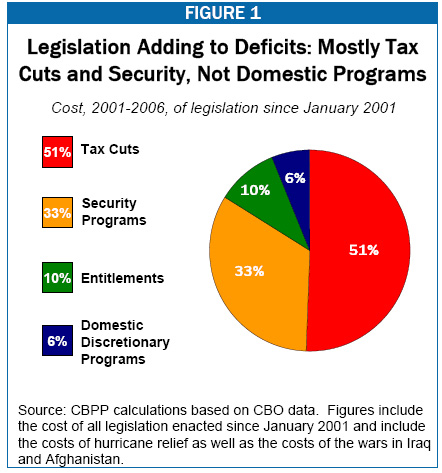
There is also the “Byrd Amendment,” which limits bills passed by reconciliation to a ten year span if they add to the deficit. So the Senate could conceivably pass a good bill and revisit in over the next ten years to either freeze it in place, or make it better. (This is why the Bush tax cuts are set to sunset in 2011 – they increased the deficit and were passed via reconciliation.)

So, the question is, is there any way that health care could have fallen under reconciliation rules and been subject to a straight up-or-down vote? The answer has to be yes, of course, by simply budgeting for the necessary revenues to fund a bill during the resolution process. Then a committee would be directed to produce a bill, and presto-up or down vote.

I could be wrong about all that. One cannot hope to learn arcane senate rules in one sitting. And surely if it were that simple, it would be done. (Please note, Democratic readers, this is sarcasm.)

This much I am fairly certain about: The Democrats did not want reconciliation from the very beginning of the health care process. They wanted to have to buy off Olympia Snowe, and Joe Lieberman, Ben Nelson. It was a convenient way for them to hide their own reluctance to pass any kind of meaningful reform.

By the way, I say “them”, and “Democrats”. There are good Democrats, but probably not enough to pass even an up-or-down bill. I speak in general terms because the ‘Good Dems’ are at a disadvantage, having the Republicans, the Democratic leadership and the White House working against them. They are a distinct minority when one considers the numbers of right wing Republicans and Democrat beards, and Obama/Emmanuel.

—————-

So, they got their sixty votes, I read. It’s a sad day, and Democrats will be hard to endure for a while as they tell us what a good deal they did for us. The public doesn’t seem to go along with that – this is a complex issue, but there were two very clear and well-understood objectives that could have been achieved with even a modicum of leadership: a Public Option, and an expansion of Medicare. We got stuffed on both, with no support at all from the White House.

Polls indicate that the public is very unhappy with the Obama/Lieberman bill, but I have to think that those two don’t care. Nor do I. Democrat control of congress and the presidency has given us this bill. How can it get worse?

————

PS: It’s worth inquiring here about the prevalence of the filibuster and the ability of Republicans to use it so freely these days on virtually all legislation. This is probably triangulation – an agreement among the leadership of the two parties and the president that the Republicans are to be the bad guys and use the filibuster to kill important legislation. Filibusters could easily be avoided or defeated if Democrat leadership wanted it so. The filibuster essentially defeats the momentum for reform that came out of the elections of 2006 and 2008. The parties present to the public the appearance of rivalry, but agree in principle on which legislation needs to be passed or defeated.

In the case of health care, filibuster was used as an excuse to water the bill down to one acceptable to the insurance and pharmaceutical lobbies – likely down to a bill they wrote themselves.