Area man accused of being clever

The North Face is a company that is owned and managed by very, very clever people. Here’s their business model: Branding. They hire Chinese peasants to make average products of no special quality, and then apply a huge markup to them.

Because no self-respecting person would pay such outrageous prices for such mundane merchandise without some ulterior motive, North Face hired the advertising industry to do what Phil Knight did with Nike: use subversion, glamor-appeal and celebrities to invest the products with a silk-purse glow. They market their products to those who have more money than sense, and who are so image-conscious that they make foolish purchases.

These very, very clever people at North Face stole their whole business plan from Nike. Not a damned thing about it is original or clever.

Along comes a clever kid, Jimmy Winkelmann, who wants to go to college. Unlike North Face, Jimmy is clever and original (he should really think about college). Jimmy founded a company called “South Butt”, and began marketing products appealing to people who don’t really like exercise.

North Face is suing Jimmy. Jimmy don’t like being sued.

North Face says that Jimmy is stealing their clever ideas. Since no one at North Face is clever, they probably don’t get what Jimmy is doing. He’s trying to make a buck by being clever.

North Face is punishing Jimmy. Jimmy might have to quit now. North Face can force him out of business just by taking him to court to defend himself. They will legal-fee him to death.

Jimmy, being very clever, maybe ought to think about being a lawyer.

Go to South Butt today, buy something from Jimmy. Jimmy needs help.

Vince, oh sweet Vince, wherefore art thou?

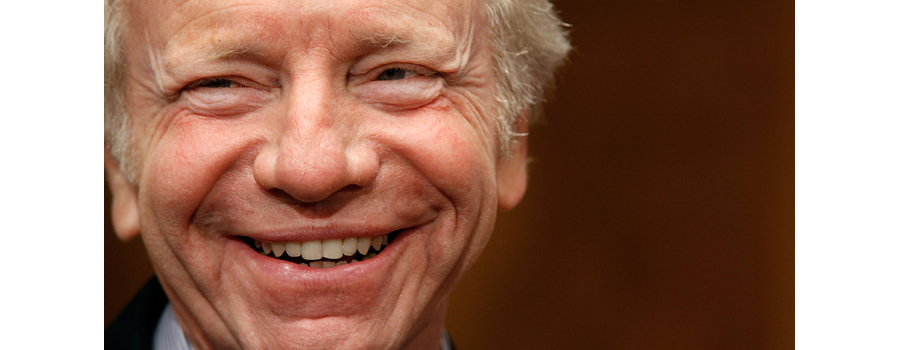
The reason I put up these two images is not because I think Joe Lieberman is a bad guy, or that he is in any way scary. The point I want to make is that Health Care politics has a kinship with professional wrestling because it is scripted. Lieberman, like any of the “bad guys” in wrestling has a job to do – he has to move the story forward. To do so, he appears on stage at strategic intervals when the story is failing. He does eeeeeeevil things, now threatening to help filibuster the Medicare 55 option.

It’s scripted. He works very closely with the Democrats on all of this stuff, and appears when he should and says what he must. In the end, he will take the heat when the ‘desired’ legislation (which is doomed to fail anyway) goes down. Other Democrats feel less heat because of Lieberman.

So Joe is an actor on a stage, and I even like him, much as I like villains in any movie. (All time classic: Heath Ledger’s “The Joker.”)

Lieberman should paint his face.

But I much prefer professional wrestling, as the players aren’t so slimy. But please note: The mindless zombies who think wrestling is real cannot hold a candle to the party hacks who buy the “Bad-guy-Joe” narrative.

Is it just me?

Is it just me? The Internet seems to be really degrading itself now. A tour through various websites is a light show, with flash ads jumping at you from every direction, text superimposing itself over the text you want to read, and what were once known as “obnoxious pop-ups” reappearing in the form of obnoxious boxes that swell up in our faces if the cursor accidentally hits a trigger word.

And Google, the search engine that distinguished itself from the others by offering true results based on popularity instead of back-door payments, is almost entirely given over to advertising results. You have to scroll deep down a page to get true results these days.

The real business of web pages, the content, is now a left-hand affair, taking up about half the screen. The rest of the page is devoted to ads and links to ads. A visit to most web sites for any kind of video content will deliver what is known as a “pre-runroll”, and ad that you must try to ignore before you are allowed to view the content you are after.

All of this comes to mind because Steve and I were looking for Glenn Greenwald’s Radio show. Click on that link, and you will first be subjected to an annoying full-page ad, and you have to find the button to close it. The page below flashes and annoys, in customary fashion. But then another ad appears, this one imposing itself over the text you want to read. This ad will not close. You have to guess what is behind it.

It was only a matter of time before the Internet, a taxpayer invention, was taken over by that thing they call the “free market” – carnival barkers, whores in dark alleys, snake oil salesmen and, everywhere you look, Google. But I repeat myself.

Enjoy the page your are now reading, free of flashdancing and pop-ups. Most places you go for content, and get hit with shit. Here we are more up front.

Profiles in Courage

Senator Byron Dorgan of North Dakota has introduced an amendment to the senate “Health Care” bill (apparently the names “Healthy Forests” “Gulf of Tonkin Resolution”, and “Clear Skies Initiative” were already taken). Dorgan’s bill would allow for the “reimportataion” of drugs from Canada.

Away from industry jargon, that word, “reimportation,” means that Americans would be allowed to buy drugs from a country where prices are regulated, and monopolies are not allowed to flourish. It means lower prices for Americans – a savings over ten years of $19 billion for us as “taxpayers”, and another $80 billion for us as “consumers.”

That’s considered poltical grandstanding, and is highly frowned upon in Washington. That $99 billion in savings would come from the pockets of “PhRMA,” the drug lobbying group also known on the streets of Newark as the “Drug Cartel.”

Said Sen Jay Rockefeller, D-AR, “Bad form, Byron – not done! Not done! Order! Return to order! Order in the senate!”

The White House, of course, opposes Dorgan’s amendment. President Obama supported drug reimportation as a candidate, but that was before he realized how really powerful these PhRMA dudes are (or, perhaps, was, just, well, you know, lying). He still supports reimportation in principle, but has alterted his stance a bit to suggest that even though it is a really good idea, it should never be implemented. That is considered, in DC parlance, a reasonable compromise.

Dorgan is making a mess of things, it appears. The White House and PhRMA had crafted a deal where PhRMA would offer up $80 billion in concessions over ten years, by first adding $80 billion to their pricing structure, which they can do as a cartel, and then giving it back. Maybe.

Dorgan is being unreasonable, and worse, he’s not backing down. Oh, he will eventually. They always do. Stuff goes on behind the scenes, and these guys always think better of behaving like this – there must be some sort of woodshed behind the capitol buidling where spankings are administered, and not the fun kind like Max Baucus does with his aides.

Dorgan has threatened to put a hold on all other amendments until his is voted on. He is really, really in for it.

There’s a rule in Washington known as the “order of feeding”, and Dorgan is violating it. It works like this: The carcass of the American public lies finally still after a long chase, eyes glazed, steam still rising from the nostrils. Wolves did the kill, but grizzlies eat first, filling their bellies until content, often resting on the carcass while processing carrion and making room for a later re-gorging. Then wolves feed, followed by coyotes and eagles, ravens last. Dorgan, an egotistical man who is not even thinking in terms of feeding rights, seems to believe that the beast should not even be killed, that there should not even be a feeding ritual. PhRMA begs to differ, and having higher standing in the senate than Dorgan, will prevail.

But in the meantine, it’s just embarrassing! Here’s what one senate aide said about the whole affair (this is true):

Of course, with Dorgan, it’s all about Dorgan.”

He will be chastised. Even as I write, PHrMa is looking for a suitable replacement for him in the coming elections. A mediocre man or woman of low character will soon have a high public profile in North Dakota, appearing in photos on newspaper front pages, having op-eds written by ghosts, and being sought out for wise commentary on the issues of the day by news stations. He/she will soon be thought of as senatorial timbre, and will draw quiet, behind-the-scenes attention from the real voting public in American politics, lobbyists, corporations, and wealthy families.

Dorgan is toast.

More Market Magic

Private for-profit health insurance is a significant factor in our high medical costs in this country. The reasons are many, but one is externalization of their internal contradiction. In order to enhance and preserve their profits, insurance companies have to go to great lengths to avoid people who are already sick, examine claims in detail to see if they can be legally avoided, and rescind coverage for some people who get sick after taking out a policy.

In addition, insurance companies impose costs on health providers by making them submit precise and detailed paperwork to assist them in the weeding-out, avoidance and rescission processes.

In total, the private insurance system imposes an overhead burden on the entire system of 31% of each premium dollar.

Often these discussions devolve into exchanges involving “evil” insurance companies. They are not evil. They are merely doing what the market demands of them.

Three insurance executives were held in a submissive posture before a House Subcommittee and asked about the policy of rescinding coverage for people who take out policies when healthy and then get sick. (Often these people have lied about preexisting conditions, but that too is a rational response to market forces.) In a powerful act of grandstanding, the executives were lectured on the cruelty of the rescission process, and they agreed that it was indeed distasteful. They were asked if they would stop doing it. They said no. They would not.

They can’t. They can’t stop doing anything they do. The market will not allow it.

Say, for example, Dennis Kucinich leaves office and becomes CEO of Unitedhealth (NYSX: UHS). He immediately announces that Unitedhealth will no longer reject coverage for people with preexisting conditions. There’s a flood of new business for Unitedhealth. Unfortunately, the business is comprised of sick people, and Unitedhealth ends up paying far more in claims than they receive in premiums. Profits are reduced, investors become unhappy and begin unloading the stock, and the market price plunges. Investors who had hedged or borrowed on Unitedhealth stock are at an extreme disadvantage. Margin calls go out.

Kucinich is assassinated fired.

Health insurance companies cannot leave the pack. They must behave as the worst actors behave. Otherwise, they are at a competitive disadvantage. Even supposed “not-for-profit” insurers, like some Blue Crosses and Kaiser Permanente, have to follow the practices of the worst actors. Otherwise they cease to exist.

There’s nothing wrong with the behavior of the people who run and work for the health insurance companies. They have to do what they do. Even if they got together and agreed to behave in more socially conscious way, there would always be one who went for the gold and undercut the others

People who work for large organizations are not free human beings. They are occupants of slots in a machine, and must behave as the machine dictates.

This is why I often say that private for-profit health insurance is incompatible with health care. Provision of care undermines profitability. The market cannot do a good job of providing health insurance. It can’t even though it is loaded with good people.

Every other industrialized country has figured this out. But, as always, the United States is exceptional.

Market Magic

This has nothing to do with anything that has transpired before. I am curious about one thing. It’s not because of what I am reading of what I have read before – there’s no great philosopher behind it. It’s just my own observations.

A workman who uses tools keeps his tools in good operating condition. If he lets them fall in disrepair, he impairs the cash flow he gets from them. But if he needs a snow plow to clear walks, he’s not going to go out and buy plow that attaches to the front of a pickup. He wants minimum investment and maximum utility.

In the antebellum South, the cheapest way to plant, grow and harvest cotton was human labor using crude tools. In true free-market fashion, an entrepreneur discovered that Negro slaves could be brought in, kept in involuntary servitude, and forced to do the work. It was a dynamic breakthrough, and anyone else who wanted to compete in the cotton market faced the dilemma of investing in labor at prices that free people might demand, or buying slaves. The South became a slave-driven economy, and slave ownership was so common as to be thought normal. Even the finest egalitarian minds of the age, such as Jefferson, owned slaves, whom he also boinked. The market gave him not much choice – if he invested in free labor, his cash reserves would soon be depleted, as the whole of the wealth of the South was based on slave labor.

But slave ownership was not without costs. In order to keep slaves in good working order, they had to be fed and housed. Replacement slaves had to be bred, so that aging ones could be replaced by newer machinery. There had to be a regular flow of machinery through the marketplace to keep it all functioning smoothly.

Laws enacted by the slave owners who controlled government enforced the rules of the slave system. If a slave escaped, local officials would assist in the hunt-down. If a slave had to be killed to teach a lesson, it was not considered a crime. Government was the servant of wealth.

Other maintenance matters were cultural – that is, understood to be necessary but not necessarily requiring cash investment. It was understood that slaves of one plantation should not be free to mingle with slaves of another, as secret alliances might form that might lead to escape plans or revolts. Slaves had to be kept illiterate, as education leads to desire for freedom. Religious indoctrination taught them to expect rewards in some other world. And even though on the surface it appears that a machine necessary for production of wealth was being abused, slaves had to be regularly beaten to demonstrate the futility of rebellion. It served a greater good.

The open market further required that family ties be broken – it was harsh, and there was no cultural or control reason to do so, but for sake of maximization of profits, families had to be broken up, children sold off if their labor was not needed, old men and women whose value had diminished sold at clearance prices too less wealthy or non-landed gentry who could use them for other purposes. (William Clark, of Lewis and Clark fame, had a slave, York, who accompanied him on the great expedition. York’s mingling with natives encountered on the trip taught him about how free men lived, and created an uppity attitude. Clark wrote of having to beat York on occasion, as his attitude was becoming insolent.)

All in all, it was an efficient marketplace, and as such, would not naturally dislodge itself. It took a great war to undo the system, and the aftermath of the war was devastation of the southern economy. Slavery became illegal in the United States, but investors, manufacturers and landowners adapted to the new economy, and soon followed the Industrial Revolution, where machines could to the work formerly done by slaves.

But market pressures would still exist to minimize the cost of labor, and due to the advance of machines, a surplus labor force was always available. So the same market forces that produced slavery still existed. On the surface it appeared as though free men and women were negotiating for fair wages in an open marketplace. The fact was that cheaper labor was always available, so that wages were eventually reduced to the point where they would provide enough for a worker to have food and crude housing – enough to make him serviceable to employers.

The Progressive Movement of the early twentieth century, which is no longer taught about in schools, fought long and bloody battles for the right of workers to form unions, a forty-hour work week, the end of child labor, and eventually, a minimum wage. Later battles would bring about unemployment insurance, Social Security, Medicare, and workplace safety laws. Still later laws would try to enforce standards to minimize environmental degradation, discrimination based on color or gender, access to buildings for handicapped people … the list goes on.

All of that, from outlawing of slavery to ramps leading into public libraries, was the work of evil government, which a certain commenter here repeatedly tells me does nothing but visit “violence” on people.

Markets are powerful engines for good, as they maximize efficiency for wealth creation and general good. Without them I would not be typing on this computer, which I depend on for my living as well. But markets have negative side effects, among them, slavery, pauper-wages, humans as chattel, and externalities such as environmental degradation. Markets do not provide remedies for these problems, as remedies do not generate immediate and visible profits.

Market pressures also demand that that investors would go elsewhere to avoid U.S. laws protecting workers, the old and disadvantaged, and the environment. So it is that most of our goods are made in other countries like China, Vietnam, the Philippines and Sri Lanka, where democratic impulses do not exist, where the environment and workplace are not a huge concern, and where labor is cheap. Very cheap.

In those countries, workers subsist on lousy wages and live in hovels. It’s almost like being a slave, except that workers are free to go starve somewhere if they don’t want to submit to market pressures.

Slavery never left. It’s a natural byproduct of free markets. It still exists in its true form (prostitute slaves are common throughout the world), and in the form of sweatshops. In an article in Scientific American from 2002 (behind a subscription wall), Kevin Bales argued that there were as many as 18 million slaves among us, including in the United States. (Going on memory here.)

Markets work, but without governments, they don’t work as well as some would have us believe. In fact, they can really hurt us. Free markets gave us slavery. Government freed them.

The words of the prophets …

The removal of inhibition can be liberating as well as criminal. Recently, a Reuters reporter expressed frustration that American soldiers stationed in Iraq would tell him nothing until he went to the latrines. “You have to go to the Port-o-Potties. For some reason, they talk there. You can read how they really feel – all the anti-Bush stuff, all the wanting to go home – in the writing on the shithouse walls.
Rose George, “The Big Necessity”

Pipeline Wars

In a post down below, I asked for opinions on why we are in Afghanistan. I got four responses: Wars always come in pairs (rightsaidfred); domestic politics and some pipeline geopolitics (ladybug); destruction of the Obama presidency (Charliecarp); and finally, encirclement of Iran in preparation for a three-pronged invasion (Blackflag).

In 1989 Iran and Iraq had one thing in common – both had independent foreign policies. Surrounded by U.S. puppets and collaborators, each was seen by the U.S. as poison. As soon as it was clear that the Soviets were no longer a threat, the U.S. attacked Iraq (1991), and then over the following twelve years strangled it, eventually invading and installing a puppet government in 2003.

Iran is a much larger and more powerful nation, and has been a tougher nut to crack. The U.S. tried to undermine its elections this year, without success. The Iraq bases are a real threat to Iran, and Israel can always be used to attack – the question is, does Iran have a credible deterrent? They appear to – the U.S. has not attacked, nor has Israel.

And an Iran with a nuclear bomb would be unassailable, hence the multi-pronged offensive to keep them from developing such a weapon. It’s not about our security or Europe’s – it’s about their ability to deter an attack by having the ability to inflict meaningful countermeasures.

Iran has fully absorbed the lesson of Iraq: Weakness induces attack. After twelve years of strangulation and disarmament, Iraq lacked a meaningful deterrent. The invasion followed like Mary’s lamb. Iran sees this, and knows it must arm itself in everyway possible to maintain it’s independence.

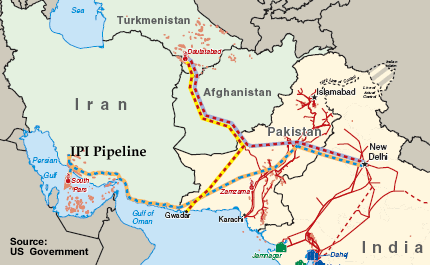
So what’s up with Afghanistan? Iran sits atop massive natural gas fields – it has far more gas than oil, the second largest supply in the world. On May 24, 2009, Iran and Pakistan signed a 25-year deal for Iran to supply gas to Pakistan with a $7 billion pipeline to be built across Afghanistan into Pakistan. This is the blue-dashed line below – the “IPI” Pipeline.

The implications are staggering – an alliance of Sunni and Shiites with potential future pipeline spurs to energy-starved India, and even China. And Russia strongly supports the deal – the alternative market for Iranian gas is Western Europe, which is currently supplied by the Russians. Iranian gas going to Asia is beneficial to the Russians in preserving their existing market.

Remember the acronym “TAPI”, or the Turkmenistan-Afghanistan-Pakistan-India pipeline, aka “TAP”, or Trans-Afghanistan Pipeline. This pipeline has been in the works, and was the reason why the U.S. military (allegedly) threatened the Taliban prior to 9/11 to bury them either under a “carpet of gold or a carpet of bombs”. TAPI is the red/yellow line on the map above.

Hindu India does not want to depend on Muslim Pakistan for energy, and so favors the TAPI line over the Iran-Pakistan line. And the U.S., of course, does not want Iran to have any options until it can install a puppet government there. (1979 was the year Iran gained its independence, and the U.S. has never forgiven them.)

So why are we in Afghanistan? There are many reasons – geopolitics, the Great Game, to clear the way for TAPI, to isolate Iran, to keep India from becoming dependent on Pakistan, to have a strong military presence in a critical area close to energy supplies critical to the region.

The reasons given for being there: To overthrow the Taliban, a security threat to us, “terrorists” in the hills of Pakistan, concern for human rights, nation building … these reasons are all smoke. All are false.

Obama has not changed one facet or detail in U.S. policy in that area of the world, and is forced to stand behind a podium and lie through his teeth now, just as Bush did before him.

It’s business as usual. Democrats are now carrying forward with the policy handed them by Bush, who inherited it from Clinton. For all I know, it could go back as far as 1979, when the U.S. first enticed the Russians to invade Afghanistan.

—–

Good reading on the subject here, from whence I stole the map above.

A royal screwing

Years ago, in the early 90’s and while still single, I briefly dated a former Baucus staffer. (It didn’t work out – we were never that close, and when she said “Stop following me or I’ll call the cops!”, I sensed that it was time to move on.) Even as a ex-staffer, she was extremely devoted to Max. (That’s part of why we didn’t harmonize.)

Anyway, we were at the Labor Temple one day because Max was going to make an appearance, and in walked the star for professional mingling. Eventually he came over to his former staffer and was most annoyingly and insincerely ingratiating and paternal. I remember thinking “These people were once an item.”

I’ve always thought of Max since that time as man who uses his power of office as a means of vaginal penetration. So I’ve not been surprised at former staffers who accuse him of misdeeds, or of the wife who left in utter unvanquished anger. A man such as Max can create great resentment because he’s kind of a dick and has great power.

And now we learn that he appointed a former girlfriend to the U.S. Attorney’s Office. (They will only admit he mixed with this staffer after his divorce. That could be strategic retreat.)

Keep in mind that most of us get screwed by Max as part of the normal course of business, and that no lucrative appointments await us.