
This is written just to complete the circle from a prior post on the fake whistle blower, Daniel Ellsberg.
Follow this link to Wikipedia, and then down to the section titled “Repeal.” Wiki is heavily censored but often has information hidden in broad daylight. This is such an entry. It is about the Gulf of Tonkin affair, and the resolution that was the legal justification for the Vietnam War.
Maybe you did, but I did not know until recently that Congress repealed that resolution in January of 1971. It was perhaps the last gasp of breath by Congress before the institution was taken down by CIA. Congress these days is a fake lawmaking body, rubber stamping laws written by corporate and other power centers, and quivering in its boots before the executive. It is of no use or purpose.
Note then that Daniel Ellsberg appeared on the scene with the Pentagon Papers in February of 1971. It was a distraction. The paper caper would dominate the news for months to come, only to be supplanted by Watergate. News that Tonkin was repealed, that the Vietnam War was illegal from 1971 forward, would be buried in the clutter.
That explains the paper caper, and at least in part Watergate.
Two things to note: One, if we have an event that dominates the news, like OJ or Monica or the Michael Jackson trial or Donald Trump, it is a cue to be alert for what else is going on. These events serve to cloud the landscape and distract us. Just as we do not have a real Congress, we do not have real news. It manipulates us, but does not inform.
And two, the purposes of reading are many – to enlighten, entertain, inspire, relax and to keep our minds sharp as we age. If, from reading, we are able to connect dots and gain some understanding of this crazy world, then it is worth doing for that reason alone. It is not done so that we can make lists of books we have read or have impressive book shelves.
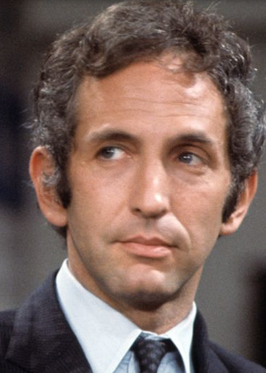 To have been young, in my twenties, during the time of Watergate, was fortunate. Of course I did not understand it – very few did then, and possibly fewer now. The obvious object was removal of a president, replacement by a cardboard cutout. But the psychological aspects are far more intriguing than the outcome. For a period of two years we were hit with a barrage of false news, false hearings, liars telling liars about other liars, and the news media positioning itself as an investigative body.
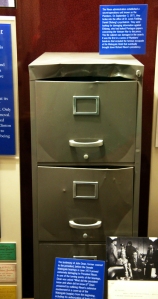 Observe the scene, August, 1971, when five CIA operatives broke in to the office of Lewis Fielding, Ellsberg’s psychiatrist. Set aside for the moment the strange notion of a man of such high intellect and position needing a shrink. That was probably an invention. The important thing was the break-in. It was sloppy, meant to be discovered, and its discovery got Ellsberg off the hook. As was intended from the beginning. Like a TV sitcom, it was the last-minute wrap-up that resolved all the problems.*
 Piece of Mindful