The genius of Bill Gates: Steal it first

As late as about 1994, people like say, Bill Gates, had no interest in the Internet. He wouldn’t even go to conferences about it, because he didn’t see a way to make a profit from it. (Chomsky, interview with Corpwatch, May, 1998)

After Ringo Starr, the luckiest man alive
The above quote, which I cannot source beyond what I have there, has stuck with me over the years. It indicates that perhaps Bill Gates is no guru, and falls in line with Nassim Taleb’s musings in his book The Black Swan that there isn’t as much financial genius in the world as we like to think, but rather a whole lot of luck. Maybe Gates just got lucky.

This is taken from the book The Drunkard’s Walk by Leonard Mlodinow, p207 forward:

I was watching late-night television recently when another star, though not one from the entertainment world, appeared for an interview. His name is Bill Gates. Though the interviewer is known for his sarcastic approach, towards Gates he seemed unusually deferential. Even the audience seemed to ogle Gates. The reason, of course, is that for thirteen years straight Gates was named the richest man in the world by Forbes magazine. … And so when he was asked about his vision for interactive television, everyone waited with great anticipation to hear what he had to say. But his answer was ordinary, no more creative, ingenious, or insightful than anything I’ve read from a dozen other computer professionals. Which brings us to the question: does Gates earn $100 per second because he his godlike, or is he godlike because he earns $100 per second?

Mlodinow goes on to describe the origins of Microsoft. IBM, whose success was built largely on government subsidized research, had belatedly decided to get into the personal computer business, that bevvy of geniuses having dismissed the trend in its planning during the 1970’s. They did not even have a program to run a PC, and so approached Gates for some help. Gates didn’t have one either, and referred them to Gary Kildall of Digital Research Inc. Talks did not go well between Kildall and IBM, and another IBM employee, Jack Sims, approached Gates again. He still did not have a program, but began to show his true “genius.” He knew someone who did.

The system Gates had in mind might well have been based on Kildall’s work. Gates asked if IBM wanted him to go get it, or if IBM would do that dirty work itself. Sams, understanding what was going on, insisted that Gates go get it, hint hint.

Gates did, for $50,000 (or, by some accounts, a bit more), made a few changes and renamed it DOS (disk operating system). IBM, apparently with little faith in the potential of its new idea, licensed DOS from Gates for a low per-copy royalty fee, letting Gates retain the rights. DOS was no better – and many, including most computer professionals, would claim far worse – than say, Apple’s Macintosh operating system.

Ergo, the conundrum so many of us have faced over the years – crappy PC technology dominates the market because IBM had market power at that time. “People bought DOS because people were buying DOS.” Gates and Microsoft amassed a huge war chest of money, and from there started to buy up competing companies and to reverse engineer technology, including Apple’s icon-orientated home screen so common now on computers.

With the internet, which Gates pooh-poohed, came the need for a means to access the web, and with some government funding, the Netscape Navigator was born.

No, it's not IE - it's Netscape!
Microsoft wanted none of that, and pushed its own product, the Internet Explorer on the market in a now famous scheme whereby IE was pre-installed on new PC’s. Netscape, long gone now, would sue and win a settlement, but IE by default became the market standard. Mozilla’s Firefox, which I use, is a superior product, but IE is the only program on any new PC that I have purchased over the years.

My first computer was and Apple IIe, and I hadn’t a clue how to make it work. It sat there. I set it up to download stock quotes for my then boss, and each time we did a download, the company providing the quotes charged us. When the bill came through, it said we were downloading “recipes,” and my mercurial boss shut us down, saying that she had more important things to do than to provide cooking ideas to her staff.

Later came VisiCalc, and at last I could put the computer to work in a practical way. Later still I bought a program called “Appleworks,” a combined spreadsheet/word processor/database. It was a remarkable program for its time. My employer owned around a thousand mineral deeds in various western states, and with Appleworks I was able to input all of the information on those deeds using over twenty parameters, and thereafter quickly locate any one for any reason. All of this before Lotus and the crappy Microsoft Office system, which now dominates the spreadsheet market. That’s becuase PC’s dominate the market.

Bill Gates is no genius, and perhaps that’s the reason he feels a need to give away so much of his fortune. If only the rest of the financial world would see it that way too. In mutual funds, for instance, given that there are thousands of them, it goes with out saying that maybe a hundred of them will outperform the others in any arbitrary period, say, a calendar year. The next year, it will be a different hundred. In the meantime the underlying companies whose stock make up the portfolios are working hard to develop products that might or might not tempt the market and create some success. No one knows which will survive or thrive. There are no geniuses. The future is just a damned mystery.

Wall Street financiers have worked a clever way around market uncertainty. Money itself has become the driving force, the thing that creates wealth. Speculators have devised financial products that are themselves considered commodities for trading without any underlying product or idea or entrepreneurial genius. It’s a house of cards, of course, and so collapsed in 2007-2008. It’s been rebuilt, and will likely collapse again, though I do not know the future. But as they say about North Dakota, there is no there there.

I was recently asked by our former landlord in Boulder about the future – what’s going to happen with the stock market, is the economy going to start ticking again. I informed her, with all the sincerity I could muster, that I had no clue. This left her cold, and no doubt she ran to a financial adviser for better advice. I sympathize, but life offers no certainties, no geniuses, and charlatans rule the financial world. The best thing to do is hope that you can pull a Gates, and get lucky.
_____________
Update: No sooner is this post up than I learn that Microsoft is going to buy Skype. Apparently, the reverse engineering failed.

A modest request

Kill the muhfuh!
Dear President Obama:

Over the weekend you announced that you have the right to assassinate American citizens without “due process”, a quaint term. Kudos – it’s teabagging time!

I special request: Please kill Thomas Friedman and Bob Woodward. They are annoying and stupid.

Sincerely,
Mark Tokarski
Morrison, CO

PS: No torture please, even though that is your right too. Don’t do them them what they have done to us. Just kill them. Thanks.

Our own private Utah

We are hiking the slot canyons and washes of Utah this week, and are deep in Mormon country. It’s an oppressive feeling in the towns – we are in Blanding, and it is sleepy. Maybe it’s just me, but there’s an air of insularity here. I look at the faces of other diners in a restaurant, and there is a passivity that creeps me out. These people do not think for themselves, and are trained all their lives to accept the rule of church hierarchy. They are severely punished if they get out of line.

In Bill Maher’s movie Religulous, he interviewed a couple of fallen away Mormons. they talked about ostracism. They not only lost contact with their friends and community, but also their business relationships, jobs and income. If you leave the Mormon church, you might as well leave Utah and start over. And that is hard, if not impossible, for most people. So they get their minds right.

And they seem happy, and that brings to mind Napoleon’s observation that freedom is not something most people want, but is rather something cherished by only a few people “of noble mind.” People don’t want to think for themselves or go againt the flow. I’m not talking about Mormons, of course, but all of this nonsense about “killing” Osama that is going down. It is so painfully obviously a total hoax, and yet those who are even a little suspicious are ridiculed and so might have to leave the Big Utah, the US of A, or just look at their shoes. Or get their minds right.

And I suppose they are happy.

Maybe that is why the Mormons ended up in Utah. It is such a big state with so many ways to go off and be alone. Maybe they all sneak off now and then and have a private thought. Maybe they tear off that white shirt and tie and tie one on, or read a book that has evil thoughts. I haven’t seen it, but these canyons are so deep that they have not all been discovered or explored. It could be that there is life here after all.

Maybe we will stumble on a colony of freethinkers today.

Ding dong Osama’s dead – is change in the air?

Benjamin Osama Button?
Osama is dead, says Obama.

Osama bin Laden probably died in late 2001 in the early bombing of Afghanistan. His images over the years have varied. He’s gotten younger, worn jewelry, a changed his dominant hand. Who it is that has been manipulating his image we cannot know. I presume it is the Americans, as his face was a valuable commodity. In propaganda terms, he was the focal point for our hatred, a way to manipulate us into supporting our own terrorism.

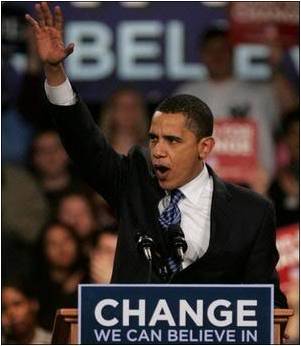
When Obama was elected, I thought perhaps they would “kill” Osama, indicating that there really had been regime change here. When they did not kill him, when Obama signaled to the world that there had been no change by leaving Gates at at the Pentagon, I knew that we were in for four more years.

What does his “death” mean? is it significant? We can only speculate. Perhaps his usefulness as ebbing. Maybe they are going to pull out of Afghanistan, either acknowledging defeat or moving on to new and better wars. They cannot leave Afghanistan without “killing” him.

So maybe this is a time for cautious optimism. Perhaps it is a good time to hope for some change. Not very damned likely, but indeed change is in the wind, so I only hope it is a positive sign.

Free markets are real

I am just going to rough this out a bit, and maybe refine it later, or maybe commenters can fix it up for me. I am fond of saying that there is no such thing as “free markets,” and have support on that idea from Dwayne Andreas, former head of Archer Daniels Midland, who said

“There isn’t one grain of anything in the world that is sold in a free market. Not one! The only place you see a free market is in the speeches of politicians. People who are not in the Midwest do not understand that this is a socialist country.”

Andreas, who (no surprise) is a major donor to “both” political parties, is wrong about that, in my opinion. There are indeed free markets, and as anyone who read the book or saw the movie “The Insider” knows, ADM spent a great deal of executive time trying to avoid those markets. The thing is that free markets scare the pants off of people, and just about everyone is looking for ways to hide out. That is most of the reason there are thousands of lobbyists in Washington, DC – they are looking for special tax treatment, access to the commons, protection from competition.

There are, however, people so weak that they cannot hide away, and so are exposed daily to the grinding mechanism of the free market. The are, in order of weakest to strongest, as I see it at this moment, as follows (the lower the number on the list, the more exposed to free markets):

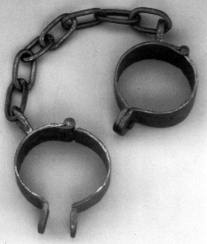
1. Slaves
2. Indentured servants
3. Unemployed people without benefits
4. Sweatshop workers
5. Migrant agricultural workers
6. Unemployed workers with benefits
7. Non-unionized employees
8. Self-employed craftsmen
9. American unionized employees
10. Unionized employees in countries with strong labor laws
11. Self-employed professionals
12. Employed professionals (athletes, architects, etc)
13. Business executives with small companies
14. Business executives with large companies
15. People who make large fortunes by skill or luck
16. People who marry people who have large fortunes
17. The heirs of people who make large fortunes by skill or luck

Best I can do at this moment. Note that the higher the number on the list, the more inclined people are to support the concept of free markets, until you reach the ultimate absurdity: The Koch Brothers, Donald Trump, the Walton Family, George H.W. and W. Bush, and Steve Forbes, #17’s all, trust babies all, and firm believers in free markets, one and all.

The Tea Party, thinking it is in charge, gets all officious

The contradictions, duplicity and hypocrisy of this incident are delicious. I don’t spend a lot of time worrying about the Tea Party, as they are just a manifestation of the larger powers at work behind the scenes in our country. Such stupid people as I have seen at the rallies are not capable of large organizational projects, long-term vision or policy expertise. They are just rubes with good reason to be upset, but not really understanding what those good reasons are. They don’t know where to direct anger, and so, like attack dogs, go where the master points. I sympathize with them, but honestly, in a country as stupid as this, there’s nothing more to be done than to sympathize. It is the other end of the leash we need to focus on.

Nonetheless, here’s a story that needs wider exposure. Nichole Sandler is a radio host, which on the left wing is one step removed from food stamps. She went to a town hall meeting in Broward County, Florida, sponsored by Congressman Allen West, a Tea Party beneficiary. West’s town hall was done in the standard PR format to give the illusion of an open public gathering. Questions were to be submitted in writing, and his staff selected those that he would answer. This leaves them free to discard tough questions and even to make up softballs for the jackass to answer.

Sandler was having none of it. When he stood there talking about how he is going to save Medicare by destroying it, she stood up and challenged him. A security guard pointed her out to local police, who sought to forcibly remove her from the room. She is heard saying things like “get your hands off me” to them. She was put in a police cruiser, held in solitary, and when challenging one of her captors to please let her go, was maced. Not a little bit – heavily. The Broward County police obviously had a power boner.

The charge against her? Trespassing. Attending a public event in a public auditorium sponsored by an elected official was trespassing. They did not charge her with speaking up, as that would imply that she had no right to speak. After being arrested for trespassing, they claim that she was a bad girl, justifying the imprisonment, isolation and macing. Maybe it’s all proper, but certainly it ain’t right.

That’s all well internalized here on this end. I understand this country better than most folks. I remember Ralph Nader being arrested when he tried to attend the Gore/Bush “debates,” another controlled forum where dissent is not allowed. He had a ticket, was not barging in. He was Nader, that’s all, so they arrested him. What is so deliciously funny about all of this is all of those Tea Party numchucks who were bussed to town hall meetings during the health care “debate,” how they were loud, obnoxious, disruptive; how the floor was open for unrehearsed questions … how they rode their buses home fully self-satisfied. No arrests that I recall.

What a country.

Democrats are still the problem

I wrote yesterday about the insignificance of replacing Democratic Senator Jon Tester of Montana with his Republican challenger, Congressman Dennis Rehberg. This brought to mind one of the weapons that people in office use to keep their base in line: The voting record.

Here are the last ten recorded votes in the current Senate without regard to issue or party: 81-19, 42-58, 47-53, 96-0, 64-36, 57-43, 100-0, 50-50, 12-88, 7-93. In those ten votes there was one where the vote of one Senator could have changed the outcome. That vote was on Amendment No. 183, which would prohibit the EPA from doing anything related to climate change. The 50-50 vote means it failed. Important? Yes. Tester’s vote? To reject the amendment. One Republican joined with the Democrats in rejecting the amendment, and four Democrats joined the Republicans to favor passage.

Now, suppose that Dennis Rehberg held Jon Tester’s seat – it indeed appears that the final vote would have changed the outcome. But we don’t know that. Prior to a close vote being taken, is is usually known how it will come out. Prior to that, a practice known as “vote trading” takes place. Republicans were mostly obligated to support that amendment, as their base requires it, and the Republican base tends to remember stuff. But are all 50 of Republicans unreasonable? Not likely. Democrats, on the other hand, are not obligated to oppose the amendment, as their base doesn’t hold them to ideology. So four of them jumped ship.

Even so, it appears we have a victory. I won’t deny that.

However, it could be that in the vote trading scheme, one Republican (Collins, Maine) agreed to take the Democratic side to defeat the amendment, and both sides were agreeable to that. That is a win-win – everyone pleases the base, and the vote tallying agencies will ‘score’ the vote for use in coming election campaigns. In the meantime, the issue dies.

In 1994 the League of Conservation Voters released its voting score on Montana Senator Max Baucus, and he scored 80% “favorable” to the environmental community. A closer look revealed that three (going on memory here) of the votes were about changing the designation of the the Joshua Tree National Monument into a national park and expanding the old wilderness. Two of those votes were procedural. Important? Yes. But the votes were all lopsided. Baucus could vote for or against the issue without changing the outcome. It did not affect his home state. It was not a true test of his environmental credentials.

Max Baucus's ideal wilderness area
Did LCV shill for Baucus? I suspected so at the time. A better test of Baucus’s wilderness creds was his behavior regarding Montana wilderness. He opposed expansion of designated wilderness throughout his tenure in office. Whenever the issue would arise, Baucus would trot out a “rocks and ice” bill designed to thwart attempts to protect heavily forested areas from development. That’s behavior that has consequences. The LCV scorecard does not reflect it.

It is hard to know the mind of a Senator, and voting records are of little use. More important is the behavior behind the scenes, and we don’t get much reporting on that. Our impression of the worth of a legislator is based solely on the record of votes and the “scorecards” put out by interest groups, and public utterances. Those votes can be tailored as necessary to please the base. Public words of politicians are designed for impact, and carry no substance. Notice that 7 of 10 votes above were lopsided, and two were far enough apart to allow the luxury of switching a vote here and there without affecting outcome. On the one that was close, we may or may not have pegged Senator Tester. He may indeed be the right guy in the right place. But it is far from certain.

There’s a great swill of controversy now about having Rehberg in office instead of Tester. Democrats are, frankly, scared out of their panties of Rehberg. They needn’t be. Part of the beauty of our two-party system is the ability of politicians to focus their base on the other party as they do their business. The only way to have an impact on the system and the outcome of votes is to pressure the person in office. Democrats, who perpetually swear to support their party no matter the behavior of the office holders, do not offer meaningful pressure. They are the problem.

Regarding the selfishness of not voting for crappy Democrats

One of the frustrations of watching Democrats in action is the frustration of watching Democrats thinking they are in action. But it doesn’t hurt to step back and take the long view. Democrats are, after all, just people, subject to illusion and delusion. I too am a people with my own set of I&D’s that are hard to even identify much less root out. So I will do what I do best – identify the failings of others.

My focus is Montana Democrats, but it is no different in Colorado. This is about Senator Jon Tester, but Colorado Democrats recently elected or re-elected Senator Michael Bennet, Congressman Jared Polis, and Governor John Hickenlooper, all of them corporate whores, just like Tester. But Colorado blogs are not active in the manner of Montana’s, or I have not come across them yet, so I focus my attention on my life-long home state, Montana.

I doubt that Tester is going to survive the next election, as his opponent, Congressman Dennis Rehberg, will be as well-funded even in spite of Tester’s continuing whoring. Rehberg is also, in my view, more representative of Montana’s self-image – cowboy go-it-alone independent thinkers, all an illusion, of course. Also, Tester’s need to appeal to his base will be a detriment as he at the same time seeks to appeal to the right wing.

Keep in mind that each man either supports or is forced to support the same agenda, so that we are really only talking about perceptions.

Tester insulted a significant percentage of his base when he called people who opposed his “Forest Jobs and Recreation Act” as “extremist.” But that is not unusual – Democrats in office are usually free to spit on all or part of their base, since they do not fear a backlash. But that particular comment might hurt him in the end, as the ones he insulted are smart and dedicated, and so will not pull his lever if they see that doing so makes no discernible difference.

The Democratic base is less attune to environmental issues, and frankly less attune in general. They are rallying around Tester now, and claiming that those who are not going to pull his lever are purists, selfish, and unable to see the big picture, or even to compromise.

Are they right? No. Not even close. The ones I know who are opposing Tester are not only able to see big, but are also willing to compromise when compromise is needed to achieve a larger goal. (“Compromise,” as the term is used by Democrats, entails giving up objectives before entering negotiations.) “Selfish”? That’s a personal trait that has no place in politics. “Purists”? Maybe. I prefer to use the term “dedicated.” They are not mealy about what they want and fight hard. That by itself separates them from regular Democrats, who do not understand dedication to an idea over a man.

Being a Democrat and supporting Tester is really the path of least resistance. It does not require attention to detail or dedication to ideas. But it is more than laziness – it is something far more common among us, lazy and energetic alike: Democrats suffer from the illusion of control.

Supporting their man through thick and thin, writing to thank him when he does something right, defending him when he is wrong – it is all part of the need to be in control of events. Indeed, those who will not pull his lever even if it means electing someone supposedly worse are told that they are fools for effectively putting Dennis Rehberg in office. That’s self-delusion – elections where differences between candidates are insignificant don’t much matter anyway. The principled ideas are still there, and those who fought for them against Tester will continue to fight for them against Rehberg. Success is never guaranteed, in fact, in our corporate oligarchy, success is usually a long shot. Those damned “extremists” do not suffer from the illusion of control, however, and so work hard for their idea no matter the candidate.

Voting itself is an illusion of control, and I have too often run to the polls to choose the lesser of evils. But I suffered from another illusion – that I could actually identify the lesser evil. Lately I’ve come to believe that the best office holder is the one that rallies the base. In Montana, from January of 2013 forward, that man will be Dennis Rehberg. He will do what Tester could not. He will rally the Democratic base, and Democrats and environmentalists and all the other Montana activists will again be united in their pursuits.