Phew!

Red Rocks Amphitheater, Morrison, CO
Well, we are no longer residents of Boulder, Colorado – the “most self-satisfied community in the country” (Denver Post). We have been moving all week, and are now officially residents of Jefferson County, Colorado. Our mailing address will say “Morrison,” but that little community is ten miles away. The closest town is Aspen Park (not to be confused with Aspen, where movies stars ski). We are living now in a mountain home, or as my wife likes to say, our “tree house.” At night we look down on the lights of Denver.

Boulder was awfully nice – very lively, lots of brew pubs and coffee houses, a college town with a very liberal atmosphere. There are lots of PhD’s there, along with entrepreneurs and authors, scientists and green companies. It suited me fine, but in the end we decided that we wanted to be off the hot prairie and up in the mountains. (Not to mention that housing costs are astronomical there.)

I’ve been following the news and blogs and stuff, and nothing has changed. I’ve got to remember that if things change, it is only to get worse. There have always been crazies about, ever since the discovery of the New World. Europe routinely sent their sent their malcontents and religious cults this way. But these days, with the Tea Parties and people like Beck and Palin and O’Donnell held in high esteem, it seems as though Ladybug is right: We are circling the drain. These people are not just politically extreme. They are very stupid. And yet, stupidity automatically garners 30% in the polls.

But I suppose people have always said that. Maybe the only difference now is that I am sixty, and noticing the craziness more.

But I’ll carry on. I’ve been doing this for four years now, and enjoy it as much as in the beginning. And my arch-nemeses, the Democratic Party, has never offered such a large target as it does now. Obama has gone all Clinton* on us, and the usual suspects are digging deep into their imaginations for reasons to continue to believe.

Green Party gubernatorial candidate Laura Green
What a country! What lunacy! The Green Party candidate for governor of California, Laura Wells was arrested! for trying to legally enter a debate at Dominican University. Ralph Nader was arrested in 2000 for trying to merely sit in the audience for a presidential debate. He, like Ms. Wells is a citizen and had a ticket.

This is our one-party-with-two-right-wings system at work. The reason why they don’t want other parties in the debates is because their presence highlights how little difference there is between them.

Circling the drain, indeed.
______________________
*Remembering Bill Clinton: Another post, some time. But could a Republican do more harm to this country than did Bubba? But he is more popular now than Obama.

Budgelby the scrivener

I wrote a piece down below for the benefit of Black Flag, and my objective was merely to lay it all out, and arrogantly put up my answers without evidence. It is so because I say it is so. I wanted to engage him and have some fun. So I called it “The Final Word.”

There is no final word. I no more have answers to the hard questions of our times and all times before than does Mr. Flag. But I do appreciate his forthrightness in presenting his views as I did mine – as the final word. He’s thought it through, he says, and presents us not with the process of reasoning that got him to his answers, but just the answers themselves. He calls his answers “immutable laws”, and uses them as a fortress to protect himself from the real world, which is fraught with uncertainty.

That’s one approach. Here’s another: Sophistry. In Greece, sophists were teachers, and should have garnered high respect, but instead through the ages have earned quite the opposite. The word “sophism” is at the root of “sophistry,” “sophisticated,” and “sophomore.” The reason? Sophists taught the art of reason for the wealthy classes, and gave them the tools they needed to defend privilege.

Enter Dave Budge.

I am a special case for Budge. I know this because he refers to me as “moron accountant with the Polish sounding name” – it’s frustrating to him because he simply cannot find the words to get across the point that he doesn’t think I know anything. He wants me to know how stupid I am, and it doesn’t sink in!

I’m Czech-Irish.

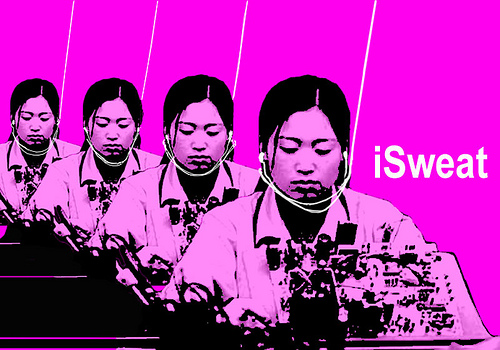
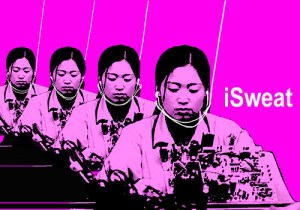
Budge put up an elegant defense of sweatshops, replete with appeal to authority, false choices, emotional arguments, and drivel. It is one of his most thoughtful works to date, and as such, exposes him at last as a guy who simply has not thought things through, but quite elegantly.

Budge doesn’t like sweatshops. But he thinks of them as a stepping stone to a better life. Evil, but necessary. As evidence, he cites improvement in places where things have improved. He leaves out everything else. Sweatshops are making life better, he says, because life is getting better in some places where there are sweatshops. He also says, at another post, that my piece, “The Final Word,” was egoistic prattle with no ideological or empirical support.

Ahem. Cough. Cough. [Clears throat.]

Go read Budge’s piece (The Pulse of my Bleeding Heart, Part I), and have some fun. I’m going to point out some of the more egregious passages.

First, Budge starts with a closing statement from another post: We on the left think that “workers in developing economies don’t deserve jobs as much as American workers.” This is a technique perfected by Karl Rove – to attack an opponent at his strong point. Simply restate their argument in a way that that sounds worse – protecting American jobs and our standard of living is selfish. I mentioned in my piece that concept of having a country was weird, but a good way to protect a group of people from bad ideas. Suppose we want a higher standard of living for ourselves – Budge is saying we can’t have that because we need to worry about Chinese labor. Bad idea. We as Americans can protect ourselves from that idea by tariffs, wage and labor standards, and the Chinese must take care of themselves. Both are possible. One country must not suffer for the other to benefit. False choice.

Later he says that there is no profit if there is no sale and if there isn’t discretionary income there are no sales. (His emphasis.) If only it were that simple, as the object of capitalism is to extract profit from labor by using stored labor (capital) applied to resources … sales are going happen, but the object is not profit. The object is to corner the profit, to keep it for oneself at the expense of others. Pay each sweatshop worker twenty-five cents an hour more, and there is not less profit. Rather, there is merely a wider group of beneficiaries. That’s an essential concept that Budge has never grasped – that wages too are a form of profit. They are the part he cares little for, as it benefits the wrong people.

Budge cites Paul Krugman, a blatant appeal to authority – a man he considers a hack, but whom he thinks happens to be right on this subject. I mentioned to my son that the only reason that Krugman has his pretty perch at the NY Times is that he is a free trader, and so is not out of step with the elite. But Budge uses him for a different purpose – as evidence that he must be right, as a man he does not agree with has come to the same conclusion.

He does the same thing with Jeffery Sachs. Set them aside. Let’s get down to business. What is the essence of the debate?

(Krugman, Sachs, and Budge are all the same person now. Budge is using their words in place of his own. From this point on, their blended words are “KSB:”)

And yet, wherever the new export industries have grown, there has been measurable improvement in the lives of ordinary people. Partly this is because a growing industry must offer a somewhat higher wage than workers could get elsewhere in order to get them to move. More importantly, however, the growth of manufacturing–and of the penumbra of other jobs that the new export sector creates–has a ripple effect throughout the economy.

This is classic confirmation bias. It’s that simple. Sweatshops are not a modern phenomenon. They are with us everywhere that there is poverty. KSB have identified those places where life has gotten better, and claim that the reason is sweatshops. I’m not kidding.

More KSB:

One German company buckled under pressure from activists, and laid off 50,000 child garment workers in Bangladesh. The British charity group Oxfam later conducted a study on those 50,000 workers, and found that thousands of them later turned to prostitution, crime, or starved to death. …

University of Colorado economist Keith Maskus says the Pakistani child laborers who lost their jobs were later found begging, or getting bought and sold in international prostitution rings. …

UNICEF reports that an international boycott of Nepal’s child-labor supported carpet industry in the 1990s forced thousands child laborers out of work. A large percentage of those child laborers were later found working in Nepal’s bustling sex trade.

Are you following the specious reasoning path? The choice between crime, sex trade and prostitution and sweatshops is sweatshops. With sweatshops there is no crime, sex trade and prostitution. We know this, because ex-sweatshop workers were found in crime, sex trade and prostitution.

Therefore, sweatshops are making life better. Classic false choice reasoning.

Here’s my favorite:

Johan Norberg … writes this about a Vietnamese woman working for Nike … “when I talk to a young Vietnamese woman, Tsi-Chi, at the factory, it is not the wages she is most happy about. Sure, she makes five times more than she did, she earns more than her husband, and she can now afford to build an extension to her house. But the most important thing, she says, is that she doesn’t have to work outdoors on a farm any more.”

Are you reading that? A sweatshop worker built an extension on her house, and doesn’t have to work on the farm anymore, because as we all know, farming is harder that sweatshop work.

Words, words, words … where you are when I need you?

OK, Budge is doing drivel, but here’s the worst part of his confirmation bias. He cites as reason for the continuation of sweatshops the success stories of the Asian continent, Korea and Japan. He leaves out heavy government subsidies, import tariffs … Toyota once made wash machines, and only became the monster company it is because Japan subsidized it, protected its markets and its workers from outside capitalists who would merely export the fruit of their labor. Were there once sweatshops in those two countries? No doubt. Are there still? Most likely. What does that have to do with their development?

Precisely nothing. Budge is saying that in order for there to be development, we must start with sweatshops. That is the point that must be debated. Starting now.

Sophistry, I have met thee, and thy name be Budge. I find thy works to be …egoistic prattle with no ideological or empirical support.

And again, I’m Czech-Irish.

No contributions without representation!

Corporations are usually owned by a wide array of wealthy individual and “institutional” investors. The latter collect funds from many places – mutual funds, retirement funds, college endowments. Behind the institutions are millions of small investors.

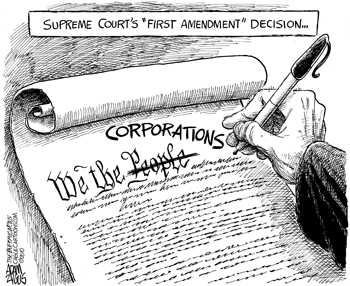
Corporations are considered legal “persons”, and carrying that logic to its extreme, the Supreme Court decided last year (Citizens United) that these persons should be able to engage in advocacy politics. So now more than ever before we are seeing anonymous groups with healthy sounding names like Citizens for Kindness running ad campaigns.

This country is so goofy that I cannot even be disgusted anymore. I can only laugh. We must surely be near the end!

Which takes us back to the beginning when our country was founded on a tax revolt – “No taxation without representation!” was the rallying cry, we are told. How is it that a corporation comprised of stockholders from millions of sources can speak for all those various persons?

Is this not contributions without representation? Isn’t it kind of, like, you know, ludicrous?

The perfect cuppa joe

Time now to get way from trivial concerns and write about something really important – coffee.

Some time in my younger years I had a really good cuppa joe. I think now it must have been on a trip to New York City in the 1976. Back in Montana after that, I was always on the lookout – I tried everything that came along, including the more expensive “premium” blends put out by Folgers and the others, and the flavored coffees that masked the bland product underneath. I sent away for Gevalia Kaffe from Sweden. It was all, as my brother liked to call it, “shit water,” or gas station blend.

I experimented with better ways to make coffee, including “French presses”, or “French toilets”, as I think of them. When the first Mr. Coffee came out, I ran out to buy one, thinking that the drip method was all that was missing from Montana coffee. It was still shit water. When backpacking, coffee was a always a necessity in the morning, and always a disappointment. (Folgers once offered coffee in tea bags. Horrible!)

Some time in the early 90’s, a coffee shop opened in downtown Billings called “Todd’s Plantation.” The entire downtown area would smell like roasted coffee, and the people would say that “Todd’s burning the beans again.” He roasted his own, and used “Arabica” beans, which meant nothing to me. (Folgers and Millstone and others are “robusta” beans – more caffeine, less flavor.) His coffee was dark and rich, but very bitter, something I find to be true of most gourmet coffee shops to this day. Todd’s closed eventually, but other shops began to open, and twenty years after that cup I had in Manhattan, premium coffee entered the Montana market.

But most of the new gourmet coffee sold at shops and kiosks was just hype, a new version of shit water at three or four times the price. My daughters worked for a coffee shop in west Billings that was eventually taken over by Esther and became “Esther’s Espresso.” I began to buy coffee by the pound from her, trying all the blends, and not liking them much except for the Italian roast. So I stuck on that.

We went on a trip to visit kids who didn’t drink coffee, and bought a bag of Starbucks Italian roast to make our own while we were there. Unlike Esther’s Italian, Starbucks was darker and more bitter, but not bad. We brought half a bag home with us from that trip, and then one morning I mixed Esther’s and Starbucks Italian, took a cup to my wife, and she came out and said “That is really good coffee.”

And it was. The search had ended. We live in Colorado now, and Esther ships us beans which we store frozen, a no-no. I make five cups in the morning using five tablespoons of Esther’s Italian and two of Starbucks. We’ve been doing this for years.

Esther’s Espresso is located at 1927 Grand Avenue in Billings. It’s just a little hole in the wall. Esther is a great gal, always fun to talk to. She has two walls of bins of various beans. Do some experimenting if you are a coffee lover – she will surely have something that fits your taste buds.

What could have been, should have been done …

A commenter at 4&20 (Ingemar Johansson, about 4/5 down the page) remarked that the standard right wing solution to our health care cost problem, crossing state lines to buy health insurance, would work because we all buy our property and casualty insurance from companies that cross state borders.

That does work. It’s a common thought, but misguided. It starts with a perceptual mistake – to name property and casualty and health care both “insurance.” It may be a useful name in terms of catastrophic events, like auto accidents and building fires where people and property are harmed.

But property insurance is based on the premise that events that require claim payments are rare. People who buy homeowners’ insurance do so because coverage is cheap and prudent, and not because they know they are going to have a fire someday. Auto accidents seem common, but in terms of the number of drivers and miles driven, are rare.

Companies who sell that insurance compete less on price and more on quality of service. It’s a good deal for everyone, and the market does a good job for us.

Health “insurance” is different. It is a virtual certainty that we will all make claims on the insurers, and also that we will avoid seeking out needed services that are not covered. Young people are so healthy that they don’t want to buy into the system and pay for other people’s costs. But these are the very clients the insurers want. Older people are a certainty to file claims, and so insurers avoid them. They even dumped those 65 and older on government.

So health insurers write elaborate contracts that sound good but disappoint when a claim is filed. States stepped in and required that they cover certain events, like maternity or the first day or two of a baby’s life. Insurers avoid those states that do that, and flock to states like Arizona, that don’t regulate them.

Because they are paying fewer claims in Arizona (medical costs are not lower there – only the percentage that insurance companies pay), if we allowed cross-state insurance, people would flock there for coverage, and we would all be under-insured. That is bad public policy.

The simple answer, the bonehead answer that every other industrial country already knows about, is to quit calling health care an “insurance” product, and simply build its cost into the national budget and spread it over the whole population. After that, we are no longer playing the hide-and-seek insurance game, which itself is a large driver behind our skyrocketing costs.

Instead we would play a game called “retail/wholesale.”

That is the essential difference between us and other countries – we pay retail. Other countries cover their entire populations, and even the worst performers, like Canada, pay only two-thirds as much per capita as us. Most countries pay around one-half of our per capita cost, and everyone is covered. Life is better in those places than it is here.

All we need to do is expand the covered pool of clients to “us” and change the enrollment period to “anytime.” We can allow insurers to practice their trade, but instead of profit-seekers, they become utility plant managers. They can’t refuse service to anyone, are guaranteed a reasonable rate of return, and are heavily regulated.

The downside? There aren’t many.

Some claim that profit-seeking drives innovation. That is a valid point in the sense that private companies innovate. That would not change, as they would be selling their products to us via government instead of private companies.

Some say there is a moral hazard as people would use medical services unnecessarily. That’s not been the case elsewhere, as evidenced by per capital costs.

Some say, in the face of all evidence, that it will cause costs to spiral. But we are the spiral. Our cost increases far outpace inflation. Costs are going up everywhere, but the U.S. leads the pack by several lengths.

And finally, some say that our system is lawsuit-driven, and that we must have tort reform before anything else can happen. False. Lawsuit settlements and malpractice insurance are a very small part of our cost spiral. Maybe we should address that matter, but it is being used as a lever – corporations simply don’t like being sued, and are using medical malpractice as a device by which they can avoid lawsuits in all areas. That is nothing more than clever PR.

This American Life (honest – that name just popped into my head out of nowhere!)

Nassim Nicholas Taleb
Two items occupy the vast expanse of my empty head this morning. I am wading through Nassim Nicholas Taleb’s book, The Black Swan, and setting aside his massive ego, he is enjoyable and insightful. I particularly like the following, in which he comments on the ability to have regular income without sucking up to people. His company, First Boston, went belly-up, but he was left with what he called the equivalent of a fellowship.

This is sometimes called “f*** you money,” which, in spite of its coarseness, means that it allows you to act like a Victorian gentleman, free from slavery. It’s a psychological buffer: the capital is not so large as to make you spoiled-rich, but large enough to give you the freedom to choose a new occupation without excessive consideration of the financial rewards. It shields you from prostituting your mind and frees you from outside authority – any outside authority. … While not substantial by some standards, literally cured me of all financial ambition – it made me ashamed whenever I diverted time away from study for the pursuit of material wealth. Note that the designation f*** you corresponds to the exhilarating ability to that compact phrase before hanging up the phone.

I offer a corollary to his words: The number of times anonymous people say f*** you on the blogs corresponds exactly one-to-one with the inability to use those words in real life without serious consequences.

Here’s another tidbit: The Denver Post today reports on the most recent poll in our senatorial race: Ken Buck (R) 48%, Michael Bennet (D), 43%, Other, 8%, and undecided (1%). Bennet is toast, which is OK, as any man who has shat upon his base as much as Bennet has shat upon his deserves defeat. Send him back to investment banking, from whence he came!

The Post, in its entire long article citing “political observers” (?), ordinary street people and other polls – never once tells us who these “Others” are, even though they are determining the outcome of the election!

it’s as if, in 1992, the presidential election ended as follows: Clinton (43%), Bush (38%), Other (19%). Ross Perot gave us minority president Bill Clinton, and unnamed and anonymous “others” in Colorado will give us minority Senator Ken Buck.

My vote? “Other.” It is my vote, and I choose to spend it wisely.

Going … going … net neutrality is slipping away

Henry Waxman
The problem with having Democrats in office is that they say they are for things and then do not fight for them. It is just like having enemies in office, except that we don’t have a chance to organize against Democrats. People think they are our friends.

But as Ariana Huffington reminds us, they just ain’t that into us.

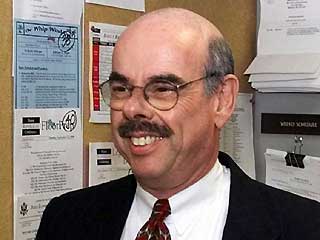
Henry Waxman announced that a bill to regulate how telecoms control the flow of traffic on the Internet, so-called “net neutrality”, is dead. He failed to garner Republican support, and did nothing deceitful or intimidating or clever to keep the bill alive. He proposed no deals, threatened nobody – he just meekly withdrew the bill.

Isn’t it interesting how flaccid, how timid, how weak these guys are even when they are in power.

US threatened by elections in Venezuela

Murderous thug
It is interesting to watch American media reaction to events for which no cheering is allowed. In Venezuela, Hugo Chavez won an impressive victory in the legislative elections, capturing 98 of 167 seats. American media outlets are looking for bad, and of course finding it. Here the Miami Herald, which must have known the news would not be good, warned us in advance that Chavez was “stacking the deck.”

Here’s why they say that the news is bad for Chavez: He did not achieve his two-thirds majority. Further, the vote was closer than the outcome – that is, many of the seats that his party one were by scant margins. Also, some outlying regions are disproportionately represented in the legislature, individuals there having in effect more bang for their vote that those from more populated regions.

Which is eerily similar to American elections with our first-past-the-post winners and senators from small population states who have disproportionate power.

Unlike the U.S. president, Hugo Chavez remains a popular fixture in his country’s politics.

Freedom fighter
This is all very difficult for our state planners, as the desire within the bowels of DC is to attack Venezuela. The usual propaganda is at work – Chavez is a dictator holding office by force, and a clown on the world stage. All false – Chavez is widely respected, and holds office by large mandate.

Nonetheless, there is a buildup of troops now in Colombia, where the U.S. is backing a thuggish government and where those who oppose those thugs are called “terrorists.” The threatened conflict will ostensibly be between Colombia and Venezuela, but much like the Iran-Iraq war of the 1980’s, will be suspiciously convenient for the U.S.

All that is needed is some Tonkin-like event to serve as a pretext to trigger the war.

What will follow? Hard to know. Augusto Pinochet is dead and buried, as is the Shah and Suharto. There’s never a shortage of murderous thugs, and all I am missing is the name of the next president of Venezuela. And remember please to speak American English: Venezuela, a free country, will not really be free until we destroy its freedom to elect its own government and install a thug to run it for us.

Is Obama a weak president?

There’s a debate going on here, and here, and other places no doubt, about the worth of the Obama Administration. He hasn’t accomplished much of anything – mild credit card reform, bad health care and financial reform, and of course, the continuation of

foreign policy, running the wars, state secrets, Guantanamo, DADT, civil liberty abuses, spying, killing, renditions, etc., things that really piss off progressives, no matter who’s in power.

That’s from a comment at LITW.

Did not know that Hiroshima was a large city?
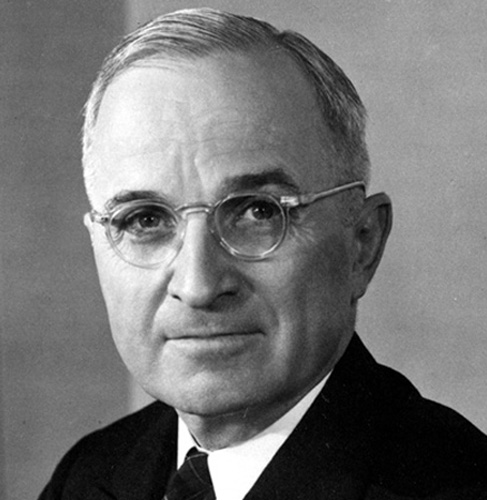
What instantly comes to mind is a footnote in Howard Zinn’s People’s History of the United States in which he said that Harry Truman’s personal notes seemed to indicate that he thought Hiroshima was a military base. That would indicate that Truman did not decide to drop the bombs. Others did, and he was the conduit for the decision. Somebody buffaloed him.

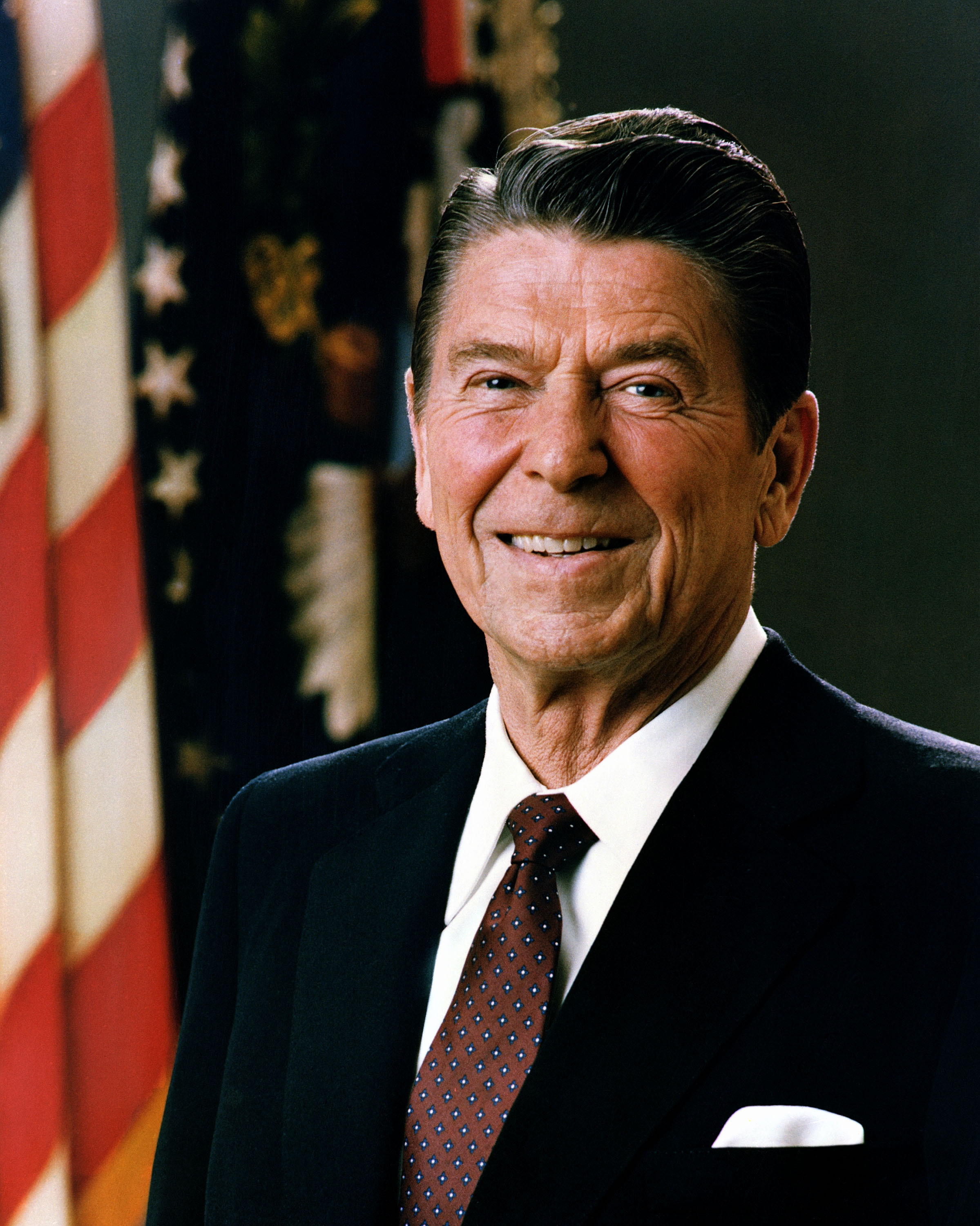
Why is that that ordinary men of limited ability and vision, like the Bush’s and Ronald Reagan, seem to be able to “accomplish” so much, while erudite men of letters, like Clinton and Obama just don’t seem to measure up, in fact, seem to be working for the other camp? The men of lesser ability make massive changes, and the men of great ability just can’t seem to get a grip on things.

A man of limited ability, and huge accomplishments?
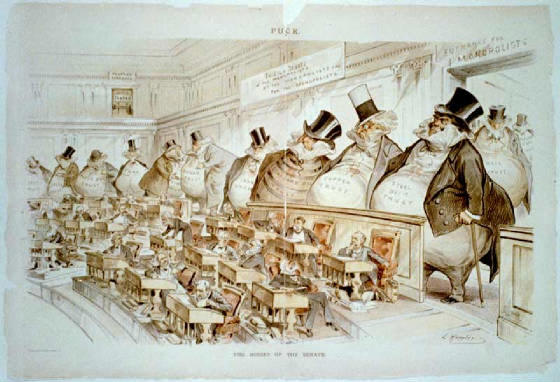
I have long thought that the presidency is merely a conduit for power, and that the occupant of the office merely imparts a flavor to the culture of DC. Different people are brought into office and the power structure does shift from one wealthy sector to another, but there is very little change in policy. And the wealthy sector still rules.

The problem I have is that I cannot describe the mechanism. It is too big. It is “the oligarchy”, the thousands of wealthy people who share common interests and frame of mind. But that sounds like a conspiracy, and it is not, anymore than the fact that Britain is run by an aristocracy that only reluctantly shares some power via parliamentary government is a “conspiracy.” It is just how power plays itself out.

Obama happens to be a weak man, but if he were a strong man of principle who intended to use the power of the office to act on those principles, he would not be president. The oligarchy would not allow it. Candidates for office are vetted over a long period, and those who might not be manageable and predictable are, by various means (usually by media indifference), rejected for high office.

And again, I am left to describe how “the oligarchs” stop candidates from getting votes. They do. Most people don’t think their own thoughts, and follow the leaders. The idea of voting for a Dennis Kucinich, say, is considered laughable. Why? He’s certainly smarter than John McCain, and certainly braver than Obama. But a pall is cast on undesirable candidates, and they rarely rise to the stature of “viable” in the eyes of the electorate.

It wasn't the speech that was his undoing ...
What is the mechanism? I have seen it at work. John Edwards, even though running even in the polls, was never mentioned as a “front runner.” Later, his sexual peccadilloes were exposed. Howard Dean pulled off an upset in Iowa, and the “I have a scream” hit the airwaves, eliminating Howard Dean from consideration.

I see that it works, I see how it plays out. But I do not know anything about how the upper crust, the corporate CEO’s and wealthy families exert their influence to make these things play out as they do.

Eisenhower warned us about the “military-industrial complex”, a nice turn of phrase, and another word for “oligarchy.” But it was too big, even in 1960, for him to describe in a way that would allow us to grasp its depth and breadth and power.

I only know this: If your vision of the office of president is of a man in charge, then your vision is wrong. If you think that George W. Bush decided to invade Iraq, cut taxes, set up a prison in Cuba and torture people, you’re wrong. If you think that LBJ decided to invade Vietnam and kill three million of them, you’re wrong. If you think that public opinion caused the government to pull out of Vietnam, think again. If you think that Obama decided to push in Afghanistan, you’re wrong. If you think that Clinton decided to bomb Serbia, you’re wrong.

The office has power, to be sure, but the power is not exerted by the man in office. The power is exerted through the man in office. Real power lies elsewhere.

Aetna jumps ship

The old logo
Aetna is pulling out on us.

[The company will] stop selling new health insurance to small groups in Colorado and move companies that have existing clients off the plan in the next year, affecting 1,200 companies with 5,200 employees and their dependents.

Aetna says it has to do this because they

…feel they can no longer meet the needs of our customers while remaining competitive.”

State insurance officials said they

… think the 1,200 companies affected by Aetna’s decision to leave the small group market will be able to purchase insurance from other insurers.

Note the careful wording … you’re being “moved off the plan” (dumped). State officials think you’ll be OK … they offer no data, no guesses, no remedy. They just think you’ll be OK.

Tough luck, buddy.

Aetna is leaving because of Obamacare, not that they were doing us any great favors anyway. Good riddance. Bur welcome to health care reform. It’s a game, and the insurance companies won.

People who need health insurance most are the ones that insurance companies don’t want to insure. This is known as “adverse selection.” Insurance companies have devised a myriad of ways to avoid sick people, but sick people are clever too, always looking for loopholes and back doors.

In the U.S., people looking for back doors are considered a problem, or “moral hazard,” while insurance companies avoiding sick people is normal and acceptable behavior. We’re a little perverse in the morality department.

One back door is fake (or part-time) employment with companies for the sole purpose of getting on the health plan. While it may appear that these phantom employees are being insured by the employer, they are reimbursing him under the table. In this manner, they escape the private placement market, where insurers refuse to offer coverage.

The new logo
Statistics show that large companies either don’t play this game, or that it is not a large factor in costs. But with small companies, one sick employee can skew the cost structure. The green eye shade people are watching closely, and realize that undesirable clients are breaking through the barriers via small companies. They have two options: Jack up premiums, or jump ship.

In the past, the insurer response has been to make insurance so expensive that small businesses with low wage employees cannot afford it. Those that can afford small market coverage tend to be high skill professionals, but the corner grocery store … no way. So insurance companies avoided undesirables by making themselves unaffordable.

Health care “reform” now offers credits to small businesses of less than 25 employees whose average wage is less than $50,000. Seems like a fix, right?

Wrong. What it really means is that the back door is opened a little wider now, and unprofitable clients are going to have an easier time getting through the barriers to coverage. Insurers still don’t want to cover them, and can either raise premiums to the point where credits are negated, or jump ship.

Run away! That’s all Aetna did. Smart move on their part.

The failure is not the “reforms,” and the health insurance companies are merely rational actors. The failure is the American health care model: “for-profit” companies managing health insurance is bad public policy. Obamacare did not a whit to fix this, and our problems will only get worse now.

And there is no hope of remedy. The health care debate is over.