The two-headed beast

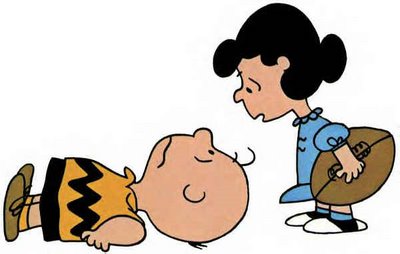
I have been following politics for many years, and enthusiasm has ebbed and flowed. After 2008 I felt like Charlie Brown. I allowed myself to buy into the whole Ad Age Marketer of the Year. That is my fault, and not that of Obama and the Democrats. I should have known better.

Bertrand Russell talked about the advantages of democracy* – from his high perch. He said that it is a given that ordinary people are unqualified to make judgments on large matters. The only real advantage of such a system is that we change rulers on a regular basis. Further, the basis for choosing a new ruler is not that he or she has a royal lineage or a large fortune. Now and then ordinary people with exceptional gifts come to power.

Politicians are second-rate people. It can be no other way. They are drawn to power. The best leaders are those who do not want power, who by definition don’t seek office. Great leaders in history, such as the Roman General Cincinnatus or our own George Washington (and apparently, if he is honest, Nelson Mandela of South Africa) are people who only took power involuntarily, and then as quickly gave it up.
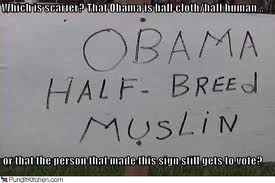
It appears to me that there are several important differences between what we call our “right” and “left” (we have no such thing, but let’s pretend). At the ground level on the right, there is base stupidity. Listen to their icons, their Sarah’s, Michelle’s, Rand’s and Santorum’s – these are not ordinary people. They are fanatics, and they are very stupid.

On the “left” we have timidity – when confronted with stupidity and fanaticism, they want to be fair. This is their major defect – they think that they must share the stage with fanatics and treat them as serious people, engaging them, negotiating and compromising with them.

That’s baseline politics, and will not change. The fanatics will take control, make a huge mess of things, and then we’ll let the timid ones back in and we’ll settle down again. (Given that they are all second-rate, money will always have disproportionate influence on them. Our best hope is to turn them out on a regular basis, hoping that we accidentally benefit during the time that they are being compromised. Our best senator, for example, would be one who served one six-year term and who was then permanently pastured on a government pension.)

But there is something more going on now in this country, in my view. We are in danger of loss of our republican form of government than ever before. There’s no ebb and flow. We had eight years on fanaticism, and when we settled down again in 2008, we got the same fanatics in different costumes. We did not change leaders. They punked us.

Maybe this too shall pass – I don’t know the future. But here is the danger: In a democracy we can vote fanatics out. In a totalitarian state we cannot. By their very nature, right wing fanatics want to keep and hold power, not for a few years, but for generations. Karl Rove called it the “permanent Republican majority.” I’m wondering now if his vision included compliant Democrats as a wing of the Republican Party.

We changed parties in 2008, but not leaders or philosophy. I don’t see a way of bringing about meaningful change in the future due to the fact that we are limited to two parties, and now more than ever before, both are the same people and philosophy.
___________
*I use the terms “democratic” and “republican” government interchangeably. In the modern sense, there is little distinction or difference.


We are the problem

As a Cincinnati Reds fan, I am familiar with defeat. It isn’t just defeat, but rather continuing and unrelenting humiliation with few prospects of future success … that wears a person down. Many times I turned have away from baseball, questioned why I am even a “fan,” and tried to ignore the game and the players. After reading Michael Lewis’ Moneyball, I even imagined I could switch loyalty to the Oakland A’s, and followed them for a day or two. It’s like changing hair tint. Can’t be done. The real color always returns.

Defeat is part of learning. The word should be reserved for special occasions, and otherwise not used. The Democrats were taught a lesson on Tuesday. The question is, are they teachable?

Apparently, not at the leadership level. Obama is now assuming a conciliatory posture towards the Republicans … you know, the one he started out with. He’s going to yield to them on critical issues. You know, like he was doing before.

There’s much to be learned from his behavior, as there is some predictability there if one changes assumptions about his beliefs. Could it be … he’s a double agent, one who sleeps with the enemy? Is such a thing even possible?

Twenty-two House seats that the Democrats lost were “Blue Dog” seats. From an ideological standpoint, those seats were never Democratic anyway. They have merely changed their tint. So 22/60, or slightly more than one-third of this is not even a loss.

Conservadems generated so little enthusiasm that they were either undone (or almost undone) by challengers that should have had no credibility at all. Michael Bennet and Harry Reid, were they men of conviction rather than just second-rate politicians, might well have sailed into office. Of course I cannot know that, but do rely on the axiom that when people have to choose between a Republican and a Democrat who sounds like one, they’ll usually go with the real thing. (The only real pain I felt on Tuesday night was the loss of Russ Feingold.)

Bad Democrat!
But it is not as simple as pandering. Bennet and Reid do not pander, in my view. They are not weak and conciliatory. They simply lack Democratic convictions, which is why they attract financial backing from Republican-centric wealth, and have electoral success. And that is the underlying problem of Democrats – the “viable” candidates rely on the same funding source as Republicans. Therefore, they are essentially the same people in different uniforms.

A dog cannot bite his master and hope to stay well-fed.

Americans seem to want to reduce politics to voting. That’s where all our energy goes – political campaigns. They are the beginning and the end of our involvement. “Politically active” people are those who work for various candidates at election time. Others – the environmentalists, peace activists, champions of the underclasses – have all been marginalized since the 1960’s. We’ve been re-purposed in our thinking.


(The photo above is a demonstration in France. “Lutte Ouvrière” means “Workers’ Struggle” – democracy is alive in France. All politicians of all parties must take heed of organized power.)

But underlying reality has not changed. Politicians are by and large second-rate people attracted to power, maybe even suffering a touch of narcissism. They can as easily mislead as lead, and will always adapt their behavior to the wishes of those who can affect their careers. They will always bend to money.

I have been hard on Democrats since the first day we started this blog, and that will not stop. I have repeatedly said that “Democrats are the problem.” That needs to be refined a bit – it is not so much Democrats, but rather the idea that Democrats are the solution that is the problem. They cannot solve anything so long as they need lots of money to succeed.

We are the solution, as always, and for so long as we see Democrats as the answer, then we are the problem.
____________
P.S. Here in Colorado, even though we are stuck with six years of Senator Bennet and four of Governor Hickenlooper, we also overwhelmingly rejected initiatives to limit the ability of government to levy tax and collect revenue, borrow money, and one to define an embryo a legal person. These campaigns, which drew no corporate support in opposition, were defeated by 60%+ margins. There is some clarity of purpose there even if candidate-driven politics is hopelessly muddled.

When opportunity looks like defeat

Prediction is a fool’s game, as we don’t know the real intentions of those who won the elections. But it is safe to say that they money behind them has more sway than the shallow appeals to popular issues they indulge in while campaigning. So when it comes to fighting for issues of importance, we are in for more of the same – strong Republicans and weak Democrats. It’s toxic.

When Democrats took control of the House and Senate in 2006, George Bush simply vetoed anything he did not like. He was strong. Barack Obama will not do that. (He is indeed weak, but that’s not his real issue.) When Democrats had a large majority from 2008 forward, Republicans merely filibustered everything in sight, and Democrats allowed it to happen. Going forward, Democrats will not use the filibuster.

The natural impression to draw from this is that one party is strong but an obstacle to progress, while the other is weak and unable to get its act together. But if each party has a role to fill in service of wealth, then it is the Democrats who are strongest, as they thwart popular will at every juncture where there is a chance for real progress. This is what they did to us, 2008 forward. They took our great opportunity, and rubbed our face in it. Democrats had as massive a victory as American electoral politics allows, and nothing changed.

The conclusions drawn from that are that we have to redouble our efforts now to elect good Democrats. But that is wrong, in my view. Think of the two parties as parts of a large sausage grinder – no matter the input, the output is the same. The Democratic Party can only serve us if they are swept out of office and replaced en masse by populists and progressives. Incremental additions to the progressive minority are mere distraction. And such a massive change in leadership cannot happen in a climate where the public is uneducated and distracted, financing is done in secret, money buys advertising, and advertising buys elections.

In our money-centric two-party system, elections and voting are the least functional outlets for reform.

The only answer, as always, is on-the-ground organizing, outside the two parties and around issues. Health care was an organizing opportunity in 2008, but instead we ran it through the Democrats, and it became sausage.

But there is no other answer. It has to happen outside the parties. Daunting as that is, it is the only reason FDR is seen as a reformer, while Nixon and Ford are perceived as contradictions – conservatives who signed into law progressive legislation. FDR was backed by massive popular movements, and Nixon and Ford were confronted with them. Power came from below.

Organizing is power. Electoral politics is a distraction.

There is no other answer, friends. In the last two years Democrats could easily have handed us many victories, but allowed Republicans to block them. This is because too many Democrats are merely closet Republicans, including Max Baucus, Harry Reid, Michael Bennet … and Barack Obama. And you cannot tell who is who at election time, as they lie. Elections are a crap shoot and we’re in a casino. The house usually wins.

Enough of electoral politics! It’s fun, but useless.

Election day predictions

Many people who were predicted to win their elections will indeed win. Some will lose. We don’t really know about that. But pundits will have an explanation for everything – they will explain the “public mind” as if the majority of that mind thought uniformly and was “sending a message.”

Consequently, “messages” that are sent by the electorate will tend to tell those who win to do what they intended to do no matter what the message was, even if there was a message.

Republicans will make either huge, large, significant, modest, or no gains.

The ads will stop, people will go on about their business, and the elected officials will go on about theirs. Never will the essential message penetrate the public mind: People who appear to be in opposition to one another during campaigns often do not have significant differences with one another.

A lot of this is just theater. These people who run for office really want to win, and try to say the right thing to catch voters’ attention, but after getting elected will either voluntarily cooperate with or buckle under to the influence of money and power. Few can resist.

I hope voting validates you. But of all our duties as citizens, it is probably the least important.

Saner times – the sixties

I watched this video with a sense of wonder at the recovered memories it contains. It is not that Martin Luther King does not know what is in store for him, while we do. It is not that he is speaking out against the Vietnam War, and not much about civil rights. Most people who know history but are not historians know that King was a vocal opponent of that war.

These three men – King, Mike Douglas and singer Tony Martin, are talking about some of the most heated and controversial issues of their day. There were riots in the streets, people at each others’ throats. The Pentagon and FBI were following King and keeping a file on anyone who participated in any demonstration. Emotions were at a high pitch, people were on edge.

And yet, listen to the tone of the conversation. King is flanked by two men to deeply disagree with him and his activities, and who are especially concerned about his opposition to the war. Yet they are respectful, allowing him to think and respond in complete statements. Their questions are thoughtful and reflective, even Martin’s, though he is merely an entertainer. King has time to think, to form a sentence, before he responds.

Take King and transport him to 2010, change the interviewers from Douglas and Martin to say, Bill O’Reilly or Chris Mathews, and to an entertainer like Stephen Colbert (the caricature, and not the real man, who is reflective). No longer are they respectful, no longer can they think before they speak. They would snap at one another, as the game over the years has changed from exchange of views to rat-a-tat brush sniping and talk-over. (Also, there would be a couple of commercial cuts, after which whatever was said before the rat-a-tat ads would be forgotten. That’s an oddity about modern television interviews – views are presented in small and quickly forgotten thought capsules.)

How did this happen? The right wing did this to us, starting with Rush Limbaugh in 1987. There is plenty of blame to go around, but not among various factions – all blame is on the right. Limbaugh hijacked the dialogue, aided by the Reagan boys who opened the radio airwaves to monopolization by one faction by shutting down the fairness doctrine.

No matter where we travel in this land, if we turn on our radios we are harangued by local and national righties. On the TV, there is the ubiquitous Fox, with an MSNBC-whispered response. (“Mainstream” media is, as always, subservient to power, but softer in tone.) Worse yet, even those who can expose themselves to other views do not. We are polarized.

This is not about content. It is tone. There is a name for what Rush and Sean and Bill and all the others are doing – “agitation propaganda”, or agitprop. It is not accidental, and not without purpose. It has made us what we are – mindless screamers. These people, knowingly or not, act with purpose to inflame our emotions and to shut out reasonable voices. They eliminate reflection and self-reflection.

Godwin forgive me, there is historical precedent for this, though history does not repeat. But there is methodological precedent.

Chris Mathews, you are not worthy to kiss Tony Martin’s shoes.

Nothing has changed

I am skeptical of government pronouncements regarding things that they want us to fear, and unlike most, do not distinguish between Republican fear-mongering and Democratic fear-mongering. So I listened to Obama’s announcement of how they found a bomb in Dubai* and how it was headed for a synagogue, and I gave it the same credibility that such a pronouncement from George W. Bush would have merited. It’s probably a lie.

But assume that people working in counter-terrorism (their name for their work) are honest, as most surely are. Does that mean that the underlying event was real?

Not necessarily. Such incidents are easily generated, and can be real or fake, or better yet, manufactured. (Even shoe and underpants bombs can be manufactured events.) All is possible, but this is the U.S., so the event is automatically treated as real and credible. Shame on you, people! Shame on you!

The timing here is suspicious we well, the Friday before a national election. Bush did this on a regular basis.

Anyway, it was like an out-of-body experience for me as I listened to the news and Obama’s words on this matter. I was concentrating, and so not aware of myself, but standing before a mirror doing my morning stuff, looked at the mirror and saw myself smiling.

And then I laughed out loud. New president, different party, same old shit. Nothing has changed.

—————-
*Worth noting here that the Obama Administration has given hints that it wants to attack Yemen, supposedly the source of the bombs found in Dubai. Is this casus belli?

The price is right

A group called American Action Network, one of those corporate fronts, is running an ad here in Colorado against Rep. Ed Perlmutter claiming that he favors giving Viagra to sex offenders. Here’s what a pretty little actress says to us:

“Apparently, convicted rapists can get Viagra paid for by the new health care bill… with my tax dollars… and Congressman Perlmutter voted for it.”

That’s crazy, I know. Just plain nuts. Regarding sex offenders and the new health law, nothing has changed. Pedophiles, just like pediatricians, can buy health insurance. Viagra is sometimes covered. Under the new law, some people might have their insurance subsidized, and no one knows what the hell the insurance exchanges will be when they come into being.

That’s the justification. Note the wording of the ad. Even though it’s a lie, it’s accurate.

One TV channel in Denver, Channel 9, pulled the ad. They stand alone in the integrity game. For all the others, the price is right.

Crystal balls

After the kerfuffle below regarding the uselessness of economics, one might logically ask the following:

Why have economic policy? If we can’t know the future, and if the present and past have too much data to analyze intelligently, why even try?

The answer is that large policies have outcomes. We can’t know all of them, but we can make reasonable guesses. Take, for instance, Social Security – we are told by policy wonks that it is either going to do the hockey stick on us, mounting so much future liability that it will absorb our entire economic engine, or that it is solvent through 2040. Which is true? Certainly not the former, as we would change course if the program got out of hand (which it hasn’t). And, sadly, not the latter either, as we did not know last year that current expenses would exceed current receipts this year.

So here is a policy suggestion: Attempt to get good outcomes, avoid bad ones, and avoid charlatans. Learn to recognize charlatans – usually, the first clue is they seem to be very certain about the future.

Social Security account manager
This much we know: The program has existed and never failed to pay a benefit for 70 years. That’s a good thing. Here’s what we also know: If we turn its management over to Wall Street, we will have no history of investment bankers running government programs during which good things happen, and a lot of history investment bankers gone wild where bad things have happened.

It’s really a no-brainer. Avoid Wall Street, and privatization.

The real Laffer Curve
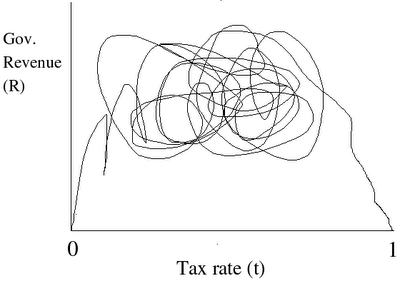
The same goes for just about every other policy question – high marginal tax rates? It might alleviate (not cure) many of our current ills, like high income disparity, bubble investing, and concentrated wealth overrunning democratic governance, such as it is. So why not give it a try? The only thing that the past tells us about high marginal tax rates is that they don’t hurt much – they were kind of like the unnamed version of the Laffer Curve. By punishing people for certain behaviors (dis-investing in businesses, overpaying themselves), we encouraged other behaviors (investment in plant and equipment, avoidance of mansions and yachts). It wasn’t all good, but overall, it wasn’t bad.

Mentally ill
I have often referred to myself as a “European-style socialist,” and I stand by that. I don’t hold that socialism is better than capitalism, but rather that the two descriptive ideas of various behaviors seem to meld well for good outcomes. “Free market” advocates (it’s a clever phrase that implies good and masks bad … who doesn’t want to be “free!”) say that because certain Europeans countries are doing things differently than us, they are going to fail.

1) They don’t know this, can’t know this. 2) There are charlatans at work, again. Notice that they are certain about the future? There is a whole industry in this country of think tanks and bought priests who preach the wonders of “free” markets, and it is all so simple to figure out: Follow the money. Who bought all these people? The Koch brothers, the Waltons, Steve Forbes and other recognizable names. Already-wealthy people who want to stay wealthy. Duh.

Supremely stupid
Not everyone on the right wing is “bought.” Many are just stupid or suffering from Ayn Rand’s polemics. That damned book is like a siren song! Some are being manipulated (Tea Party). Some are very smart, but supremely stupid as they focus intensely on a few things and ignore everything else (Budge, Natelson, Kavulla). But more importantly, there is much of value on the so-called “right” – caution in formulating large policy changes, respect for wisdom of the past, fiscal prudence, respect for individual liberty (not “freedom”) – that we all need to respect.

If only the right wing would go back to being the right wing, if only the “left” even existed in this country, we could again have reasonable policy discussions. For now it’s a frenzy of stupids and crazies on one side, and weaklings and shills on the other.

I hope we make it through this period. I hope Social Security survives the onslaught. But I don’t know the future.