Silver medal

Alex Carey, the Australian writer/psychologist, wrote that the greatest achievement of American propaganda is that is has convinced Americans that there is no American propaganda.

That may be. It’s a good insight. But as I look around me and the horrors that American foreign policy has visited on the world in my lifetime, I offer up a second-place candidate:

American propaganda has convinced Americans that Americans are the victims of terrorism, rather than the major perpetrators.

Living in the Gladio era

“This man appears to be wholly devoid of any imaginative facilities. His percepts are predominantly the most common. His range of interest and achievements is quite limited, seen in his very narrow associational content. He takes little note of rare and unusual stimuli in his environment. His mental functioning is highly stereotyped. In conformity, he is within the limits of the average in that his thinking corresponds with that of the community at large. However, he proceeds occasionally with alogical reactions.”

rorschachThe above words were written by a psychiatrist about a police officer who was eventually hired and went on to become famous. They were the result of a Rorschach test. I’ve stripped all of the context from it because it so well describes the typical American sitting in front of his TV watching “news,” and also sums up the content of blog comments too.

The events at Charlie Hebdo have all the markings of a covert operation, far more likely an intelligence operation than a random act of terror. To wit:

  • It is insane. It serves no operational purpose, advances no cause. It merely inflames anger. It’s utterly stupid.
  • It is solved without investigation. We immediately know the perps. Now it’s just a matter of killing or silencing them, Tsarnaev style.
  • The press was prepped in advance with the story, and immediately solved it. The talking heads all speak with barely concealed contempt for the aggressors, instantly known to them.
  • We’re learning now that the supposed suspects have been on a “terror watch list” for a decades, that is, they’ve been babysat.

To what end? Some time read about “Operation Gladio,” the US/NATO terror operation in Europe that was exposed in the 1990’s, but is oddly buried in broad daylight. Agents of NATO bombed a train station in Bologna, the Piazza Fontana in Milano, randomly shot shoppers in Belgium, a car bombing … ultimately, the assassination of Italian Prime Minister Aldo Mora in 1978. NATO was behind this. NATO, and the CIA committed random acts of terrorism designed to discredit left-wing groups.

Of course, with the attack in France, we don’t know anything yet. There’s been no investigation. There will be no trial. The accused will never get their day in court. But we live in a time when “instant information” produces a demand for an instant solution to crimes. We can’t wait for the patient, painstaking search for background, clues, evidence, interrogation, and finally the adversarial proceeding where everything is laid bare before a group of skeptical inquirers.

This is the nature of … not news, but agitprop. That is all this is, agitation propaganda, the strategy of tension. And it works so well because it fuels hatred.

Every generation has its focal point for hatred. In the early days of our country, it might have been Native Americans, savages. Later came freed slaves, still a focal point, and later still various immigrant groups, most recently Hispanics. But American foreign policy is set now to dominate the oil fields of the Middle East, and so for decades has been using Muslim extremists as the focal point. Muslims, no more or less violent than anyone else, have become archetypical villains feeding our nightmares, our television sets and computer screens supplying the sublime imagery.

Intelligences agencies, who are linked to each other without regard to country of origin, have stables of post-MKULTRA patsies available for any desired outcome, be they Saudi faux-pilots or Chechen rebels, or in this case two Algerians, Cherif and Said Kouachi.

It is fashionable these days to openly hate Muslims, and these staged events are successful because they feed hatred. Imagine the perpetrators were instead Mossad agents, would American jets be lined to to drop bombs on Tel Aviv? No. It is no longer fashionable to hate Jews in the manner we are allowed to hate Muslims. But if I were looking for the real perpetrators of this small massacre, I’d be looking to Tel Aviv and Langley first, and Paris suburbs last.

That’s how we roll in the Gladio era.
______________
Some absurdity: From Agence-France Presse, carried on MSN.Com:

Cherif Kouachi was a known jihadist convicted in 2008 for involvement in a network sending fighters to Iraq.

That’s insanely funny, as without our brains so deeply soaked in agitprop and nationalism, we would easily recognize 2003 forward as a time when a certain country was sending tens of thousands of terrorists to Iraq to destroy the place and murder its citizens. The doctrine of “worthy victimhood” stands. Iraqis do not qualify. French citizens do.

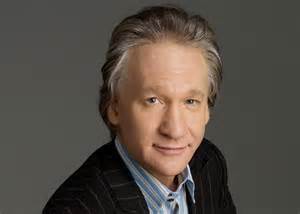
MaherAnd one final absurdity: I watched Bill Maher on the Jimmy Kimmel show the other night. Bill too had solved the crime, but since, as Kimmel mentioned, Bill is so intelligent, his take was a little different. The event, he said, was the result of a religion that espouses open hatred.

Doug Feith, step aside. Bill Maher is the stupidest fucking man alive.

See entry below

I am just testing here, learning more about how WordPress works and “following” myself to see if I get an email. I’m in a zone and not writing and so have been re-posting from 2006 and 2007, but to bring the excellent comments foreword I have to edit the post and change the date stamp rather than just copy the content and repost it. It is then not a new post, and no email goes out to subscribers.

So look below to a November 2007 piece and some fun comments.

Does Reading Matter?

Again I’ve no inclination to write here, so went back to 2007 for this piece. The comments are interesting. I lived in Bozeman when I wrote this, and Bon Garner took trouble to introduce me to Steve Kelly, and then went and died. Bob was quite a character, a nice man, and I have fond memories of our brief interlude before he died. I remember his house was full of books.

He told me of the time that he worked in Vargas, a local book store, and they had a customer tie up his dog outside and come in and browse. A cop saw the dog and came in to reprimand the man for neglecting the pooch, and Bob seized the opportunity. He dialed 911 to report an armed man was harassing a customer. Three squad cars arrived at once. Hilarity ensued. For Bob, anyway.
_____________________
There’s an interesting op-ed in yesterday’s Wall Street Journal called “Does Reading Matter?” I reprint it in full below, as the Journal online is subscription-based. The National Endowment for the Arts released a report on reading that said that the average 17-24 year old in this country spends seven minutes a day doing voluntary reading.

I’ve read these reports before, and for years have witnessed the hand-wringing on the subject. Some implications are clear – people get their information by watching TV and listening to radio, and lately, via their computers. These media are not filtered in the same way as the printed word, and people are much more susceptible to indoctrination via TV and radio than books, which are filtered at the source. Pictures go straight to the brain. Words are filtered, contrasted with ideas, accepted or rejected based on other knowledge and prejudices.

So the logical inference is that people who digest information via reading are better informed than those who do so via TV and radio.

How do we process information, and how many of us process it at all? Frankly, those who are not reading are being manipulated by various media. Can’t be helped. It appears as though very few people have the inclination to pick up a book at the end of a long work day. Most turn on the tube. And they don’t want to be hit with hard issues with complicated resolution. They want the easy stuff. They want to relax, and who can blame them.

It’s a free market, and the market gives them what they want: Damned little to think about. But it leaves our society as a whole subject to the worst sort of leadership – people who use images to control opinions. We leave ourselves open to that when we do not read, filter and process information.

Where does that leave those of us who do read and digest and think about things in any depth? We have some power. We’re in charge of ideas. We advocate for policy, but the mainstream is brought along by the most thoughtless media of all, TV. In the end, it’s not ideas that sell policy – it’s images. The Bush Administration (along with FOX News) is very careful to control images coming out of Iraq. They know that even though words accompany the images, it is only the images that matter. No flag-draped coffins, no dead civilians. That’s how they manage public opinion.

There’s more to it, of course. The primary means of manipulating public opinion is to filter it down via opinion leaders. That’s the same way they sell fashion – people see important people wearing different clothing, and change their own style. It’s the same in the arena of ideas – most people don’t think for themselves. They look up the food chain. TV is a great medium for handing down information. It’s how we elect our presidents.

Are we a literate society? Hell no, of course not. And we were not a literate society when Tom Paine hit the streets with Common Sense. Only a relative few read it, the opinion leaders, and those few made all the difference.

Back to the beginning – does reading matter? Yes, it matters a great deal. But there are now, as in 1776, only a few that can process information and think critically. The rest are along for the ride. Things have not changed much, then to now.

————————————————————————

Does Reading Matter?
November 29, 2007; Page A18
By: Daniel Henninger

Time-pressed Christmas shoppers who visit Amazon.com nowadays see a homepage pushing Kindle. Kindle is Amazon’s “revolutionary wireless reading device.” This ambitious ($400) and ultimately admirable gadget springs from the hopes of Amazon’s visionary founder, Jeff Bezos, whose e-company began with books but in time found that profitability required the selling of things that people prefer to do with their ever-dwindling free time.

It was hard not to notice that Kindle was born unto us about the same moment the National Endowment for the Arts released a report on reading’s sad lot in our time. Amid much other horrifying data, it revealed that the average 15- to 24-year-old spends seven minutes daily on “voluntary” reading. Cheerfully, this number rises to 10 minutes on weekends.

An earlier, equally grim NEA report, “Reading at Risk,” announced the collapse of interest in reading literature — basically books. This newer study widened the definition of “reading” to include magazines, newspapers and online leisure. No matter. Even if the definition of literate life includes persons who spend their seven voluntary minutes with “InStyle” magazine or online reviews of HDTVs, the report still suggests that unmandated reading is heading for the basement.

As someone whose professional hero up to now was Johannes Gutenberg, I’m obviously cheering for Mr. Bezos’s Kindle, whose pages appear in a book-like technology called E-Ink. It must be counted as good news that Amazon’s Web site says the first run of the Kindle machines is sold out. (A spokesman said they won’t disclose how many. Hmmm.) Still, one must ask:

Are Kindle’s early adopters the leading edge of a new literate future, or a small, fanatic band of bookish monks, like those in Walter M. Miller Jr.’s 1959 sci-fi classic, “A Canticle for Leibowitz” (not yet available on Kindle) who preserved books in a post-nuclear apocalypse? Are we in a post-digital apocalypse for serious reading?

And if so, does it matter?

The NEA authors posit “greater academic, professional and civic benefits” with high levels of leisure reading. In other words, readers profit, at least in their souls, from time spent with works of the imagination or with books that explain the past. I agree.

Herewith, however, an anecdote that may suggest one reason for the decline. At a Wall Street Journal focus-group session awhile ago, the facilitator asked young professionals, readers of the Journal, about their reading habits. I was struck by the comment of a 30-something woman. “Look,” she said, “I spend my entire day at work on a computer. When I go home at night, I just want to read something.”

She, no doubt, would be one of Leibowitz’s monks. The fact is that many people who used to read a lot today have jobs that require staring at a screen. Smart people work long hours, mostly onscreen, ingesting things like legal documents, commercial leases, prospectuses for initial public offerings, Yahoo headlines and whatever computer engineers read. Then they crawl home at night to play video games or watch season three of “24” from Netflix.

Rolling your eyeballs across endless snowdrifts of pixels 10 hours a day, even for good money, is tiring. Thus post-pixel reading defaults to absorbing the synopsis on the back of a DVD box. If you can read Angelina Jolie’s name, what else do you need to know?

One criticism of the NEA studies is that they don’t capture the “new” ways people read away from work. This means the Endowment doesn’t validate new pastimes, such as reading text messages on cell-phone screens. Add the input-output of text messaging to the data base of readers and the daily voluntary reading time likely rises from seven minutes to six or seven hours.

Is this literacy? In 50 years, no one may ask.

This is an inventive age, though, so it was inevitable that smart people would devise a response to the flight from literature. French professor Pierre Bayard has written (a book) called “How to Talk About Books You Haven’t Read.” He suggests we skim, rather than read, the classics. A less-suspect fix is the Web site DailyLit.com. It’s a site for people beset with guilt because they don’t “read” anymore.

Select one of their classics, or poetry, and they’ll push five minutes of it to your email box each day at the same hour. I read F. Scott Fitzgerald’s “The Beautiful and Damned” this way. The story was fantastically depressing, but the expiation helped.

One wonders if reading’s status isn’t more complex. Unlike 30 years ago, when most of one’s acquaintances could at least talk about Cheever, Malamud, Updike, Plath, Baldwin, Mailer et al., there is no longer a common conversation about literature. Today, it’s come down to one book: Harry Potter. Maybe two, “The Kite Runner.” And yes, a million people will read David McCullough’s grand “1776” and talk about it. But other than Oprah, the institutional agenda setters and critics that created the common conversation are gone.

Anecdotally, though, there seems to be an amazing amount of real reading going on.

A recent phenomenon on the streets of New York is people walking, amid crowds, their nose in a book. One sees it all the time. The subways are full of people reading books. On just one subway car this Tuesday one saw: “Tales from Da Hood” by Nikki Turner, “The Catcher in the Rye,” “Don’t Know Much About History” by Kenneth Davis. Small book clubs abound, as do book Web sites. There are small presses dedicated to writers “no one” is aware of beyond several thousand loyal acolytes. But they are reading.

It isn’t just books. There’s no common conversation about popular music either; music’s subcategories now are endless and arcane. Other than movies, still seen together in theaters, cultural interests once widely shared have subdivided into many discrete communities.

But the NEA’s broader policy issue still holds: Will people who simply stop “reading” be at a disadvantage? Yes. In the future, I suspect that the adept “readers” will be telling the non-readers what to do. A canticle, perhaps, for the next Leibowitz.
• Write to henninger@wsj.com.

A Leftish Analysis of Media Bias

I haven’t writing much lately and see no inspiration on the horizon. I went back to the early days of this blog thinking I’d be a tad embarrassed at things written back then, but I am not. This is a November 2006 piece, three months into blogging, that still resonates. If the comment section comes through with the article, that too is a good thing.
______________________________________

The press was protected so that it could bare the secrets of the government and inform the people. Only a free and unrestrained press can effectively expose deception in government. And paramount among the responsibilities of a free press is the duty to prevent any part of the government from deceiving the people. (Justice Hugo L. Black)

I just fired up my computer this morning and encountered a new error message. A program that I did not know existed was not functioning properly, it said. It would have be shut down. It did shut it down, I assume, and the computer seems to be working fine without it.

Ah – a metaphor! That’s a problem with my thinking – everything can mean something else. It’s not necessarily wrong-headed thinking. It’s just annoying to people for whom metaphors convey little information. But I sat down to write about Ed Kemmick’s Sunday City Lights piece defending against press bias, so it seemed appropriate. A left wing analysis of the American press invariably rests on the assumption that there are background, or memory-resident programs running in the minds of all publishers, editors and reporters.

It’s not meant as an insult but is often taken as one. A left analysis of the press attempts to eliminate the need prejudice on the part of reporters as an explanation for bad reporting. This is a far cry from those on the right who say that there is a liberal bias, and that it is deliberate. A left analysis attempts to explain bias as a natural byproduct of ownership, advertising, sensitivity to critics, and source of information.

  • The American media (and this analysis applies on big and small scale, News Corporation and Lee Enterprises), is owned by corporations who tend to be conservative. Overwhelmingly.
  • The American media depends for sustenance on advertisers who tend to be conservative. Overwhelmingly. (Don’t believe that? Try getting Air America on the air anywhere, even Missoula. Even though there is a market niche larger than many of the splintered right wing segments, there are not enough advertisers willing to sponsor left-of-center programming.)
  • The American media stands in the proverbial mighty wind of right wing flak about supposed liberal bias. They react defensively.
  • The American media gets its information, to a very large degree, from ‘inside’ government and corporate sources, and depends on favorable treatment of those sources for continued access.

That’s a left-wing analysis. I think it stands up well to criticism because it lets ordinary people off the hook. Yes, you have integrity, work your craft, and do much good work. But no, you can’t see the forest for the trees.

Kemmick is a tree in the forest. He judges the integrity of the profession as a whole based on his own.

It seems like a hundred years ago that I was a reporter in Anaconda, and back then the only accusations of bias thrown at me had nothing to do with politics. In Anaconda, where it seemed that everybody was related to everybody else, or at least had known one another all their lives, reporting on matters of public interest was rarely simple.

I would be accused of writing a story so as to favor some faction whose existence I was unaware of, or of taking sides in a feud stretching back generations between people I didn’t know. In that town, where everybody was in one camp or another on all important debates, the idea that I was truly an outsider with no bones to pick was inconceivable.

Funny he should mention Anaconda, as in Anaconda company. Who would say that the Montana press was unbiased when that company owned most of the major outlets, back before Kemmick’s time. Did reporters have less integrity back then? It must have been hard for a journalist back in those days to punch out copy, knowing that inevitably it would be vetted by an editor with an eye on the publisher who was enforcing the will of the owner.

The journalist internalizes the conflict, it becomes memory-resident. Only rarely does the conflict peskily rise to the surface. That’s a left analysis, which Kemmick dismisses:

It’s more difficult to deal with the current pervasive belief that nobody in what is known as the mainstream media can be trusted. We are accused of masquerading as unbiased reporters while promoting a left-wing agenda – unless the critic happens to lean toward the left, in which case we are written off as servants of the status quo, lackeys promoting the interests of the powers-that-be.

Journalists get annoyed by left wing criticism of the press. Criticism from the right is generally anecdotal, and each anecdote can be refuted. Rightish criticism says that editors and publishers must be left-wing liberals, which simply doesn’t stand up in the light of day. But the leftish ragging accuses reporters of being lackeys, though unknowingly. It attempts to expose the memory-resident programs in operation. It’s personal.

Ben Bagdikian summed up the problem of media nicely back in 1982, when large-scale consolidation was just underway:

The new owning corporations of our media generally insist that they do not interfere in the editorial product. All they do is appoint the publisher, the editor, the business manager and determine the budget. If I wanted control of public information, that is all I would want. I would not want to decide on every story every day or say “yes” or “no” to every manuscript that came over the transom. I would rather appoint leaders who understand clearly who hired them and who can fire them, who pays their salaries and decides on their stock options. I would then leave it to them.

That’s a big treatment of the subject, and in the end, Kemmick’s City Lights piece doesn’t do it any justice. He falls back inside the gates of the city, and defends the question that was not asked.

Any thinking person will have beliefs and opinions, but a good reporter will bend over backward to prevent those beliefs and opinions from slanting a story. That is much different from failing to acknowledge those beliefs, or simply giving into them and becoming a partisan hack. Good reporters, trained in skepticism and objectivity, can still serve an important public function.

It’s all about the individual reporter and how he carries on his craft. There’s no larger questions to be answered.

What I mean by objectivity is that the reporter stays out of what he writes, not that he slavishly presents two “sides” to every story. If we report that a petroleum geologist has located oil in a formation 150 million years old, we are not obligated to tack on a disclaimer saying, “Many people, however, believe that the Earth is only a few thousand years old.”

What I mean by being fair and objective is presenting facts without comment and conveying the words and thoughts of other people as they would want them to be conveyed. That is not an easy thing to do, but I think we should continue to demand that reporters at least try.

Reporting then is nothing more than he-said-she-said. Critics on the left call this stenography.

When the government wanted us to go to war in Iraq, they said alot of stuff. It was all duly reported, without editorial bias. When that stuff turned out to be false, we were stuck with a decimated country and hundreds of thousands of dead Iraqis, and a press that appeared to be comprised of lackeys. But never did they fail to report on what he and she said (except for that odd case of the Downing Street memo). They only failed to analyze, failed to suspect lies, shelved intuition and did not confront power. They went along, and hid behind the mask of objectivity.

And that, in the end, summarizes the problem the left has with the media: They use objectivity as an excuse to avoid probing for truth. In the end, as with Iraq, they fail us miserably. But they do so while honoring the hallowed traditions of journalism.

If paramount among the responsibilities of a free press is the duty to prevent any part of the government from deceiving the people, they aren’t doing their job, and should be replaced. The question answered in Kemmick’s piece is not the question asked. It’s not about reporting both sides and walking away. It’s about how to build an accountable media.

Pursuit of truth … why it matters

Accordingly, the [JFK murder] case has been deliberately and systematically marginalized by the “media industrial complex” and turned over to the province of kooks, crackpots, and “assassination buffs” and “conspiracy theorists,” coded expressions craftily designed to disparage anyone who simply keeps an open mind and wants to look further into the circumstances of the president’s death. Independent thinking about this critical event has been stigmatized as taboo, a stigma enforced through belittlement, mockery, and obfuscation. Many people as a result are too intimidated to express the dissenting opinions about the case.

The effect is a pervasive atmosphere of unreality surrounding postwar American history, a willed decision by most citizens (even some who know better) to live in a fantasy America rather than the far messier place we actually inhabit. The fact that none of the official explanations for all of the major events in modern American history – the assassinations of John F. Kennedy, Robert Kennedy, Malcolm X, and Martin Luther King, Jr.; the Vietnam War; Watergate; Iran/contra; the Gulf War; 9/11; and the Iraq War – makes sense when the evidence is examined with care should be enough to make even the most trusting American realize he or she is being duped by our own government. (Joseph McBride)

It usually takes a great tragedy, losing a war or perhaps internal rebellion, to force those in power to come clean. In South Africa after years of apartheid the new government deliberately forsook opportunity to hold an inquisition, and instead went the “truth and reconciliation” route. This promotes healing even as I know that the very worst people in society walk free after committing heinous crimes. “Reconciliation” is not possible with such monsters. No doubt the South Africans knew that too, and yet, what was the alternative? To hire a new set of monsters to make revenge?

Nonetheless, if our country is ever to heal, even 51 years after the fact, we need to officially solve JFK’s murder so that we can have some closure. The private kooks, crackpots, assassination buffs and conspiracy theorists can then join all of the regular people of society, no longer grasping on to a slim read of truth under the yoke of a fascist state hidden behind a fake democracy. We could all be equals. We could all know some truth.

Happy New Year to my reading friends

The phonetic alphabet is a unique technology. There have been many kinds of writing, pictographic and syllabic, but there is only one phonetic alphabet in which semantically meaningless letters are used to correspond to semantically meaningless sounds. This stark division and parallelism between a visual and an auditory world was but crude and ruthless, culturally speaking. The phonetically written word sacrifices worlds of meaning and perception that were secured by forms like the hieroglyph and Chinese ideogram. These cultrually richer forms of writing, however, offered men no means of sudden transfer from the magically discontinuous and traditional world of the tribal word into the hot and uniform visual medium. (Marshall McLuhan, The Written Word: An Eye for an Ear)

Marshall McLuhan is a man whose words I cherish, as he was so able to communicate complex ideas in an understandable manner. A tribute to his genius is that while reading his words it is as if the sun pokes between the clouds, yet shortly after I lose that light. I have to continually revisit him.

Consequentially, his major essays, collected in Understanding Media: The Extensions of Man, sits atop my shelves here among pictures of my mother and grandmother and others – I didn’t realize as I placed that and two other books there that I was reserving a place of honor for him. I just wanted his book to be handy.

Love of the written word takes many forms. Some prefer fiction writers, and I tend to agree that fiction in the proper hands conveys important truths in a manner that non-fiction cannot. (See, for example, “The New Testament” by various anonymous authors.) Others prefer poetry, but I’ve never been able to sit and look at a it long enough for it to penetrate this thick cranium. Hearing poetry is another experience entirely.

I read mostly non-fiction. But my most recent experience with fiction, The Stranger by Camus, left me wanting more. It was so deeply moving. In the same manner, On the Road by Kerouac moved me … “That’s not writing. That’s typing!” scorned Truman Capote, but Kerouac had managed to convey to me the emptiness felt by the Beat Generation in the post-war years in a manner that no historian could touch.

So as a reader of non-fiction, I doff my cap tho those who prefer fiction. Their pathway to truth is less littered with lies than my own.

As we head into a new year, I take a moment now to offer tribute to those who read this blog and bring their own ideas and experiences here. There is nothing new or original under the sun, of course, but there is the human mind. We are capable exchanging complex notions of great value.

It is always obvious to me in blog exchanges whether or not I am dealing with someone who reads, and even more, the type of reading done. It takes a lot of reading over time before things can settle in and begin to paint a picture of the world that has some consistency around the edges.

As a young man raising kids and working full time, I managed to read maybe three books a year, and consequently each had disproportionate impact on me. So it was that I read, for example Milton Friedman’s Free to Choose, and Dare to Discipline by James Dobson. Without broader experience, the effect of these men was disproportionate.

So too is it with so many of recent generations who have read Atlas Shrugged, and then stopped. It’s good to read Ayn Rand, and then even better to throw her aside with great force later on. It’s a liberating feeling.

Before we settled in the house we now occupy, we looked at maybe thirty others in this area and up around Boulder. I was always curious about the people who lived in those houses, so as we went room-to-room I looked for the book shelves or stacks. What I generally found was no shelves or stacks, maybe a few travel guides or a beach book or two. Dan Brown probably accounted for 60% of book sales in this land a few years back. It’s a desert out there, I realize.

But then I recall that Allen Dulles, who sat on the Warren Commission, reminded the other Commission members that even though the final Report would contain gaping holes and contradictions, that they should not worry about it because Americans do not read.

That was 1964 and true then as now.

As McLuhan reminds us, what is more meaningful on a wall? An American flag, or the words “American flag”? While phonetic symbols store a great wealth of information, symbols impart far more and with immediate impact. Consequently, the power of television and movies, and now the images on the screen of our computers, own the American mind.

There is a vast treasure trove of truth and lies out there waiting to be assembled and easily accessible to all of us. But it is hidden away in books, and so will never be found.