
I’ve been taking a stroll down memory lane with the top-selling albums of the 1970s, a sort of personal farewell tour. But don’t worry, this isn’t one of those “farewell” tours that music acts like The Who or Cher love to milk for decades. No, this is more like revisiting old haunts, savoring the bitter and the sweet, and offering a proper “so long” to the soundtrack of my youth. During the golden years of 1971 to 1980, I went from nine to eighteen—a stretch of time that perfectly bookended my high school era. Naturally, the music of this decade made a massive impression on me. But, like that friend who overstays their welcome, a lot of these songs have been played to death. My old kit bag will carry only a few carefully chosen relics as most of the overexposed hits are being gently but firmly shown the door.
Once I’ve tackled every track on every gold- and platinum-certified album from the ‘70s—and survived the experience—I’ll compile my own Top 100 list. Will it be revolutionary? Probably not. Thousands have done it before me. But in the meantime, I plan to take a detour into murkier waters. I’m pulling out my magnifying glass to scrutinize the darker side of this decade’s music (and beyond), exploring acts that seem less like genuine artists and more like tools for social engineering. Yes, I’m diving into the possibility that some music might have been concocted to steer society toward an agenda—and, spoiler alert, I’m not convinced it was for the betterment of mankind.
Let’s face it, society isn’t exactly marching toward Utopia these days, which makes me wonder: were these tunes pushing us down a less-than-savory path? I don’t claim to have all the answers—just a lot of questions and a healthy dose of skepticism. My goal is to present my take, spark some thought, and hopefully learn a thing or two from the feedback I receive. After all, I’m just a humble observer on this extended farewell tour, trying to make sense of it all—bitter, sweet, and everything in between.

The Doors drew their iconic name from The Doors of Perception, Aldous Huxley’s groundbreaking exploration of his psychedelic experiences under the influence of mescaline. This book, in turn, took inspiration from a line by poet William Blake: “If the doors of perception were cleansed, everything would appear to man as it is, infinite.” Huxley’s work and the countercultural ethos of the 1960s seemed to resonate deeply with Jim Morrison and the band, whose music often sought to push boundaries and delve into altered states of consciousness.
While the discussion of psychedelics is often polarizing, it’s important to recognize the nuance in these substances. Mescaline, derived naturally from the peyote cactus and used in Native American spiritual practices for centuries, has shown promise in addressing mental health conditions such as depression, anxiety, PTSD, and even alcoholism. Ironically, these potential benefits have been stymied by its classification as a Schedule I controlled substance, effectively curtailing meaningful research into its therapeutic applications.
Morrison and The Doors, with their anthem “Break on Through (To the Other Side),” can be seen as cultural provocateurs encouraging us to transcend conventional thought and explore new realms of understanding. However, the path of mescaline, like many psychedelics, took a darker turn when it moved from its traditional and sacred context to the laboratory. Once isolated and synthesized, mescaline became entwined with a host of chemical processes and industrial uses that distanced it from its natural origins. Terms like potassium cyanide, 3,4,5-trimethoxybenzaldehyde, and nitrile reduction underscore the stark contrast between the ancient peyote ritual and the modern chemical manipulation of the substance.
The story gets murkier when considering government programs like Operation Chatter, which began in 1947 and sought to identify drugs for interrogation and covert purposes. Mescaline, alongside substances like LSD and anabasine (notably used as an insecticide), played a role in these experiments. The program eventually folded into the infamous MKULTRA project, a Cold War-era initiative shrouded in secrecy and controversy.
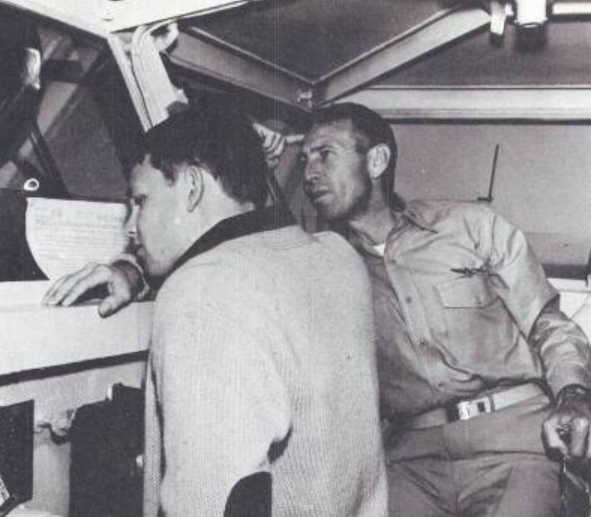
Adding a layer of intrigue to The Doors’ legacy is the much-debated (fake) photograph of Jim Morrison with his father, a Navy admiral. No matter the origin of the photo, it raises questions about Morrison’s background and its possible influence on his art and worldview.
The Doors’ discography, including their final album L.A. Woman (1971), reflects a journey of introspection and mysticism. Closing with the haunting track “Riders on the Storm,” the album captured an ominous and prophetic mood. Yet the band’s mythos both begins and ends with the enigmatic and apocalyptic “The End.”
There are certainly suggestions that Morrison is talking of the end we all must face, and escaping the inevitably of it whenever possible, but there is also a hint that the singer is telling his audience to live their lives as freely as possible in the meantime. One such instance comes from the Oedipal notions in the lyrics: “Father? Yes son/ I want to kill you/ Mother, I want to…”
In the recording, Morrison was asked to restrain himself when singing the lines. In fact, only in 1999 did engineer Bruce Botnik put the “f**k” back into the track. It’s concoction that gives the track an extra powerful punch, amid an already stringent conception.
https://faroutmagazine.co.uk/the-doors-the-end-jim-morrison-oedipal-nightmare-story-behind-the-song/
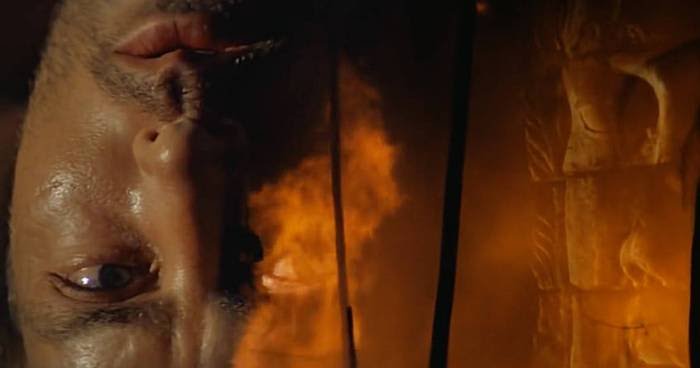
A decade after its release, The Doors’ haunting anthem The End became a defining centerpiece of Apocalypse Now, Francis Ford Coppola’s cinematic exploration of the Vietnam War and the darker recesses of the human psyche. The song’s brooding tone and apocalyptic lyrics perfectly complemented the film’s surreal, mind-bending narrative, amplifying its psychological impact. This marked a new frontier for The End—not just as a song, but as an immersive tool of cultural “mind-f*ckery,” blending music and film to leave a profound imprint on audiences.
As for Jim Morrison himself, the circumstances surrounding his death in a Paris bathtub remain as murky as the mythos he cultivated during his life. Many, including myself, find it hard to accept the official narrative. Morrison’s abrupt departure has long been fodder for speculation. Could he have been an “agent” of some sort—one whose mission was successfully completed? His sudden disappearance might not signify death but rather the deliberate “retirement” of a character who had served a larger purpose.
What could that purpose have been? One could argue it was to propagate specific cultural paradigms—an ethos steeped in hedonism, nihilism, fatalism, and narcissism. The Doors’ music, and Morrison’s persona in particular, captured a generation’s disillusionment and a yearning for transcendence, while also potentially steering listeners toward escapism through drugs, rebellion, and self-destruction. Whether intentional or not, the ripple effects of this message linger today.
What’s striking is how Morrison’s legend continues to thrive, crossing generational boundaries. Decades after his supposed death, I still encounter younger individuals who are fervent disciples of the “Church of Morrison.” They idolize his poetic musings, enigmatic stage presence, and unrelenting defiance of societal norms. In the end, Morrison’s legacy transcends mere music. It’s a puzzle of contradictions, inviting us to question not only the man but also the broader narratives of art, culture, and influence.
I’m not a club member, but I can easily picture myself spewing this same verbal abuse to my intended targets. What other conclusion is there to draw and what, indeed, are we gonna do about it?
 Piece of Mindful
The “like” button does not work for me up above, but I liked this post. I hope you keep ’em coming.
Somewhere in this blog is a post called Photo fakes – spotting trickery,
https://pieceofmindful.com/2022/03/17/photo-fakes-spotting-trickery/
Wherein we looked at a whole bunch of Morrison family photos, and they were all, in my view, fake. Also, Pam Courson, Jim’s girlfriend, became (in my opinion, not everyone sees this as I do) Barbara Walters, replacing the original, who just wasn’t cutting it as a pioneer female journalist. She was juiced, Jim was juiced.
Dave McGowan in his book Weird Scenes Inside the Canyon noticed that many of the rock stars of the period 65-75 came from military families. I think he was doing his limited hangout job, as I gather from seeing family photos of Morrison, John Denver, and Janis Joplin to be fake that something else was going on. Were these musicians assigned military handlers? Probably all from that period were if these three were.
McGowan also noticed that Morrison could not read music and played no musical instrument. How, he wondered, was he able to carry 12 songs in his head for their first album? But that’s the official story. I will grant him that he was a powerful stage presence, charismatic beyond the pale. But I think you are right to speculate that he was on assignment and was retired. Believe me we looked for him. Nowhere to be found. (There’s a fiction that he is now a rancher in Oregon, and they do some photo fakery to “prove” it, but I did my own, and found the Oregon guy to be someone else.)
LikeLiked by 2 people
Your photo analysis of Jim’s youth is certainly damning. As you state, there is no way to know who that person/entity actually was.
LikeLike
What are you going to do about it? Smoke legal weed and watch legal porn. Speaking of drugs, I wonder, given that booze was Jimbo’s DOC, that his fat phase might have been the result of pharma bloat. My default is a guy like him would be an inbred royal bastard and they do have medical issues. Thyroid, kidney, heart- infertility, big time. A trim gay guy gets fat, he’s retired. Can’t help it. He could have easily segued into a 70’s hippie dippie type, but that bloated face wasn’t going to sell. So, maybe it was the same guy all along until he “died”.
LikeLike
Inbred bastard is a good call. Talk about an asshole, in every film of him he is completely insufferable and an arrogant, smug, elitist prick.
I would classify the Doors as promoting nihilism, hedonism, and good bad music. This is from someone who liked the Doors most of my life with reservations. I have also met way too many Jim Morrison fanboys. Ray Manzarek screams CIA agent, older than Morrison, and he also discovered the punk band X from LA I used to like.
LikeLike