Does Reading Matter?

Again I’ve no inclination to write here, so went back to 2007 for this piece. The comments are interesting. I lived in Bozeman when I wrote this, and Bon Garner took trouble to introduce me to Steve Kelly, and then went and died. Bob was quite a character, a nice man, and I have fond memories of our brief interlude before he died. I remember his house was full of books.

He told me of the time that he worked in Vargas, a local book store, and they had a customer tie up his dog outside and come in and browse. A cop saw the dog and came in to reprimand the man for neglecting the pooch, and Bob seized the opportunity. He dialed 911 to report an armed man was harassing a customer. Three squad cars arrived at once. Hilarity ensued. For Bob, anyway.
_____________________
There’s an interesting op-ed in yesterday’s Wall Street Journal called “Does Reading Matter?” I reprint it in full below, as the Journal online is subscription-based. The National Endowment for the Arts released a report on reading that said that the average 17-24 year old in this country spends seven minutes a day doing voluntary reading.

I’ve read these reports before, and for years have witnessed the hand-wringing on the subject. Some implications are clear – people get their information by watching TV and listening to radio, and lately, via their computers. These media are not filtered in the same way as the printed word, and people are much more susceptible to indoctrination via TV and radio than books, which are filtered at the source. Pictures go straight to the brain. Words are filtered, contrasted with ideas, accepted or rejected based on other knowledge and prejudices.

So the logical inference is that people who digest information via reading are better informed than those who do so via TV and radio.

How do we process information, and how many of us process it at all? Frankly, those who are not reading are being manipulated by various media. Can’t be helped. It appears as though very few people have the inclination to pick up a book at the end of a long work day. Most turn on the tube. And they don’t want to be hit with hard issues with complicated resolution. They want the easy stuff. They want to relax, and who can blame them.

It’s a free market, and the market gives them what they want: Damned little to think about. But it leaves our society as a whole subject to the worst sort of leadership – people who use images to control opinions. We leave ourselves open to that when we do not read, filter and process information.

Where does that leave those of us who do read and digest and think about things in any depth? We have some power. We’re in charge of ideas. We advocate for policy, but the mainstream is brought along by the most thoughtless media of all, TV. In the end, it’s not ideas that sell policy – it’s images. The Bush Administration (along with FOX News) is very careful to control images coming out of Iraq. They know that even though words accompany the images, it is only the images that matter. No flag-draped coffins, no dead civilians. That’s how they manage public opinion.

There’s more to it, of course. The primary means of manipulating public opinion is to filter it down via opinion leaders. That’s the same way they sell fashion – people see important people wearing different clothing, and change their own style. It’s the same in the arena of ideas – most people don’t think for themselves. They look up the food chain. TV is a great medium for handing down information. It’s how we elect our presidents.

Are we a literate society? Hell no, of course not. And we were not a literate society when Tom Paine hit the streets with Common Sense. Only a relative few read it, the opinion leaders, and those few made all the difference.

Back to the beginning – does reading matter? Yes, it matters a great deal. But there are now, as in 1776, only a few that can process information and think critically. The rest are along for the ride. Things have not changed much, then to now.

————————————————————————

Does Reading Matter?
November 29, 2007; Page A18
By: Daniel Henninger

Time-pressed Christmas shoppers who visit Amazon.com nowadays see a homepage pushing Kindle. Kindle is Amazon’s “revolutionary wireless reading device.” This ambitious ($400) and ultimately admirable gadget springs from the hopes of Amazon’s visionary founder, Jeff Bezos, whose e-company began with books but in time found that profitability required the selling of things that people prefer to do with their ever-dwindling free time.

It was hard not to notice that Kindle was born unto us about the same moment the National Endowment for the Arts released a report on reading’s sad lot in our time. Amid much other horrifying data, it revealed that the average 15- to 24-year-old spends seven minutes daily on “voluntary” reading. Cheerfully, this number rises to 10 minutes on weekends.

An earlier, equally grim NEA report, “Reading at Risk,” announced the collapse of interest in reading literature — basically books. This newer study widened the definition of “reading” to include magazines, newspapers and online leisure. No matter. Even if the definition of literate life includes persons who spend their seven voluntary minutes with “InStyle” magazine or online reviews of HDTVs, the report still suggests that unmandated reading is heading for the basement.

As someone whose professional hero up to now was Johannes Gutenberg, I’m obviously cheering for Mr. Bezos’s Kindle, whose pages appear in a book-like technology called E-Ink. It must be counted as good news that Amazon’s Web site says the first run of the Kindle machines is sold out. (A spokesman said they won’t disclose how many. Hmmm.) Still, one must ask:

Are Kindle’s early adopters the leading edge of a new literate future, or a small, fanatic band of bookish monks, like those in Walter M. Miller Jr.’s 1959 sci-fi classic, “A Canticle for Leibowitz” (not yet available on Kindle) who preserved books in a post-nuclear apocalypse? Are we in a post-digital apocalypse for serious reading?

And if so, does it matter?

The NEA authors posit “greater academic, professional and civic benefits” with high levels of leisure reading. In other words, readers profit, at least in their souls, from time spent with works of the imagination or with books that explain the past. I agree.

Herewith, however, an anecdote that may suggest one reason for the decline. At a Wall Street Journal focus-group session awhile ago, the facilitator asked young professionals, readers of the Journal, about their reading habits. I was struck by the comment of a 30-something woman. “Look,” she said, “I spend my entire day at work on a computer. When I go home at night, I just want to read something.”

She, no doubt, would be one of Leibowitz’s monks. The fact is that many people who used to read a lot today have jobs that require staring at a screen. Smart people work long hours, mostly onscreen, ingesting things like legal documents, commercial leases, prospectuses for initial public offerings, Yahoo headlines and whatever computer engineers read. Then they crawl home at night to play video games or watch season three of “24” from Netflix.

Rolling your eyeballs across endless snowdrifts of pixels 10 hours a day, even for good money, is tiring. Thus post-pixel reading defaults to absorbing the synopsis on the back of a DVD box. If you can read Angelina Jolie’s name, what else do you need to know?

One criticism of the NEA studies is that they don’t capture the “new” ways people read away from work. This means the Endowment doesn’t validate new pastimes, such as reading text messages on cell-phone screens. Add the input-output of text messaging to the data base of readers and the daily voluntary reading time likely rises from seven minutes to six or seven hours.

Is this literacy? In 50 years, no one may ask.

This is an inventive age, though, so it was inevitable that smart people would devise a response to the flight from literature. French professor Pierre Bayard has written (a book) called “How to Talk About Books You Haven’t Read.” He suggests we skim, rather than read, the classics. A less-suspect fix is the Web site DailyLit.com. It’s a site for people beset with guilt because they don’t “read” anymore.

Select one of their classics, or poetry, and they’ll push five minutes of it to your email box each day at the same hour. I read F. Scott Fitzgerald’s “The Beautiful and Damned” this way. The story was fantastically depressing, but the expiation helped.

One wonders if reading’s status isn’t more complex. Unlike 30 years ago, when most of one’s acquaintances could at least talk about Cheever, Malamud, Updike, Plath, Baldwin, Mailer et al., there is no longer a common conversation about literature. Today, it’s come down to one book: Harry Potter. Maybe two, “The Kite Runner.” And yes, a million people will read David McCullough’s grand “1776” and talk about it. But other than Oprah, the institutional agenda setters and critics that created the common conversation are gone.

Anecdotally, though, there seems to be an amazing amount of real reading going on.

A recent phenomenon on the streets of New York is people walking, amid crowds, their nose in a book. One sees it all the time. The subways are full of people reading books. On just one subway car this Tuesday one saw: “Tales from Da Hood” by Nikki Turner, “The Catcher in the Rye,” “Don’t Know Much About History” by Kenneth Davis. Small book clubs abound, as do book Web sites. There are small presses dedicated to writers “no one” is aware of beyond several thousand loyal acolytes. But they are reading.

It isn’t just books. There’s no common conversation about popular music either; music’s subcategories now are endless and arcane. Other than movies, still seen together in theaters, cultural interests once widely shared have subdivided into many discrete communities.

But the NEA’s broader policy issue still holds: Will people who simply stop “reading” be at a disadvantage? Yes. In the future, I suspect that the adept “readers” will be telling the non-readers what to do. A canticle, perhaps, for the next Leibowitz.
• Write to henninger@wsj.com.

A Leftish Analysis of Media Bias

I haven’t writing much lately and see no inspiration on the horizon. I went back to the early days of this blog thinking I’d be a tad embarrassed at things written back then, but I am not. This is a November 2006 piece, three months into blogging, that still resonates. If the comment section comes through with the article, that too is a good thing.
______________________________________

The press was protected so that it could bare the secrets of the government and inform the people. Only a free and unrestrained press can effectively expose deception in government. And paramount among the responsibilities of a free press is the duty to prevent any part of the government from deceiving the people. (Justice Hugo L. Black)

I just fired up my computer this morning and encountered a new error message. A program that I did not know existed was not functioning properly, it said. It would have be shut down. It did shut it down, I assume, and the computer seems to be working fine without it.

Ah – a metaphor! That’s a problem with my thinking – everything can mean something else. It’s not necessarily wrong-headed thinking. It’s just annoying to people for whom metaphors convey little information. But I sat down to write about Ed Kemmick’s Sunday City Lights piece defending against press bias, so it seemed appropriate. A left wing analysis of the American press invariably rests on the assumption that there are background, or memory-resident programs running in the minds of all publishers, editors and reporters.

It’s not meant as an insult but is often taken as one. A left analysis of the press attempts to eliminate the need prejudice on the part of reporters as an explanation for bad reporting. This is a far cry from those on the right who say that there is a liberal bias, and that it is deliberate. A left analysis attempts to explain bias as a natural byproduct of ownership, advertising, sensitivity to critics, and source of information.

  • The American media (and this analysis applies on big and small scale, News Corporation and Lee Enterprises), is owned by corporations who tend to be conservative. Overwhelmingly.
  • The American media depends for sustenance on advertisers who tend to be conservative. Overwhelmingly. (Don’t believe that? Try getting Air America on the air anywhere, even Missoula. Even though there is a market niche larger than many of the splintered right wing segments, there are not enough advertisers willing to sponsor left-of-center programming.)
  • The American media stands in the proverbial mighty wind of right wing flak about supposed liberal bias. They react defensively.
  • The American media gets its information, to a very large degree, from ‘inside’ government and corporate sources, and depends on favorable treatment of those sources for continued access.

That’s a left-wing analysis. I think it stands up well to criticism because it lets ordinary people off the hook. Yes, you have integrity, work your craft, and do much good work. But no, you can’t see the forest for the trees.

Kemmick is a tree in the forest. He judges the integrity of the profession as a whole based on his own.

It seems like a hundred years ago that I was a reporter in Anaconda, and back then the only accusations of bias thrown at me had nothing to do with politics. In Anaconda, where it seemed that everybody was related to everybody else, or at least had known one another all their lives, reporting on matters of public interest was rarely simple.

I would be accused of writing a story so as to favor some faction whose existence I was unaware of, or of taking sides in a feud stretching back generations between people I didn’t know. In that town, where everybody was in one camp or another on all important debates, the idea that I was truly an outsider with no bones to pick was inconceivable.

Funny he should mention Anaconda, as in Anaconda company. Who would say that the Montana press was unbiased when that company owned most of the major outlets, back before Kemmick’s time. Did reporters have less integrity back then? It must have been hard for a journalist back in those days to punch out copy, knowing that inevitably it would be vetted by an editor with an eye on the publisher who was enforcing the will of the owner.

The journalist internalizes the conflict, it becomes memory-resident. Only rarely does the conflict peskily rise to the surface. That’s a left analysis, which Kemmick dismisses:

It’s more difficult to deal with the current pervasive belief that nobody in what is known as the mainstream media can be trusted. We are accused of masquerading as unbiased reporters while promoting a left-wing agenda – unless the critic happens to lean toward the left, in which case we are written off as servants of the status quo, lackeys promoting the interests of the powers-that-be.

Journalists get annoyed by left wing criticism of the press. Criticism from the right is generally anecdotal, and each anecdote can be refuted. Rightish criticism says that editors and publishers must be left-wing liberals, which simply doesn’t stand up in the light of day. But the leftish ragging accuses reporters of being lackeys, though unknowingly. It attempts to expose the memory-resident programs in operation. It’s personal.

Ben Bagdikian summed up the problem of media nicely back in 1982, when large-scale consolidation was just underway:

The new owning corporations of our media generally insist that they do not interfere in the editorial product. All they do is appoint the publisher, the editor, the business manager and determine the budget. If I wanted control of public information, that is all I would want. I would not want to decide on every story every day or say “yes” or “no” to every manuscript that came over the transom. I would rather appoint leaders who understand clearly who hired them and who can fire them, who pays their salaries and decides on their stock options. I would then leave it to them.

That’s a big treatment of the subject, and in the end, Kemmick’s City Lights piece doesn’t do it any justice. He falls back inside the gates of the city, and defends the question that was not asked.

Any thinking person will have beliefs and opinions, but a good reporter will bend over backward to prevent those beliefs and opinions from slanting a story. That is much different from failing to acknowledge those beliefs, or simply giving into them and becoming a partisan hack. Good reporters, trained in skepticism and objectivity, can still serve an important public function.

It’s all about the individual reporter and how he carries on his craft. There’s no larger questions to be answered.

What I mean by objectivity is that the reporter stays out of what he writes, not that he slavishly presents two “sides” to every story. If we report that a petroleum geologist has located oil in a formation 150 million years old, we are not obligated to tack on a disclaimer saying, “Many people, however, believe that the Earth is only a few thousand years old.”

What I mean by being fair and objective is presenting facts without comment and conveying the words and thoughts of other people as they would want them to be conveyed. That is not an easy thing to do, but I think we should continue to demand that reporters at least try.

Reporting then is nothing more than he-said-she-said. Critics on the left call this stenography.

When the government wanted us to go to war in Iraq, they said alot of stuff. It was all duly reported, without editorial bias. When that stuff turned out to be false, we were stuck with a decimated country and hundreds of thousands of dead Iraqis, and a press that appeared to be comprised of lackeys. But never did they fail to report on what he and she said (except for that odd case of the Downing Street memo). They only failed to analyze, failed to suspect lies, shelved intuition and did not confront power. They went along, and hid behind the mask of objectivity.

And that, in the end, summarizes the problem the left has with the media: They use objectivity as an excuse to avoid probing for truth. In the end, as with Iraq, they fail us miserably. But they do so while honoring the hallowed traditions of journalism.

If paramount among the responsibilities of a free press is the duty to prevent any part of the government from deceiving the people, they aren’t doing their job, and should be replaced. The question answered in Kemmick’s piece is not the question asked. It’s not about reporting both sides and walking away. It’s about how to build an accountable media.

Pursuit of truth … why it matters

Accordingly, the [JFK murder] case has been deliberately and systematically marginalized by the “media industrial complex” and turned over to the province of kooks, crackpots, and “assassination buffs” and “conspiracy theorists,” coded expressions craftily designed to disparage anyone who simply keeps an open mind and wants to look further into the circumstances of the president’s death. Independent thinking about this critical event has been stigmatized as taboo, a stigma enforced through belittlement, mockery, and obfuscation. Many people as a result are too intimidated to express the dissenting opinions about the case.

The effect is a pervasive atmosphere of unreality surrounding postwar American history, a willed decision by most citizens (even some who know better) to live in a fantasy America rather than the far messier place we actually inhabit. The fact that none of the official explanations for all of the major events in modern American history – the assassinations of John F. Kennedy, Robert Kennedy, Malcolm X, and Martin Luther King, Jr.; the Vietnam War; Watergate; Iran/contra; the Gulf War; 9/11; and the Iraq War – makes sense when the evidence is examined with care should be enough to make even the most trusting American realize he or she is being duped by our own government. (Joseph McBride)

It usually takes a great tragedy, losing a war or perhaps internal rebellion, to force those in power to come clean. In South Africa after years of apartheid the new government deliberately forsook opportunity to hold an inquisition, and instead went the “truth and reconciliation” route. This promotes healing even as I know that the very worst people in society walk free after committing heinous crimes. “Reconciliation” is not possible with such monsters. No doubt the South Africans knew that too, and yet, what was the alternative? To hire a new set of monsters to make revenge?

Nonetheless, if our country is ever to heal, even 51 years after the fact, we need to officially solve JFK’s murder so that we can have some closure. The private kooks, crackpots, assassination buffs and conspiracy theorists can then join all of the regular people of society, no longer grasping on to a slim read of truth under the yoke of a fascist state hidden behind a fake democracy. We could all be equals. We could all know some truth.

Happy New Year to my reading friends

The phonetic alphabet is a unique technology. There have been many kinds of writing, pictographic and syllabic, but there is only one phonetic alphabet in which semantically meaningless letters are used to correspond to semantically meaningless sounds. This stark division and parallelism between a visual and an auditory world was but crude and ruthless, culturally speaking. The phonetically written word sacrifices worlds of meaning and perception that were secured by forms like the hieroglyph and Chinese ideogram. These cultrually richer forms of writing, however, offered men no means of sudden transfer from the magically discontinuous and traditional world of the tribal word into the hot and uniform visual medium. (Marshall McLuhan, The Written Word: An Eye for an Ear)

Marshall McLuhan is a man whose words I cherish, as he was so able to communicate complex ideas in an understandable manner. A tribute to his genius is that while reading his words it is as if the sun pokes between the clouds, yet shortly after I lose that light. I have to continually revisit him.

Consequentially, his major essays, collected in Understanding Media: The Extensions of Man, sits atop my shelves here among pictures of my mother and grandmother and others – I didn’t realize as I placed that and two other books there that I was reserving a place of honor for him. I just wanted his book to be handy.

Love of the written word takes many forms. Some prefer fiction writers, and I tend to agree that fiction in the proper hands conveys important truths in a manner that non-fiction cannot. (See, for example, “The New Testament” by various anonymous authors.) Others prefer poetry, but I’ve never been able to sit and look at a it long enough for it to penetrate this thick cranium. Hearing poetry is another experience entirely.

I read mostly non-fiction. But my most recent experience with fiction, The Stranger by Camus, left me wanting more. It was so deeply moving. In the same manner, On the Road by Kerouac moved me … “That’s not writing. That’s typing!” scorned Truman Capote, but Kerouac had managed to convey to me the emptiness felt by the Beat Generation in the post-war years in a manner that no historian could touch.

So as a reader of non-fiction, I doff my cap tho those who prefer fiction. Their pathway to truth is less littered with lies than my own.

As we head into a new year, I take a moment now to offer tribute to those who read this blog and bring their own ideas and experiences here. There is nothing new or original under the sun, of course, but there is the human mind. We are capable exchanging complex notions of great value.

It is always obvious to me in blog exchanges whether or not I am dealing with someone who reads, and even more, the type of reading done. It takes a lot of reading over time before things can settle in and begin to paint a picture of the world that has some consistency around the edges.

As a young man raising kids and working full time, I managed to read maybe three books a year, and consequently each had disproportionate impact on me. So it was that I read, for example Milton Friedman’s Free to Choose, and Dare to Discipline by James Dobson. Without broader experience, the effect of these men was disproportionate.

So too is it with so many of recent generations who have read Atlas Shrugged, and then stopped. It’s good to read Ayn Rand, and then even better to throw her aside with great force later on. It’s a liberating feeling.

Before we settled in the house we now occupy, we looked at maybe thirty others in this area and up around Boulder. I was always curious about the people who lived in those houses, so as we went room-to-room I looked for the book shelves or stacks. What I generally found was no shelves or stacks, maybe a few travel guides or a beach book or two. Dan Brown probably accounted for 60% of book sales in this land a few years back. It’s a desert out there, I realize.

But then I recall that Allen Dulles, who sat on the Warren Commission, reminded the other Commission members that even though the final Report would contain gaping holes and contradictions, that they should not worry about it because Americans do not read.

That was 1964 and true then as now.

As McLuhan reminds us, what is more meaningful on a wall? An American flag, or the words “American flag”? While phonetic symbols store a great wealth of information, symbols impart far more and with immediate impact. Consequently, the power of television and movies, and now the images on the screen of our computers, own the American mind.

There is a vast treasure trove of truth and lies out there waiting to be assembled and easily accessible to all of us. But it is hidden away in books, and so will never be found.

Oliver Stone, be wary

@the OliverStone: A dirty story & in the aftermath the West maintains the dominant narrative of “Russia in Crimea” – the true narrative is “USA in Ukraine.”

@shaymultimedia: @TheOliverStone Shame on you Stone! How much is the Kremlim paying you? You are what Lenin used to refer to as a “useful idiot.”

@AlexandrNevskij: @The OliverStone I know my history, and Putin is a thieving murderous war-mongering thug, pure KGB filth!

@mpthct: @shaymultimedia @AlexandreNevskij @TheOliverStone Odd that people who claim to know their history are the ones that don’t know their history.

________________________
stoneI listened to NPR’s Wait Wait Don’t Tell Me podcast over the weekend. It is called the “NPR News Quiz” and I listen because they have some really funny people on their panels. But it can be annoying too. It is, after all, NPR, and so the “news” it quizzes panelists about is mostly lies. Host Peter Sagal made jokes and references to our official and given truth in this last show, that Vladimir Putin is an evil man, that the Russians invaded Crimea, and that the Ukrainian coup d’état earlier this year was a triumph for democracy in which the US played only a small part, if any. That is the official and dominant narrative, and Sagal, of course, is too … NPRish … to know any better.

Oliver Stone is now making a documentary about the Ukrainian coup d’état and Maidan massacre, and it will be out soon enough and opening at a theater anywhere but near you. Here’s a part of his description:

“Details to follow in the documentary, but it seems clear that the so-called ‘shooters’ who killed 14 police men, wounded some 85, and killed 45 protesting civilians, were outside third party agitators,” he said. “Many witnesses, including Yanukovych and police officials, believe these foreign elements were introduced by pro-Western factions – with CIA fingerprints on it.”

My only question, and why I reprinted the Tweets above, is … how can anyone not know this? How?

The massacre during demonstrations is a CIA specialty repeated elsewhere, for instance in Venezuela in 2002, and of course in countless coups d’état wherein any government that demonstrates any left-leaning sympathy or, more importantly, charts a course independent of US dominance, is targeted for regime change. Of course, the @AlexandrNevskij’s of this world who know their history so well don’t know this, and neither do most Americans.
______________

This may seem a disjointed post, but all of this came full circle this morning for me as I reviewed a murder in Washington DC in 1964, that of Mary Pinchot Meyer, one of JFK’s lovers, but oddly, one with whom he was truly in love and with whom he shared deep secrets. Her ex-husband, Cord Meyer, was high up in the CIA and so had to sit in silence as CIA murdered her. The murder took 6-8 people to carry out, not counting those who planned it. It included

  • surveillance for weeks to choose the murder spot;
  • a planted broken-down car so that a tow truck was called, to make sure witnesses were on hand;
  • a patsy selected that very morning, a young black man who was sleeping off a drunk after having had a tryst;
  • a wardrobe department at CIA that supplied the clothing for a a man looking like the patsy to be seen near the body by witnesses;
  • two people, a man and woman strolling through the park – actually doing surveillance;
  • a “witness,” a young army officer who appeared and offered incriminating testimony against the patsy and then disappeared into the shadows;
  • and of course, the shooter himself, a mere mechanic, a paid killer, who performed his job with cold calculated efficiency, even eliciting a scream from his victim before dispatching her. (He could have killed her silently but wanted attention drawn to the event so that the man imitating the patsy could be seen walking away from the scene.)

It’s just one more murder. CIA has done thousands of them. But look at the attention to detail in the staging, the thoughtful setup for the sake of investigators. They are professional murderers, and their art is to make murders look like something else – accidents, random acts of inexplicable violence, car accidents, plane crashes large and small, suicides, drownings, lone nuts in windows overlooking motorcades … there is always the act itself, but then something else too, some distraction to draw our attention away from the real murderers and motives.

James Jesus Angleton was one of the early henchmen in the organization as it found its wings in the post-war era. Like most psychopaths, he found little joy in life beyond the game, and spent his closing days drinking himself into oblivion, perhaps even demonstrating elements of a conscience in these words spoken close to the end of his life.

Fundamentally, the founding fathers of U.S. Intelligence were liars. The better you lied, the more you betrayed, the more likely you would be promoted. These people attracted and promoted each other. Outside of their duplicity, the only thing they had in common was a desire for absolute power. I did things that, in looking back on my life, I regret. But I was part of it and I loved being in it. … Allen Dulles, Richard Helms, Carmel Offie, and Frank Wisner were the grand masters. If you were in a room with them, you were in a room full of people that you had to believe would deservedly end up in hell.

I guess I will see them there soon.

I bring this up because Oliver Stone, in being openly hostile to CIA and having power in his filming skills and reputation, is putting his life in danger. Discussions are likely going on as we speak about the wisdom and possible means of dispatching him. If he knows this, and I assume he does, then he is a man of honor and rare courage. We all gotta go sometime, and his body of work, especially the movie JFK, is an enormous and important contribution to the preservation of truth, that thing that American historians* are so very bad at.
__________________
* As Senator Frank Church discovered during his investigation into CIA activities in the late 1970’s, CIA has paid writers on staff whose job it is to rewrite history in the making so that researchers looking for source material in college libraries and other archives will find only official history, and not the real stuff. Thus are the bookshelves of Barnes and Nobel, history and current events section, littered with bullshit.

Martin Luther King assassination … hidden in plain sight

I am busy today transcribing a one-hour interview by Len Osamic of William Pepper, currently serving as defense attorney for Sirhan Sirhan, but before that the attorney for James Earl Ray. And I have to chuckle a little bit because commenter Fred has said to me on occasion that the government cannot keep secrets and that secrets get out, and that’s why he doesn’t believe these fantastic stories of conspiracies and cover-ups, Martin Luther King being a big one.

Well, information did get out there. In 1999 the family of Martin Luther King sued Lloyd Jowers and “other unknown conspirators” in the death of Dr. King, forcing a public trial in Memphis. It was the trial of the century, and no one showed up. To this day if you ask any newspaper reporter or journalist in this country about that trial, you’ll get a blank stare. But for a week Three weeks in 1999 seventy witnesses were called and testified about the events surrounding King’s death. The verdict was that Lloyd Jowers, a minor player, was found guilty, as were the FBI, Memphis Police, and U.S. Army.

The trial is public record, and I intend somehow to get hold of the transcript. William Pepper and company have done a remarkable job of uncovering witnesses and evidence. It seems they know everything now except the name of the actual shooter. Lloyd Jowers, who had ulterior motives for approaching the King family to confess his guilt, was not a shooter, but took care of the rifle after King was gunned down from the bushes below the rooming house where the shot “officially” was fired. He knows who fired the killing shot, but refused to give up a name because, as Pepper says, he feared for his life. The actual murderer of King, a hired gun, a mechanic, was a very dangerous man, and was still alive in 1999.

It gets even more interesting. There were levels of organization in the shooting, with the U.S. Army providing backup snipers in case King survived. (Andrew Young was also to be killed that day but was not.) The Army also provided a photographic team, two still photographers who were atop the fire station nearby taking pictures of everything. From them we heard testimony that James Earl Ray was not present at the time of the shooting. But is that not weird, that the Army took the trouble to photograph the event? Would we not want to see those photos now? Were they produced at trial? Subpoenaed?

Here’s part of the Pepper interview, as it relates to Colonel John Downie, who was in charge of the military side of the shooting:

That entire Army unit, those soldiers, the ones from Psychological Operations and the other Special Ops came out of Camp Shelby, Mississippi early that morning, was designated, authorized under the control of Colonel John Downie. John Downie was the head of the 902nd Military Intelligence Group that was based in the Pentagon reporting directly to the Assistant Chief of Staff for Intelligence of the United States Army. And that’s the only MIG, Military Intelligence Group, that is based in the Pentagon. John Downie controlled it, he was brought back to take it over and run it in June of 1967, and he was given his marching orders to begin to organize the military side of that operation as opposed to the civilian side, which was handled separately.

Downie was organizing the military side in ’67. He’s an interesting character, and was a man, strangely enough, that one had to have some respect for as a patriot who believed what he was doing was right. Because, he was Lyndon Johnson’s briefer. He was also CIA. He was Lyndon Johnson’s briefer on the Vietnam War. And he would come back into Washington on a regular basis and meet with the President to give him a briefing on the war and continually question the president as to what we were doing there, saying this was a ridiculous waste of blood and treasure, and that we had no business being there. And why are we there? And he kept pounding out this fact to Johnson and finally one day Johnson pounded the table and said to him “John, I can’t get out of this war. My friends are making too much money.”

Now that is one of the most outrageous and revealing statements about war and the waging of war that any head of state in the history of this republic has ever made. And he made it to John Downie, and I learned about that subsequently with an interview of John Downie’s daughter, who remembers him coming home that day very upset and saying to his wife “Pack your bags. We’re going to Canada.” And he had himself transferred up to the embassy in Canada and wanted nothing more to do with being a facilitator for the war in Vietnam.

So that taught me something about the character of this man who originally was from Pennsylvania, and in terms of his perceived actions in terms of patriotism. And I believe – this is the quandary one gets into – I believe that he had no doubt that Martin King was an enemy of the state and that what he was doing was correct. Of course, however, it was wrong and illegal and criminal and immoral. With that assessment, one has to put the whole story out there so that it’s clear where this guy was coming from. He ran the military side of things. He ran the military side.

I find that intriguing, that the assassination of Martin Luther King can be traced to within shouting distance of Lyndon Johnson. Of course, we have no evidence that Johnson ordered it or even knew about it. But his military briefer sure did.

Pepper will put out a book that summarizes all of this, to be coordinated with a movie, in the near future. He has written two previous books on this subject, Orders to Kill: The Truth Behind the Murder of Martin Luther King (1995), and An Act of State: The Execution of Martin Luther King (2003, revised 2008). These will be folded into the final book, which also includes “devastating information that I have been able to acquire in the fifteen years following the civil trial.”

So there ya go, Fred. Information got out, it’s hidden in plain sight, and still no one knows about it! That’s thought control in our democratic society, at its finest.

A bad year for Malaysian Airlines

One has to be very careful with information such as this … a former Ukrainian soldier has taken refuge in Russia and claims that a Ukrainian fighter jet shot down the Malaysian Airlines aircraft on July 17, killing all 298 on board. While Voltaire reporters are doing their best to vet the soldier and cross-reference and verify his statements, it should be noted that Western intelligence agencies are experts in the disinformation game, and he could be a plant who will later be discredited by Western sources. That’s an old intelligence/propaganda game.

Nonetheless, read for yourself, judge for yourself.

There were actually two Malaysian jets lost last year, and the first, Flight 370, disappeared over the Pacific on March 8th of this year. News media reports that it simply vanished, that technology did not exist to track it to its final destination did not exist, are simply not believable. A French former airline director, Marc Dugain, has claimed that the US military may have shot down that airliner and covered it up. The aircraft was last seen in the vicinity of Diego Garcia, a US/British base in the Indian Ocean that is equipped with very sophisticated weaponry and tracking equipment.

Again, you’re on your own. Here’s the link.

Coming to grips with ignorance … loose screws

Veracity: “Not entertaining any proposition with greater assurance than the proofs it is built upon will warrant.” (Locke)

U.S. variation: If something is on TV and called “news” it is true. No proof need be offered.

Bertrand Russell:

“[Locke’s] definition is admirable in regard to all those matters as to which proof may reasonably be demanded. But since proofs need premise, it is impossible to prove anything unless some things are accepted without proof. We must therefore ask ourselves: What sort of thing is it reasonable to believe without proof?

I should reply: The facts of sense experience and the principles of mathematics and logic – including the inductive logic employed in science. These are things which we can hardly bring ourselves to doubt, and as to which there is a large measure of agreement among mankind.

But in matters as to which men disagree, or as to which our own convictions are wavering, we should look for proofs, or, if proofs cannot be found, we should be content to confess ignorance.” (The Listener, 1947)

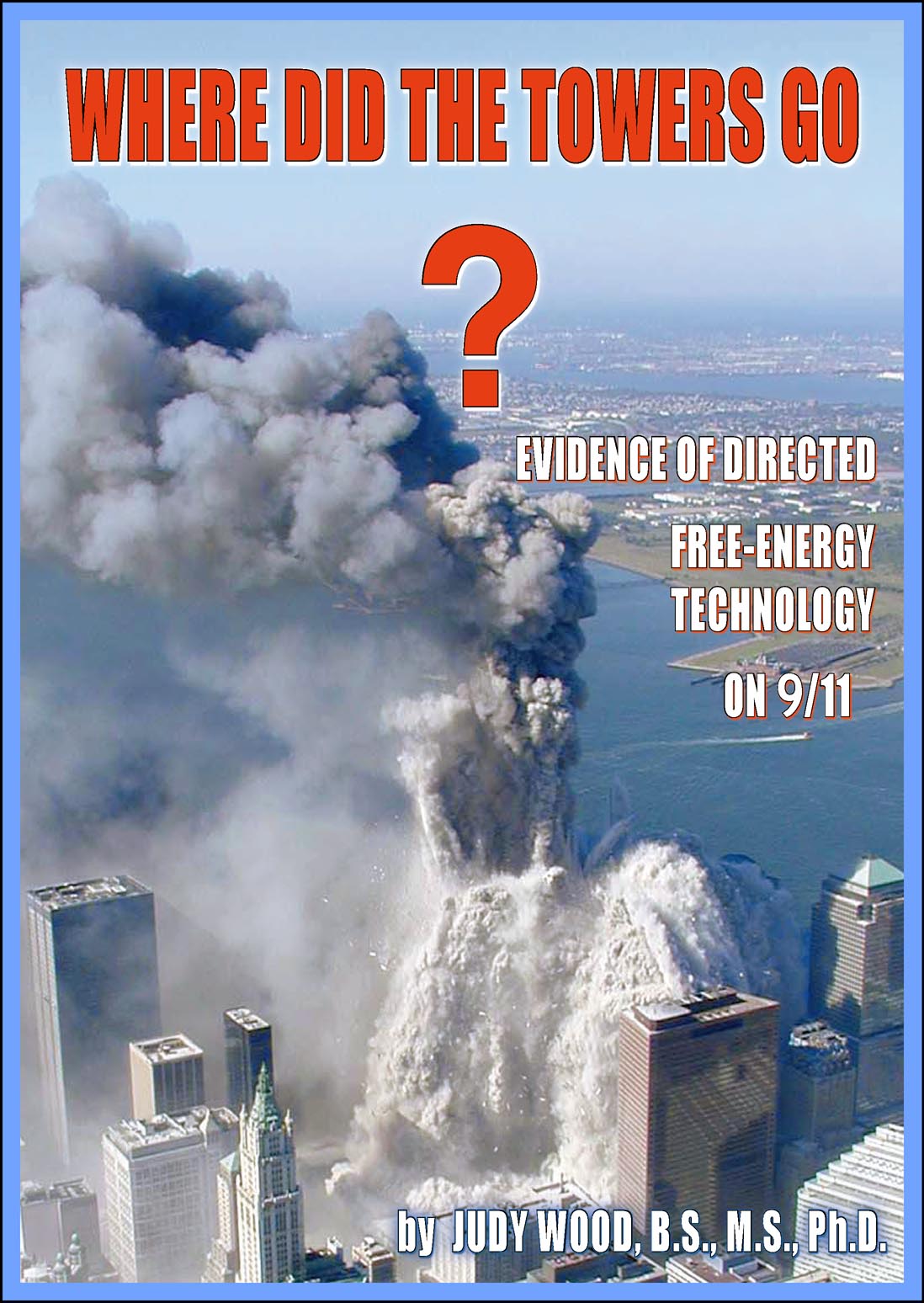
The major event of our time for most Americans, 9/11, is surrounded by so-called evidence with little or no science behind it.

  • Jet aircraft cannot behave in that manner, cannot fly at 500+ mph in dense atmosphere;
  • The odds of 19 supposed hijackers all having success with minimal tools at their disposal are phenomenal …
  • … and then to fly the aircraft (which cannot fly at that speed anyway) unerringly to their targets … unlikely.
  • Large jet aircraft cannot fly through small holes without meeting resistance and leaving debris.
  • Light posts would not have been severed by aircraft wings – quite the opposite, the wings would have been severed by a denser metal.
  • Cell phone calls from aircraft were impossible then, as now.
  • The notion that an aircraft sunk in an abandoned mine and that no effort was made to recover it is … indescribably ludicrous.
  • That a group of people ascertained the plans of supposed hijackers and then voluntarily committed suicide to save others … Disneyesque, vain, patronizing and stupid.
  • That national defense responders all at once screwed up is so … highly unlikely …
  • … that fighter aircraft needed for national defense conveniently were out of position – highly coincidental.
  • The large number of military drills going on, easily ‘flipped live” to avail plotters of vast government resources, was too coincidental to be taken without serious skepticism.
  • The presence of an unreported large hurricane off the shore of Long Island that day … hmmmm.

These are the facts of sense experience, but also principles of mathematics and logic. Those of us who look at the events of that day with high skepticism are the ones who employ the skills of reason and logic, and are also the ones not so susceptible to TV truth. We are the sane ones. The rest of you … you seem to have some screws loose.

I do not understand the power in place that causes ordinarily sensible people to believe such monstrous lies. It’s really weird that all of the above, easily seen to be false, even ludicrous, are accepted without proof.

What the hell is wrong with you people?

Arrogant jerkism

“I have come to realize that men are not born to be free. Liberty is a need felt by a small class of people whom nature has endowed with nobler minds than the mass of men.” (Napoleon Bonaparte)

As a young man of 36 in 1986 (April 1st) I had broken free of the business world, and was self-employed. I was worried about making a living, of course, but slowly over time began to notice that I had time to do things I wanted to do rather than dancing like a monkey for some organ grinder. I did not know it, but that freedom made me unemployable, that is, no boss would ever again subdue my thoughts or demand all my time save those two precious weeks a year I was allowed before.

The question is, then: What is our natural state? In bondage? Or as free human beings? If Napoleon above is right, it is both – that most of us are born to be soldiers and waitresses, while a few rise above it all.

If that is the case, I must then sound like an arrogant jerk. Maybe I am.

Lately I’ve been listening to podcasts while I do other stuff, as always, but the topic has been education. Driving to and from Montana last week we passed countless truck drivers, and I tried to look at them, to see the eyes, to see what a man’s face looks like as he is engaged in the most boring possible activity. Of course, the face tells me nothing. But I had to think that our eduction system, with our countless hours of boredom am mindless repetition and regurgitation, prepares them well for that occupation – or to be soldiers, clerks, drivers, insurance agents, sales people, teachers … but not free human beings.

And I wonder about the chicken and the egg – does our education system produce zombies, or merely nurture them?

I do no know.