Kwyjibo first appeared on the Simpsons many years ago in an hilarious scene where the family was playing Scrabble. As I remember the scene, it is Homer’s turn, and we are looking over his shoulder. In his rack he has the word “oxidize.” He does not recognize that word and so plays “do.” Bart’s turn comes around, and he plays “kwyjibo.” It’s not a word and Homer objects. We are looking over Bart’s shoulder now as Homer eats a banana. Bart says “it’s a North American ape with a receding chin, balding head, and short temper.” Homer accepts the definition.
I long wondered about the kwyjibo factor on the blogs, where we debate with the unreachable elements, mostly right wing in origin but not exclusive to any political outlook. Learning is a lifetime experience, never ending, and most smart people I know usually have a book or two going. But there are others who are encased in steel armor, never reading, never exposed to any depth of scholarship, picking up wisdom in the passing clips and paragraphs of a computer screen. It is this armored vehicle that is most frustrating, because it is lack of depth that provides the armor. Nothing penetrates these slow moving creatures as they roll across the landscape. They are the last to know how little they comprehend.
So kwyjibo should be our secret handshake as we deal with these morons, a way of sneaking a private laugh as we connect with each other without unduly insulting the state if stupidity that is incapable of knowing its own state. With due apologies to the writers of the Simpsons who gave us this beautiful word, of course.
We often speak of “mobilization” of public opinion, or a centralized and organized effort to achieve an objective. Public opinion by itself, fragmented and isolated, is worthless. Such a mobilization battle has been going on against the FCC, a body now entirely dominated by Obama appointees, and who seem intent on yielding to industry on the matter of “net neutrality.” Obama the candidate was resolute on the issue. His appointments to FCC have belied his sincerity. If ever there were a case of “regulatory capture“, this is it.
“Net neutrality” is probably not a good battle cry, as most people do not understand it. “Net freedom” or “freedom to browse” or “equal access to the web” would be more informative. But we seem stuck with that phrase.
It’s on now. Industry, it is easy to see, has employed the public relations industry, our clever professional liars, to muddy the waters. Their strategy is becoming apparent: steal the flag, co-opt our noble word “freedom” from the side of actual freedom, for use by the telecoms. Senator Al Frankin had to explain to Senator Ted Cruz what net neutrality means. This is a very bad omen, as it appears that prominent Democrats are taking the lead on this battle. They are very good at losing. Look for a meek response to the intense industry effort to bring the FCC to heel.
In the meantime, our intellectually crippled friend Swede predictably popped up with the image up above over at 4&20:
This image is laden with archetypes, from the word “Nyet” to the image of Stalin (Russians are currently being demonized in our propaganda system). It looks clumsy, even stupid, but is clever, calculated, and a sign of an ugly campaign ahead from the yapping jackals of the advertising industry. (The beating heart, the vital center of every ad agency is a behavioral psychology department.)
Swede’s ad originates at this place, The Peoples Cube, most likely chosen (or created) as a vehicle by the ad agency employed by the telecoms to lead this ugly campaign. The website appears crazy and incoherent. That’s how Our Kwyjibo found it. Don’t be fooled by its rube appearance. It is slick and professional.
The battle for web freedom is now a right-wing talk and scare phenomenon. This poster is a seed. This is where the rest of the battle will be fought. How to fight back? Stay mobilized behind organized groups like Electronic Frontiers, or Free Press.net. Avoid Democrats, who will figure a way to lose. Obama’s recent strong words on net neutrality may be real, but might also be a means of castrating the movement by ceding leadership to Democrats. Given his appointment of Wheeler, he is not to be trusted. (What to trust: Words, or deeds?)
I am reading these dark mornings of the events leading up to World War II, wondering if the Brits, cunning bastards that they are, were not playing the little corporal as he maneuvered to incorporate Czechoslovakia and Poland into his empire. Did the Brits and Germans share a common goal, to bring down the Bolsheviks? (Of course, by that time, Russia was long over its Bolshevik spell and was merely another military dictatorship.) What the Germans wanted was the Asian frontier, defined these days as Ukraine, but an interface of Western and Eastern cultures that today splits that country in two.
As if now Act II of this play, the neo-Nazi regime in Kiev, put in place by machinations of NATO and US-backed forces (repetitive phrasing, I know), including a strong Jewish element, is goading the Russians to defend their frontier against repeated provocations. Such atrocities as the burning down of a trade union building in Odessa, incinerating those forced to remain inside, and then the shooting down of MH17*, are designed to bring the Russians into Ukraine. When that finally happens there will be a shrill cry of outrage among the toadies of the Western media about Russian “aggression”, as when Russia “seized” Crimea by an overwhelming plebiscite.
So it is with some trepidation that I learn from the Saker that the provocations are working. Heads of state must be cautious and circumspect in speaking in public, as it is assumed that their words carry the weight of the structure behind them. Here’s Vladimir Putin:
Today there is fighting in eastern Ukraine. The Ukrainian central authorities have sent the armed forces there and they even use ballistic missiles. Does anybody speak about it? Not a single word. And what does it mean? What does it tell us? This points to the fact, that you want the Ukrainian central authorities to annihilate everyone there, all of their political foes and opponents. Is that what you want? We certainly don’t. And we won’t let it happen.
Putin, perhaps the most widely respected leader on the planet at this time (despite the howling of US and British state-controlled news and entertainment media), is drawling a line with those words. The Russian military will easily crush Ukraine forces, and that is not the point. Rather, it is the feigned outrage that will follow, that the Russian response will be used as justification for Western attacks … this is the whole point of the Kiev machinations.
________________
*The time to investigate MH17 has long since passed, as evidence by now is presumed corrupted. I assume, but will never know, that it was Western-backed agents that shot it down, and JC offers some insight in a comment below another thread on this matter too. In another piece, Saker reminds us to be cautious regarding evidence that has already surfaced, as Western intelligence agencies are very good at playing both sides of the fence.
One thing leads to another to another … Red Ice Creations is a Swedish source for podcasts that I’ve subscribed to for a couple of years. For 80% of the time Henrik Palmgren, the host, will take us down the path of extraterrestrials and ancient civilizations, none of which interest me – maybe even spooks me a little. I mean Henrik, please.
Bruce VeinotteBut that other 20% of the time makes the subscription worthwhile. He seems to be scouring the landscape looking or interesting people with different outlooks. He introduced me to Bruce Veinotte and the “School Sucks” project. I was a bit leery at first, as I am with so many of Henrik’s guests, but as I listened realized that Veinotte is intelligent, mindful, and counter-cultural. He reminds me of my son.
Judge for yourself. The first hour of the podcast is free to non-subscribers. If you want to hear the second, email me and I’ll see what can be done. Veinotte calls school a “jail with books,” and has very little use for the buildings or the teachers. He thinks that learning is a lifetime challenge, should be self-guided, and that we can dispense with regimentation, permission to go to the bathroom, hall passes, bells, lines, and that godawful focus on testing for temporary retention (before tossing the information aside). (I found the second hour far more intriguing.) His take on “bullying” is utterly sensible: It usually happens in prisons and schools, those places where people are held against their will.
Veinotte mentioned “the” nine-types of intelligence (as if). I am one of those people who always tested well on ACT’s and SAT’s. I happen to have the type of smarts that are valued in our society – pattern recognition, numbers, language skills. But oddly, I’ve noticed over time, I suck at things like chess and checkers and poker – I would call these “gaming” skills. I can see the past very clearly, but cannot anticipate the future (as in why you moved that bishop to that square). Also, I cannot tell you how an internal combustion engine works – way too may things going on there at once. I struggle with our snow thrower, our plumbing, building a simple staircase.
It just demonstrates that people have wide and varied talents, and that we overemphasize some, undervalue others. Anyway, “the” nine types of intelligence are actually a fairly comprehensive description of the many facets of the interaction of the human brain with nature. I found it in many places on the Google. Here they are:
Naturalistic: Living among the elements, plants, rocks, animals, harmonizing … these are our farmers, hunters, chefs, botanists, gardeners with that “green thumb.”
Musical: People sensitive to pitch, timbre, rhythm, harmony and who add so much to our lives.
Logical and mathematical: People who discern relationships and patterns, demonstrate sequential reasoning skills, and generate and use abstract thoughts. That’s me, I guess, or why I scored well on those damned tests.
Existential: These are our philosophers, religious types, who wonder why we are born, exist, what happens at death. I am drawn to this, but am not very good at it.
Interpersonal: People-smart. People who get along easily, size up, enjoy people. Blog behavior aside, this is me in real life. I enjoy meeting people, and look for reasons to like them.
Bodily kinesthetic Dancers, athletes, surgeons … all of those talented people out there who are not me.
Linguistic: To think in words and makes oneself understood. ‘Nuff said.
Intra-personal: Self aware – this, while evident in some people (my late older brother for one) at a very young age, is something we develop as we age … if we are paying attention.
Spatial: Thinking in three dimensions – understanding how a damned snow thrower works. These are the architects, mechanics, many artists, and those amazing people who design the cardboard containers that we use to ship products around the world. Have you ever wondered how they take a piece of cardboard and slice and dice it to the exact shape needed to hold your set of glassware you just ordered? I marvel at those designs. Just sayin’.
So go back to your SAT and ask yourself what were they testing, and how many ways there are that we can develop outside of formal schooling, which Veinotte says (and I agree) is a prison with books, and a waste of our precious time.
I’ll never forget watching Tom Brokaw on Leno or Daily Show or some other outlet talking about the trials and tribulations of his job. He was driving in Manhattan when his phone rang, and he learned that Saddam Hussein had been captured. The poor schmuck had to turn around and go back to the studios and sit down and read prepared copy to us. That was his only job. He was considered very good at it because he seemed believable.
In the Empire of Lies, men of law caliber are elevated to high station. Brokaw is a sycophant and an actor, nothing more. He is to journalism what fine quality paper is for books: Very handy for frontispieces.
The Rosetta landing was an inspirational feat, and may tell us if we are alone in this universe (so very highly unlikely!) But more than that, on seeing what they pulled off there I realized that the impetus for space exploration has exited the United States (if it was ever here to begin with).
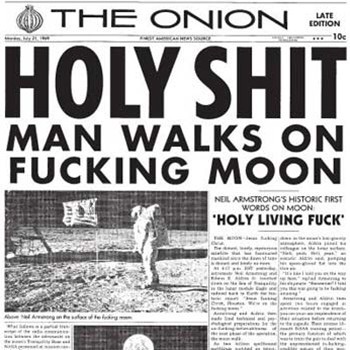
The most important missions in American space history were done under the names Voyager and Galileo. Those missions, wholly publicly funded, were stunning successes. The moon landings, if they happened at all, were an impressive feat. But why, pray tell, did we never go back, advance the technology, expand our horizons beyond the moon? Why did we retreat from 248,000 miles to 200? Huh? Huh?
Far more likely, Apollo was a stalking horse for development of ICBM technology and placement of weapons in space.
But we did it American way – with lies, fakery, deceit, all mixed up with excessive patriotism.
Anyway, just as the beacon of democracy has left the United States, now residing in Russia and China, so has the impulse to move forward in space exploration. Rosetta is an impressive technological achievement, and may yield the answer to the question long sought in so many other ways: Are we alone?
We are in Oregon visiting family. This state, like others, had a GMO labeling issue on the ballots. It was instructive.
Labeling is harmless information. But Monsanto, the prime mover behind GMO’s, does not want information out there. So they managed to frame the debate as “GMO’s are evil and cause cancer” versus “we are solving world hunger.” Both are false, no doubt surreptitiously planted by Monsanto PR agents to control the parameters of the debate.
Debate framing is done so that no matter which “side” you are on, you’re not debating the real issue. The grand objective appears to be “out of sight, out of mind.”
We need to discuss GMO’s because they are a means by which Monsanto and others can put a fence around the food system, charging entry to all farmers. That’s the objective of all capitalist monopolists, always everything, never enough.
It’s a very dangerous practice, as we become overeliant on a few food strains, exposing ourselves to potential humanitarian disaster – diversity is our security, not GMO’s.
That’s the conversation Monsanto does not want us to have. They managed the Oregon debate beautifully. And won. Framing works. There’ll be no further discussions here.
People generally have their feet set in cement and cannot be reasoned with. It is therefore my view that we should simply say what we think and bring our evidence to the table.
That’s why I admire people like Chomsky, the late Gore Vidal, and the man above, Norman Finkelstein. They say what they believe to be true and defend their position with vigor. They are not nice, because like every other means of persuasion (short of advertising and propaganda), being nice does not work. Knocking an opponent for a loop can remove cobwebs, creative cognitive dissonance. Honest people then self-reflect and alter their views.
It is rare but it happens.
By the way, Norman Finkelstein is banned in the State of Israel. He cannot enter the country. If he were nice (i.e., stfu) that would not have happened.
People are frustrated. I get that. Tossing the bums out feels good.
This is the great elixir effect of politics, that people vent their frustration by voting out one set of oligarchs (or tools thereof) and voting another in.
It’s our only voice, but we don’t control the choices. They are handed down from above, by money and media and power of suggestion. In those cases where voting can indeed bring forth an effective leader, the election results can easily be tampered with and overturned by the electronic machines. That’s why they are there, just in case.
Without voting, we’d have no outlet for frustration, and people would get upset and organize and force meaningful reforms on government. We’d have representative government.
Voting prevents meaningful change. If it were a truly effective tool, it would be outlawed.
____________
Speaking of the power of suggestion, I don’t hear much mention of “Tea Party” anymore, as if they are being quietly ushered out of our perceptions. I said from the beginning days when they were foisted on us by FOX and CNBC that they were a tool to make Obama appear as a lefty (strident right wing bigots yelling at him makes him appear their opposite), and that they would disappear when no longer useful.
People don’t seem to be able to grasp the idea of perception management, perhaps because the implications are frightening. The very idea that we are studied and gamed so that we think we are acting on our own even as others control our thoughts and behaviors … freaky!
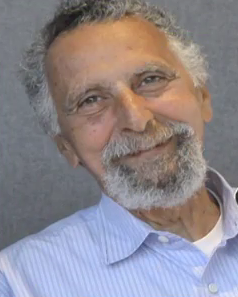
He actually hated working in any world. Later on, when we were doing Car Talk, he would come in late and leave early. We used to warn him that if he left work any earlier, he’d pass himself coming in.” (Ray Magliozzi)
The news of Tom Magliozzi’s death hit me very hard last night, and I realized that it is because time is passing along with generations, and that I too am in that relentless march to the sea.
Car Talk was never about cars. That was just a cover story. It was about two brothers, the one twelve years younger idolizing the older one. They were men of good will, self-deprecating humor, and who even knew the difference between a fuel injection system and carburetor, but would never brag about that.
I listened for years as I could, and when podcasting started, never missed an episode. I noted one time a few years back that Ray ran an entire show while Tom sat silent. I thought he must have been under the weather. Sometime after that, Ray started, rather than ended the show with “Well, you’ve wasted another perfectly good hour listening to Car Talk…” and then sighed as he plunged into the week’s episode. Something was wrong.
Tom had Alzheimer’s. Typically that disease takes about ten years to kill a person. So they’ve been faking it for a good long time. And now we know why Tom did not drive. Also, as Ray reminds us, that’s why Tom could never remember last week’s puzzler.
They retired in 2012 and rebooted Car Talk as re-runs, and they could do that because they were always careful not to be topical. By staying away from current events, they stood out among all shows on NPR by not lying to us. At the end of the re-runs their voices sounded patched in, current, and there would be topical references. But at one point I realized that Tom’s laugh had been electronically spliced into that part of the broadcast, and that Ray was working alone. NPR liars did indeed penetrate the studio overlooking Harvard Square in their fair city.
Oh well. So it goes. Car Talk was the best thing ever on NPR. They’ll continue with Best of Car Talk and I will continue to listen. What, I have to wonder, becomes of the staff members left behind? What now for Irasmus Bedraggin, the head of working mothers support? Or their brake tester, Carson Delake? The gal in charge of repeat business, Lucinda Bolts? Staff tailor Hugh Jass? Will they find other work?
Unlikely. There’ll never be anything like it again.

 long wondered about the kwyjibo factor on the blogs, where we debate with the unreachable elements, mostly right wing in origin but not exclusive to any political outlook. Learning is a lifetime experience, never ending, and most smart people I know usually have a book or two going. But there are others who are encased in steel armor, never reading, never exposed to any depth of scholarship, picking up wisdom in the passing clips and paragraphs of a computer screen. It is this armored vehicle that is most frustrating, because it is lack of depth that provides the armor. Nothing penetrates these slow moving creatures as they roll across the landscape. They are the last to know how little they comprehend.


 Piece of Mindful