
Lizard put up this video in the comments over at 4&20. I long ago quit doing this, realizing that people just don’t have or won’t take the time to invest such affairs. But Hedges is so good that I’m doing it anyway. Give it a watch, report back.
Poor Juan, now $2 million richer, should not have been fired


As Abbie Hoffman would remind us, freedom of speech is not about the ability to pray at a prayer meeting or salute the flag. It is about protection of the expression of unpopular views. And in that sense, the U.S. is a most un-free place. We don’t begin to practice what we preach to the world, and the world knows it.
________________
Here’s Glenn Greenwald of the same subject:
I’m still not quite over the most disgusting part of the Juan Williams spectacle yesterday: watching the very same people (on the Right and in the media) who remained silent about or vocally cheered on the viewpoint-based firings of Octavia Nasr, Helen Thomas, Rick Sanchez, Eason Jordan, Peter Arnett, Phil Donahue, Ashleigh Banfield, Bill Maher, Ward Churchill, Chas Freeman, Van Jones and so many others, spend all day yesterday wrapping themselves in the flag of “free expression!!!” and screeching about the perils and evils of firing journalists for expressing certain viewpoints. Even for someone who expects huge doses of principle-free hypocrisy — as I do — that behavior is really something to behold. And anyone doubting that there is a double standard when it comes to anti-Muslim speech should just compare the wailing backlash from most quarters over Williams’ firing to the muted acquiescence or widespread approval of those other firings….
Sucking blue whale
 Down here in Colorado we are inundated by the same-ol same-ol from Democrats – yeah, Michael Bennet ain’t all that good, but geez! Ken Buck is even worse. These are our two senate candidates. Bennet is a Conservadem campaigning now as a progressive after knocking the real progressive out of the race. It’s a close contest. I voted for the Green candidate.
The lesser-of-evils strategy has worked too well for too long, for Republicans. Democrats succeeded in 2008 in taking control of two branches of government by such large margins that they could have made significant progress in achieving progressive goals. Instead, Obama went Clintonista on us, the 60 Senate Dems allowed the Republicans to block all legislation proposed, and good legislation like EFCA did not even make it to the floor.
They could have done more. They could have done a lot more. But they didn’t. Worse than that, they didn’t fight for us. They are either weasels and cowards of no spinal substance, or they are working against us. Pick-em.
By the way, the House passed quite a bit of good legislation, and it all died in the Senate. The lesson that most people took from that is that the House is a good body that is working hard for us. The actual lesson is a little less inspiring – the House could do anything it wanted, as everything had to pass through the bottleneck in the Senate. Therefore, the powerful forces that control these people pretty much let the House do as it wished. But note that when it came time to pass a very bad piece of legislation, the Health Care Reform Act, The House caved. Power worked its magic.
I know, the usual suspects will say that I “wasted” my vote on a Green candidate. This is true. It was a choice of wastebaskets, and I chose to toss that vote in the clean receptacle. Democrats are going to take a beating this November, but they deserve it. Republicans are going to take hold of many offices, and they will fight for their beliefs. Our choices are people who fight against us, and people who refuse to fight for us.
 That sucks. But it is tough-love times, time for the Democrats to take a cold shower. Nothing that is done cannot be undone. There will be suffering and pain, and things will get worse now. In time, either the Democrats will be taken over by fighters, or they will sit on the sidelines watching history go by.
But don’t kid yourself. This coming election, the Democrats will go down, and it is not the fault of progressives. It is the fault of Democrats. They suck … blue whale? Who said that?
Texas Hold-em
 I have a game on my ITouch that simulates Texas Hold-em poker. It’s put out by an outfit called Candywriter, and is called Imagine Poker. As far as I can tell, the game is not rigged – it allows real odds to play themselves out. There are a host of characters that you play against, most taken from history, and each exhibiting playing characteristics different from the others. Napoleon takes too may risks, Little Red Riding Hood is too timid, and Medusa is always in your face with a challenging bet, forcing you to take a hard look at your king-nine-suited.
The game is five levels, and if you win at every level you win the tournament. I have been playing for over a year, and have won one tournament. I have lost a couple of hundred times.
Am I a bad player? Probably. I will never find out in real life, as there are two possible outcomes from a real tournament: I win some money, or I lose some money. If I win, I’ll surely go back and try again. If I lose, well, I lose some money. So both outcomes are bad.
Worse than that, a simulated game allows me to play with funny money. The risk-taking, while it seems real, is not, and I know this. In a real game, challenged by a real player who knows more about odds and people than I do, I would be burnt toast in a big hurry. So I’ll stick to the ITouch, or watch those tournaments on TV where you get to see the hole cards.
Here’s what is interesting – my son, who is very perceptive, played the ITouch one time and won a tournament. How did he do it? He went all-in on every hand every time. Most times this caused the others to drop out, but often enough when they stayed in he drew the right cards to win.
As I said, I think the game allows real odds to play themselves out. So I need someone to explain this phenomenon to me. If I went to Vegas and played Texas Hold-em, and went all-in on every hand every time, would I stand a better chance of winning? Or did my son merely find the glitch in the programming where it stopped simulating real life, and became a farce.
Or a larger question – is skill at poker an illusion? Is it just random chance with random winners continuing to play while the losers go into other pursuits, like accounting or investment advice?
Empty suits
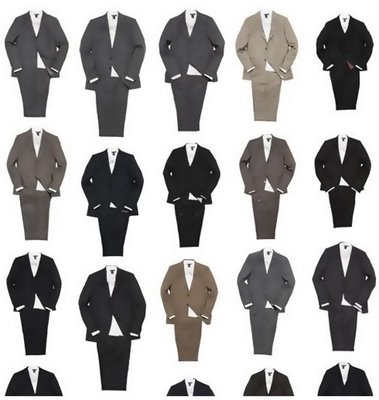
My last serious blog encounter prior to the move was with Dave Budge, and it resonated. The man was arrogant enough to say
…I’m working on a long post, Mark, that you’re going to have to research to argue against.
As I learned afterward, he wasn’t asking me to critique it. He merely wanted to play teacher-student. His post, The Pulse of my Bleeding Heart: Part I (Part II never appeared), was devoid of one important thing: research.
I approached it with some anticipation, however, as I regarded him as a scholarly man. I put it off until a Saturday morning when I would have time to read it. And then I got through it, and did some writing. In retrospect, the real conclusions I draw form his post go deeper than what I wrote that day.
I am surprised. He’s not all that smart. He’s not all that thoughtful. His long post was mostly a citation of others with whom he agreed, patting himself on the back for taking the trouble to quote people with whom he otherwise disagrees, but with whom is was in agreement with on the subject at hand: sweatshops. He doesn’t like them, but thinks them necessary. They are the price that (other) people pay for prosperity. He offered no empirical data – only an affirmation that others had done so.
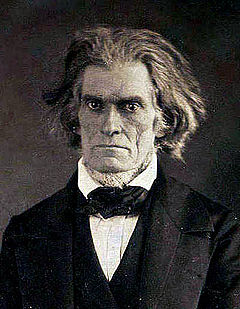
Sweatshops, like the stockyards of Upton Sinclair’s “Jungle,” are merely investors grabbing at opportunity. Budge looks backward and sees sweatshops in the distant past for countries that have developed well, and imputes cause and effect. It is not only wrong and backward, but servile. Such conclusions benefits oligarchy. He may not be well-paid in the terms of our bought priesthood, but he is bought nonetheless. He literally self-indoctrinates for benefit of the wealthy sector.
But there’s more to his flawed thinking than mere false narrative. There is massive, overwhelming, blatant and obscene confirmation bias. Budge went so far as to say that Japan and Korea developed because of sweatshops. All he had to do, all anyone has to do, is look a little deeper. What do Japan and Korea have in common? As with China, they were never colonized. That confirms my bias – that countries that were colonized by Europe and the U.S. in past centuries, like India and those in Latin America, suffer from retarded development. There may have been sweatshops in Japan and Korea, might still be, and it means nothing more than investors still pursue opportunity as it presents itself.
Sweatshops are just a tool for extracting wealth, a form of oppression, slave labor by many for the benefit of a few, and justified by the bought priesthood.
I didn’t set out here to write about sweatshops again. My reason in sitting down this morning was the wonderment I felt this week that the man with whom I have argued so much, and for whom I had grudging admiration, turned out to be so shallow. In the end, he reminds me of Rob Natelson, rigorously affirming what he knows to be true, ignorant of all that contradicts it, and calling the outcome “scholarship.”
Phew!

Boulder was awfully nice – very lively, lots of brew pubs and coffee houses, a college town with a very liberal atmosphere. There are lots of PhD’s there, along with entrepreneurs and authors, scientists and green companies. It suited me fine, but in the end we decided that we wanted to be off the hot prairie and up in the mountains. (Not to mention that housing costs are astronomical there.)
I’ve been following the news and blogs and stuff, and nothing has changed. I’ve got to remember that if things change, it is only to get worse. There have always been crazies about, ever since the discovery of the New World. Europe routinely sent their sent their malcontents and religious cults this way. But these days, with the Tea Parties and people like Beck and Palin and O’Donnell held in high esteem, it seems as though Ladybug is right: We are circling the drain. These people are not just politically extreme. They are very stupid. And yet, stupidity automatically garners 30% in the polls.
But I suppose people have always said that. Maybe the only difference now is that I am sixty, and noticing the craziness more.
But I’ll carry on. I’ve been doing this for four years now, and enjoy it as much as in the beginning. And my arch-nemeses, the Democratic Party, has never offered such a large target as it does now. Obama has gone all Clinton* on us, and the usual suspects are digging deep into their imaginations for reasons to continue to believe.

This is our one-party-with-two-right-wings system at work. The reason why they don’t want other parties in the debates is because their presence highlights how little difference there is between them.
Circling the drain, indeed.
______________________
*Remembering Bill Clinton: Another post, some time. But could a Republican do more harm to this country than did Bubba? But he is more popular now than Obama.
Budgelby the scrivener
 I wrote a piece down below for the benefit of Black Flag, and my objective was merely to lay it all out, and arrogantly put up my answers without evidence. It is so because I say it is so. I wanted to engage him and have some fun. So I called it “The Final Word.”
There is no final word. I no more have answers to the hard questions of our times and all times before than does Mr. Flag. But I do appreciate his forthrightness in presenting his views as I did mine – as the final word. He’s thought it through, he says, and presents us not with the process of reasoning that got him to his answers, but just the answers themselves. He calls his answers “immutable laws”, and uses them as a fortress to protect himself from the real world, which is fraught with uncertainty.
That’s one approach. Here’s another: Sophistry. In Greece, sophists were teachers, and should have garnered high respect, but instead through the ages have earned quite the opposite. The word “sophism” is at the root of “sophistry,” “sophisticated,” and “sophomore.” The reason? Sophists taught the art of reason for the wealthy classes, and gave them the tools they needed to defend privilege.
Enter Dave Budge.
I am a special case for Budge. I know this because he refers to me as “moron accountant with the Polish sounding name” – it’s frustrating to him because he simply cannot find the words to get across the point that he doesn’t think I know anything. He wants me to know how stupid I am, and it doesn’t sink in!
I’m Czech-Irish.
Budge put up an elegant defense of sweatshops, replete with appeal to authority, false choices, emotional arguments, and drivel. It is one of his most thoughtful works to date, and as such, exposes him at last as a guy who simply has not thought things through, but quite elegantly.
Budge doesn’t like sweatshops. But he thinks of them as a stepping stone to a better life. Evil, but necessary. As evidence, he cites improvement in places where things have improved. He leaves out everything else. Sweatshops are making life better, he says, because life is getting better in some places where there are sweatshops. He also says, at another post, that my piece, “The Final Word,” was egoistic prattle with no ideological or empirical support.
Ahem. Cough. Cough. [Clears throat.]
Go read Budge’s piece (The Pulse of my Bleeding Heart, Part I), and have some fun. I’m going to point out some of the more egregious passages.
First, Budge starts with a closing statement from another post: We on the left think that “workers in developing economies don’t deserve jobs as much as American workers.” This is a technique perfected by Karl Rove – to attack an opponent at his strong point. Simply restate their argument in a way that that sounds worse – protecting American jobs and our standard of living is selfish. I mentioned in my piece that concept of having a country was weird, but a good way to protect a group of people from bad ideas. Suppose we want a higher standard of living for ourselves – Budge is saying we can’t have that because we need to worry about Chinese labor. Bad idea. We as Americans can protect ourselves from that idea by tariffs, wage and labor standards, and the Chinese must take care of themselves. Both are possible. One country must not suffer for the other to benefit. False choice.
Later he says that there is no profit if there is no sale and if there isn’t discretionary income there are no sales. (His emphasis.) If only it were that simple, as the object of capitalism is to extract profit from labor by using stored labor (capital) applied to resources … sales are going happen, but the object is not profit. The object is to corner the profit, to keep it for oneself at the expense of others. Pay each sweatshop worker twenty-five cents an hour more, and there is not less profit. Rather, there is merely a wider group of beneficiaries. That’s an essential concept that Budge has never grasped – that wages too are a form of profit. They are the part he cares little for, as it benefits the wrong people.
Budge cites Paul Krugman, a blatant appeal to authority – a man he considers a hack, but whom he thinks happens to be right on this subject. I mentioned to my son that the only reason that Krugman has his pretty perch at the NY Times is that he is a free trader, and so is not out of step with the elite. But Budge uses him for a different purpose – as evidence that he must be right, as a man he does not agree with has come to the same conclusion.
He does the same thing with Jeffery Sachs. Set them aside. Let’s get down to business. What is the essence of the debate?
(Krugman, Sachs, and Budge are all the same person now. Budge is using their words in place of his own. From this point on, their blended words are “KSB:”)
And yet, wherever the new export industries have grown, there has been measurable improvement in the lives of ordinary people. Partly this is because a growing industry must offer a somewhat higher wage than workers could get elsewhere in order to get them to move. More importantly, however, the growth of manufacturing–and of the penumbra of other jobs that the new export sector creates–has a ripple effect throughout the economy.
This is classic confirmation bias. It’s that simple. Sweatshops are not a modern phenomenon. They are with us everywhere that there is poverty. KSB have identified those places where life has gotten better, and claim that the reason is sweatshops. I’m not kidding.
More KSB:
One German company buckled under pressure from activists, and laid off 50,000 child garment workers in Bangladesh. The British charity group Oxfam later conducted a study on those 50,000 workers, and found that thousands of them later turned to prostitution, crime, or starved to death. …
University of Colorado economist Keith Maskus says the Pakistani child laborers who lost their jobs were later found begging, or getting bought and sold in international prostitution rings. …
UNICEF reports that an international boycott of Nepal’s child-labor supported carpet industry in the 1990s forced thousands child laborers out of work. A large percentage of those child laborers were later found working in Nepal’s bustling sex trade.
Are you following the specious reasoning path? The choice between crime, sex trade and prostitution and sweatshops is sweatshops. With sweatshops there is no crime, sex trade and prostitution. We know this, because ex-sweatshop workers were found in crime, sex trade and prostitution.
Therefore, sweatshops are making life better. Classic false choice reasoning.
Here’s my favorite:
Johan Norberg … writes this about a Vietnamese woman working for Nike … “when I talk to a young Vietnamese woman, Tsi-Chi, at the factory, it is not the wages she is most happy about. Sure, she makes five times more than she did, she earns more than her husband, and she can now afford to build an extension to her house. But the most important thing, she says, is that she doesn’t have to work outdoors on a farm any more.”
Are you reading that? A sweatshop worker built an extension on her house, and doesn’t have to work on the farm anymore, because as we all know, farming is harder that sweatshop work.
Words, words, words … where you are when I need you?
OK, Budge is doing drivel, but here’s the worst part of his confirmation bias. He cites as reason for the continuation of sweatshops the success stories of the Asian continent, Korea and Japan. He leaves out heavy government subsidies, import tariffs … Toyota once made wash machines, and only became the monster company it is because Japan subsidized it, protected its markets and its workers from outside capitalists who would merely export the fruit of their labor. Were there once sweatshops in those two countries? No doubt. Are there still? Most likely. What does that have to do with their development?
Precisely nothing. Budge is saying that in order for there to be development, we must start with sweatshops. That is the point that must be debated. Starting now.
Sophistry, I have met thee, and thy name be Budge. I find thy works to be …egoistic prattle with no ideological or empirical support.
And again, I’m Czech-Irish.
No contributions without representation!
Corporations are usually owned by a wide array of wealthy individual and “institutional” investors. The latter collect funds from many places – mutual funds, retirement funds, college endowments. Behind the institutions are millions of small investors.
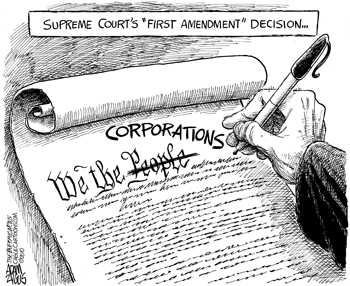 Corporations are considered legal “persons”, and carrying that logic to its extreme, the Supreme Court decided last year (Citizens United) that these persons should be able to engage in advocacy politics. So now more than ever before we are seeing anonymous groups with healthy sounding names like Citizens for Kindness running ad campaigns.
This country is so goofy that I cannot even be disgusted anymore. I can only laugh. We must surely be near the end!
Which takes us back to the beginning when our country was founded on a tax revolt – “No taxation without representation!” was the rallying cry, we are told. How is it that a corporation comprised of stockholders from millions of sources can speak for all those various persons?
Is this not contributions without representation? Isn’t it kind of, like, you know, ludicrous?
The perfect cuppa joe
Time now to get way from trivial concerns and write about something really important – coffee.
Some time in my younger years I had a really good cuppa joe. I think now it must have been on a trip to New York City in the 1976. Back in Montana after that, I was always on the lookout – I tried everything that came along, including the more expensive “premium” blends put out by Folgers and the others, and the flavored coffees that masked the bland product underneath. I sent away for Gevalia Kaffe from Sweden. It was all, as my brother liked to call it, “shit water,” or gas station blend.
I experimented with better ways to make coffee, including “French presses”, or “French toilets”, as I think of them. When the first Mr. Coffee came out, I ran out to buy one, thinking that the drip method was all that was missing from Montana coffee. It was still shit water. When backpacking, coffee was a always a necessity in the morning, and always a disappointment. (Folgers once offered coffee in tea bags. Horrible!)
Some time in the early 90’s, a coffee shop opened in downtown Billings called “Todd’s Plantation.” The entire downtown area would smell like roasted coffee, and the people would say that “Todd’s burning the beans again.” He roasted his own, and used “Arabica” beans, which meant nothing to me. (Folgers and Millstone and others are “robusta” beans – more caffeine, less flavor.) His coffee was dark and rich, but very bitter, something I find to be true of most gourmet coffee shops to this day. Todd’s closed eventually, but other shops began to open, and twenty years after that cup I had in Manhattan, premium coffee entered the Montana market.
But most of the new gourmet coffee sold at shops and kiosks was just hype, a new version of shit water at three or four times the price. My daughters worked for a coffee shop in west Billings that was eventually taken over by Esther and became “Esther’s Espresso.” I began to buy coffee by the pound from her, trying all the blends, and not liking them much except for the Italian roast. So I stuck on that.
We went on a trip to visit kids who didn’t drink coffee, and bought a bag of Starbucks Italian roast to make our own while we were there. Unlike Esther’s Italian, Starbucks was darker and more bitter, but not bad. We brought half a bag home with us from that trip, and then one morning I mixed Esther’s and Starbucks Italian, took a cup to my wife, and she came out and said “That is really good coffee.”
And it was. The search had ended. We live in Colorado now, and Esther ships us beans which we store frozen, a no-no. I make five cups in the morning using five tablespoons of Esther’s Italian and two of Starbucks. We’ve been doing this for years.
Esther’s Espresso is located at 1927 Grand Avenue in Billings. It’s just a little hole in the wall. Esther is a great gal, always fun to talk to. She has two walls of bins of various beans. Do some experimenting if you are a coffee lover – she will surely have something that fits your taste buds.
What could have been, should have been done …
A commenter at 4&20 (Ingemar Johansson, about 4/5 down the page) remarked that the standard right wing solution to our health care cost problem, crossing state lines to buy health insurance, would work because we all buy our property and casualty insurance from companies that cross state borders.
That does work. It’s a common thought, but misguided. It starts with a perceptual mistake – to name property and casualty and health care both “insurance.” It may be a useful name in terms of catastrophic events, like auto accidents and building fires where people and property are harmed.
But property insurance is based on the premise that events that require claim payments are rare. People who buy homeowners’ insurance do so because coverage is cheap and prudent, and not because they know they are going to have a fire someday. Auto accidents seem common, but in terms of the number of drivers and miles driven, are rare.
Companies who sell that insurance compete less on price and more on quality of service. It’s a good deal for everyone, and the market does a good job for us.
Health “insurance” is different. It is a virtual certainty that we will all make claims on the insurers, and also that we will avoid seeking out needed services that are not covered. Young people are so healthy that they don’t want to buy into the system and pay for other people’s costs. But these are the very clients the insurers want. Older people are a certainty to file claims, and so insurers avoid them. They even dumped those 65 and older on government.
So health insurers write elaborate contracts that sound good but disappoint when a claim is filed. States stepped in and required that they cover certain events, like maternity or the first day or two of a baby’s life. Insurers avoid those states that do that, and flock to states like Arizona, that don’t regulate them.
Because they are paying fewer claims in Arizona (medical costs are not lower there – only the percentage that insurance companies pay), if we allowed cross-state insurance, people would flock there for coverage, and we would all be under-insured. That is bad public policy.
The simple answer, the bonehead answer that every other industrial country already knows about, is to quit calling health care an “insurance” product, and simply build its cost into the national budget and spread it over the whole population. After that, we are no longer playing the hide-and-seek insurance game, which itself is a large driver behind our skyrocketing costs.
Instead we would play a game called “retail/wholesale.”
That is the essential difference between us and other countries – we pay retail. Other countries cover their entire populations, and even the worst performers, like Canada, pay only two-thirds as much per capita as us. Most countries pay around one-half of our per capita cost, and everyone is covered. Life is better in those places than it is here.
All we need to do is expand the covered pool of clients to “us” and change the enrollment period to “anytime.” We can allow insurers to practice their trade, but instead of profit-seekers, they become utility plant managers. They can’t refuse service to anyone, are guaranteed a reasonable rate of return, and are heavily regulated.
The downside? There aren’t many.
Some claim that profit-seeking drives innovation. That is a valid point in the sense that private companies innovate. That would not change, as they would be selling their products to us via government instead of private companies.
Some say there is a moral hazard as people would use medical services unnecessarily. That’s not been the case elsewhere, as evidenced by per capital costs.
Some say, in the face of all evidence, that it will cause costs to spiral. But we are the spiral. Our cost increases far outpace inflation. Costs are going up everywhere, but the U.S. leads the pack by several lengths.
And finally, some say that our system is lawsuit-driven, and that we must have tort reform before anything else can happen. False. Lawsuit settlements and malpractice insurance are a very small part of our cost spiral. Maybe we should address that matter, but it is being used as a lever – corporations simply don’t like being sued, and are using medical malpractice as a device by which they can avoid lawsuits in all areas. That is nothing more than clever PR.
 Piece of Mindful