How do they do what they do?

Thierry Meyssan in this article, Jihadists in the service of imperialism, deals with a confusing aspect of U.S. foreign policy: How does CIA get so many Muslims to do its bidding?

CIA used Al Qaida as ground troops to overthrow the Libyan regime in 2011, hence the nickname for the group “Al CIAda.” And I’ve long understood that CIA was behind the training and arming of the Mujaheddin in Afghanistan in the 1980’s, the forerunners of Al Qaida. It is also easy to understand that CIA has long groomed and fashioned leaders of opposition groups, from Daniel Ellsberg to bin Laden himself along with Iraq’s Saddam Hussein – disposing of them when convenient.

Controlling the opposition by leading the opposition is nothing new. The latest phenomenon, ISIS, armed with American weaponry and seemingly unending money supply, is easily seen to be a western front. Just ask two questions: Why the timidity of the US military in attacking them, and why has ISIS no interest in Israel? That should tell you everything you need to know.

But if we can see that from here, why cannot the Muslim participants see it as well?

The answer, that CIA is expert at manipulation of existing hostilities, dividing enemies to force them to fight among themselves … that Muslims are as credulous and easily manipulated as Americans … is just an admission that CIA is that good at this business.

That is discouraging.

The Devil Speaks

INCORPORATION, n. The act of uniting several persons into one fiction called a corporation, in order that they may be no longer responsible for their actions. A, B and C are a corporation. A robs, B steals and C (it is necessary that there be one gentleman in the concern) cheats. It is a plundering, thieving, swindling corporation. But A, B and C, who have jointly determined and severally executed every crime of the corporation, are blameless. It is wrong to mention them by name when censuring their acts as a corporation, but right when praising. Incorporation is somewhat like the ring of Gyges: it bestows the blessing of invisibility–comfortable to knaves. The scoundrel who invented incorporation is dead–he has disincorporated.”

Ambrose Bierce, The Devils Dictionary

Thanks guys for the heads up

Before I move on, I wanted to offer a quick apology of sorts – I am very hard on American journalists. I can forgive ignorance, as we are all ignorant about most things. Then there is dullness – frankly, most people in most professions are not that bright, journalism no exception, that is, the average IQ is 100.

It is their hubris that fires my rockets. But that could be mere defensive posturing on their part, as they are often roundly criticized.

I have been reminded or I have read someone write that inside the profession there are many very bright people. But they cannot speak up for fear of losing their jobs, or worse yet meeting Michael Hastings’ fate. If true, they are living their lives with their little lights under a bushel basket, which would explain the need for hubris to contain their angst.

But I do believe that under such pressure and tension, people either leave and do something more psychically satisfying, or break in spirit and get their minds right. Whichever it is, dullness, light under the bushel, or broken spirit, from the outside looking in, the result is identical: Very bad journalism.

Here, just for fun, again, is a satellite photo of the area directly west of Manhattan and Long Island on the morning of 9/11/2001. No American journalist knows about that hurricane, named Erin, which was virtually ignored in New York City news coverage in the days before as it made its way up the east coast. Thanks guys for the heads up.

image

Qualification for journalism: Absense of inquisitive nature

Editor emeritus?
Editor emeritus?

Speaking of left gatekeepers, here is a surly quote from another, dead-on in my view:

Journalists should pride themselves for their lowly status, only a yard or two ahead of the gendarmes and with prison stocks our likely fate if we do our jobs properly. Now the idea is to have the moral standing of bishops. What rubbish! What pretension!
(Alexander Cockburn)

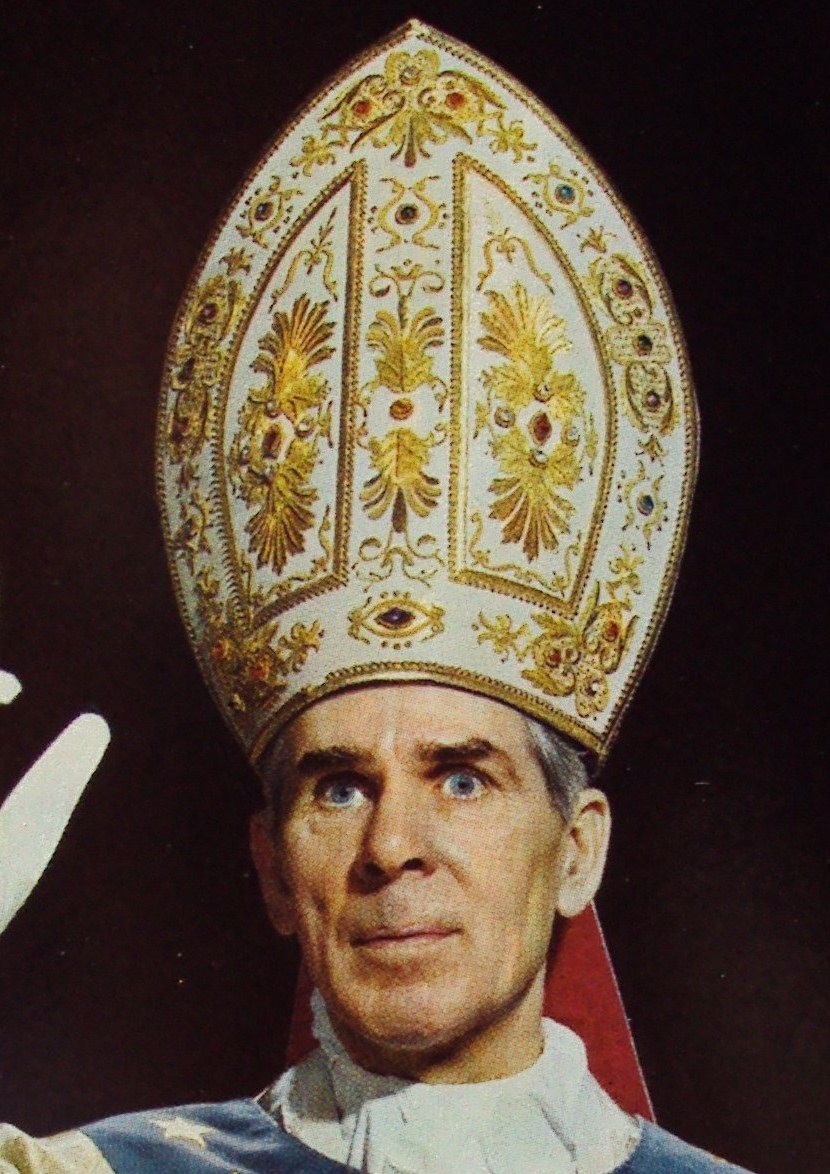
It is that “moral standing of bishops” that drives me bonkers. I imagine that in private gatherings they wear those big penis-shaped hats that Catholic bishops do. Merely attaining the status of “editor,” that is, knowing where power lies being submissive to it, is in their line of work an honorary accolade.

One ex-editor of the Billings Gazette conferred the title of “editor emeritus” to his resumé. The word “emeritus” is used to designate a retired bishop, pope, president, prime minister …honestly, this is how they view themselves. It is a far cry from being one step ahead of the gendarmes.

The next time you are watching a debate among candidates hosted by journalists, such as Gwen Ifill, Candy Crowley or Bob Schieffer, picture the moderator in the phallic hat worn by Bishop Sheen above. It adds humor to the affair. Understand that the position of debate moderator is only granted to those known to pose no threat to power.

The defining characteristic of an American journalist is absence of an inquisitive nature. They praise each other for it.

The pathway to truth’

The Wayfarer
by Stephen Crane

The wayfarer,
Perceiving the pathway to truth,
Was struck with astonishment.
It was thickly grown with weeds.
“Ha,” he said,
“I see that no one has passed here
In a long time.”
Later he saw that each weed was a singular knife.
“Well,” he mumbled at last,
“Doubtless there are other roads.”

I was reading a piece by Barrie Zwicker called “The Shame of Noam Chomsky and the Gatekeepers of the Left.” Zwicker undresses the old fart.

There is undeniable quality in Chomsky’s writings. It is hard to back away from his impressive body of work on American foreign policy and propaganda.  But what if he is himself a propagandist? Zwicker gives us a list of techniques beginning with absurdities and ending with “word inflation,*” and uses them on Noam.

Here’s Chomsky on JFK from a now-dead link at his old haunt, Z magazine:

It’s true that I know very little about the assassination. The only thing I’ve written about is that the claim that it was a high-level conspiracy with policy significance is implausible to a quite extraordinary degree. History isn’t physics and even in physics nothing is really “proven” but evidence against this claim is overwhelming from every testable point of view, remarkably so for a historical event. Given that conclusion, which I think is well founded, that I have written about, a lot, I have no further interest in the assassination and while I’ve read a few books out of curiosity I haven’t given the matter any attention and have no opinion about how or why JFK was killed.

Here’s the undressing:

It’s true that I know very little about the assassination [ignorance flaunted]. The only thing I’ve written about is that the claim that it was a high-level conspiracy with policy significance is implausible [internal contradiction: he admits to knowing “very little” so on what basis does he find any claim “implausible?”] to a quite extraordinary degree [adding to the internal contradiction, word inflation, failure to provide minimal evidence]. History isn’t physics [obfuscation] and even in physics nothing is really “proven” [misdirection, vis a vis the laws of physics] but evidence against this claim is overwhelming [internal contradiction, word inflation, bald assertion, failure to provide minimal evidence] from every testable point of view [sweeping generalization, bald assertion], remarkably so for a historical event [word inflation, failure to provide minimal evidence]. Given that conclusion, which I think is well founded [bandwagon psychology, failure to provide minimal evidence], that I have written about, a lot,[internal contradiction: earlier he said the only thing he’s written about it is to claim implausibility, etc.] I have no further interest in the assassination [dismissiveness, evasion, minimizing importance of the important] and while I’ve read a few books [internal contradiction: he said he knows “very little:” reading “some books” surely qualifies as more than “very little”,] out of curiosity [dismissiveness, suggesting close-mindedness, not even fake open-mindedness] I haven’t given the matter any attention [internal contradiction: for someone who “hasn’t given the matter any attention” he has arrived at extremely strong and controversial opinions] and have no opinion about how or why JFK was killed [internal contradiction: he has an opinion, which he has just energetically expressed, that the way JFK was killed was not by state conspiracy].

Chomsky is in contortions in his statement, albeit a mere chat room post. He’s clearly uncomfortable with the subject, and aggressive in distancing himself from it. He’s urging his followers, who number in the millions, to avoid the subject as well. This is the work of a gatekeeper:

“This far, no further.”

Crediting Chomsky with essential honesty in his work, which I have read extensively, I am left in a quandary. He is not convincing. The assassination, if a state conspiracy (as evidence strongly suggests), was coup d’état, and so is of critical importance. It is true that JFK was but a flawed man, an actor strutting and fretting on a stage. Set him aside. Look at the event.

Elsewhere Zwicker references E. Martin Schotz and his book History Will Not Absolve Us. According to Schotz, an early JFK researcher, Ray Marcus, met with Chomsky in 1969 and a one-hour affair turned out to be four. His secretary canceled all appointments for the rest of the day. He agreed to a follow-up session. Then the line went dead.

Chomsky knows more than he lets on. Marcus later met with a Chomsky colleague at MIT, Selwyn Bromberger, who said

“If they are strong enough to kill the president, and strong enough to cover it up, then they are too strong to confront directly … if they feel sufficiently threatened, they may move to open totalitarian rule.”

Chomsky often refers to people in institutional settings who have to meld their minds with the power around them. We cannot live long with internal contradictions, he says. So, crediting him with integrity, I suggest that this is the avenue he has chosen deliberately – that to directly confront power would cost him his job, perhaps his life. Setting the matter aside as he does allows him a forum for all other matters.

Nonetheless, he performs the role of gatekeeper. Further, by warning his legions of followers away from curiosity about the event, he undermines his credibility. If he is so disingenuous in one area, what degree of confidence can we bestow on everything else?
_____________________
Continue reading “The pathway to truth’”

Absent a Lee Newspapers state bureau, nothing has changed

People who know David Crisp know him to be a nice man of both letters and integrity. That makes it hard to be critical of him. But I will. Someone has to.

From his article “From the Outpost: Papers go dark when news is about them, I capture some telling sentences below.

The article is about how Lee Newspapers shut down its Helena Bureau and gave two journalists a hard choice – pay cut or the door.

Here are some excerpts from Mr. Crisp’s article about Charles Johnson and Mike Dennison:

As of this writing, late Tuesday, I have been unable to find a reference to the story in any Lee newspaper—not the Billings Gazette, the Helena Independent Record, the Missoulian, the Montana Standard or the Ravalli Republic, or any of the Lee’s numerous satellite publications in Montana. …

…Blogs and news sites such as Last Best News picked it up almost immediately and drew dozens of comments from readers.

This is a bugaboo in journalism, that their job is simply to write stuff that will be written anyway somewhere. Why should I care if a Ravalli paper or the I Like Boobs blog carries an easily accessible story like this? There is no great accomplishment in printing it on Tuesday instead of Monday, or on a blog instead of in a newspaper. The knowledge has little impact on us (it is a very big deal to journalists, I realize), and the timing and means of receipt of the information are of no consequence.

Chuck Johnson has covered the state capital since the Constitutional Convention of 1972. I have gotten to know him a little, and I have read his work for many years. If he has any political biases, I have been unable to detect them. …

…Mike Dennison has been in recent years, if anything, the more aggressive of the two reporters. He covered healthcare better than any Montana reporter I know about. His stories were detailed, precise and fair, and his occasional columns were must reads. …

…the web has nothing yet to match the expertise and deep knowledge that Johnson and Dennison brought to statewide coverage of Montana.

There’s a theme there, and it is a little difficult to detect, but I’ll try: Johnson and Dennison write stuff. They don’t allow their personal opinions to interfere with what they write. That’s why they are really good at what they do, no matter that the stuff they write is easily accessible and will be widely known whether they write it or someone else does. Everything that is acted out on the public stage, even in wee hours of the morning, gets written somewhere. So what?

In the mind of the journalist, the highest accolade is fairness and objectivity. Screw that. I want to know what is going on behind the scenes, off stage – money changing hands, deals cut, political cover and inside baseball. Fairness and objectivity are nice, but not useful. Power gets to do what power does behind the scenes even as reporters are fair and balanced.

Professional journalists are trained to avoid losing objectivity, of becoming involved in the story, even if in so doing they tell us something that we might otherwise not have known.

Here’s an example: In late 2002 and early 2003, the government lied to the public about Iraq, claiming by means both open and psychologically suggestive that Iraq (“Saddam Hussein”) was involved in 9/11, had nuclear and chemical weaponry, and was going it attack us. American journalists did their job, as they see it, reporting the lies in a fair and objective manner.

The result: hundreds of thousands of dead, a massive refugee crisis, and a crime of significant historic proportions, surely the greatest slaughter of the new century.

We had no one running interference for us, burrowing and getting down to the underlying truth. Our reporters were busy being professionals, reporting on what he and she said. The New York Times even allowed lies to go front page through Judith Miller, as if they could not control or discipline her.

That’s American journalism. I’m sorry, Mr. Crisp, Mr. Johnson and Mr. Dennison, to be the one with a scoop here, but writing down what public officials say and do in public, even if you do it on Tuesday instead of Wednesday, and in the New York Times instead of  the Ravalli Republic, is not an important job. Anyone can do that, even me.

We need people of steely resolve who are fearless of making enemies and who attempt to find out what powerful people are really doing. The ‘finding out’ part is very difficult. The ‘reporting back’ to us not so much. Somewhere along the line American journalists forgot about the ‘finding out’ part.

High praise given journalists by public officials is a sign they are not doing their job. Otherwise, powerful people would not like them so much.

Real journalism, finding out what powerful people are doing and reporting it to us, has value. Informed public opinion, even if enraged or indignant, and even in our fake democracy, matters.

We don’t have journalism. Shutting down a state bureau is not significant. We’ve got bigger problems than that. I feel the pain of dispatched reporters. But the world moves forward without a wobble, having lost nothing of value.
____________________
PS: Mr. Crisp has little regard for bloggers, in fact, even a haughty disdain. It is true, we do not do what he does, and I too have haughty disdain as a result. He quotes another blog, apparently a self-loathing one:

The 4&20 Blackbirds blog may have put the issue most concisely: “So what fills the vacuum? If the answer is bloggers, we’re screwed.”

Of course, blogs are not the answer, but let’s be clear: What we had before the Internet and blogs … that was not the answer either.

We need … reporting.

A glitch

The blog was down this morning – a computer at WordPress identified it as a source of spam or some such thing.  Having been raised Catholic, my first move was to examine my conscience – have I used copyrighted photos? Offended people? And second thoughts – blogging is such a merry-go-round, nothing ever changes, hardly anyone reads or thinks independently, and those who do know who they are.

And, of course, I was frustrated that some unknown person somewhere had such power over me. I hate it when people have power over me!!! I pay $99 a year for a domain name and was under the impression I owned my content here. Apparently not.

Anyway, all’s well, but I will be more careful about copyrights and stuff. That was a jolt. And I will be nicer. Starting now.

Ah, screw that.

Hey buddy! Down in front!

image

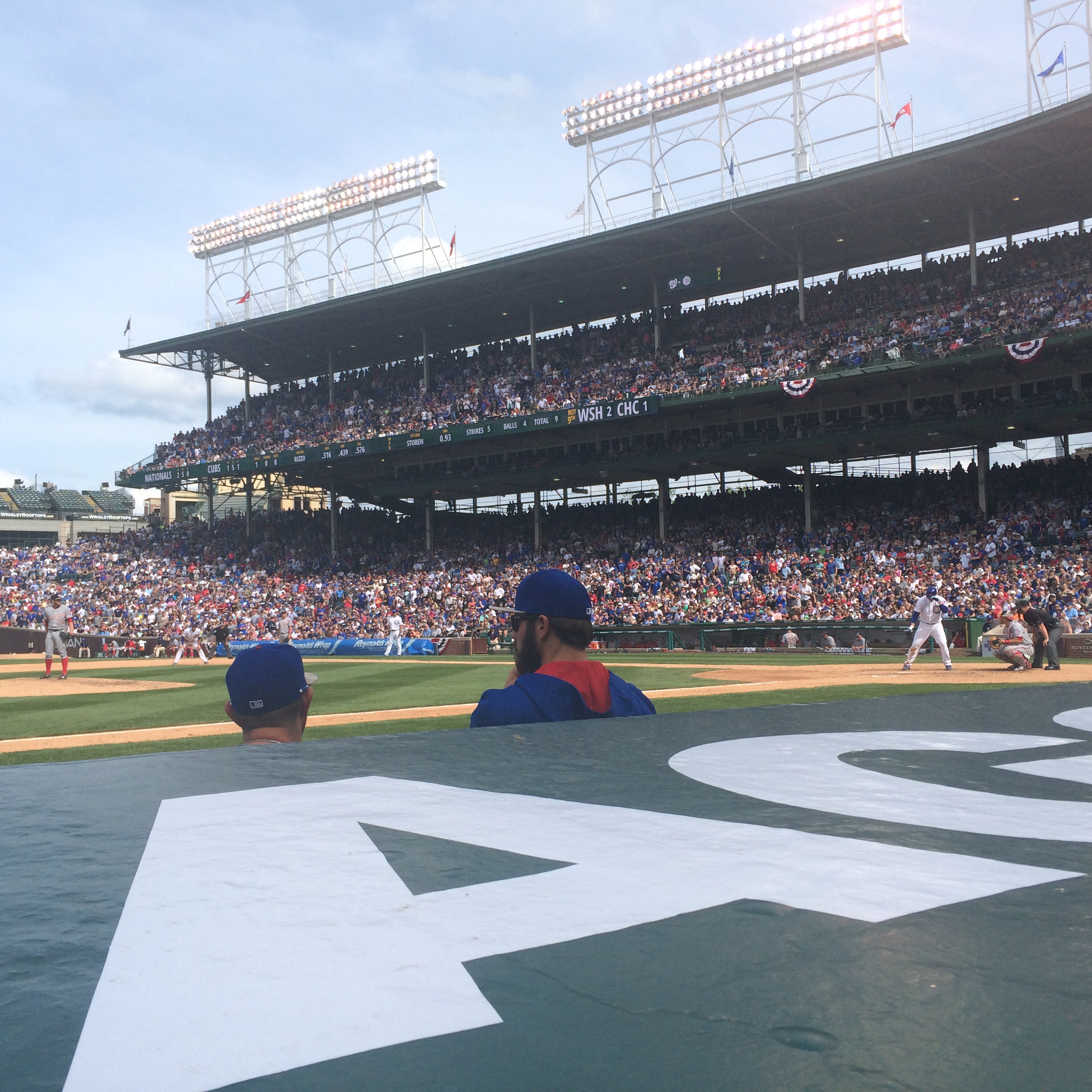
My wife’s son works for a company that has four season tickets directly behind the third base dugout at Wrigley Field. Yesterday we got to use them. It is as close as I have ever been to a major league game. Interesting too that the people around us seemed like everyday people, no one rich and famous. Those folks are probably behind the glass walls high up above.

The beer vendors came around every two minutes, but we only wanted water. That vendor never showed. The lines were so deep underneath that it would have taken half an hour to get waited on. And anyway, it would have been $10 for two Aquifinas.

But we did not have to pee, the whole time, saving another half an hour.

This is, however, a fun time. Keep that in mind.

Mad Mel

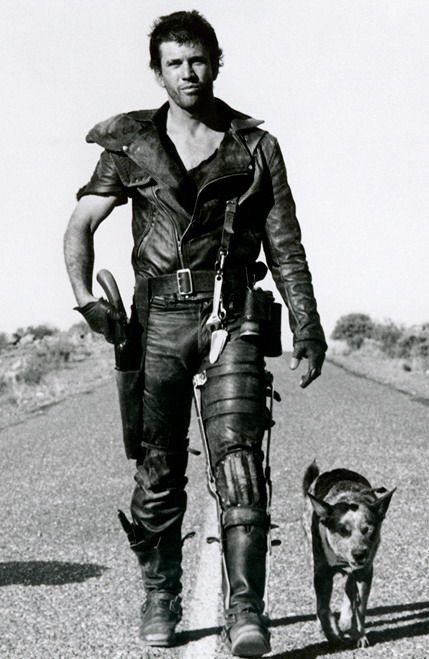
imageI was given a choice last night of movies to watch, Zero Dark Thirty (recommended) or Mad Max (1980). I chose Mad Max thinking it would be a better portrayal of real life and have a little more accurate historical content.

Mel Gibson was so young, barely recognizable, but a stud. He fills the screen like few actors can. I’ve long forgiven him for his bout with anger and letting true things slip, and hope he is busy making movies.

Too busy to think

Photo by Mrs. T
Photo by Mrs. T

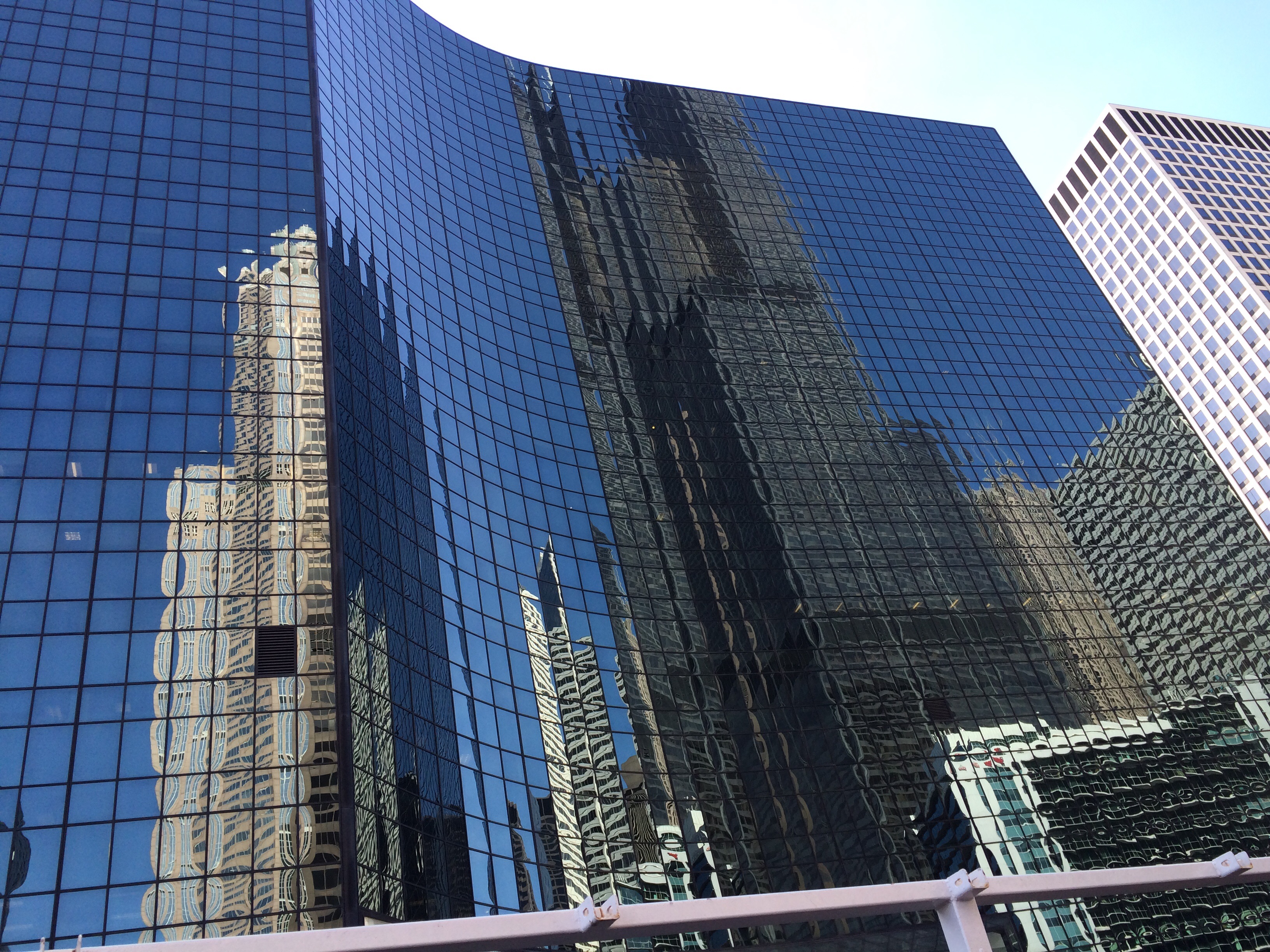
We took a boat trip yesterday, the Chicago Architectrual Tour. I expected it to be interesting, and was not disappointed. I am at a loss for words to describe the genius, ingenuity and “imagine-it-so-make-it-so” engineering ability of our fellow humans.

At the same time, surrounded by such genius, I wonder why the same people are so easily fooled by false flag events and political lies, large and small. Things we know to be physically impossible are believed with credulous blank stares. Lame explanations by authority figures are not just swallowed whole, but with great enthusiasm.

Part of it is faith. We are raised from the cradle to believe in our government and institutions. The notion that they would so boldly lie to us is impossible to accept. Doubt requires setting aside a life of fables. The implications of doing that are too severe to contemplate.

Another part was voiced by Alexis de Tocqueville in the 1830s:

It is extremely difficult to obtain a hearing from men living in democracies, unless it be to speak to them of themselves. They do not attend to the things said to them, because they are always fully engrossed with the things they are doing. For indeed few men are idle in democratic nations; life is passed in the midst of noise and excitement, and men are so engaged in acting that little remains to them for thinking. I would especially remark that they are not only employed, but that they are passionately devoted to their employments. They are always in action, and each of their actions absorbs their faculties: the zeal which they display in business puts out the enthusiasm they might otherwise entertain for idea.”

Emphasis added, or course. and keep in mind that back then most people were self-employed. Employment by others, having a “boss” in our lives, is now seen as normal but is an even more debilitating experience. We must constantly monitor our thought content to make sure it aligns with those who have power over us.

People are too busy to think here in our fake democracy. They are easily fooled by our overlords. But as seen on the architectural boat tour, there is genius among us and on display all about.