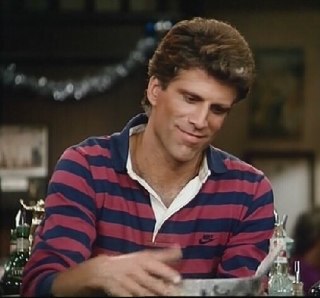
Sam Malone is bald?

Ted Danson is an idealist.

He was Sam Malone on Cheers, the recovering alcoholic ex-pitcher with the lady obsession. He’s also a “Hollywood liberal” – that is, he supports Democrats, goes to Barbara Streisand parties, and while not stupid, boasts no great political insight.

Being a Democrat does not make one an idealist. Far from it. The reason I [speculate] that he is an idealist is a little thing he did when Cheers ended its run. The entire cast, past and present, came out to be applauded and stood before the audience. Danson, while the cameras blazed away, took off his toupee. He wanted the world to know that he really did not have that beautiful head of hair. The back of his head was, like mine, follicle-challenged.

So here’s why I speculate: Idealists (I am one) do not like inner turmoil – that is, it upsets us when our inner selves are not congruent with our outer presentation to the world. We have to be ‘real’. We self-reflect to attain harmony with the world. Danson was obviously having some turmoil, as balding Ted was not at all like beautiful Sam, and he wanted the world to know that.

That would be like Paris Hilton admitting she has no talent, or Dick Cheney no empathy. It isn’t done very often. And usually when we see someone voluntarily bares his soul in public, it’s a sign of idealism.

Here’s the other thing about Ted Danson that it does not hurt to speculate about: He’s pretty. A man with such good looks has more career options than we ordinary folks, and will find it easier to make his way. Acting is a common choice for very good looking people, and to succeed they have to work very hard at their craft. That is how Danson developed his abilities.

He did not develop his intellect. He didn’t have to. He’s not stupid. Idealism makes him a Democrat, but not an insightful political person. I am finding a lot of that around.
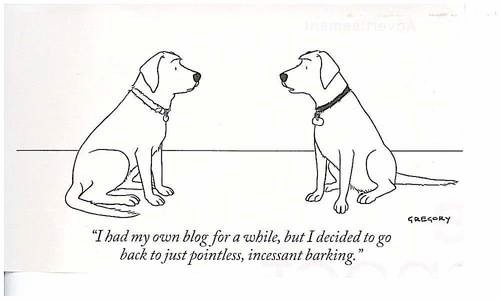
I catch a lot of hell because I probe people I meet on the Internet – I have only their words and tone, and yet intuit the inner meaning of their comments, and draw conclusions based on those clues. How dare I! But when a person writes on these pages, he/she reveals a whole lot, and it doesn’t take a genius to piece together things. So I look at how people present, see clues, and draw conclusions about those people that are contrary to the persona they want to project. It infuriates them!

People do the same sort of sleuthing about me … am I a complete phony? World weary? Pseudo-intellect? A cross-dresser? Do I work from my mother’s basement?

Usually, when someone says something about me that is true, it stings. I reject it. Then I ponder it. Then I cop to it. I am, after all, an idealist, and it is that last feature, the copping, that gives me inner and outer harmony.

At night, she stripped for cash
Idealists, by the way, are often annoying. We don’t make good intellectuals, as there is too much “should” in us, and not enough “is.” We make terrible politicians, as that profession requires deceit even of honest men and women. We usually end up as teachers or historians or counselors. An idealist accountant is like a brown polar bear – pretty rare. Idealists started the feminist movement – easy enough to see. Dropping bras was akin to dropping toupee. And we have, by definition, never had an idealistic president. They all claim to be, but that phoniness is part of being a successful politician.

Just so you know – if you need to understand me better, now you do. I never set out to annoy you. I was only being true to self.
_________________
PS: As I gather from Swede’s comment below, one might conclude from this that I regard idealism as some sort of superior trait, and that this post is is just bragging. Far from it – idealism is a curse, as it takes we who suffer from it out of the mainstream. If all of us were idealists, very little would ever be accomplished. We have a role to play, but a minor one, kind of public conscience, but that is an annoyance to most people. Compromise is an essential part of any endeavor, and idealists don’t do that very well.
Need some new books, new outlooks …

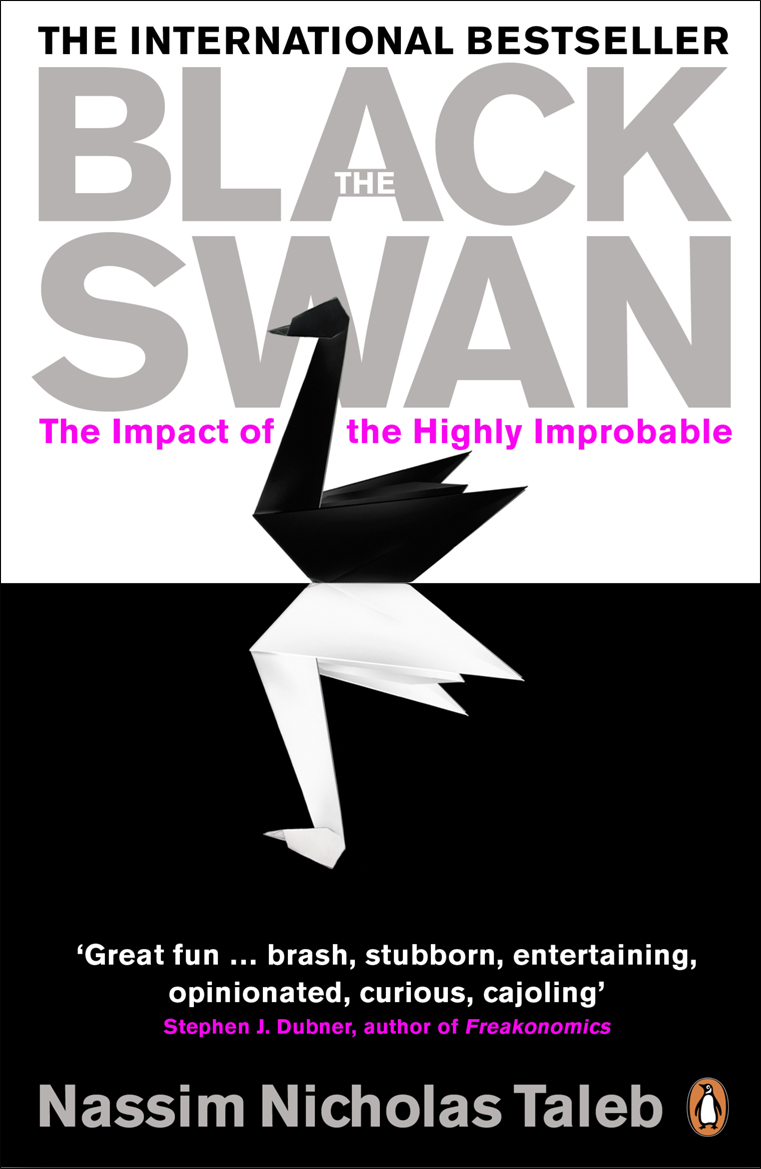
Where are the original thinkers? I just got hold of a book yesterday, The Black Swan, that I am told offers a fresh perspective on things. If you’ve read it, please give me your thoughts. I won’t get to it for a bit, as I have a couple of un-original books to finish up.

Which naturally leads to the question: What books changed your outlook on things? What writers offer up such unique and fresh insight that you altered your outlook afterward?

I’ll offer a few that have impacted me that way, and then if you are even out there, you do the same. But please take note: I am not interested in books that reinforced your existing viewpoint. Those are easy to come by. We seek them out. I want game-changers only:

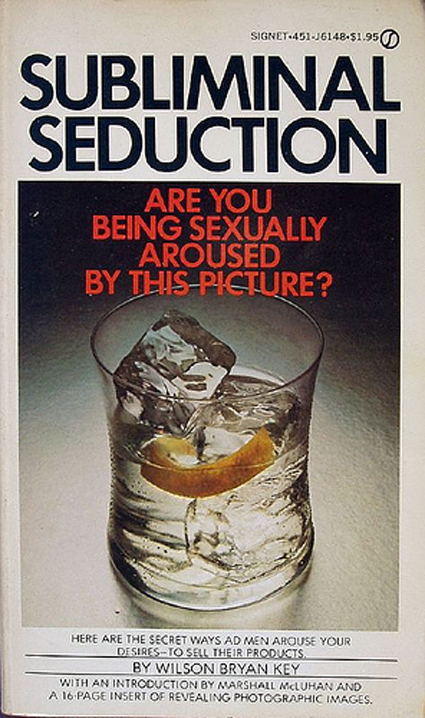
Subliminal Seduction by Brian Wilson Key. I was very young. OK? Wilson had a bonanza of ideas about how advertising messages are really embedded in the pictures and words, hidden beneath the written words. I had a fun time after that looking for embedded messages in ice cubes, but never did find anything. It did, however, change the way I looked at advertising. I have never, since that time, trusted that it is straightforward. Advertising only succeeds to the degree that it undermines our defenses.

The Naked Ape, by Desmond Morris. Again, I was very young, so forgive me as I pull books off the top-seller shelf. This was the first in a long line of books that would analyze evolutionary man, and how our far-distant past has influenced our present behavior, all the way from wearing neck ties to shaving armpits. I was a Catholic at that time, and when the chapter on religion came around, I cringed. I did not want to read it. The book brought to the surface my religious doubts, and also opened up a whole new area to look at with great interest – the inner meaning of our outer behaviors.

Manufacturing Consent by Noam Chomsky and Ed Herman. Keep in mind that I was in the “bounce” period, and was moving from far right to far left. But Chomsky said things I had never heard before in a way I had never experienced. It would begin a twenty-year affair with him. His mind is critical, his patterns of thought democratic and like me, always cheering for the underdog and resenting the abusers. We think alike to the degree that I think properly at all. I am an underdog kind of guy.

Anyway, this book allowed me, for the first time, to understand the nature of ‘big’ – that is, media is so big that no one person or group of people can control it. But it is subject to pressures, and does bow to power. It gave me a non-conspiratorial view on how societies function. The world is too big for small conspiracies to have an impact. But concentrated power is real.

The Fish is Red, by William Turner and Warren Hinckle. This book was written in the aftermath of the Frank Church hearings on CIA activities in the Caribbean from 1959 forward, after the fall of Fulgencio Batista. (This is the only time that Congress has ever investigated CIA activities.) The words “the fish is red” was a line from a poem by E. Howard Hunt that was the encrypted signal that the Bay of Pigs Invasion was to begin. I read it as a right winger, but found it troubling that in many areas it appeared as though the only people saying things that were true were the likes of Fidel Castro. It was troubling. Very troubling.

The Varieties of Religious Experience by William James. James pursued the psychological undercurrent that manifests itself in the form of religious belief, but he was not a Dawkins. He wasn’t debunking or trying to undermine religious belief. He only wanted to understand it. It created in me a respect for religious believers that I had been lacking since I lost my own ‘faith.’ James, himself not a believer, pursued knowledge as a scientist and respected the depth of human intelligence even as we pursue irrational belief systems.

Propaganda, by Jacques Ellul. He is best known for The Technological Society, but I’ve never read that one. This book slowly helped me understand that societies are not random collections of individuals with unique thoughts, but groups whose thoughts are managed by people who have studied the art of propaganda for many many decades. Not all countries engage in this nefarious activity, but ours does. In spades. This is the book that has turned me into the hated soul that I am today, as I don’t think that the original thinkers around us on the blogs have any original thoughts. That sort of thing gets me banned.

Moneyball, by Michael Lewis. I’ve never looked at baseball the same way since.

______________________

Those are the big ones. I don’t keep books forever, and give the ones of lesser influence away at book swaps and the like. This can all be very boring, so I’ll trouble you no further except to ask for books that transformed, rather than reinforced. If you say “Atlas Shrugged”, you are banned! Maybe it transformed you, but I do not want to hear about it!

Also, note that these books, with a couple of exceptions, are very popular. I hate to expose myself as being shallow, but there ya go.

Glenn Beck’s Rally

2.5 million people marched nationwide in Spain on June 8
There is quite a bit of discussion on the news, on talk radio, and the blogs of course, concerning Glenn Beck’s rally on the National Mall. There were, according to CBS News, which actually has an algorithm to estimate the size of crowds, 87,000 people there. That’s a good-sized crowd, and of course, Dick Armey and the Koch’s were behind the scenes providing the buses and potty-booths for them.

But I wonder what it means. American right wingers will scoff at the notion that French and Greek workers will pour into the street when there is an attempt to undo their system of wages and benefits. From their point of view, those kinds of people are on welfare and are merely afraid of losing their easy money.

Beck Rally at National Mall
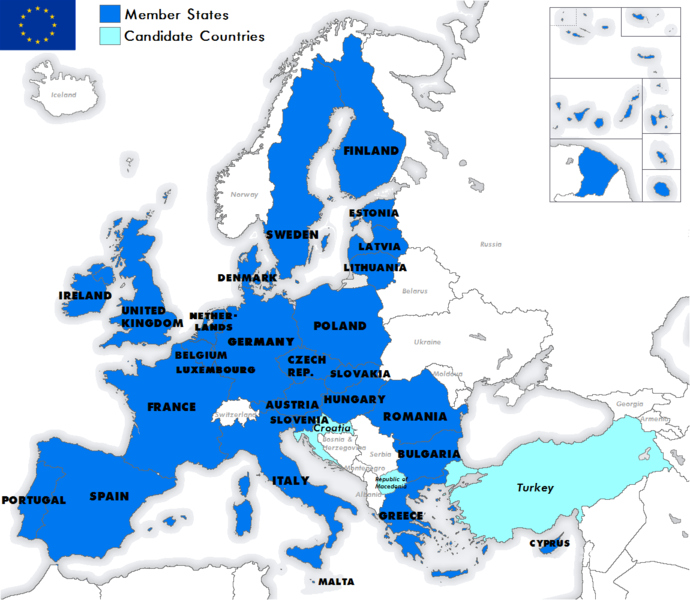
But when Greek and French people pour into the streets, it has an effect. It stops things from happening that the majority of people in those countries do not want to happen. When Bush was preparing to attack Iraq, there were huge demonstrations in France and Spain and Germany, and it was so bad that the leaders of Spain and Great Britain had to meet with Bush on a ship in the Canary Islands to discuss the war plan. It was too dangerous elsewhere, the security needs were too much.

And in the end, Germany and France and Turkey stayed out of Bush’s war. The Bushies were furious. “Old Europe”, they called it: Countries where popular rule actually causes governments to behave themselves.

Crowds of people can be dangerous, in that an excitement can take over and violent things can happen. Beck’s organizers had a long list of requirements for attending his rally, including prohibition on alcohol, guns, and pointed and sharp objects. Signs had to be approved. They wanted a peaceful gathering. And when it was over, they went home. Nothing changed.

In the United States, workers don’t pour into the street anymore, and even if they did, it would not change anything. They have no power. They seem to know it. And that is the key to understanding why French and Greek workers do hit the pavement – it has an effect. They do have power.

Why? Unions. They are organized. We were in Barcelona a few years back on May 1, May Day. There was a parade, but it was not a “parade” like we have here, floats and celebrities and horse shit. It was just miles of people, locked arm-in-arm, walking down the street. They had bands and banners, but the only point of the parade was to make a statement. “We are one.”

Power – that’s all it is. Power. Unions don’t have all the power over there, or even most of it. They only have some power. And that is enough to make their lots better than that of most people in this country.

So what did Glenn Beck’s rally accomplish? I don’t know. It was done for the sake of television images. Beck is trying to draft a little bit behind the civil rights movement. He’s got a massive ego, and though there is disagreement among those who know, and I don’t know, I suspect he is a master showman, and that when goes home at night he is a regular guy, a bit off-kilter, dry drunk and all of that, but knowing that he is stroking fools for his own ends.

I only know this: In the United States public rallies have no impact on public affairs. We don’t have power in the streets or at the ballot box. We are not organized. Our lives will continue to get worse until people realize that there is power in numbers, but only if arms are locked. Massive crowds at football games do not affect real power centers.

Dissident, or assimilated conformist?

These are the words of a song by TradeMartin on YouTube, We’ve got to stop the mosque at Ground Zero:

We’ve got freedom of religion, I understand,

But …

OK, stop! I need hear no more. I got it.

Here are remarks of New York Mayor Michael Bloomberg defending Imam Rauf:

Imam Rauf, who is now overseas promoting America and American values, has been put under a media microscope. Each of us may strongly agree or strongly disagree with particular statements he has made. And that’s how it should be – this is New York.

And while a few of his statements have received a lot of attention, I would like to read you something that he said that you may not have heard. At an interfaith memorial service for the martyred journalist Daniel Pearl, Imam Rauf said, ‘If to be a Jew means to say with all one’s heart, mind, and soul: Shma` Yisrael, Adonai Elohenu Adonai Ehad; Hear O Israel, the Lord our God, the Lord is One, not only today I am a Jew, I have always been one. If to be a Christian is to love the Lord our God with all of my heart, mind and soul, and to love for my fellow human being what I love for myself, then not only am I a Christian, but I have always been one.’

In that spirit, let me declare that we in New York are Jews and Christians and Muslims, and we always have been. And above all of that, we are Americans, each with an equal right to worship and pray where we choose. There is nowhere in the five boroughs that is off limits to any religion.

By affirming that basic idea, we will honor America’s values and we will keep New York the most open, diverse, tolerant, and free city in the world.

And finally,Abbie Hoffman:

You measure a democracy by the freedom it gives its dissidents, not the freedom it gives its assimilated conformists.

The latter quote is on the wall above my desk. I like to think that I am not an assimilated conformist.

America shuns vaccines, whooping cough returns

Dr. McCarthy
California health officials are reporting a whopping 3,000 cases of whooping cough, and fear an epidemic. Further, California schools are telling parents that if their kids don’t have their vaccines, they are not welcome.

Dr. Bodine
This is a public health problem that is easily preventable – vaccines. But there are people out there – professional people like Jennifer McCarthy, MD, pictured above in her laboratory, who are telling parents they should not immunize their kids against various diseases. She cites a link between vaccines and autism.

Groundbreaking work on this subject was done by Dr. Jethro Bodine, using grant money from the Horwitz, Horwitz and Fine Institute of Hollywood.

A worrisome statistic

A new poll says that 59% of Americans do not think that Sarah Palin would be an “effective” president.

Good God! What does this say about us? 15% don’t know. How can you not know? 26% think she could do the job. How can they think that? What the hell is wrong with them?

Since I am one who thinks that the president is more a figurehead than an actual leader, I suppose she could fit in the slot, everything scripted for her, decisions made and brought to her for approval. But she might actually take the job seriously, and try to get involved in things. But wait – that would be high comedy!

Count me among the 41%.

Why Democrats are not to be trusted with our Social Security

The following excerpt is from the 2002 book Banking on Death, or Investing in Life: The History and Future of Pensions, by Robin Blackburn, pp 387-89. It is for wonks only. I am not going to fancy it up with pictures nor explain anything to anyone, save one comment: In the 1990’s, what they called “New Democrats” are now known as “Conservadems”, or “Blue Dogs.” The footnotes are the author’s.

…The dilemma posed by Social Security was different. There was business backing for privatization but it was not yet overwhelming. In the absence of an agreed path to privatization the financial corporations were cautious, fearing that they could be lumbered with a large number of unprofitable small investors. Clinton had pleased his constituency by giving them something they really wanted – a large cut in capital gains tax – and for the time being most were content. Nevertheless, there was still a definite ideological and cultural impetus towards privatization. The extraordinary buoyancy of the stock market was giving added appeal to the idea that the program’s difficulties could be fixed by personal accounts. Prominent economists were coming forward with detailed blueprints. We will shortly consider the scheme drawn up my Martin Feldstien. But since Feldstein inclined to support the Republicans, it was also significant the Laurence Kotlikoff of Boston University and Jeffrey Sachs of Harvard produced a partial privatization plan for Social Security in 1997. These men were closer to [Larry] Summers and other figures in the administration, and had both served, with Washington’s approval, as advisers to the Russian government.

At a conference held at Harvard in June, 2001, former staff members of the Clinton Administration presented papers explaining that plans for partial privatization or mandatory private provision had been intensively prepared in 1997-98 but abandoned prior to the State of the Union address in 1999. A newspaper report explained:

President Clinton and his economic advisers spent 18 months secretly discussing the elements of a plan to add individual accounts to Social Security, but abandoned it when it became clear the president would be impeached … Throughout 1998 a working group met once or twice a week, with the agenda disguised on official schedules, to discuss options and has out details of a proposal. The president was briefed every six weeks.(1)

The so-called ‘Special Issues’ task force was set up by Larry Summers and Gene Sperling, the chair of the Council of Economic Advisers. While some of those involved favored privatization anyway, there was also the political objective of devising a reform that could bring together Republicans and New Democrats. One of the papers, written by the of the aides involved, makes it clear that this was believed to require mandatory private accounts: ‘For example, one option was for worker to indicate their choice of a private sector fund manager on their 1040 tax form. The working group’s estimates were at the level of detail that it was determined how many digits an ID number would have to be for each fund and how many key strokes would therefore be required to enter all the ID numbers each year.’

… But it was not technical or design questions which eventually doomed the working party’s efforts. In the event Monica Lewinsky sabotaged the privatization cause. As the aide explains:

Toward the end of 1998, as the possibility that the President would be impeached came clearly into view, the policy dynamic of Social Security debate changed dramatically and it became clear to the White House that this was not a time to take risks on the scale that would be necessary to achieve a deal on an issue as contentious as Social Security reform. The President decided to follow a strategy of trying to unite the Democrats around a plan that would strengthen Social Security by transferring some of the budget surpluses to Social Security and investing a portion of the transferred funds in equities. (2)

A paper by a different group of Clinton aides further explained that the political situation by no means deterred the White House from courting controversy” ‘Put simply, the communications and political staff at the White House were enthusiastic about anything, including Social Security reform, that would divert attention from the scandal. Clinton evidently decided that it would be better to advocate controversial means for saving Social Security than to arouse a different sort of controversy that would have attended a privatization bid.
_____________
(1) Thomas E. MacUrdy and John Shoven, ‘Asset Allocation and Risk Allocation: Can Social Security improve its future solvency problem by investing in private securities?, in John Y. Campbell and Martin Feldstein eds, Risk Aspects of Investment-Based Social Security Reform, Chicago and London, pp 11-32.
(2) Jim Stanford, Paper Boom, Ottawa 1999, p. 349

The Bounce

Modern-day Brownshirt?
A few of us who are politically inclined have experienced what I call “The Bounce.” It is a life-shattering experience wherein we realize that our political philosophy is bankrupt, and so we leave it and go shopping for another.

I was once a right winger. Dave Budge was once a communist, he says. David Horowitz was a Maoist. The “Neo-Cons” are reformed leftists.

We bouncers think ourselves very special. After all, we thought our way through a defective philosophy to fine a better one. We think good, or so we think.

The Guide for Post-Bouncers
But it ain’t quite like that. Yeah, we read and think a lot, but the bounce is quite a different phenomenon than we imagine it. As I explained to Budge (click on link – it’s a fun thread for masochists), our political outlooks are coats of armor that protect us from reality. Once we have a philosophy of everything, we can put on our smug hats and profundinate to the rest of the world on how things should be.

So Budge is now a libertarian, Horowitz a … Brownshirt? The “Neo-Cons”, I need say no more. And me? I really did think, as I bounced from right to left that someone had slipped the answer to the left. I went for years forcing the world into that mental stockade. And, since I was a former member of the right … well, I had insight that others lacked. Got that? I bounced, you see …

I’ll never be a righty again, of course, especially in the post-Buckley era. Bill Buckley single-handedly got rid of the lunatic fringe, but they are back now in droves, and are so strong that it is hard to see the thoughtful conservatives that are still around.

But I am also not a lefty, at least not in the American sense. There is no left in the United States. What there was of it withered and died in the post-war era. There was a nice compromise in the 1950’s, where they let us have our unions, our Social Security, but they still insisted on their wars and military spending, and fear governed. The advent of the National Security State in 1947, and the deep propaganda of the Cold War, followed by the Drug War, and now the Terror War … makes us a society where fear governs. And where people are afraid of each other, there can be no left. Propaganda has destroyed our minds, so that only the passing of generations will bring us back to sanity.

The unions are shells, and Social Security is under attack again, this time by Democrats, who are supposedly our “left.” We are so right wing that the right wing Democrats look like lefties to us.

He bounced from right to left...
The bounce … oh yeah – the bounce: Those of us who are deeply indoctrinated in one set of ideas, and who find those ideas to be defective, naturally look for another set of ideas to replace the old ones. We cannot live without the indoctrination. It defines us, sets us apart, makes us special. We literally self-indoctrinate. Budge has built himself a fortress complete with machine gun turret of ideas that simply do not work … and reality is a crawl across the bottom of his screen, hardly noticed.

This is not a world that conforms to ideology. They are all defective. As I told Budge, there is really only one philosophical insight that matters, and it consists of two words:

Power corrupts.

That is the meaning of Tolkien’s “ring”- if affected all who touched it. It is power. We cannot manage it, we cannot come near it without changing. Frodo had to go away at the end. Even though he was a good and strong and courageous man, he had touched the ring, and it had changed him.

For now ... the best of the worst
I call myself a “European-style socialist” in debate now and then, and in this country, which is all right wing all the time, that is like a loud fart in church. But by that expression, I do not mean that I have adopted the tenants of socialism, or that I do not recognize the good things about what we call “capitalism.” It simply means that in Europe, at this time, power is distributed among the business class, the workers, the government agencies and the military in such a way as there are checks and balances. For most of them, life is very good. Balance is the key.

But nothing lasts. Power waits in the wings there just as here. Power always hovers nearby.

I highly spirited debate that has never, ever happened before!

Playing the wacky right winger: Ken Buck
Playing the liberal: Michael Bennet
There is a very interesting debate going on down here in Colorado right now. I don’t think I’ve ever witnessed anything like it. Michael Bennet, a right wing Democrat, won the nomination from Andrew Romanoff, who ran as a progressive. (Don’t know what to think about that, as Romanoff was once a member of the DLC. Sometimes even our primary choices are fake.)

Bennet has no use for progressives, and even refuses to come on the Denver radio station and talk to the progressive base. That is such a surprise, as usually right wing Democrats understand give and take, and realize that to get progressives to vote for them, they have to give something.

But oddly, Bennet is giving nothing. I’ve never seen that before! Imagine a right wing Democrat refusing to give anything to progressives! It’s crazy, but when I look in those beady eyes, I think he might want to have them arrested.

Democrats on the campaign trail
So the debate is this: Democrats say that as bad as Bennet is, if his opponent, Ken Buck, gets in office, things will be even worse! And they also say that progressives have this crazy “all or nothing” mentality and would rather (they are coining a phrase here, so please try to imagine it visually) “cut off their nose to spite their faces.”

________________________

OK. That was sarcasm. This is real: To please his base, Ken Buck is running as a wild-eyed right winger. To avoid making promises, Michael Bennet is avoiding progressives, and being vague. He thinks progressives have nowhere else to go anyway, so fuck ’em. This being America, progressives being mild and malleable, he’s probably right.

Democrats, once elected
When Bennet or Buck get to Washington, if both could be elected, they would disappear behind closed doors,sit down, shake hands, and get to work on the corporate agenda. They are the same person. They are only playing roles assigned them by political necessity.

Democrats who call progressives names for not supporting their crappy candidate are stupid. Progressives who vote for that crappy candidate because he is the “lesser of evils” are stupid.

I know no other words that fits so well.

Posthumous al-Qa’ida membership

Glenn Greenwald announces that President Obama has cruise-cluster-bombed yet another country, this time Yemen, and (I think) nominates him for a second undeserved Nobel Peace prize. :

Amnesty International, June 7, 2010:

Amnesty International has released images of a US-manufactured cruise missile that carried cluster munitions, apparently taken following an attack on an alleged al-Qa’ida training camp in Yemen that killed 41 local residents, including 14 women and 21 children.

The 17 December 2009 attack on the community of al-Ma’jalah in the Abyan area in the south of Yemen killed 55 people including 14 alleged members of al-Qa’ida.

My bet on the “al-Qa’ida” members killed? See below.

Ordinary everyday Muslims have a weird habit of becoming post-humus members of “al-Qa’ida.” It justifies the slaughter of innocent people.

But let’s be real for a moment here: Our wars are not controlled or even affected in any way by electoral politics. The course of events in Iraq and Afghanistan, and now Yemen, would not be different had John McCain won the election. Obama is a figurehead.