
After the dissolution of The Doors in 1971, another band emerged to fill the void of dark, theatrical rock: the Alice Cooper Band. That year, they released two albums, Love It to Death and Killer, both of which showcased impressive musicality. However, their true standout feature was their bold embrace of taboo themes, including manic insanity, necrophilia, and the infamous “Dead Babies.” Such provocative subject matter inevitably drew criticism and sparked debates about artistic intent, with defenders dismissing objections as either prudish overreaction or a failure to appreciate the dark humor and performance art inherent in the work.
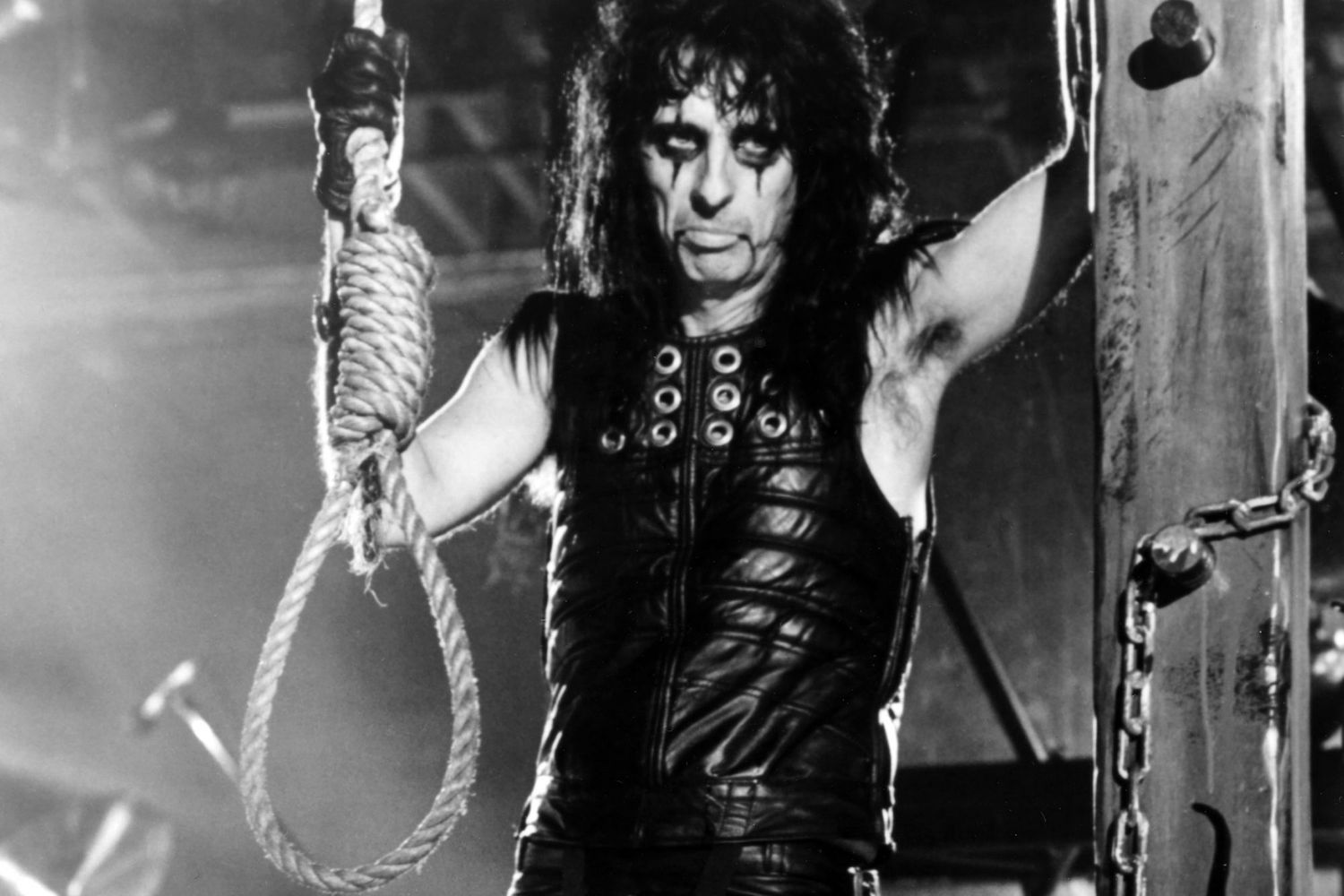
As a teenager, I was among those captivated by their audacious style, owning every Alice Cooper album available at the time. However, with the benefit of hindsight, I now see this fascination through a different lens. What I once viewed as edgy rebellion now seems, in part, like an exercise in social engineering—a normalization of aberrant behavior wrapped in the guise of entertainment.
Interestingly, Alice Cooper himself linked his work to The Doors. On the 1997 live album A Fistful of Alice, Cooper introduces the song “Desperado” (originally from Killer) by revealing it was written about Jim Morrison, the enigmatic Doors frontman who died in 1971—the same year the song was written. The two acts had shared the stage, with Alice Cooper opening for The Doors in concert, cementing an artistic connection between their legacies.
While I enjoyed the music of the Alice Cooper Band, my enthusiasm waned when Alice embarked on his solo career. Albums like Welcome to My Nightmare and Goes to Hell marked the end of my engagement with his work, as the balance tipped from dark artistry to what felt more like novelty and exploitation. Since then, I’ve avoided his subsequent releases. Nevertheless, Alice Cooper’s ability to cultivate a devoted, almost cult-like following is undeniable. Despite his singing voice being more sneer than croon, he has maintained a prolific recording career and he’s remained a viable figure in rock, even releasing new material as recently as 2023.
One of his more recent albums, 2021’s Detroit Stories, coincided with his involvement in a pro-vaccine campaign during the Covid pandemic.

Earlier this week, Alice Cooper received his vaccine for the COVID-19 virus at the Abrazo West Campus hospital in Goodyear, Arizona, a suburb of his hometown of Phoenix, and now the shock rocker is encouraging others to also get a shot to protect them.
Cooper and his wife, Sheryl, who both already recovered from a bout of COVID, still decided to get the vaccine when they had the opportunity. The shots were administered by Team Rubicon, a veteran-led disaster-relief organization.
“Getting the COVID shot with Team Rubicon was a great experience, everyone was really nice,” said Cooper, while joking that Team Rubicon was one of his favorite bands.
Born Vincent Damon Furnier, Cooper’s roots are equally intriguing. With a father who was an evangelist and a grandfather who served as president of The Church of Jesus Christ, a Mormon offshoot, his background adds a layer of complexity to his persona. Adding to the intrigue, his affiliation with organizations like Team Rubicon, connected to high-ranking military officials and corporations, raises further questions.
In sum, Alice Cooper’s career is a study in contradictions: a provocateur who blends dark humor, shock, and performance art with a seemingly relentless ability to endure and adapt in the music industry. Yet, when viewed through a critical lens, his work prompts broader questions about its role in shaping cultural narratives and societal norms
 Piece of Mindful
dead babies dont take things off the shelf
231123
LikeLike
Alice Cooper, aka Vincent Furnier, has long intrigued me, though I’ve never listened to his music. The female name, grotesque appearance, had to be designed to knock us off kilter, far too professional to be just something some kid dreamed up. It was, like the Beatles, probably a design meant to move us from our comfortable zones and into transgenderism and all of that stuff. Is Alice woke?
He was good friends with Glen Campbell, perhaps the best true musician I’ve ever encountered, 7th son of a 7th son, self-taught and an amazing guitarist who to my knowledge only ever wrote one song, Turn Around, Look at Me. He said to Bob Costas in an interview that being one of 12 children, he did not know what it was like to sleep alone until he got married. The two of them moved to Arizona to get out of the LA scene, and Glen gave up booze and drugs and lived a happy clean life there. Perhaps they helped each other that way. Alice watched Glen slip into dementia and mourned losing his friend, who eventually died of it.
LikeLike
I was not aware of the Campbell-Cooper connections. Seems odd. Cooper claims to be a born-again Christian, for whatever that’s worth.
LikeLike
As I understand from watching a special on Glen, both he and Cooper converted to Christianity on moving to Phoenix and ditching LA. Glen remarried, a solid marriage, and he and Cooper played a lot of golf together. (Glen maintained his guitar skills even as he was deep in Alzheimer’s, really something to see him play the opening riff from Fun Fun Fun and forget names of his kids.) His wife had to go public on his Alzheimer’s because fans assumed with his behaviors and speech patterns that he was drugging and drinking again. He was not.)
LikeLike
These last two columns have been excellent. I have been meaning to comment lacking time. If I had the time I would write a similar column on some of these artists. I spent a lot of time listening to and studying the history of rock artists from the 50s through 90s.
LikeLike
https://matthewehret.substack.com/p/a-gateway-to-the-satanic-revival
More to the music….
LikeLiked by 1 person
Comment went through. Crucial piece of information on Cooper is he was discovered by Frank Zappa. I was obsessed with Zappa for many years, until I realized he had to be an agent. Excellent guitarist, but very unsavory character. I know his life story well, he was a real asshole – no other way to say it. Promoting groupies and underage sex with Girls together outrageously, making terrible films like 200 Motels, I could go on. Managed from the early days by Herb Cohen. He had a fake arrest for supposedly making porno audio. His father was supposedly an expert in chemical weapons chemistry, so the apple apparently didn’t fall far from the tree.
LikeLiked by 1 person
Thank you for your comment. Zappa was next on my list since he also has a devoted, almost cult-like following. Personally, I’ve always been put off by his smug, “hipper-than-thou” demeanor. His music often struck me as leaning more toward novelty, with humor that felt puerile, pornographic, or just plain sophomoric. He definitely comes across as a tool. Interestingly, his publishing or record production company played a key role in grooming and promoting the Alice Cooper Band. It’s worth questioning how someone who seemed to be operating under the radar in the ’60s had the resources to start his own publishing business. Definitely raises some suspicions.
LikeLiked by 1 person
There used to be, and might still be, an excellent analysis of zappa on bitchute by a guy posting under a handle like MKUltraNOW. I remember the guy was biased in thinking the Manson murders were real, but he really did an excellent analysis on Zappa and his output, and how he truly was an exploiter and cynical asshole.
LikeLiked by 2 people
” once viewed as edgy rebellion now seems, in part, like an exercise in social engineering a normalization of aberrant behavior wrapped in the guise of entertainment.”
I’d say that sums up the entire our popular culture industry.
All those people were connected to each other. Zappa, Irving Azoff are two I’ve researched and not who we are told they were. Military plays a big role in the entertainment industry.
I could live with his pro golf choice but was very upset when I found out the Coop was pro vax, along with many other popular rock musicians, who I felt should have been very vocal against it. So much for true punk rock and raising our fists to the man. There isn’t an us versus them…it’s just Them.
LikeLiked by 1 person
There’s one example from Germany, summing it all up. The “Ärzte”, (sic the doctors) appeared at the beginning of the Tagesschau, in 2020. Clip can be found looking for ärzte tagesschau. The Ärzte were punk rockers back in the day, the Tagesschau the manifestation of respectability. People don’t get it, thinking they have changed. As they think politicians would be incapable. ATM, there are reports of politicians suing ordinary people because of insults, and it works, people are framed. For cannibalism and stuff like that we got Rammstein. These are regularly promoted by scandals. There was some fitting into the me too craze, another one about the stadium in Berlin, Nazi Olympics, you know. The subconscious has to be worked from time to time. It’s just ridiculous. The method has been revealed in the movie “Under the silver lake” The protagonist is confronted with an old man, playing the piano, bragging he’s behind all the music, all his heroes are fake. He looses it…
LikeLiked by 1 person
This book lays out a connection between ancient “rock stars” and today’s chart toppers. Rome had headbangers (known as Corbantes) and glam rockers (self-castrating Dionysian loons) and loud noise all synched to that devil beat. The grown ups were appalled, ‘natch, but the Dionysian cults generated income and huge social capital so the PTB let the kids rock.
LikeLike
Thanks Tyrone. I think I will join Audible (free trial) and listen to this. I just wonder if the author is related to Beyonce (Knowles).
LikeLike
Related? Most assuredly not. Here’s his web site. Lots of stuff to ponder. Especially his work in the teens.
https://secretsun.blogspot.com/
LikeLike
Have you seen his Cocteau Twins timeline. Wow…weird.
LikeLike
LikeLike