
I first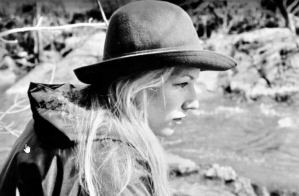 knew the name Annie Dillard through Edward Abbey. I read everything he wrote, except for his fiction, which I did not like. He wrote The Monkey Wrench Gang, and due to that was adopted as a mascot by Earth First!, s false-front environmental group used to discredit true conservationists. I doubt that Ed knew he was being used, but in his shoes I probably would have seized on the added publicity too. He lived on book sales royalties, and it was not much. As I recall, he sold the rights to MRG for a nice sum, but that book is still waiting to be made into a movie.
I read MRG and then avoided all of his other fiction. His characters were too clever and overwrought, and there was just too much self-destructiveness within it. The idea was that a new breed of environmentalist would step forward, and start doing destruction of projects that were anti-nature. The big one in Abbey’s time was the Glen Canyon Dam, a water project built in the 1950s over the objections of then true-to-heart conservationists. Abbey and others would take time to paddle what would later become the catchment area for Lake Powell. His writing about that and other natural wonders of the Western United States, especially the deserts, is why I read it all, everything he wrote, except the fiction.
David Brower (1912-2000) came out in favor of Glen Canyon, which I think went a long way in helping the project go forward. He was prominent and well-known at that time. His words carried weight. Later Brower would express regret that he came out as he did. To me, suspicious Sam, it told me that Brower, like Earth First!, was false-front. That’s pretty common in the environmental movement.
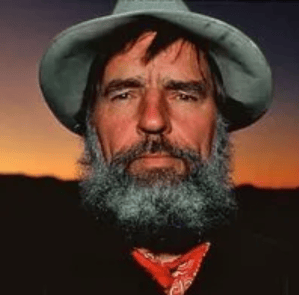 Abbey died in 1989 at the age of 62 of cirrhosis of the liver. That’s all anyone can make of his hints while alive. Sam Prentiss, a follower, wrote Finding Abbey in 2015, and concluded that given the descriptions of his condition in his writing, that Abbey indeed drank himself to death. Abbey described a medical condition that nearly killed him, without any mention of liver, just some complicated medical jargon that Prentiss unraveled:
Before leaving Michigan for this absurd adventure to locate Abbey’s final resting place, I asked my friend McCleary, a therapist who works with addicts, if he knew of esophageal varices.
McCleary said, “Yup.”
“What causes it?”
“Drinking,” McCleary said without hesitation.
“Anything else?”
Not really.”
OK. I’ll leave it at that, and will not judge the man, as he was a walking contradiction, who complained about overpopulation as he married five times and sired five children. He was a good writer, a quotable one. My favorite among many, “Growth for the sake of growth is the ideology of the cancer cell.” Ed was a boozer. And a good writer. Do the two go hand-in-hand? No, not really, but when it happens, we do take note and remember great authors who died of alcoholism, and not the ones who lived without the addiction.
Abbey spoke very highly of Annie Dillard after she won her 1975 Pulitzer Prize for General Nonfiction for her book Pilgrim at Tinker Creek. Abbey’s best writing, in my view, were his essays on travelling the rivers of the American West in a raft. There was nothing complicated about it – putting in, passing the day, fighting rapids, getting out, making camp, morning coffee, hiking the side canyons. As I liked to say, reading Abbey was like a fireplace and warm slippers in the winter.
My favorite, Down the River with Henry Thoreau, was about a trip down the Green River of Utah. I made that same trip, putting in at Mineral Springs, just like Ed, but not because of Ed. Also, we were in canoes, and not rafts, but the part of the Green we paddled was calm and easygoing. We got out on the Colorado River shortly after the confluence. As we nervously paddled, me feeling the power of the river beneath me, we saw a man on shore frantically waving his paddle at us. We beached, and he advised us that in a short while we would encounter Brown Bettie, a class III rapid, and our canoes would not likely survive.
“We camp here”, we decided. I remember that line from the movie True Grit, starring John Wayne, who also suffered, I read, of alcoholism. He uttered those words after drinking all day and then falling off his horse late.
Anyway, note the photo above of Dillard, and read Abbey as I have read him, and you might understand my take on why he wrote such glorious praise about her, beyond her writing. She was an attractive woman, and Abbey was a horndog. He probably, I intuit, had a mind that he would meet her professionally after public praise, and bed her.
Like I say, I admired Abbey, a great writer and a so-so human being. I still have all of his books, except the fiction.
_____________________
Annie Dillard, who died on September 15 at age 81, was a bit of a recluse in the public sense, that is, she seemed to want to live a private life in spite of her fame. No doubt more than one man wanted to know her better, perhaps tried to look her up. She married three times, the last to Robert Richardson, whom she met after sending him a fan letter about his book Henry Thoreau: A Life of the Mind. The circle completes. (He died six years ago.)
I did not read Dillard’s Pulitzer book, a Pilgrim at Tinker Creek, until a few years ago. In it, Dillard, a woman living a peaceful life, would spend hours observing, just observing, nature around her in her home in Virginia. She seemed to have infinite patience. I’ll quote just a few memorable lines among hundreds from the book:
I was ambling across this hill that day when I noticed the speck of pure white. The hill is eroded; the slope is a rutted wreck of red clay broken by grassy hillocks and low wild roses whose roots clasp a pittance of topsoil. I leaned to examine the white thing and saw a mass of bubbles like spittle. Then I saw something dark like an engorged leech rummaging over the spittle, and then I saw the praying mantis.
She was upside down, clinging to a horizontal stem of wild rose by her feet which pointed to heaven. Her head was deep in dried grass. Her abdomen was swollen like a smashed finger; it tapered to a fleshy tip out of which bubbled a wet, whipped froth. I couldn’t believe my eyes. I lay on the hill this way and that, my knees in thorns and my cheeks in clay, trying to see as well as I could. I poked near the female’s head with a grass; she was clearly undisturbed, so I settled my nose an inch from that pulsing abdomen. It puffed like a concertina, it throbbed like a bellows; it roved, pumping, over the glistening, clabbered surface of the egg case testing and patting, thrusting and smoothing. It seemed to act so independently that I forgot the panting brown stick at the other end. The bubble creature seemed to have two eyes, a frantic little brain, and two busy, soft hands. It looked like a hideous, harried mother slicking up a fat daughter for a beauty pageant, touching her up, slobbering over her, patting and hemming and brushing and stroking. The male was nowhere in sight. The female had probably eaten him. (Page 57) [Photo of male mantis supplied by blog reader Matt]
The birds have started singing in the Valley. Their February squawks and naked chirps are fully fledged now, and long lyrics fly in the air. Birdsong catches in the mountains’ rim and pools in the valley; it threads through the forests, it slides down the creeks. At the house a wonderful thing happens. The mockingbird that nests each year in the front yard spruce strikes up his chant in high places, and one of those high places is my chimney. When he sings there, the hollow chimney acts as a sound box, like the careful emptiness inside a cello or a violin, and the notes of the song gather fullness and reverberate through the house. (Page 105)
And on it goes, the above words just a sense of her writing style, and her persona, a quiet observer with keen insight. She also wrote Teaching a Stone to Talk, and my best memory of that book is something we’ve all witnessed, a spider trapped in a bathtub. Dillard could not let it suffer, and so draped a towel over the edge of the tub. It quickly crawled out. I did the same with a very large spider trapped in the same manner, acting out her idea. I draped the towel, and came back later to find it had escaped. I had left clothes laying on the edge of the tub, and worried that it might be lodged within them. Then I looked over and saw the doorway leading out, and there stood the spider front and center. I went to it and it did not try to hide. I picked it up with a toilet paper and it did not resist. I took it outside and released it. But something about the way it stood in the doorway, it was as if we knew each other. It was not scared of me and did not try to hide from me after I engineered its escape from the tub.
Anyway, God rest your lovely quiet soul, Annie Dillard.


I’ve never read Abbey (although I have a couple of his books from a really great free bookshelf that no longer exists.) But I have to assume he would be appalled by the drive to build data centers the size of eight Walmarts or whatever, all across the land.. if only for their environmental impact, let alone their apparent only purpose (?) as a total control and surveillance grid..
LikeLike
Well, if you’re going to read him a nice introduction is Desert Solitaire. It’s a book of essays … he’s living in a trailer at Arches before it was opened to the public. I think it might be the one that got him first noticed.
LikeLike
Pretty sure that’s the one I have along with Monkeywrench Gang. I’m a little wary of a whole book of nature writing – not sure that’s my genre – but I could be wrong. Currently reading a history of China, but I skipped ahead to the 20th century because I just wanted to know more about Mao and that era of his rise and time in power.
LikeLike
I gotcha on nature writing. Abbey is more brittle than most, so more readable. I started to read Sand County Almanac by Aldo Leopold, and couldn’t finish it because it was too wispy and sentimental. Dillard is kind of a cross between Abbey and Leopold.
In Desert Solitaire Abbey is complaining about how they are getting Arches ready to be a park, and he goes along pulling up markers at night where future roads will be. He also throws a rock and kills a rabbit, which upset some. And he comes within an inch of his life glissading down a mountain … he comes to a full stop and then whoosh! A rock he had dislodged above flew by his head, easily big enough to kill him.
He commented on wilderness, and Boy Scouts and others getting lost and killed in them, saying that it is not wilderness if there is no risk, but a little more terse, like a few Boy Scouts being a small price to pay. He had quite a wit. That’s the kind of stuff that drew me to him.
LikeLike
Re saving spiders etc.
This topic came up on a recent podcast I heard, with heady philosophical questions raised.. I found it quite fascinating, never would have considered this perspective, although it seems plausible – the two co-hosts Silas and Eros discuss the nature of the universe as fundamentally predatory, destructive – an endless cycle of change as everything consumes and is consumed in turn. Man is a sort of exception to this, in being able to pause and experience pity. But this stepping back and engaging in reflection opens him to abstract thought, which paradoxically makes him a hyper-predator (IIRC, I could be mangling all this.) There is much, much more to their speculation, some really wild ideas about the nature of the universe and existence, man’s place in it, what it’s all driving at –
https://odysee.com/@Silasspeaks:a/The-Hyper-Predator:9
LikeLike
Incidentally, I first heard Silas on Fakeologist audiochat. He’s recently disavowed the fakeologist perspective, as far as I can tell. He seems to accept mainstream news stories, eg has a recent show taking the Clancy story at face value. I understand his critique of conspiracy culture as intentionally promoted and weaponized, but nonetheless the evidence for extensive fakery seems hard to argue – in which case that’s the “reality,” like it or not. I wish he’d address this more directly, but Odyssee doesn’t allow comments easily and I got no response to an email –
LikeLike
Tim, I have a very simple tracker on psyops. I subscribe to Boston.com, NYtimes.com, Washington post.com, and USA Today in my mailbox. That way I can quickly read their headlines every day and know what the psyops are. Because I (and YOU I am sure) know the leading stories, and stories that get repeated for a long time are psyops. Pretty simple metric that allows me to filter out garbage. As far as Lindsay Clancy, that is a Boston area psyop so I sussed it out as fake a few months ago based on many factors – daily emotional, bizzare headlines, with an attractive woman (actress clearly) in obviously staged photos with everyone wearing all the right expressions.
Clancy is a very obvious “don’t have children” “split the sexes psyop”. They want you to think having children will make you Cuckoo. Whereas reality suggests people having large families are thriving – I have talked about this before but I live next to a strict, exceptional Catholic school and my property value has more than doubled in 7 years because a “large” minority of people are seeking alterative lifestyles and places away from the psychotic paranoid virus obsessed idiots that compromise a rapidly shrinking number of idiots in the USA.
LikeLike
Yes, and other agendas paving the way for more scrutiny and monitoring of the mental health of mothers, and long game move toward Brave New World style, state control over reproduction, with sex purely for recreation.. see recent Miri Finch posts for a good analysis.
The thriving families might be a bit chicken or egg – only thriving couples feel they can afford to have a lot..
LikeLike