In praise of rock throwers

9781610915588There is a new book out, Keeping the Wild, a compilation of essays and articles edited by George Wuerthner, Eileen Crist, and Tom Butler. I have not read it but will, and wanted to promote it here as it was recommended to me by a rock thrower over the weekend.

I used to be a volunteer for Montana Wilderness Association. This was the period from perhaps 1992 to 2000 or so – I am not clear. I sat through endless meetings, but it was a learning process more than a time when I was doing effective work. It was like being dropped in the middle of the Keebler Elf cookie factory, a buzz of activity and left to me to figure out who’s doing what and who is in charge. I joined because I like the product.

I do remember a trip to Great Falls in the early 1990’s with the Eastern Montana organizer, Tammy, to meet with people from the Pew Charitable Trusts and try to get some financial support. I was determined at that time to try to understand Max Baucus, and so took with me a yellow legal pad so that I could jot down thoughts as we traveled. I remember that. That was just a beginning, of course, and a long period of self-education followed, still going on. But I did ask a question.

In the aftermath, and memories are not clear, I do know that we were turned down by Pew, and that Tammy was disappointed. A young fellow from back east, John Adams, the successor organizer for the Eastern office, would later tell me that he was of the impression Pew was trying to take over the program for MWA, and offered grants only if the organization conformed to its objectives, abandoning its own.

At that time, I recall MWA having three paid staff in Helena, Bob Decker, Executive Director, John Gatchell, Conservation Director, and Susan, the administrative assistant. There were also paid field offices in Great Falls, Billings, and a couple of other places. It had a host of volunteers*, the old guard, the men and women who formed the organization and fought and won many of the wilderness areas that Montana still enjoys. These men, like Joe Gutkowski, Don Mazola, and two I never met, the Baldwins, and a host of others whose faces I know but names I’ve lost, formed a backbone of directed energy that accomplished goals over a long-term. I do hope that in writing this people come along and refresh my memory, as too much time has passed since my involvement. I would like that list of names, as I could not find it at the MWA website.

An important feature of MWA was poverty. Bob Decker, an engineer by trade, along with Gatchell and Susan, made very little money despite having good skills and talents. That’s a hard way to live, but is part of the deal in the environmental movement ethos – there isn’t a lot of money to be had. Poverty draws out the dedicated souls who are more concerned about mission than comfort. But that’s easy to say of other people. I always wanted to make enough money to be comfortable. So did they. So do we all.

Decker left. Susan probably retired. Gatchell is still there. Pew moved in. Pew won. Here’s a list of current staff of MWA:

  • Bryan Sybert, Executive Director
  • Carl Deitchman, Finance Director
  • Laura Parr, Business Manager
  • Amanda Hagertym, Administrative Assistant
  • Sarah Shepard, CFRE, Development Director
  • Kassia Randzio, Development Coordinator
  • Molly Severtson, Donor Relations Manager
  • Denny Lester, Communications Coordinator
  • Gabriel Furshong, State Program Director
  • Mark Good, Central Montana Field Director;
  • Casey Perkins, Rocky Mountain Front Field Director
  • Zack Porter, NEXGen Program Director
  • Amy Robinson, Northwest Montana Wilderness Field Director
  • Cameron Sapp, Eastern Montana Field Representative
  • John Todd, Southwest Montana Field Director
  • John Gatchell, Conservation Director
  • Shannon Freix, CDT Montana Program Director
  • Meg Killen, CDT Montana Field Crew Leader
  • Sonny Mazzulo, CDT Montana Field Coordinator
  • Cedron Jones, GIS Mapping Specialist

Good heavens! That’s not a dedicated group of volunteers – these are mostly degrees and salaries and the hubris that goes with that. Quite a few are dedicated to “development,” or keeping the engine going that pays the salaries. It’s become a self-feeding machine that needs a continual source of new food to keep going.

Wilderness has always been a tough fight, but the fighters left MWA as the Pew children moved in. The culture changed. These folks, one in particular, refer to the old guard as “rock throwers.” The new guard are well paid I assume, and comfortable with development of donors instead of wilderness. These are our “collaborators.” They throw rocks at outfits like Alliance for a Wild Rockies, the men and women who fight the fights that MWA used to help out with.

I once referred in a blog comment to a similar experience that Trout Unlimited experienced, an influx of foundation money, as “Invasion of the Body Snatchers.” These people talk like wilderness advocates, and they all attach their canoeing and hiking affectations to their resumes. Perhaps they’ve noticed, then, as I have, that the back country is virtually empty these days, as are parking lots at trail heads. That was our constituency, wilderness users. Without them, it will soon be rolled over by ATV’s and snowmobiles and loggers, the people whom MWA collaborates with.

MWA website is littered with pictures of cherished areas. Gone are any references to the founders, any history. If anyone criticizes them for selling out, as they surely have, they are likely to get that piercing and deeply disturbing scream that Donald Sutherland did so well in the 1978 movie about moving automatons into the bodies of real people.

These people, the current staff of MWA, and there are two that were there when I was there, will never know the thrill of a victory. They don’t try to win anything. But they also don’t know the other part of being alive, as essential as an occasional victory, the pain of defeat. Since they don’t try to win, by definition, they don’t know what it is to lose. So life is good for them.

It’s always been easy to call losing something else. But that’s what they do for living.
___________________
*Do not confuse “volunteers” with “membership.” There were perhaps thirty hard-core volunteers even as MWA listed thousands of members. The requirement for members was a $35 annual contribution, and it had a four-fold effect, that is, if you sent them that, they would assume you had a spouse and two children, and add four people to their rolls. I assume that chicanery goes on throughout the not-for-profit world, as there’s very little active volunteer activity in this country outside churches.

Noises in the night

This is a most revealing conversation from two days ago at 4&20:

Commenter: Count me among the many who can’t process the thought that elites were behind 9/11.

Me: Totally understandable thought. I do hope, however, that it represents the beginning, rather than the end, of your search for truth.

Commenter: Actually, I’m not much of a seeker. Most of the time I’m willing to settle for appearances. They’re damning enough.

Me: Until scrutinized.

Imagine laying in bed at night and hearing noises in the house. Perhaps the hardest thing we all have to do in growing up is to summon the courage to go find out what is going on. It requires every ounce of steel we have accumulated to that point. (We could just grab a gun, a substitute for courage.)

Here’s another exchange, from this blog:

Commenter: I’m looking for a cause to which I can become a lackey and sycophant. I’m considering the conspiracy theory world. The problems I have with it are:

)there are multiple threads to follow. It would seem things would begin to converge after a while.

)there are as many holes in the proposed alternatives than in the official line.

)the personnel in the genre often have quirks that overshadow the scholarship

Me: As to your first point, it is true, you do have to use your brain.

As to your second point, utterly false. You’ve obviously never looked at any evidence.

As to your third point, such observations are generally made by people who have not used their brains or looked at the evidence.

You can solve this crime … millions of other have. It was essentially solved back in the 60’s. What scares you?

Commenter: Comes the hour, comes the man. Why don’t the millions rise up, empower some leaders, and prosecute the wrongdoers? Probably because there is less there than you think.

Me: Darting, dodging, weaving, ducking, refusing to look at the evidence. You’re scared of what you might find, I suppose. That’s why they got away with it. People are just like you. People don’t want to believe our country is just like every other country, run by thugs. America is exceptional, we are told. Look into this crime … and your eyes will be opened. That’s rare. Few have the balls to do that. Few transcend the barrier of fear.

That’s really all that is going on. People are afraid of facing their darkest fears. I am like everyone else except that, by chance, perhaps being blind and naive, I got up and stumbled around the house and came face to face with reality.

It made a difference. It changed me.

The intruder is American exceptionalism … that is, we need to come to grips with what is not there. We are just like every other country on earth, not different or better. Just suffering deeper delusion.

Outliers 2

The posts below, Outliers, as expected, drew few reads and but one comment. Perhaps the biggest deterrent to anyone reading it is that it is long. But beyond that, there is a divide, and it is an interesting one to observe. Americans are kept under a bubble and fed shit, and have so learned to trust what they are fed that they regard anything outside it as aberrant. (“Conspiracy theory,” they are taught to think.) There is precious little freedom of thought in this country, and the most astounding thing is that this is so even as people are free to access any and all information from any and all sources … and don’t! They wait to have it dropped in their lap.

And then I realized because I have stepped out of traffic and read and read and tried to figure things out … that I am an outlier. I am not a radical in that I don’t have any solutions to our problems, and so have no proposals. There is no ‘ism’ that will fix us. I don’t support anarchists or syndicalists or libertarians or any of that nonsense, and certainly do not think that either of our two parties, the People’s Front of Judea or the Judean People’s Front, are any kind of solution.

So screw ideology. I just operate on a different set of evidence-backed convictions.

If more people were to free their minds, we might have meaningful change. But I don’t see it ever happening. The forces of thought control as manifested by news and entertainment and schooling is far too powerful to overcome. We’ll just have to see where it takes us. We have not really suffered much, not as suffering goes on a world-wide scale anyway. Other countries have suffered deeply because of American insulation. Millions have died, millions more are homeless and trapped in poverty. But we have not suffered. So I guess there’s not much hope for change from within.

Outliers

Malcolm Gladwell in his book Outliers talks of the need to devote 10,000 hours to any activity to become really good at it. He’s talking, of course, about violinists and chess masters, people who stand out, but it struck me the other day, looking back over my life since 1988, that I have 10,000 hours of reading in the bank, or an average of an hour a day during that time. That does not count the hours spent writing on this blog these last eight years, a form of self-guided learning. That’s more time than I spent studying in college.

It does not begin to equate to the number of hours I spent in classrooms, however. Most of that classroom time was spent absorbing material that I would later have to recite back on a test before permanently forgetting it. How that qualifies as “education” – I haven’t a clue.

Looking back at my graduation from college, I am embarrassed at how little I learned. True, I passed the CPA exam, but on-the-job training is where that expertise comes from. I could have skipped most of college. Everything I know I learned since. There was very little learned in school that was truly useful later on.

My wife’s son runs a small business with quite a few employees. I asked him about the value of a college degree in his hiring practices. He didn’t think there was much value except for this: A person with a college degree can undertake a large project and see it through to the end. But honestly, there’s got to be better, cheaper ways of attaining that end than those thousands of hours wasted in classrooms. Can we not find a more visionary rite of passage into adult life?

It is our self-guided learning that matters most, because it is driven by interest. We tend to remember it. In my case, The lessons I had absorbed in sixteen years of classroom learning were those most Americans learn: Religious faith, false history, some numbers, some literature … drawing a blank here. What did I do all those years?

Let’s see: In college I studied …

  • statistics for three semesters. I cannot tell you a thing about it.
  • I studied marketing, but didn’t learn how it is really done, as no one will ever admit they deceive for a living.
  • I studied governmental accounting, and during that semester fell for a really hot girl. What I remember from that class: Betsy.
  • From my college history courses I remember some tidbits, like the type of landing craft used on D-Day, the first American victory in World War II at Al Alamein.
  • Dr. Aaron Small and Shorty Alterowitz, two professors at Eastern Montana College, left a positive lasting impression. They were really smart guys who seemed to like students – they brought some passion to the game.
  • A non-teacher came in and taught a course on insurance and investments, and his stuff stuck with me because it was counter-intuitive. He taught me the life insurance game, indeed a con game. That was a really useful information when I later encountered “experts.” That’s how I learned about snake oil.
  • Real estate – again, non-teachers taught the course, and they were all about closing deals, getting people to commit to borrowing large amounts of cash and thereby turning six percent over to them. The teacher, J. Cody Montalban, was a rich and eccentric character. He did not play it straight, and I really liked him. He died young.

That paragraph above, 233 words, is all that comes to mind as I think back on four years of post-secondary education. There’s more, but I’d have to work at it. Oh yeah: Randy Howard, accounting professor, was considered an excellent teacher because he laid out information in such an organized manner that you could remember it when tested. Mostly, though, here merely brought some humor to the dreary profession. He made a risqué joke one day about early withdrawals. I remember that.

Born in 1950, entered school in 1956, but it was not until 1988 that I started my own education, the self-guided type, following my real interests. It wasn’t an organized program of learning. I did not know the final objective. But I was interested. That year was the 25th anniversary of the death of JFK. I thought I might just solve that crime. I had done well in school, so thought I was able. So I asked the question.

Here’s what it has taken 10,000 hours and 25 years to understand: All of our glorified institutions, including our courts, law enforcement and news media, formed a circle around the criminals who committed the murder of JFK, and protected them. They are still doing so to this day. They do so in an instinctual manner, fulfilling their true function.

Every institution in our land has both a stated function and a real function. The real function is usually so seedy that it is not discussed, even privately. For example, the FBI acts as political police, CIA as professional murderers. Both are charged with watching the population, ferreting out and undermining democratic movements, murdering the leaders if necessary. It’s not just that one murder that one day. Thousands of people have been killed in every way imaginable, from poison to heart attacks to cancer to downed planes to car wrecks to gunshots in an open plaza … god it’s disgusting. Murder, murder everywhere, Michael Hastings recently, for example. And just as with JFK, people know instinctively not to ask questions. Another cover-up.

If it were that one crime … but and it crosses all affairs of our glorious state. Everything about us is a lie.

Nothing changed on that day, 11/22/63. Had the crime been carried out as planned, had Lee Harvey Oswald been murdered by JD Tippet so that he never have uttered those four words “I’m just a patsy”, had not John Connally also been shot, we would not know as much as we do about that day. They bungled the job. The cleanup and coverup have been operations of brute force. Part of our patriotism now demands that we believe the impossible, the Magic Bullet, 2+2=5. Our leaders and institutions were left naked before us that day … for eyes that can see.

JFK does not matter. No matter his glorious intent, one way or another he would have been thwarted. He was just a man, and a deeply flawed one at that. But asking the question – who killed him – leads to other questions leads to answers and more questions, and finally, enlightenment.

Since I know that no others are going to take my journey, I’ll slip you the answer: The United States of America is a totalitarian state hidden behind the thinnest veil of democracy imaginable. In order to maintain the illusion of democracy, the bulk of the population has to be kept in a state of unenlightened patriotism, or deep indoctrination.

That’s what formal education does for us; that is its primary function. It keeps us willfully blind an unknowingly stupid. News and entertainment follow up in our post-education years to reinforce the blindness and stupidity. Teachers, journalists, cops, judges … all of them have to buy into the system and be as stupid and blind as the rest of us. Any who are enlightened are soon jettisoned. Or disgraced. Or murdered.

When I left college with a decent GPA and hours of study and classrooms behind me, the best words that described me were blind and stupid. Formal education had worked its magic on me.

Twenty-five years, 10,000 hours made me an outlier. I overcame my education; I learned things. I asked the question.

Elections: “A form of public self-worship”

The paradox of education is precisely this — that as one begins to become conscious one begins to examine the society in which he is being educated. (James Baldwin)

Dangerous psychopath?
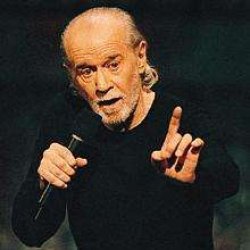
The above quote came to me via Joseph McBride, and reminded me of something George Carlin use to say in his act. He, like me and McBride, was a product of Catholic schools, but Carlin’s education was progressive. He was not taught to be a Catholic. The assumption was that he would come around on his own by his own internal light as he grew in ability.

…somehow we got lucky, y’know. Got into a school where the pastor was kinda into John Dewey and progressive education and he talked the parish…talked the diocese, rather, into experimenting in our parish with progressive education and whipping the religion on us anyway and see what would happen with the two of them there. And [it] worked out kinda nice; there was a lot of classroom freedom. There was no…for instance, there were no grades or marks, … no report cards to sweat out or any of that. There were no uniforms. …there was no sexual segregation; boy and girls together. And the desks weren’t all nailed down in a row, y’know. There were movable desks and you had new friends every month. It was nice; like I say, a lot of classroom freedom…in fact there was so much freedom that by eighth grade, many of us had lost the faith. ‘Cause they made questioners out of us and … they really didn’t have any answers …

george-carlin-84

While the world is crawling with ex-Catholics like Carlin, McBride and myself, Catholic education these days does not mess around. They go for the mind, take ownership, and leave no doubt that Catholic is the righteous path.

I am reading McBride’s Into the Nightmare. It is about his growing up and coming of age after the Kennedy assassination. He and I have much in common, being about the same age, taking the same publications in our homes as youths, twelve years of Catholic schooling, and having the assassination as the lever by which were launched into the grown-up world.

JFK was just a man who tripped over real power. I seriously doubt he could have changed very much, as the office of president, while powerful, is not the center of power in this land. But the assassination is a focal point. If we examine it closely, we can come to grips with that power, educate ourselves, and free our minds of the deep indoctrination that is American education. It is a lever by which we learn to view the world with unfiltered eyes. It can help us grow up.

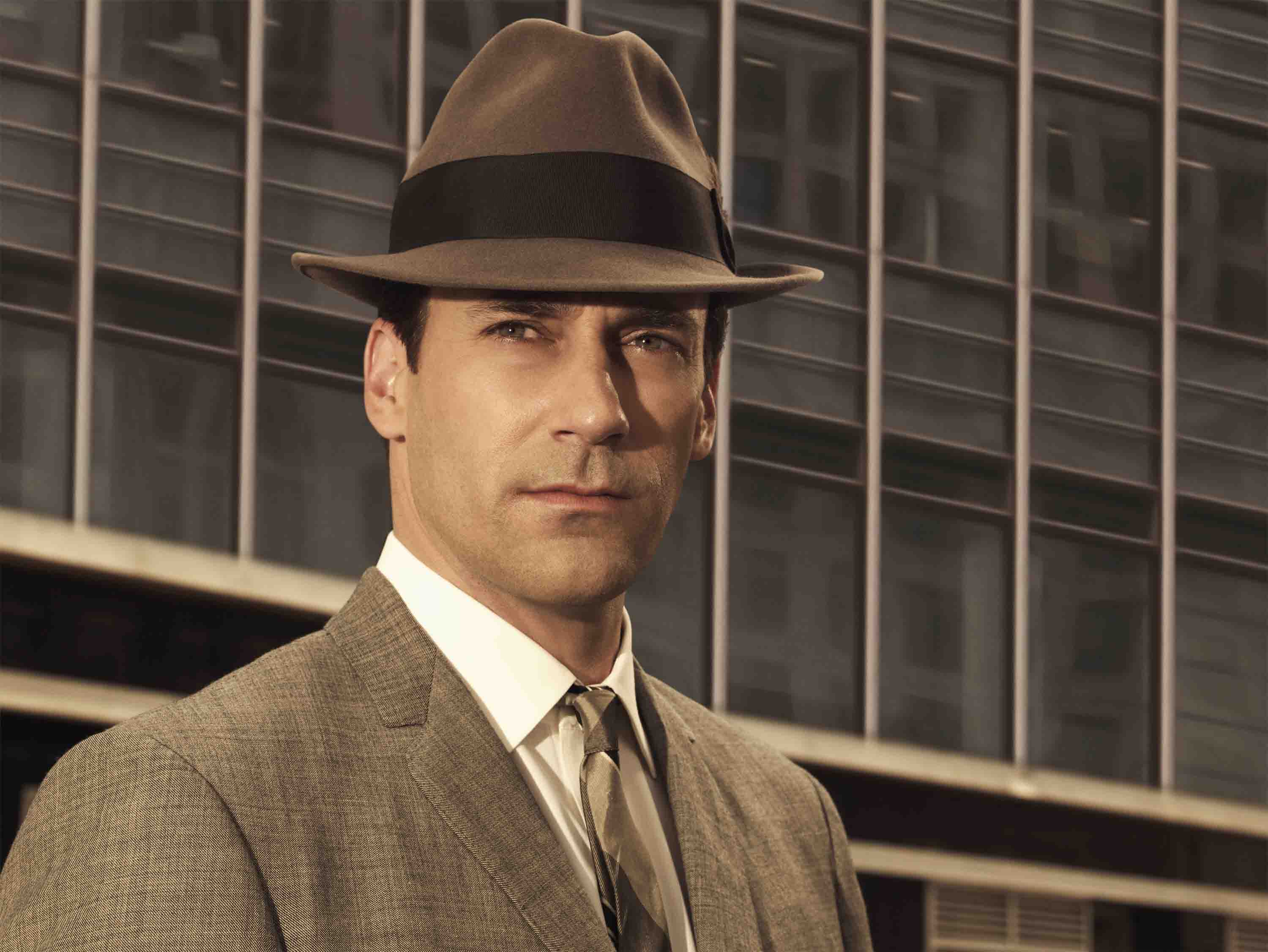
Don Draper: Grew up in whorehouse
If was often said over the years that Europeans were not surprised at how JFK was murdered, that such intrigue is common and accepted over there. Americans still cling to childish beliefs about leaders and countries and systems of government. I know I did, so that finally coming to realize that JFK was murdered by Americans, and that the whole of our collective institutional structures formed a circle around the murderers was deeply shocking. I had to throw out my education and beliefs and start over from scratch. I realized that I had grown up in a whore house. (This is, I suspect, the underlying message of the TV series Mad Men, as Don Draper comes to grips with his life and real identity. The TV series is smuggling some truth to to us.)

The Saker wrote a nice short piece on this country called “Hillary, Jeb, Rand – does it make a difference anyway?”

[I] see the USA as run by a tiny elite which is good at “pretend democracy” but which makes darn sure that the people vote the “correct” way. I consider the primaries, conventions, caucuses, and elections themselves as a mix between a farce, a form of entertainment, a re-legitimization of a system and a secular liturgical act (a form of public self-worship). There is no “democracy” in the US and there probably never was. However, if the regime does not change, the specific clans within the 1% do fight each other and struggle for control of the regime.

Second, there are different clans, interest groups, factions who fight *within* the top 1% and they can, and do, make use of the electoral process not as a means of popular expression, but as a way to impose their agenda and interests. I often speak of the “old Anglo guard” (best represented by the Bush clan before Dubya) and the “Neocons”, but there are many more interest group[s] (oil, banking, military, drug warriors, big pharma, etc.) who all participate in the internal struggle for power.

Thus, there is no real difference between the Republicrats and the Demoblicans, they are all part of the same elite, but there are differences between different political figures who are more, or less, aligned with any specific interest group. Thus Greenwald is correct when he identifies the various groups who would support a Hillary Presidency. This has nothing to do with democracy, the political parties or even her own views and everything to do with which interest groups she sold out to.

The Saker, as a legal alien educated elsewhere, came to this country with a fully formed cerebral cortex. Unlike products of our own education system, he is a grown-up. Later in his short essay he says that given a choice we might be better off “having a generally mentally sane Jeb Bush (and his staff) … than a clearly rabid Hillary (and her staff).” This feeds my own sensibilities, affirms my own judgment to a degree.

My impressions of people that we only know via media and print is flawed, of course. Over the years I have come to view George H.W. Bush as a dangerous psychopath, for example, and Ronald Reagan as a dunce and the mere vehicle by which (the unelectable) Bush was handed the presidency (on March 30,1981). George’s son George W. is a ninny. Richard Nixon was a complex and intelligent man who, like JFK, thought the power of the office of president could be exercised roughshod over the other factions within the 1% who have different objectives. He failed to grasp the nature of the makeup of our oligarchical structure. Fortunately for him, his removal from office was bloodless.

And yes, Hillary, like George H.W. Bush, scares the crap out of me. She’s unprincipled and ruthless, and smart only to the degree that she can see up to, but not around the bend. Having no emotions or concerns about human suffering, she might indeed think war with Russia is a smart move, for example.

Why do only the good ones get taken down? Where are those damned hidden gunmen when we really need them?

My little GMO

We are in Oregon visiting family. This state, like others, had a GMO labeling issue on the ballots. It was instructive.

Labeling is harmless information. But Monsanto, the prime mover behind GMO’s, does not want information out there. So they managed to frame the debate as “GMO’s are evil and cause cancer” versus “we are solving world hunger.” Both are false, no doubt surreptitiously planted by Monsanto PR agents to control the parameters of the debate.

Debate framing is done so that no matter which “side” you are on, you’re not debating the real issue. The grand objective appears to be “out of sight, out of mind.”

We need to discuss GMO’s because they are a means by which Monsanto and others can put a fence around the food system, charging entry to all farmers. That’s the objective of all capitalist monopolists, always everything, never enough.

It’s a very dangerous practice, as we become overeliant on a few food strains, exposing ourselves to potential humanitarian disaster – diversity is our security, not GMO’s.

That’s the conversation Monsanto does not want us to have. They managed the Oregon debate beautifully. And won. Framing works. There’ll be no further discussions here.

The problem with voting

People are frustrated. I get that. Tossing the bums out feels good.

This is the great elixir effect of politics, that people vent their frustration by voting out one set of oligarchs (or tools thereof) and voting another in.

It’s our only voice, but we don’t control the choices. They are handed down from above, by money and media and power of suggestion. In those cases where voting can indeed bring forth an effective leader, the election results can easily be tampered with and overturned by the electronic machines. That’s why they are there, just in case.

Without voting, we’d have no outlet for frustration, and people would get upset and organize and force meaningful reforms on government. We’d have representative government.

Voting prevents meaningful change. If it were a truly effective tool, it would be outlawed.
____________
Speaking of the power of suggestion, I don’t hear much mention of “Tea Party” anymore, as if they are being quietly ushered out of our perceptions. I said from the beginning days when they were foisted on us by FOX and CNBC that they were a tool to make Obama appear as a lefty (strident right wing bigots yelling at him makes him appear their opposite), and that they would disappear when no longer useful.

People don’t seem to be able to grasp the idea of perception management, perhaps because the implications are frightening. The very idea that we are studied and gamed so that we think we are acting on our own even as others control our thoughts and behaviors … freaky!

Forecast for Tuesday: Cold shower

I’ve been reading two separate books these past mornings, centered around two men: Adolf Hitler and John F. Kennedy. Each suffers from overblown reputation, one for evil and the other good intentions. But it does reinforce in me the idea that there are two forces in politics that feed one another: leaders and movements. Right now we have neither.

This coming Tuesday the Democrats will be given a well-earned cold shower, having provided us with neither vision or leadership for six years. But therein lay the problem of American politics, that we turn to the weak and disingenuous Democrats as relief from strong and deeply stupid Republicans.

Back and forth we go.

The mushroom effect

To be mushroomed is to he kept in the dark and fed shit. I am continually impressed with the American news and entertainment media. Despite our ability now to travel the world and get information and news from a host of English-speaking sources, most Americans passively absorb news from American sources. They are mushroomed.

I see it everywhere. Most recently there was an interesting exchange at 4&20 involving Turner, a nice fella doing his best, but he repeated the current propaganda meme that Vladimir Putin is a monster bent on destroying civilization. It takes but a quick spin around the globe, to French, Iranian, even British, Canadian and Indian sources, for example, to see that Putin is widely respected. He is in a class by himself these days, perhaps the most able and articulate world leader on the stage.

I’ve been watching the monologues on the Tonight Show with Jimmy Fallon and Late Night with David Letterman since our return from South America. Each of them, unknowingly of course, is repeating the US propaganda line that Putin (not Russia) invaded Eastern Ukraine (false), and stole Crimea (false). A caricature of Putin is a recurring Jimmy Fallon character.

This works, as most Americans absorb their opinions from entertainment sources rather than academics or straight “news.” Whatever the reality of Putin’s and Russia’s current activities, Americans are drawn into the caricature and form their opinions on that more than on any credible source.

The US is demanding now that Russia withdraw its troops from Ukraine. Russia naturally responds (not reported here) that they don’t have any troops in Ukraine. The US insists, nonetheless, that they be withdrawn. If Americans don’t go outside US media for at least some news, our lying leadership gets away with such nonsense. Outside this loony bin the lies don’t have legs.

But the lessons stands: If you sit passively and wait for “news” to come to you from American sources, entertainment and otherwise, you’ll be mushroomed. It is up to you as a vigilant citizen to actively seek out information from many sources, and then use your brain to assemble it in a coherent package. It is not easy. It takes an effort.

Not having yet seen Kill the Messenger

I was going to wait until I actually saw the movie Kill the Messenger to write about it, but it plays late in the day, and we don’t usually go to movies unless they play early afternoon. (My God, I’ve become a senior citizen! Soon I’ll be grabbing early bird specials in restaurants!) I might, on my own, take a trip down the hill, but I don’t really need to see this movie to write about some important aspects of it.

Robert Ludlum (1927-2001)

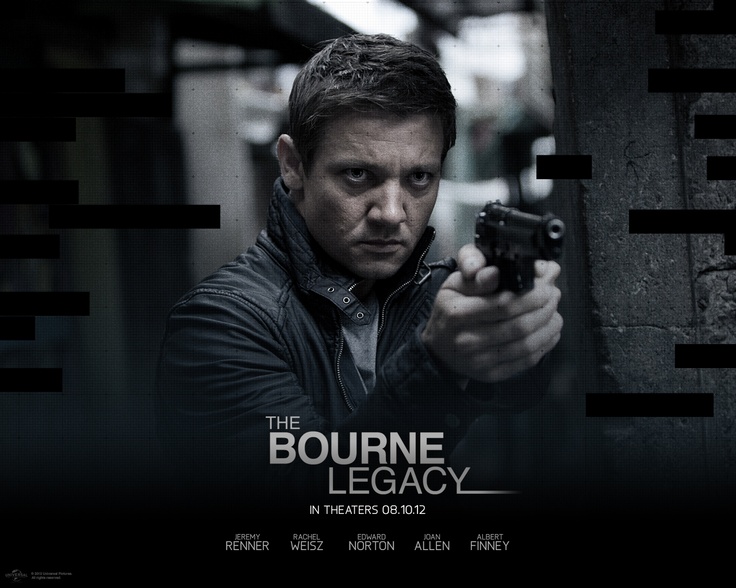
  • Jeremy Renner: I enjoyed the work of Robert Ludlum. He had inside knowledge of spycraft, and wrote about hard and chiseled people who were never who they appeared to be. There were no good guys in Ludlum’s work except the occasional amateur two got trapped in events over his head. When Ludlum died, his name was trademarked and other people began to write using it, and the work turned to crap. I wish his estate had let his body of work stand on its own.

    Jason Bourne was an important character in Ludlum’s work, the only one ever to appear in more than one book. He wakes up on a beach not knowing who he is, and slowly discovers he has abilities and knowledge beyond the ordinary person. I wondered if Ludlum was seditiously inferring that Bourne was part of MKULTRA, the CIA mind control program (MK – “Mind Kontrol” has a nice German ring to it.) Matt Damon became Jason Bourne in our minds, and I enjoyed those movies, like everyone. When the fourth movie was to be made without Damon, I only watched reluctantly. renner as crossJeremy Renner playeld Aaron Cross, a man like Bourne. As I watched the movie unfold, I realized that Renner was good, the script and casting was excellent, and the chase scene in Manila at the end one of the best I’d ever seen.

    My favorite movie of all time was The Fugitive with Harrison Ford. The Bourne Legacy takes second place now. I know these are not deep and artistic movies, but if they are on the screen, I drop everything and watch them. I cannot not watch. That’s my criteria for “favorite.”

    Jeremy Renner, to my surprise, used his own resources to get Kill the Messenger made, as it had languished around Hollywood for over a decade. He thought it was important.

  • Gary Webb: In 1996 I had only had internet for a little while in my office, and was one of seven million people to go to the San Jose Mercury News website to download Webb’s Dark Alliance series. Since San Jose is in Silicon Valley, it only made sense that the little newspaper had developed a model website, complete with the ability to link to every footnote in a story. Readers were able to judge for themselves whether or not sources were legitimate and accurately used. Using a dial-up connection, I downloaded the whole series and printed it, a first for me and so many others.

    dark allianceWebb wrote about something that was already on record, Iran Contra, that typical of American scandals, something we only surface-skimmed. He uncovered just one small part of it, that the Nicaraguan Contras, thugs and terrorists from the Somoza regime, were cut off from US government funding by the Boland Amendment, so that CIA turned to its well-documented alternative means of funding, drug running, to raise the necessary cash to supply arms to them. In so doing, crack cocaine, which Congress had been warned about in the late 1970’s, made its first serious inroads into American culture, and became epidemic in the black neighborhoods of Los Angeles. Webb wrote about the means and methods of getting it into the country, and how the money made its way back to the Contras.

    San Jose Mercury News is a small newspaper, but because the Internet was used and was so effective, the story had legs. It traveled and made headlines to the point where John Deutch, Director of Central Intelligence under Clinton, had to travel to LA and face an angry black crowd and lie to them about what had happened. He didn’t get away with it, was caught in the lies. Here’s what happened:

    CIA has assets in all major newspapers, as documented by the Church Committee and reported by (real) journalist Carl Bernstein in 1977. Some, like Judith Miller or Anderson Cooper, are easy to spot, but most are mere moles, perhaps never doing anything more than watching what goes on and reporting back to the agency. With the Gary Webb matter, they came out in droves. The LA Times assigned seventeen reporters to its “Get Gary Webb” project. The NY Times and Washington Post all got into the act too. They did what American journalists do so well, attacking anyone who practices real journalism. They destroyed Webb. He was demoted at the Mercury News, and eventually blacklisted, unable to get a job on any newspaper in the country.

    Webb committed suicide in 2004. I had trouble accepting that he had done so, as when the CIA does not like someone, a staged suicide is but one means of assassination. What I have read since of the circumstances of his life indicate that this indeed is what happened. At age 49 he could no longer support himself in his profession, even as he had won so many awards for his excellent work. He was living with his mother. End of story, I suppose, except …

“Anyone can commit a murder, but it takes an expert to commit a suicide.” (Bill Corson, CIA agent)

We have living right among us professional liars, murderers, assassins, terrorists. They are centered in Langley, Virginia. Even though their Assassination Manual is public now, we don’t talk about it or them. When Agency enemies die, the mere fact that people know that CIA murders people is usually enough to keep people quiet. They have countless means at their disposal of eliminating enemies, and drugs that induce severe suicidal depression are among them.

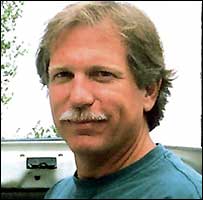
Gary Webb
Gary Webb
Did they get to Webb in this manner? Of course I don’t know, can’t know, never will know. Just remember that the Agency is composed of thugs, murderers, liars, terrorists, and that killing people is one of the things they do best, with their second-best activity being the cover-up. So I will always suspect that Gary Webb was undone 1) by American journalists, who know nothing about journalism, and 2) by the CIA, which might have led him down the path of blacklisting so that he could not work his trade. The Agency also might well have found a way to inject him with a drug that induces suicidal depression. I do not give the Agency the benefit of any doubt. Ever.

But judge for yourself. Here’s a one-hour and twenty-four minute interview with Webb from 2001. In it he is bright, quick, well-versed, alert and possessed of a fully functioning memory. The man is anything but depressed. In short, he exhibits all the skills that made him an excellent journalist, and not a hint of depression.

The last movie* in which CIA featured prominently was the piece of excrement called ARGO, a lie spun into a bigger lie, poorly acted, obviously green-screened, and then given best picture honors even as it wasn’t even a candidate for special effects. (There was one accurate and undeniable fact as portrayed in that movie: Tehran does indeed have an airport. That’s about it, however.)

Kill the Messenger also features CIA prominently. I wonder what treatment the Academy will give it. I’ll write more when I actually see it.
______________
*Charlie Wilson’s War also appears to be based on a CIA-sponsored screenplay. That movie too was a lie, that one sugar coating CIA’s secret war that devastated Afghanistan in the 1980’s.