Summer pastimes

Our little town up here above Denver is just like every other little town in the country. Every summer they put on festivals, concerts, celebrations and fairs, and people come out in droves. We did so over the weekend. It was a small affair with booths, and the corporations co-opt these opportunities to hawk their own crap. Direct TV had a booth. I walked by it several times and watched the lonely man there gathering spider webs on his body. Nobody cared.

The reason I write this is because I am so often critical of humans of the American variety. It is true that we live in a thought control regime, cluelessly. It is true that we are poorly educated, diddled by what we call “news,” and made to feel important by a PR device known as “elections.”

But these gatherings are so much fun, even just to sit in a chair and watch the people and the stuff they can do. Musical and artistic, athletic, culinary and mechanical talent is out there in abundance. Antique automobiles are crafted, preserved and spit polished by men who understand internal combustion, a mystery to me. People know how to make jelly out of wine, engraving and wood carving. They do some really nice photography (along with the usual photoshopped stuff).

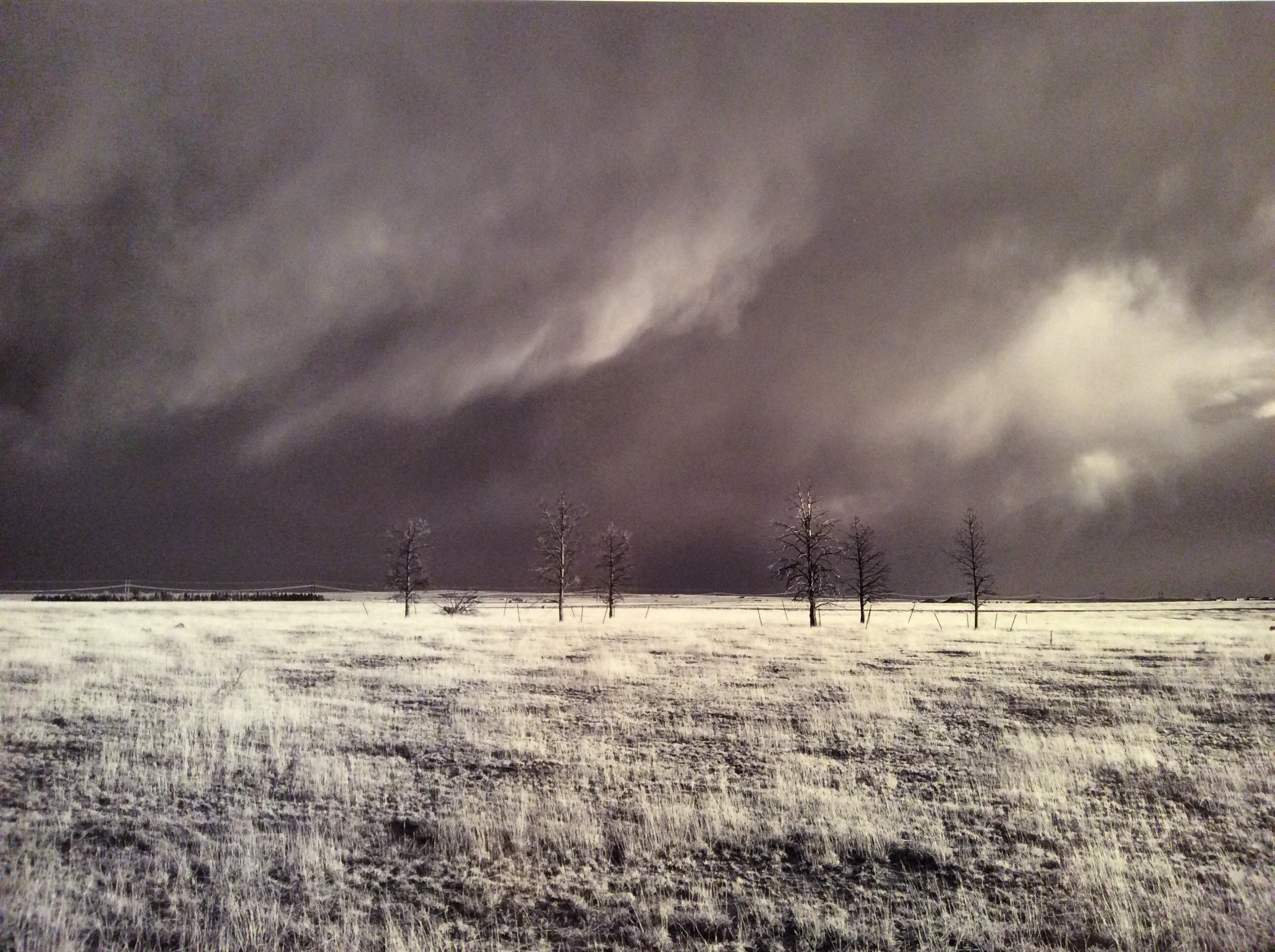
imageAbove is a photo [of a photo]  I purchased … I’m no judge, but think she did a good job. It’s taken out in the Colorado flatlands.
My point is that people are amazing and wonderful, even if politically inept. As a country, we have limitless talent. I watched the ponytailed and tattooed guys on motorcycles and the ladies at the cookie stand and have nothing but affection for them.

We we suffer from bad leadership, and have for decades. We have a lousy educational and political system. But we are a wonderful people. Please don’t get me wrong about that.

What little news I pay attention to, I get wrong!

I had a long drive into and back from greater Denver today, and listened sporadically to NPR when other stations were doing commercials. (Colorado Public Radio runs commercials all day long, as much as any other station … they just don’t call them that.)

I gathered that some kind of deal had been struck to remove the threat of nuclear weapons from the Middle East. The radio journalists were gaga about Kerry and Obama.

I thought great! Israel has agreed to disarm!

Later I learned that they were talking about Iran, a country that doesn’t have nuclear weapons but could use a few.

As it turns out, the real crazies, the Israelis, are still armed with nukes. It is still a danger zone, madmen at the wheel.

As you were folks, no news here.

Apollo and PID – same song, different verses

By fearing whom I trust I find my way
To truth; by trusting wholly I betray
The trust of wisdom; better far is doubt
Which brings the false into the light of day.
(Abdallah al-Ma’arri) (973-1057)*

“We leave you much that is undone. There are great ideas undiscovered, breakthroughs available to those who can remove one of the truth’s protective layers. There are places to go beyond belief…” (Neil Armstrong, 1994)

In yesterday’s piece on the moon landings, I was flippant, as the matter is so fraudulent as to invite humor. And yet … Neil Armstrong, quoted above, is obviously a man of high character and intense honesty, so much so that he remained silent and out of the spotlight for the bulk of his life after the supposed lunar landing. In his quoted words, he is doing above what so many others do when under intense pressure to keep secrets – he is communicating by means of inference, leaving it to us to read between the lines.

Oddly, Apollo and P(aul) I(s) D(ead), the serious and the trivial, are alike in this regard. The Beatles, in dropping so many clues on albums and in songs, asked us to think on our own about things they could not tell us openly and plainly. They too were under intense pressure, “McCartney” himself wanting to come clean. So both Macca and Armstrong are in the same boat: Living a lie under threat of death. In their shoes I would do the same. Their personal integrity, in my mind, is fully intact.

I am not going to chronicle all of the evidence uncovered by others. It’s a waste of time. People of curious mind are perfectly capable of seeing it and forming their own conclusions. I have some other thoughts about the the lies of our times in general, and the Apollo Program in specific:

  • The role of evidence: I have noticed in my travels on this planet that “conspiracy theorists” are nothing more than people who look at evidence. There is a direct correlation: Much looking, much doubt. Little looking, little doubt.
  • Fear of the implications. Add to that another factor: Fear of implications when exposed to but a little evidence, which leads to ridicule, a deflection tactic.
  • “Debunking”: NASA knows, along with those who have perpetrated every other hoax in our times, that curiosity leads to doubt, and so has loaded the Internet with “debunking” sites. Phil Plait for example, performs this task for NASA, for what motive I cannot know. The role of the debunker is to derail the curious mind before before curiosity creates suspicion and doubt. “Debunking” is one of “truth’s protective layers.”

The moon landings were faked, but probably for good reason. The people who did it were serving a higher purpose, one that they needed to keep secret.

NASA, it must be remembered, is not a civilian agency, but rather a disguised military one. It is described as such in the US code. While its mission often appears to be scientific, and while it often allows itself to be used to advance science (as with the Voyager probes), we should never lose sight of military objectives. Werner von Braun was a Nazi man first, NASA man second. He needed facilitators to achieve advances in rocketry, using whatever funding source available.

So what was Armstrong referring to above? I don’t know, of course, but to me he appears to be saying everything he can say without blowing his cover: he was witness to some marvelous doings, and wants others to carry on in his footsteps, which are not on the moon.

There are other things to talk about – the nature of technological advance in a military state, the need for secrecy, and the danger of going public when so much is at stake. I want to get into that stuff, but will stop here with but one more thought:

Apollo involved the work of thousands of smart and serious people, most of whom knew only small parts of a much larger whole. Their abilities and accomplishments are impressive. I wish we lived in a world where we could speak plainly with one another, but we don’t. So to get at truth, we need to learn to navigate lies, and for that, we need better equipment than given us by our news, information, entertainment and education systems.

I read that perhaps 20% of Americans do not believe we landed on the moon. I suggest that this 20% is not at all the dumbest quintile of the population. Quite the opposite.
_____________
*Cited in Doubt: A History, by Jennifer Michael Hecht, p231

Dead man walking

“I think it’s people on the outside who perceive Paul (McCartney) as thinking he’s the only one left. Actually, it’s me. I am the last remaining Beatle.” (Ringo Starr, DailyMail, 5/26/2011)

paul13A rumor popped up in Great Britain in 1966, and took wings in the United States in 1969, that the original Paul McCartney had died and was replaced by an impostor, William Shears Campbell. [Unknown to me on writing this, as I have not really followed this stuff, there are a number of candidates who might ahve filled the bill, “Billy Shears” merely the name of the new Beatle.] I wrote about it back in 2013 after Macca graced yet another Rolling Stone cover. I actually like what I wrote. I said it was a marketing ploy. A very good one.

The idea was this: The greatest rock band in history was breaking up, and the large organization built around them would be set adrift. To keep revenue flowing, they needed album sales. What better way to do that than to plant “clues” in the album covers, beginning with St. Pepper in 1967.

I recommend, especially if you are of a curious mind, to take a look at all those clues. It is a macabre trip, but there are scores of them, and they all point at Paul, and they all hint that he died. The most potent is the Pepper album cover, a funeral scene. It’s crawling with stuff, just crawling. I do suggest that you avoid the audio clues, playing songs backward and all of that, as it strikes me as a bit like looking for encoded messages in the Bible. Who really knows what we would get if we played Pat Boone songs backward? (The words of April Love, played backwards, say “I hate Jesus”?)

By the way, the current guy who plays Paul in real life is an immensely talented performer. He was an unwitting beneficiary. He’s not guilty, in my mind, of anything but living a lie, knowing that if he spoke up, that we would come together over his grave, as we did with John, George, Brian Epstein, Mel Evans … . Further, since so much time has passed, the current Paul is the Paul we know, and has effectively body snatched the original.

That November 16, 2013 piece would have been my last thought on the matter but for three new pieces of information, new to me anyway:

  • An article from The Pessimist, November 7, 2013 that Warren Commission critic Mark Lane was sought out by Paul McCartney in early 1966:

    While living in London during that time I attended a small party of about a dozen people. One of them was Paul McCartney. He walked up to me, offered his hand, and told me his name. The introduction was hardly necessary as he was one of the most famous people in the world…

    He said, “I understand you have written a book about Kennedy’s assassination. I would like to read it.”

    Lane gave McCartney an early draft of Rush to Judgment, and McCartney wanted to write music to a documentary being made to advance the case made in the book.

    Only a person who is as well versed in the JFK assassination as me would know this, but Mark Lane is an intelligence agent, part of the JFK cover-up. Hard as this is to grasp, his role was to become the public voice of skepticism in the late 60’s about JFK’s death, since the case against Oswald was so clearly fraudulent. In that role, others of prominence would seek him out – in effect, would self-identify. Lane’s bosses could then evaluate the risk posed, and act accordingly. McCartney, perhaps one of the most famous people in the world at that time, obviously posed a considerable threat, and so was murdered.

    When I read of Mark Lane’s involvement in the PID affair, my blood ran cold. If you’ve seen the movie Sixth Sense, the big reveal at the end, that the Bruce Willis character is dead and has been dead all along … was a shock. I experienced that feeling again. Oh shit, I realized. He really is dead.

  • The strange behavior of Heather Mills:

    Nuff said.

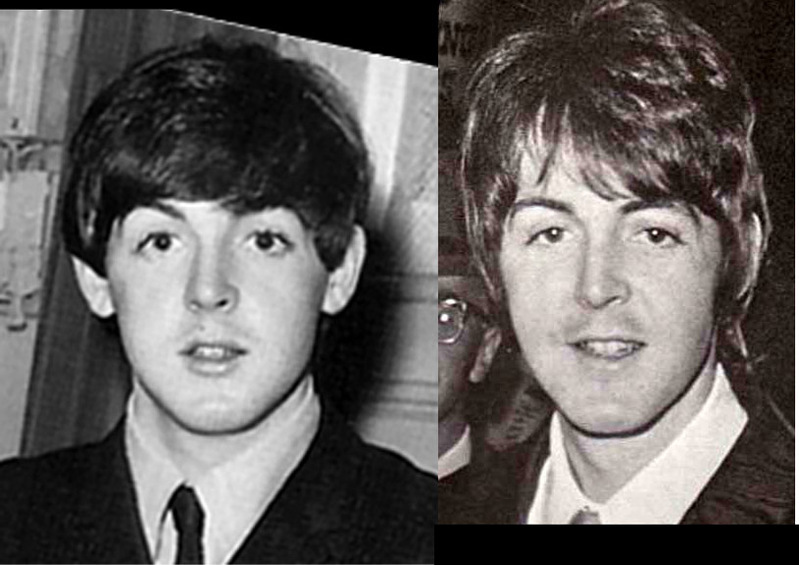
  • Italians Gabriella Carlesi, forensic pathologist and Francesco Gavazzeni, computer scientist, set out to dispel the PID rumor in 2009. They do this sort of thing in real life for forensic purposes, court cases and all of that. They compared high-quality photos of Paul before 11/66 with those after to determine if it was the same man. To their surprise, it was not. Their article appeared in the magazine Wired Italia on July 15, 2009. The article can be found here and there in rough form – that is, someone photographed the pages and put them online. (Coincidentally with release of that article, McCartney appeared on the Letterman show and gave a rooftop concert. It was a nice distraction.)

How could something that sophisticated happen before our eyes? Who possesses such skill and power of deceit? My question exactly. Until I bumped into the Mark Lane story, I had no clue.

Remember, after the Beatles stopped touring, they radically altered their appearances, growing, beards  mustaches and much longer hair. Seen from a curious angle, all of that served to hide the surgical scars that were healing on Sir Paul. Many months would pass before public performances, and before that, we don’t know if Paul as actually playing the instruments. We don’t know that he wrote the music credited to him since 11/66, so much of which is crap.

Anyway, I add young and naive Mr. Paul McCartney to the long list of deaths surrounding the JFK assassination. That is the only reason I care. It is also weird to think that of the four original Beatles, three were murdered.

Notes in passing

This caused pain …

Dave McGowan, author of Weird Scenes in the Canyon, an inconclusive expose’ of the music scene in Los Angeles in the mid-sixties, along with other works, has inoperable cancer. I think he smokes.

I’ll be spending time soon PDFing all of his website writing, most not published.

Couple this with the an aggressive form of breast cancer hitting DM Murdock (Acharya S), author of The Christ Conspiracy and Did Moses Exist?, among many other works, and it is a double whammy. I don’t know them personally, but feel like I do, and have great fondness for them.

It makes me wonder why George H.W. Bush has lived so long and well. Why do the good die young, while old creepy cynical psychopaths linger on and on and on …?

Again with the Lee Enterprises State Bureau! Enough already!

Again with the state bureau … said the nagging spouse.  This time it is the Missoula Independent, Out with the news: Lee’s loss of veteran reporters will lead to greater demise, by Dan Brooks.

There’s a certain amount of delusion and illusion in any country, but in one like ours, where just within the last fourteen years we’ve been sold and told lies on four major wars causing millions of deaths and refugees, and where are own crimes against ourselves and others go uninvestigated … we get words like these:

You can run a newspaper without professional reporters in much the same way you can run a democracy without newspapers: badly.

Perhaps there is truth in those words if Brooks understands that we have “newspapers” in this country in the same sense that Soviet Russia had them: as a façade. Perhaps he is publicly acknowledging that this is not a democracy. But I don’t pick up on any real insight in the piece.

Religious authority figures preen about in phallic headgear, all the while failing to tell us that the Jesus story is really myth. In the political economy, the story of Jesus is replaced by the story of great country with functioning institutions. Police and courts enforce laws, and powerful people have to care about the law. Journalists relay the words of politicians, and the mere act of relaying those words helps us to understand politics. Journalists, acting as both stenographers and megaphones, after years of service, are de facto very good at that job.

In reality, the good ones are squeezed out early on. But as long as we’re pretending, let’s also assert that votes matter and are really counted, and behind those votes exist informed citizens. Even as every politician knows that inside the voting booths are clueless people performing ritual without substance, we have to pretend it matters.

That is the democracy story. Like the Jesus myth, the whole thing was made up by power to serve power.

The people need their myths. So Says Father Foster in the video above. Without it, they are forced to make their own sense of the world, and often come up with explanations that do not please the overlords. (Who, in their right mind, without any outside influence, would come up with the Jesus story?)

And without phony “journalists” who give us our “news” we are given a complicated world that does not lend itself to simple causes and effects. We have to think for ourselves. People don’t know how to do that, and power likes it that way.

Enter the journalist.

…the good people of Montana can produce their own opinions without people like me, but without people like Johnson and Dennison, they cannot produce their own facts.

The good people of Montana could stand with a little less patronizing. That aside, the news media in this utterly corrupt country exists to reinforce offical lies, and facts are an important part of the art of a well-told lie.

I come from a religious family, with a priest brother and sixty years of Catholic education spread among four boys. This is the lesson I got out of all of that: The further up the ladder of power one goes, the less belief there is, the more cynicism. Priests often believe, and just as often know better. Bishops (like editors) rarely believe the myths.

The journalism profession serves as a bought priesthood, to use a term from the earlier labor press we once had. Up the ladder go those most intuitively aware of where power lies and how to live with it. Out the door go those who want to know what is really going on.

Here’s an allegory from my youth. I went to see a movie, Journey to the Center of the Earth, starring Pat Boone and based on a Jules Verne novel I’ve never read. I was a kid and really liked it. At a certain point the cast was lost in the bowels of the planet and their lanterns went out. They thought they would perish in darkness. Then a remarkable thing happened: Absent lantern light, phosphorous in the walls provided all the illumination they needed.

We do not have a burrowing press, we do not have serious journalists, we do not have a functioning democracy. We’re on our own, kids. Time to grow up.

So there is no more Lee Enterprises Montana State Bureau. Stop whining! Stop trusting journalists. Citizen, make sense of it on your own – you are easily as capable as any journalist.

The Devil Speaks

INCORPORATION, n. The act of uniting several persons into one fiction called a corporation, in order that they may be no longer responsible for their actions. A, B and C are a corporation. A robs, B steals and C (it is necessary that there be one gentleman in the concern) cheats. It is a plundering, thieving, swindling corporation. But A, B and C, who have jointly determined and severally executed every crime of the corporation, are blameless. It is wrong to mention them by name when censuring their acts as a corporation, but right when praising. Incorporation is somewhat like the ring of Gyges: it bestows the blessing of invisibility–comfortable to knaves. The scoundrel who invented incorporation is dead–he has disincorporated.”

Ambrose Bierce, The Devils Dictionary

Thanks guys for the heads up

Before I move on, I wanted to offer a quick apology of sorts – I am very hard on American journalists. I can forgive ignorance, as we are all ignorant about most things. Then there is dullness – frankly, most people in most professions are not that bright, journalism no exception, that is, the average IQ is 100.

It is their hubris that fires my rockets. But that could be mere defensive posturing on their part, as they are often roundly criticized.

I have been reminded or I have read someone write that inside the profession there are many very bright people. But they cannot speak up for fear of losing their jobs, or worse yet meeting Michael Hastings’ fate. If true, they are living their lives with their little lights under a bushel basket, which would explain the need for hubris to contain their angst.

But I do believe that under such pressure and tension, people either leave and do something more psychically satisfying, or break in spirit and get their minds right. Whichever it is, dullness, light under the bushel, or broken spirit, from the outside looking in, the result is identical: Very bad journalism.

Here, just for fun, again, is a satellite photo of the area directly west of Manhattan and Long Island on the morning of 9/11/2001. No American journalist knows about that hurricane, named Erin, which was virtually ignored in New York City news coverage in the days before as it made its way up the east coast. Thanks guys for the heads up.

image

Qualification for journalism: Absense of inquisitive nature

Editor emeritus?
Editor emeritus?

Speaking of left gatekeepers, here is a surly quote from another, dead-on in my view:

Journalists should pride themselves for their lowly status, only a yard or two ahead of the gendarmes and with prison stocks our likely fate if we do our jobs properly. Now the idea is to have the moral standing of bishops. What rubbish! What pretension!
(Alexander Cockburn)

It is that “moral standing of bishops” that drives me bonkers. I imagine that in private gatherings they wear those big penis-shaped hats that Catholic bishops do. Merely attaining the status of “editor,” that is, knowing where power lies being submissive to it, is in their line of work an honorary accolade.

One ex-editor of the Billings Gazette conferred the title of “editor emeritus” to his resumé. The word “emeritus” is used to designate a retired bishop, pope, president, prime minister …honestly, this is how they view themselves. It is a far cry from being one step ahead of the gendarmes.

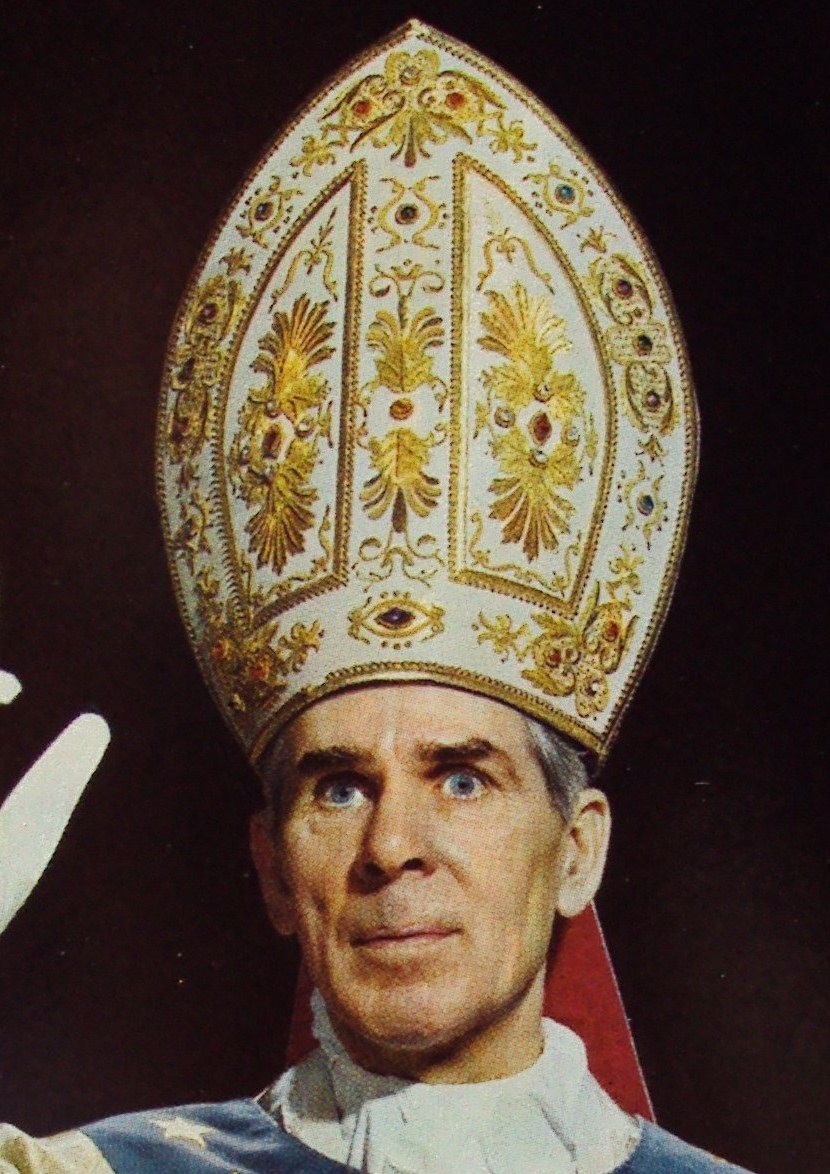
The next time you are watching a debate among candidates hosted by journalists, such as Gwen Ifill, Candy Crowley or Bob Schieffer, picture the moderator in the phallic hat worn by Bishop Sheen above. It adds humor to the affair. Understand that the position of debate moderator is only granted to those known to pose no threat to power.

The defining characteristic of an American journalist is absence of an inquisitive nature. They praise each other for it.

Absent a Lee Newspapers state bureau, nothing has changed

People who know David Crisp know him to be a nice man of both letters and integrity. That makes it hard to be critical of him. But I will. Someone has to.

From his article “From the Outpost: Papers go dark when news is about them, I capture some telling sentences below.

The article is about how Lee Newspapers shut down its Helena Bureau and gave two journalists a hard choice – pay cut or the door.

Here are some excerpts from Mr. Crisp’s article about Charles Johnson and Mike Dennison:

As of this writing, late Tuesday, I have been unable to find a reference to the story in any Lee newspaper—not the Billings Gazette, the Helena Independent Record, the Missoulian, the Montana Standard or the Ravalli Republic, or any of the Lee’s numerous satellite publications in Montana. …

…Blogs and news sites such as Last Best News picked it up almost immediately and drew dozens of comments from readers.

This is a bugaboo in journalism, that their job is simply to write stuff that will be written anyway somewhere. Why should I care if a Ravalli paper or the I Like Boobs blog carries an easily accessible story like this? There is no great accomplishment in printing it on Tuesday instead of Monday, or on a blog instead of in a newspaper. The knowledge has little impact on us (it is a very big deal to journalists, I realize), and the timing and means of receipt of the information are of no consequence.

Chuck Johnson has covered the state capital since the Constitutional Convention of 1972. I have gotten to know him a little, and I have read his work for many years. If he has any political biases, I have been unable to detect them. …

…Mike Dennison has been in recent years, if anything, the more aggressive of the two reporters. He covered healthcare better than any Montana reporter I know about. His stories were detailed, precise and fair, and his occasional columns were must reads. …

…the web has nothing yet to match the expertise and deep knowledge that Johnson and Dennison brought to statewide coverage of Montana.

There’s a theme there, and it is a little difficult to detect, but I’ll try: Johnson and Dennison write stuff. They don’t allow their personal opinions to interfere with what they write. That’s why they are really good at what they do, no matter that the stuff they write is easily accessible and will be widely known whether they write it or someone else does. Everything that is acted out on the public stage, even in wee hours of the morning, gets written somewhere. So what?

In the mind of the journalist, the highest accolade is fairness and objectivity. Screw that. I want to know what is going on behind the scenes, off stage – money changing hands, deals cut, political cover and inside baseball. Fairness and objectivity are nice, but not useful. Power gets to do what power does behind the scenes even as reporters are fair and balanced.

Professional journalists are trained to avoid losing objectivity, of becoming involved in the story, even if in so doing they tell us something that we might otherwise not have known.

Here’s an example: In late 2002 and early 2003, the government lied to the public about Iraq, claiming by means both open and psychologically suggestive that Iraq (“Saddam Hussein”) was involved in 9/11, had nuclear and chemical weaponry, and was going it attack us. American journalists did their job, as they see it, reporting the lies in a fair and objective manner.

The result: hundreds of thousands of dead, a massive refugee crisis, and a crime of significant historic proportions, surely the greatest slaughter of the new century.

We had no one running interference for us, burrowing and getting down to the underlying truth. Our reporters were busy being professionals, reporting on what he and she said. The New York Times even allowed lies to go front page through Judith Miller, as if they could not control or discipline her.

That’s American journalism. I’m sorry, Mr. Crisp, Mr. Johnson and Mr. Dennison, to be the one with a scoop here, but writing down what public officials say and do in public, even if you do it on Tuesday instead of Wednesday, and in the New York Times instead of  the Ravalli Republic, is not an important job. Anyone can do that, even me.

We need people of steely resolve who are fearless of making enemies and who attempt to find out what powerful people are really doing. The ‘finding out’ part is very difficult. The ‘reporting back’ to us not so much. Somewhere along the line American journalists forgot about the ‘finding out’ part.

High praise given journalists by public officials is a sign they are not doing their job. Otherwise, powerful people would not like them so much.

Real journalism, finding out what powerful people are doing and reporting it to us, has value. Informed public opinion, even if enraged or indignant, and even in our fake democracy, matters.

We don’t have journalism. Shutting down a state bureau is not significant. We’ve got bigger problems than that. I feel the pain of dispatched reporters. But the world moves forward without a wobble, having lost nothing of value.
____________________
PS: Mr. Crisp has little regard for bloggers, in fact, even a haughty disdain. It is true, we do not do what he does, and I too have haughty disdain as a result. He quotes another blog, apparently a self-loathing one:

The 4&20 Blackbirds blog may have put the issue most concisely: “So what fills the vacuum? If the answer is bloggers, we’re screwed.”

Of course, blogs are not the answer, but let’s be clear: What we had before the Internet and blogs … that was not the answer either.

We need … reporting.