(As a change of pace, I want to post a short six part series that I had previously posted several years ago when attempting a second blog. Perhaps a half dozen bots and a couple of stumble-upons were exposed to this, so it is still, relatively speaking, factory fresh. I feel it is germane to the ongoing discussions here at POM as it is an exercise in clear-eyed interpretation of imagery. It concerns the output of the Dutch master, Johannes Vermeer, whose paintings are the most sought after across all of planet Earth, though I am at a loss as to why.)
This has bothered me for a long time and so I am finally going to try and put this somewhere other than my head. Guided by a generally agreed upon chronology, I will use the paintings as a stepping stone to get a handle on how Johannes Vermeer of Delft, Holland (1632-1675) managed to feed ten surviving children, a wife and a mother-in-law on thirty some odd paintings, almost none of which sold while he was alive.
A few basic facts: Vermeer’s mother in law, Maria Thins, an assumed source for most of the household revenue, was not as wealthy as most claim. She owned rented farmland that did yield some steady income. She was Catholic and so restrained to a degree inside Protestant Holland. The fact that several debts were outstanding at Vermeer’s death strongly suggests that the family, at best, had decent credit. The fact remains that Vermeer was in need of work and that he possessed one marketable skill: The ability to render objects and persons, as well as preexisting paintings by others, with remarkable accuracy.

 Warning to readers: Below the fold are some gruesome photos of an alleged execution of a young Vietnamese boy in 1968, the famous Saigon Execution photo by famous war photographer Eddie Adams. I am convinced it was faked, and so have no problem showing both it and a related film clip of the incident. If you are squeamish about blood, be warned, read no further. If you do, take comfort, as it is fake blood.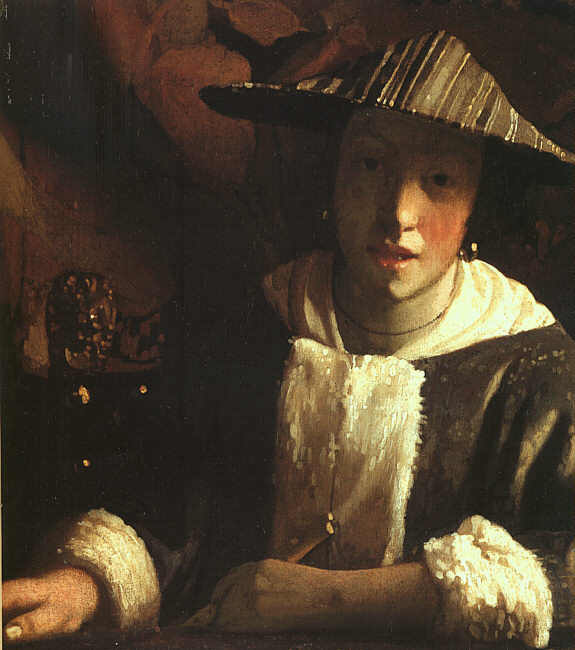

 Piece of Mindful