Statistics is a much maligned field. Its practitioners are seen as dull, gray cardboard cutouts. Its methods are tedious and complex. Its results can be stunning.
I studied the topic in college, but unfortunately was enrapt of a young female during that time, and so had little ability to focus. Much of it went by me, and I felt fortunate to pull a C out of the courses. The young female? If my fellow classmates that I saw at my fiftieth class reunion in 2018 are any hint, she is probably married and as big around as a water tank. Something to do with aging and estrogen, I am told.
In real life I saw the field applied almost magically with election results and a process called “exit polling.” Many people might note that the entire population of our country can be polled by using a sampling of 3,000 people, maybe even fewer. The quality of results depends on the selection of people to be polled. But when dealing with people who have just now voted, many variables are eliminated. People can lie in polling, over-enthused about their own importance. They might not even vote. Exit polling reduces the field of data to people who have actually voted, and by rigorous questioning, places them in various categories that resemble to electorate as a whole.
The idea is to construct a microcosm of the larger population in the smaller one, a tiny mirror image. If done correctly, and if bias is eliminated in questioning, the sample can be deadly accurate. In fact, it was often said during the days of exit polls that the results were more accurate than the elections themselves, which can have many mechanical shortcomings.
But statistics never yield concrete answers. They only state probability – that is, if a poll finds that Elmer Fudd is ahead of Bugs Bunny, it will give a range of probability, as in “Fudd leads Bunny by seven percentage points with a margin of error of one percentage point either way,” or that the lead is 6-8 points. The likelihood that the result will fall within that range is called a “confidence interval,” and the level of confidence is stated as a standard deviation (don’t go there), usually with a professional poll in the area of 97% or so. So there is a 97% chance that on election day Fudd will beat Bunny by 6-8 points. But suppose Elmer leads by only 1/2 point with a 1 point margin or error. Then the result might fall between Bugs winning by a point or Elmer winning by 1.5%. The results are said to “cross zero”, so no winner is named in the poll.
Notice that nothing is ever definite with statistics. But it was a rare thing prior to the 2000 election for exit polls to be wrong. What happened in 2000? Bush v Gore, and HAVA, or the Help America Vote Act, which introduced electronic voting throughout the country. Exit polls went south on us, and ceased to be reliable. In fact, in the subsequent years when exit polls were still done, they were massaged afterwards to adjust them to the “actual” vote count. Then they stopped doing them entirely because they were not “reliable.”
These days I do not trust any election outcome. As our friend Miles Mathis noted recently, popularity polls concerning Joe Biden are fake, and his real level of popularity is probably less than 10%. But no matter, as votes are not counted, and elections are anybody’s guess (Last sentence there is me, not MM.)
Beneath the fold is an excerpt from a book I read many years ago, The Metaphysical Club: The Story of Ideas in America, by Louis Menand (2001). I was still quite naive when I read it, and was totally taken by it, and still admire the work and its author. It is mostly about four men, Charles Sanders Pierce (pronounced “perz“), Oliver Wendell Holmes, William James and John Dewey. Yesterday I took time to dictate a section of the book about The Witch of Wall Street, Hetty Robinson. It’s a 3,000-word excerpt, I warn you, but for those who dive into it, I assure you it will hold your interest. Keep in mind that Benjamin and Charles Pierce plied their work before statistics was a formal science taught in colleges, so that their techniques are nothing short of pure and original genius. (If you come upon typos, please let me know in the comments. I used Nuance Dragon to dictate, and then spent as much time fixing typos, but I am sure I missed some.)
[PS: Methodology can be confusing. What the Pierce’s have done is to quantify how unlikely it is that each signature in the (forged) will is exactly like the signature on the original. The extremely high number, one in five to the 30th power, is the result of multiplication of unlikelihoods. For instance, the odds of rolling a one with a die are one in six. The odds of rolling snake-eyes is 1/6 x 1/6, or 1/36. The odds of rolling snake-eyes twice in a row are 1 in 1,296. Etc.]
____________________
Continue reading “The Wolf of Wall Street” →

 The above title of this post is also the title of a book published in 2008 by science writer Gary Taubes, full title
 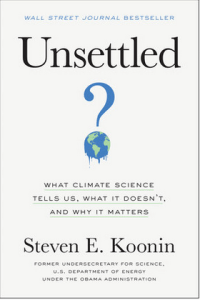 “
“ Piece of Mindful