Immanuel Velikovsky died in 1979. The following passage is from his book Mankind in Amnesia, published in 1982. I found it, like him, profoundly insightful. He describes a situation that has not changed in the intervening years. It is, in fact, much, much worse. We are surrounded not just by stagnated and bureaucratic science, but with corrupt science. Warm your globe on that.
Author: Mark Tokarski
What is up with 8, 11 and 33?
Find the next two numbers in this series:
1,2,2,4,8,11,33
The answer, as shown here, is 37 and 148. This has no significance in regard to this post, but I thought it kind of funny that the three numbers I will be discussing, 8,11 and 33, just happened to pop up. That is a coincidence.
I was listening to Ab over at Fakeologist some time ago, one of his call-in podcasts, and in it he said something to the effect that he does not pay much attention to numerology. I tend to agree with him, but only to a degree. I do not think there is any particular significance to any number any more than there is to any one hair on my head. Numbers serve a useful purpose. They help us quantify and measure things.
I know that some numbers have unusual properties, 9 for example – any time two numbers are transposed, 18 for 81 for example, the difference is divisible by nine. There is a such a thing called the “rule of 72”: Divide the rate of return on an investment into 72 and the answer is how many years it will take to double. It works. A 6% return doubles in 12 years, and a 12% return doubles in 6 years.
That is just fun and games, however, and has no cosmic significance. There is, however, something going on with numbers and public hoaxes and fake events. There may be superstition beneath it – if so, I do not care. Numbers still mean nothing. Superstitious people often have odd beliefs.
I am going to go through some numbers here, taken right out of real events, just to demonstrate the importance of what I once heard a man named Michael Parenti say: “Just because we don’t know what they are doing does not mean that they don’t know what they are doing.”
Taxes Part 2: The Tax on Social Security Benefits
Note to readers: Part one of this two-part essay was about FICA, and how a hidden tax affecting only people who work for wages is used to levy a heavy tax on those workers. Part of the strategy behind that tax is to hide half of it behind the employer, calling it a matching tax.
This part of the essay deals with another tax, this one not so hidden, but its creeping nature slowly taking more and more benefits from Social Security recipients each year. The means by which they accomplished this were diabolically clever.
This essay will be a bit more complicated than the one before, so if you find the calculations incomprehensible, merely skim them, as I will describe the outcome in understandable terms.
As Johnny Carson used to say of comedy, “If you buy the premise, you buy the bit.” The premises behind taxation of Social Security benefits are two: (1) The program is in dire straits, and will soon run out of money, and (2) Recipients receive a gift in the form of the employer match, so that it is just to levy income tax on half of the benefits paid.
Continue reading “Taxes Part 2: The Tax on Social Security Benefits”
The Plausibility Index
Our friend and fellow writer, Tyrone McCloskey, has started a new blog called The Plausibility Index. I urge all readers to pay it a visit. He has a unique writer’s voice.
I don’t wish to detract attention from Kevin’s very interesting piece below, but wanted to get this publicity out there. Though we are five writers on a common blog here, we are often of five minds about various matters. Ty chose to use a separate outlet to voice some of his personal reflections, but is still on board here, and for that I am thankful. .
Why is modern music so awful?
I had fun with this video. At twenty minutes in length it asks for more of your time than you are likely willing to give, so if that is the case, jump ahead to minute 7:00 where Thoughty2 discusses modern songwriting. He credits most of the big hits of our era to two men, a Swede named Max Martin, and American Lukasz Gottwald, or Dr. Luke. Sure enough, a quick search shows that these two men are acknowledged to be behind many hundreds of songs.
Thoughty2 talks about many other aspects of our modern music scene, why the tunes and lyrics seem so mediocre, why LOUDNESS drowns out lack of quality. Last year my wife and I were in a station on a mountain side in Switzerland waiting for a tram. We had about forty minutes before it arrived. Even though we were the only people there, loudspeakers were blaring popular tunes. It was horrible! I now consider it to have been a near-death experience (NDE). I had to leave the building.
A bitter fog of deceit
I was asked by a friend of the blog to read a book and report on it … it was my intent to do so, but it is so out of the ordinary for me, that is, I don’t want to simply read a book and report its findings as if every word were true. So I decided that I would highlight the book for blog readers, and suggest they too read it, and pass along some thoughts.
The book is called A Bitter Fog: Herbicides and Human Rights, by Carol Van Strum. It is available on Kindle for free – I don’t own one and so downloaded it for a few bucks.
The book was first published in 1983, and recounted a long battle between local residents of Oregon and the Forest Service, Environmental Protection Agency, Dow Chemical, local government about the use of chemicals containing dioxin (including but not limited to 2-4-5-T and 2-4-D, the former known as “Agent Orange” when used in Vietnam.)
The destruction of forests and harm to people and animals, as outlined in this book, is distressing. The fact that the same chemicals keep appearing under new names equally distressing, but more than that, I found the same story I encountered when I read about AIDS, and AZT, Zika, climate change … systemic and deep corruption. I will outline just a few aspects:
POW images from the past highlighted on Facebook

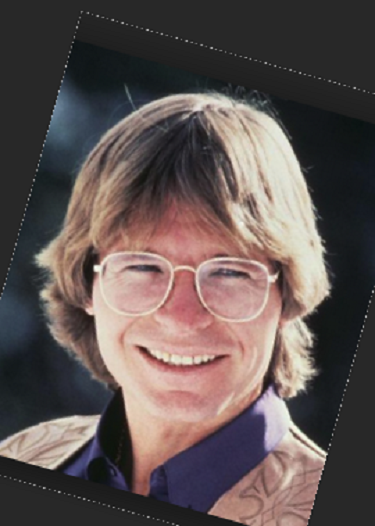
The above photo has been making the rounds on Facebook.I originally assumed it was of Hanoi Hilton vintage, as it reminded me of the one beneath, which I covered in my post called St. John’s Warts. In my opinion the John McCain POW story was just propaganda designed to sheep dip him and prepare him for the presidency.
Continue reading “POW images from the past highlighted on Facebook”
Hilarity ensues …
I’ve been reading comments at a long thread that I won’t link to concerning our series of posts on the man in Taos. Comments are open on this post, so it will be a chance to see if the defenses put in place are effective.
What startled me is this: In that thread several facts about me are discussed that take some research on their end. One is that in 2015 I was in Ljubljana in Slovenia. I think at that time I was writing about our travels here on the blog. I don’t do that anymore. That year we were in Italy for a trek in the Dolomites, and on return to Venice rented a car and drove to Slovenia, something had never done before (both renting a car while abroad and visiting Slovenia).
Earth is in balance

[Note: Comments were accidentally turned off when this article was published earlier today. That is now an automatic feature that I have to override.]
A while back I sat across from my son and daughter-in-law and received the low-down on climate change. We are, I was told, entering the Sixth Great Extinction, and we are causing it. I didn’t get excited, and from a relaxed posture suggested they get ready to enjoy some Canadian wine. I am not worried about the planet.
Another “frivolous” lawsuit
Environmental groups (real ones, anyway) are often criticized for excessively engaging in lawsuits. The logging industry has engaged the PR industry to defend them, generating talking points such as calling the lawsuits “frivolous” and even painting environmental groups as racketeers. Behind the scenes they no doubt talk a different line … lawsuits force industry to follow the law, and are a damned nuisance.
I worked for many years in the environmental movement in Montana. The group I worked with, Montana Wilderness Association, is now a full-fledged industry front group. They might have been so in the 1990s too, when I was with them, but they had very little money. That is usually a sign of a genuine environmental group. These days their money rolls in from trusts and foundations and they are bloated with excessive staff while “collaborating” with industry. They are phonies.