
Time and again now, in personal dealings, on Facebook, on radio and TV, I am seeing self-imagined intelligent people saying derogatory things about Donald Trump.
On the other side of that coin are the same type people saying kind things about Bernie Sanders.
It is media manipulation, writ large. You’re being diddled, folks. Statements by Trump and Sanders are being magnified by news media and entertainers and aimed at target audiences.
Trump’s (scripted) comments are for reactionary right wingers, a significant portion of the population. His intemperate remarks on immigrants, foreigners in general, building walls and anti-trade agreements are calculated to get a rise out of that crowd. He’s fake.
Sanders’ (scripted) remarks are for deluded liberals and progressives. His incantations are for policies that he surely knows will never see light of day in our business-run country: public-sponsored health care and higher education, anti-trade agreements and taxation of oligarchs. This is all calculated to get a rise out of the NPR/PBS set. He’s fake.
Reactionaries and liberals and progressives are being herded in opposing camps for one purpose: the selection and then election of Hillary as the next president. It is classic divide and conquer. Yes, the office of president has no power, but public opinion can create problems for the rulers, and so has to be maneuvered into submission.
The Trump/Sanders gambit is immensely clever. It was masked in a hoard of candidates, all of whom dutifully stepped aside when ordered to do so, leaving us with what we see now: Two shills and Hillary. (I doubt very much that reported vote counts in primaries are even close to accurate.)
The American public is polled incessantly, our attitudes and ideas constantly held under the microscope. If you want to see some of this polling, which is not published, consult the Council on Foreign Relations.
The purpose of the polling is only for management purposes. The oligarchs and their puppet politicians exist in a sphere far to the right of public opinion, but they do need to know and understand their enemy, the American public. So the job of media is to be sure Americans feel an effective blowing off of steam through elections, but realize no change in public policies.
It is herd management, nothing more. Public policy, after all, is none of our damned business.
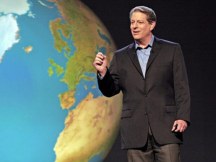 Note: As with everything I write here, it is only my studied opinion that follows. It is my view that we currently have the technology to get us off oil, but it is withheld from us. If indeed global warming were real, technology would not be withheld. Even oligarchs have to live on this planet with us.
 Plastic surgery is apparent in this photograph to the left, where the skin lines are a huge tell. This photo is of “Mike,” and not the “Paul” who appears in the YouTube above. He has had plastic surgery about the eyes, and age is exposing it. He will have to have yet more to hide those lines again. He is now almost 73 years old, so that his skin must be like hard rubber. Imagine the makeup he needs to appear in public! The price of fame.
 Paul is the photo to the right, and the same type lines are apparent, but not as severe, indicating that Mike was the one who endured the most facial reconstruction to look like the other.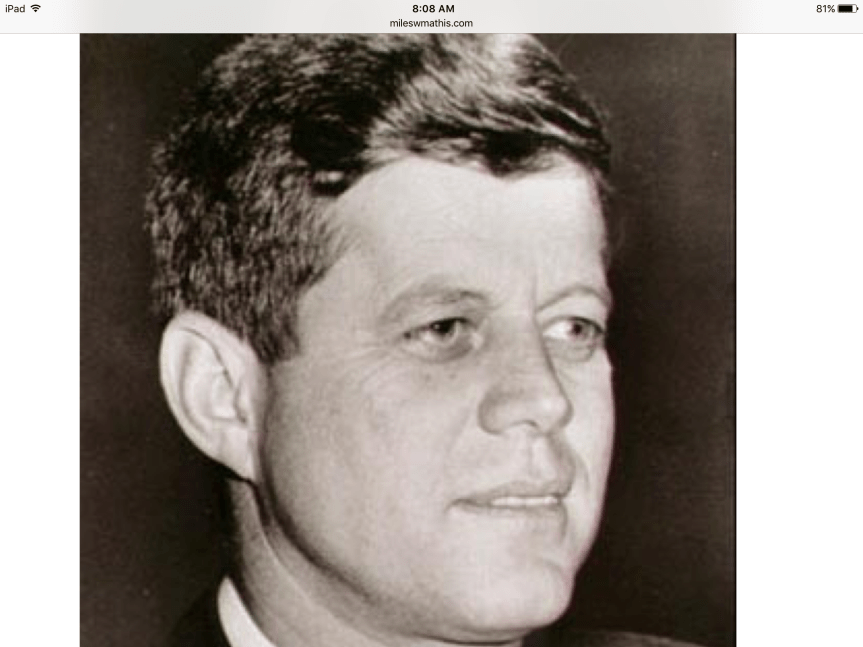
 While the late Dave McGowan was working on his Laurel Canyon series, his wife sent him an
  Piece of Mindful