I used the post down below as a means to write a review of the book, Unsettled, by Steven E. Koonin, severely editing it. I had little hope of seeing my review published by Amazon, as over the past couple of years overt censorship has taken over so much of our lives.
“Overt,” mind you. Not new,. It has always been like this. Technically speaking, we have, as expressed in the Bill of Rights, an inalienable right to freedom of speech. It is not given us by our Constitution. We own it, have it, have always had it. But during my years after schooling I slowly realized that this inherent right to speak our minds is severely limited, that is, if I have an opinion about who should be the quarterback of the Denver Broncos, that opinion easily flows through the censors. It is painless, stupid, offends no one, not even the current quarterback, whatever his name. (Russell Wilson.)
However, if my opinions are of a more serious nature, and especially if they rub up against anyone who has power, say the editor of a small local newspaper, they will be censored. Back in pre-Internet days the outlets for personal opinions were limited to newspapers and radio talk shows, and the gnomes guarding the caves were newspaper editors and talk show hosts.
My wife and I are in our seventies now, and each of us is trim. That doesn’t just happen, however. It takes great effort.
First, we had to understand the nature of body weight – why it accumulates, where it accumulates. There are a lot of fad diets, from starvation (and accompanying psychosis) to vegan. In between are things that sell books, like South Beach and Caveman. I cannot speak for my wife, as we each cook for ourselves and eat differently. For myself, I long ago settled on what is now called “Keto,” short for ketosis.
If you wake up in the morning with “morning breath,” you are in ketosis, that is, fat-burning mode. Often during the night our bodies run short on carbohydrates and convert to that mode. This is the essence of Keto, to force our bodies into fat-burning mode, not just as we sleep, but 24/7.
This link is to a specific podcast, Most Peoples Brains Are Broken. In comments beneath another post, we were linked to Legalman and some of his writing, that about the abuses of the Supreme Court. I think the name of the blog was The Truth About the Law. He has apparently quit posting and gone over to podcasts.
This link is to his current blog, which looks to be entirely podcasts. It is called The Quash.
Two things about Legalman: One, he is a lawyer. The other, his voice reminds me of Jimmy Stewart, or at least Stewart as done by Dana Carvey. You might catch this as his voice inflects upward.
The post below was written in 2016. I had just read a book that, amazingly, still rests on my shelf, called Everything You Know About the Constitution is Wrong, by a man calling himself Edward James Snowden. I normally do not recommend what others should read or watch or think. It is up to you.
Last night comments were appearing on the nature of our Constitution, and I remembered this book. It had impacted me. There are many threads within the book that Snowden writes well about, but the one that caught my eye most when I read it was the 14th Amendment, passed in 1868. It is long and wordy, and I will reprint here only the pertinent parts of the first clause:
All persons born or naturalized in the United States, and subject to the jurisdiction thereof, are citizens of the United States and of the state wherein they reside. No state shall make or enforce any law which shall abridge the privileges or immunities of citizens of the United States; nor shall any state deprive any person of life, liberty, or property, without due process of law; nor deny to any person within its jurisdiction the equal protection of the laws.
Honestly, that sounds like overstating the obvious along with virtue signalling. The country had just emerged from a bloody Civil War, blacks were emancipated, so the ground was ripe to make major substantial changes in our laws. Prior to this amendment, non-black people were citizens of the various states, and none (except slaves) could be deprived of life, liberty or property without due process of law. Blacks were no longer slaves. Why restate? It appears as though the purpose was to make everyone a subject of the Federal Government rather than any state.
I listen to podcasts these days when exercising, more so than music. There are a number of good ones out there. My own preference is comedy. It seems during lockdown people decided that being alone at home and hooking up via computers was a way to alleviate boredom. There are quite a few, my own favorites Conan O’Brien Needs a Friend and Fly on the Wall with David Spade and Dana Carvey.
One that I picked up on is called Smartless, which has three hosts: Jason Bateman, Sean Hayes and Will Arnett, the latter one of my favorite comedic actors. He played Job on Arrested Development. Bateman, of course, is one of our Brats, part of the Matt Damon group, and appears unaware of it. He is not aware of us, of course, but his own “chosen” nature. He had an unhappy childhood and that sort of thing. He’s been employed on one thing or another his entire life, including Arrested Development, where he shows great comedic chops (along with Arnett). Hayes I know nothing about, a costar in Will and Grace, a show I never watched.
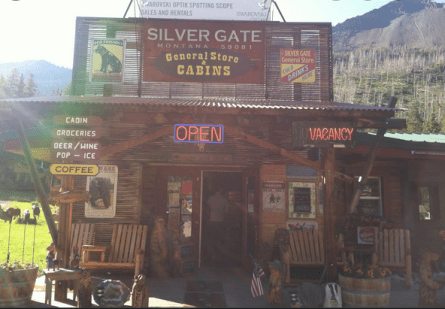
Silver Gate, Montana rests two miles from the northeast entrance to Yellowstone National Park. It is a collection of stores and shops and motels. Most of those on the north side of the highway are owned by one man, or one company – I don’t know for sure. The good thing about him or it is this: He does not cater to motorcyclists and snowmobiles. You can always be sure, if you stay there, that you will have silence. The air will not be full of exhaust fumes, as is Cooke City in the winter, four miles down the road.
His goods are very expensive. He requires an up front deposit to make a reservation, and keeps it if you cancel. You can say that this is the price of being in business there, but no one else in the area does that. However, it is tough to be in business in a tourist trap. Cooke City addressed this problem by opening up to snowmobiles in the winter, delivering year-round revenue.
Earlier this week John le Bon and I had a 2-1/2 hour conversation, which was saved for posterity.
I do not imagine I am that interesting, so relax. I am not suggesting that you go to John’s website to listen to me rattle on for that long, but there is a trove of interviews there. I am going to subscribe, but am waiting until my credit card rolls over, some time after the 20th. I am in that time frame where I can incur an expense, and then postpone payment for almost 60 days. It is an interest-free loan.
I do urge readers to visit his site, as this very interesting young man contributed tons to our interview. He is currently a resident of Plovdiv, Bulgaria, a beautiful city north and west of Greece. One thing I wanted to ask him is how he ended up there, but I never got around to it, you know, talking about me, me and then me.
Our family has lived in our small, humble abode for more than 25 years. Most of the trees on our property have stood here since we arrived in the late 1990s — already fully mature. It was the landscape of tall, proud, and abundant trees that invited us in.
The lush trees have provided not only beauty, healthy habitat for wild animals, and shelter from sweltering sun in the summer, but also a place on which to hang our hammock and swing, when our children were very young.
We actually kept the swing attached after all these years. Every once in a while, I have sat pensively atop it.
We have gratefully enjoyed the offerings of the majestic trees, attempting to not take them for granted. To echo the thoughts of this writer, the bold ash trees have served to anchor our front, back, and side yards.
June 2022
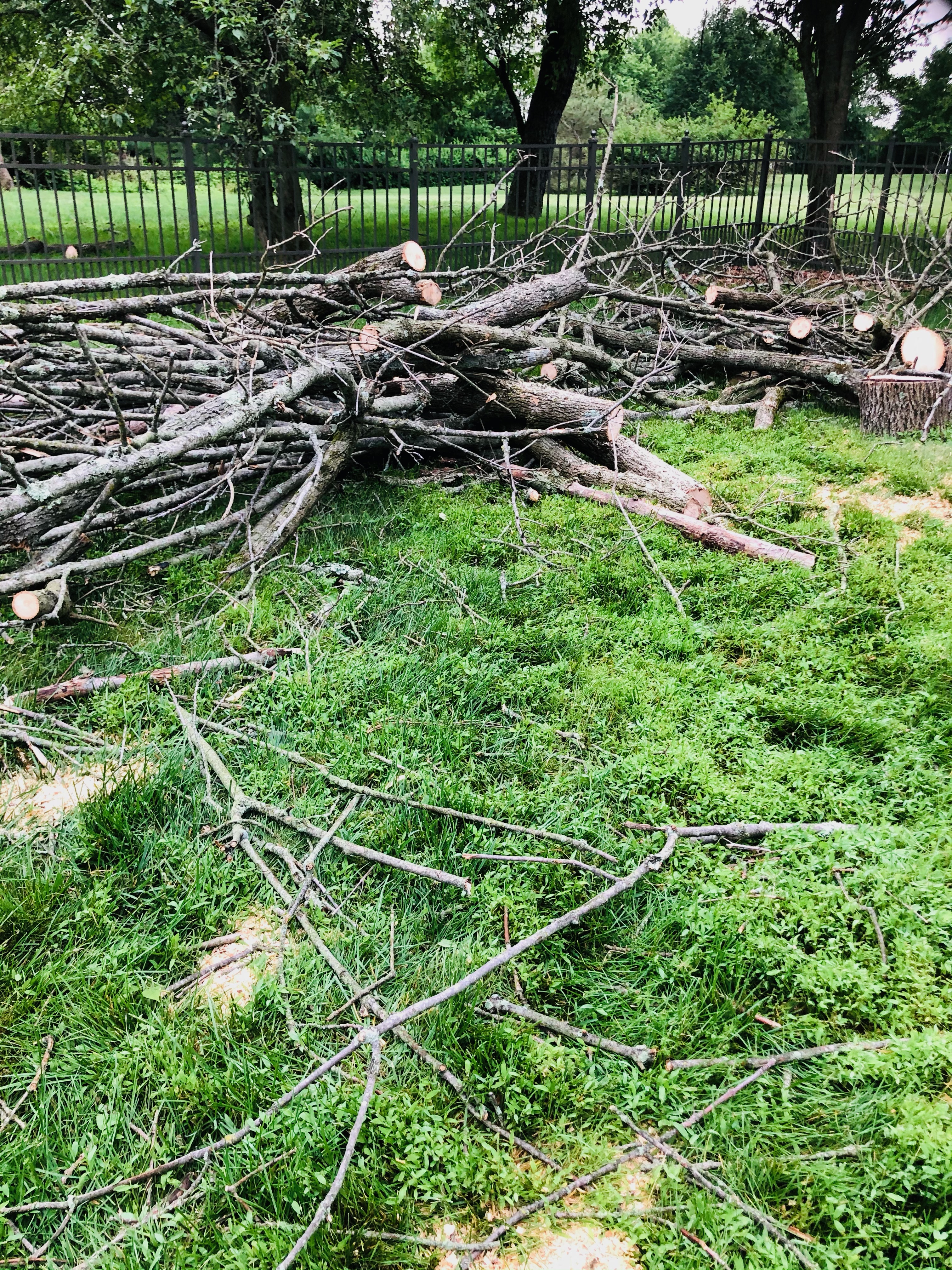
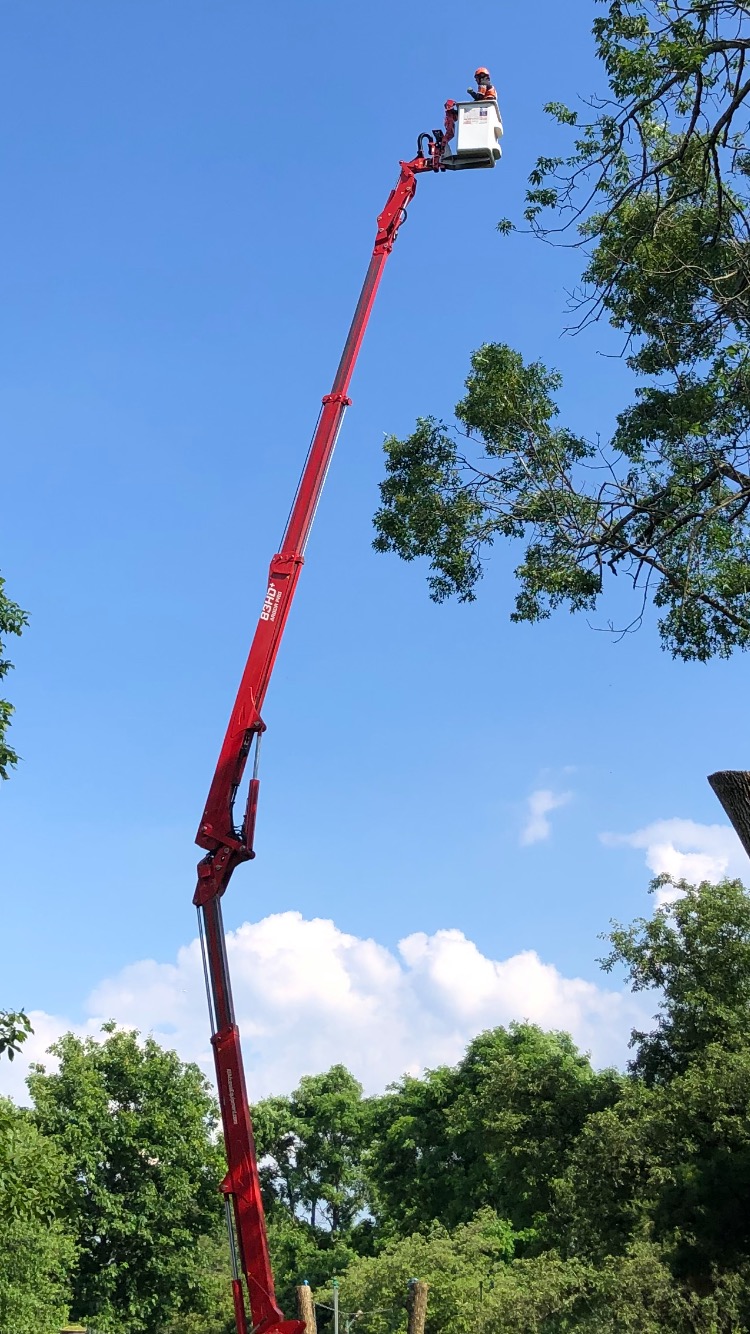
The photo directly above is not reflective of a storm (norclimate change), but, rather, the consequence of the blight of the emerald ash borer (EAB). Accordingly, twenty-one (yes, 21) of our trees (exclusively ash) were professionally felled. This week, it took the tree cutting service 24 hours over the span of 2 1/2 days — long days in the heat — to clean up the devastation created . . . by a frickin’ beetle.
The emerald ash borer (Agrilus planipennis) is a destructive wood-boring pest of ash trees (Fraxinus spp.). Native to China, Mongolia, North Korea, South Korea, Japan, Taiwan, and the Russian Far East, the emerald ash borer beetle (EAB) was unknown in North America until its discovery in southeast Michigan in 2002. Today, EAB infestations have been detected in 35 states and the District of Columbia; Alabama, Arkansas, Colorado, Connecticut, Delaware, Georgia, Illinois, Indiana, Iowa, Kansas, Kentucky, Louisiana, Maine, Maryland, Massachusetts, Michigan, Minnesota, Missouri, Nebraska, New Hampshire, New Jersey, New York, North Carolina, Ohio, Oklahoma, Pennsylvania, Rhode Island, South Carolina, South Dakota, Tennessee, Texas, Vermont, Virginia, West Virginia, and Wisconsin.
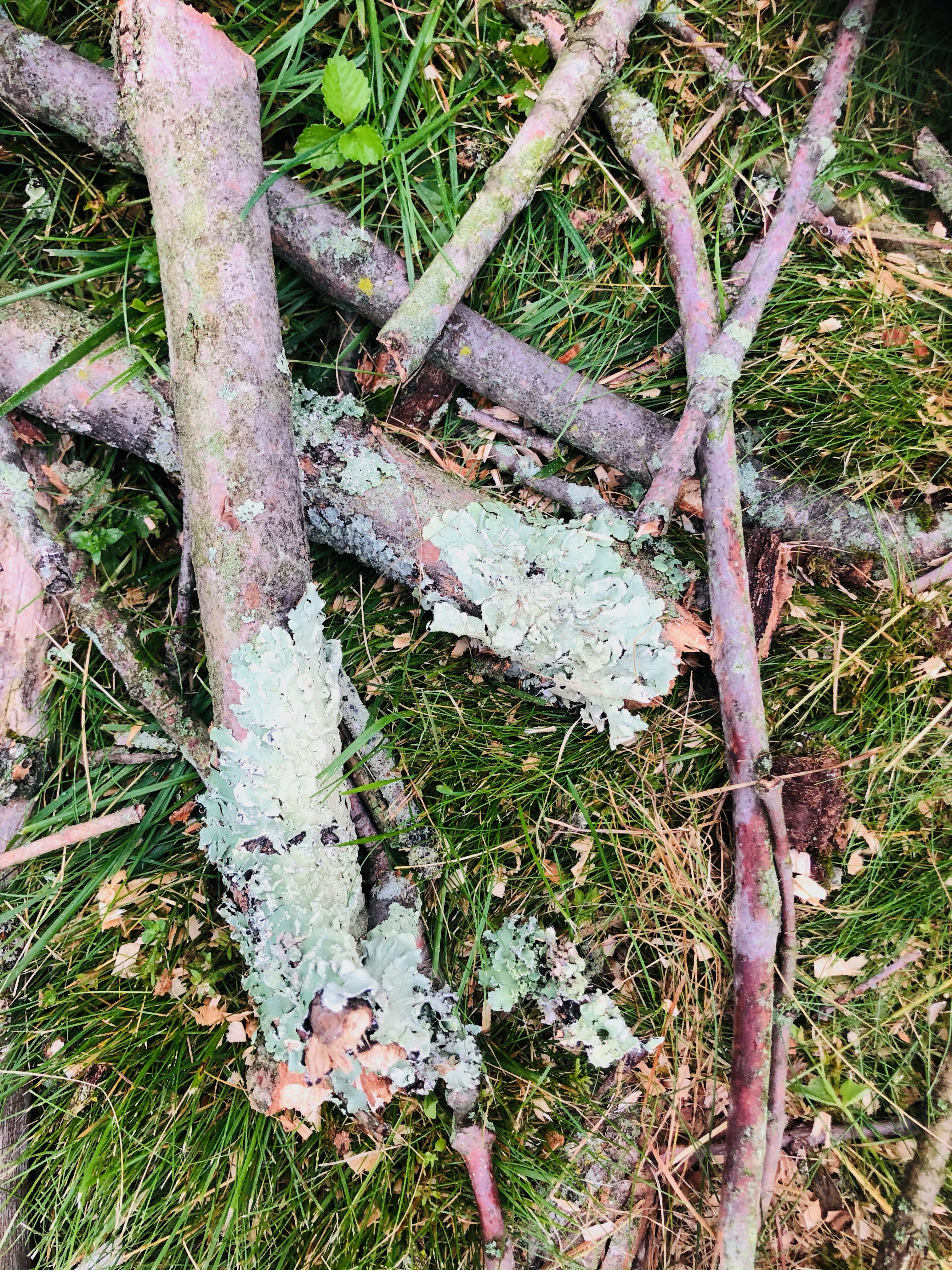
Sadly, over the past few years, the green metallic-like ash borer beetle bore inside our ash trees, ravaging them — leaving behind massive decay, and destroying the natural green canopy above us. In the meantime, the dying trees provided a home for plentiful lichen.
After the post below and yesterday’s interview with John le Bon (which I will discuss in a later post -a very nice young man and a very good time had), I feel a need to set the record straight, to care what others might think. I am not a person who simply abandoned his five children. Of course I am flawed, of course I have made mistakes, but walking out on my kids is not in my nature. I am Mr. Do-The-Right-Thing, and when I do the wrong thing, I pay a psychic price.