Anomalies, moles, patsies, sheepdipping

Anomaly (NOUN): something that deviates from what is standard, normal, or expected.

Anomalies often serve as doorways for investigators, as they can lead to important information. 9/11/2001 was an anomaly circus. I will highlight a few today and tomorrow.
______________
Anyone who has flown on an American passenger airline knows that the flights are almost always full, or nearly so. The airlines vary the size of the aircraft and shift passengers so that they maximize occupancy on any flight. They are pretty good at it. It’s rare even to have an empty seat next to us on most flights.

However, on September 11, 2001, the four flights that were supposedly hijacked carried very few passengers. In fact, on Flight 93, the source of the famous “Let’s Roll!” fable, each passenger enjoyed a full row of seats. Here’s the occupancy for that day:

  • Flight 11: 180 seats, 76 passengers;
  • Flight 175: 180/46
  • Flight 77: 200/50
  • Flight 93: 200/26

Such a shortage of passengers on these flights is suspicious. The 9/11 Commission did not investigate the matter.
_______________
“Short sales,” for those who are not familiar with stock market terminology, are a trading device used by investors to take advantage of a falling stock price. He “borrows” stock from a broker, sells it, and when the price falls buys it back and returns it to the broker, pocketing the difference. A “put” option is a form of shorting the market, betting that a stock will fall without actually buying and selling the stock.

Inside information is a huge part of stock market success, so the SEC monitors the Chicago Board Options Exchange for anomalies in puts and shorts.

Three stocks were heavily shorted immediately prior to 9/11/2001, United and American Airlines (whose planes were hijacked) and Morgan Stanly Dean Witter (offices in World Trade Center). There were spikes in activity on these stocks that caught the eye of investigators after 9/11. The Chicago Board Options Exchange saw purchases of 4,744 put options on United Airlines, and 4,516 on American Airlines, and 12,215 on Morgan. Previous activity might have seen at most a few hundred puts on these stocks, and there was nothing in the news just indicate that their price might fall. Someone was operating on inside information.

I regard this as humorous – someone, knowing 9/11 was coming down, simply could not resist. Mendacity, treachery, and greed operated hand-in-hand. Who did these puts? We don’t know. $2.5 million in profits lay unclaimed to this day. The 9/11 Commission investigated, of course, but found that there was no connection to Osama bin Laden, its predetermined villain, and so did not do further inquires.

More to follow. Stay tuned.
_____________
PS: This is in response to comments below: At some point in the near future I will write about the so-called “truth” movements and “truthers.” At this point the organizations with the words “…for 9/11 Truth” are Architects and Engineers, Scholars, Pilots, possibly one or two others. I avoid them, regarding them as merely part of the ongoing coverup.
Reverse Naudet

In the previous post I discussed the extreme unlikelihood that the “Naudet Brothers” would to happen to be in position to catch high quality video of the first “plane” hitting the Pentagon. This happened even as no other citizen of that great city managed to put their cell phone in the air and take even one bad photo of that event that day.

Now we need to take a look at the other side of that coin, the extreme set of circumstances where a building with a highly trained and professional security force and scores of cameras always operating … failed. This is as unlikely as the other event, so that I choose to call it the “Reverse Naudet Effect.” The Pentagon is protected by rings of redundant security, sophisticated anti-missile equipment, and cameras everywhere. The cameras operate 24/365, and are routinely inspected and tested to be sure they are working properly. The images they take are reviewed, catalogued and stored.

On 9/11 everything failed at once, except this:

I don’t mean to be rude, but I want to administer atrial fibrillation to the cranial area of the American public. I have to ask the question: People, what the hell is wrong with you?

The extreme unlikelihood of certain events happening by chance

The coincidence which has occurred here must have had its origin in an intention to produce it. It is utterly repugnant to sound reason to attribute this coincidence to any cause but design. (Benjamin Peirce)

Please review here for a simple example of probability as demonstrated by coin toss, and here for a more complex demonstration of the use of probability logic to show how certain events cannot possibly be coincidental.

This brief video clip, now called the “Naudet Film,” appeared first on September 11, 2001. It claimed to be evidence of a plane hitting the North Tower of the World Trade Center, even though no plane is seen. Like everyone that day, I was doe-eyed and ate it up. It did not occur to me to question its authenticity.

It does not take much critical examination to show that the Naudet film had to have been staged. It is high quality, focused, and the object of our attention is neatly framed by buildings on either side. Many things had to come together to produce such a film highlighting seventeen seconds of a major crime, to wit:

  • Jules Naudet had to be outdoors, and not indoors at the moment the event happened. (Almost all New Yorkers at any given time are indoors or in their cars or on public transportation.)
  • He had to be in a place that had a clear and unobstructed view of the Twin Towers. (Such views in the canyons of Manhattan are unusual.)
  • He had to be using high quality video equipment at that time.
  • His view had to be of the north side of the building that was hit, and not any of the other three sides.
  • Naudet had to be free of moving vehicles and pedestrians to be able to work without interference.
  • He had to be with people who had the legal power to block off the intersection.
  • His unobstructed view had to be of the north tower, and not the south, which presented three more viewshed possibilities for an errant aircraft that day.
  • A gas leak (officially listed now as a false report) had to be phoned into the New York Fire Department at the intersection that provided the view.
  • There had to be a compelling reason for Naudet to film an uninteresting event such as FDNY response to a gas leak.
  • His camera had to be positioned at a place in the large intersection where he could easily shift the camera view to pick up the event.
  • The video of the event is precise and the view centered and the object in focus. He had to be very lucky to make a quick maneuver and get such a result.
  • After hearing the noise of an aircraft or missile he quickly moved the camera to focus on the north tower, which does not seem the normal reaction to a loud noise. (Three firemen react to noise and look up, but we do not know if is to the noise we hear on the sound track, which can be easily manipulated.)

In sum total, there were too many coincidences. The event was staged, and Naudet was positioned with foreknowledge that there was going to be an explosion in the north tower.

Leslie Raphael has done far more work on this event, and I credit him with the content of the bullet points above. But he is far more thorough, and has in fact come up with a list of 69 happenstance circumstances that had to have been in place for Jules Naudet to enjoy his brief moment of fame. In going over the list, I don’t always comprehend his reasoning, and thought maybe one or two of the 69 coincidences were duplications, but if the list were only the twelve listed above, it is enough to conclude that the Naudet film was a staged event.

Again, if indeed this event was staged and done with foreknowledge, and it is utterly repugnant to sound reason to conclude otherwise, then what are the implications?

The high improbability of certain events

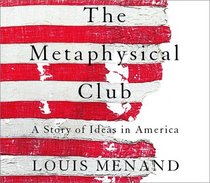
MetaphysicalThe Howland Will Forgery Trial is a very interesting case involving Charles Peirce (pronounced purz). Louis Menand wrote about him and others in a wonderful 2001 book, The Metaphysical Club.

Peirce was involved in the 1868 Howard Will Forgery Trial, and that case is useful here as I try to demonstrate how illogical are the official stories of major crimes of our times. Please refer to this post for a simple exposition of the logic of the coin toss in analyzing observed phenomena.

Anyone interested in Howland (Robinson v. Mandell) can read about it in depth, and I will treat it briefly here. Sylvia Ann Howland died and left a large amount of money to various heirs and legatees. Any residual was to go to her niece, Hetty Robinson, who stepped in with an earlier will. Attached to that will was a letter dated later than the existing will that canceled all the other bequests. It was purportedly signed by Howland, and that was where Peirce entered.

Each of us sign documents regularly, and the quality of our signature varies with our mood, attentiveness, time of day and by pure chance. So it is rare that our signatures will always match in all detail. Peirce noticed with Robinson’s document that part of Howland’s signature, the “downstroke,” when overlaid, matched in all thirty instances with another of her signatures. Using other signatures from other documents, he noted that Howland’s downstroke rarely matched in more than a few instances, and so found this occurrence to be highly unlikely.

He calculated the odds of such a set of identical matches as follows: Signature

That’s one chance in 2,666,000,000,000,000,000,000.

In other words, the Howland signature on the codicil was traced, and the document was a forgery. The conclusion was inescapable. As Charles’ father, Benjamin Peirce, testified on the stand,

The coincidence which has occurred here must have had its origin in an intention to produce it. It is utterly repugnant to sound reason to attribute this coincidence to any cause but design.

The reasoning was relatively new at that time, and the court ruled it inadmissible. Robinson otherwise lost the case.

I will use similar reasoning in the next post as we take a close look at the Naudet film, seen below.

The silence of the readers

“To learn who rules over you, simply find out who you are not allowed to criticize.” (Voltaire)

I am enjoying the news media as they wrestle with Hillary Clinton’s handling of official U.S. business on a private email server. It’s not complicated. She is hiding things we should know about. There is no other plausible reason.

She will be forgiven and the matter will pass, as the U.S. media does not investigate powerful people. We’ll get coverage, but no insight. [Along those lines, Daily Beast does its doody here]

passportIn a recent post I pointed to (painfully obvious) planted evidence, a “hijacker’s” passport found several blocks from the World Trade Center after 9/11. No bodies survived, none of the millions of parts used to make a jet aircraft were found in the rubble. But the passport turned up.

I asked readers, including two commenters directly, to consider the implications.

The predictable response was no response. Such a glaring anomaly pushes subconscious fear closer to the surface. I fully understand the silence of the readers.

Such oppressive silence is a manifestation of hidden power, and is common in every age. Andersen published The Emperor’s New Clothes in 1837, but the story can be traced back centuries before that. Galileo was not arrested for spreading lies, but exposing hidden truth. Julian Assange lives the Ecuadorian Embassy in London now, Bradley Manning is in prison, Edward Snowden in Russia … for saying things that happen to be true.

Even recently with the Charlie Hebdo affair in France there has to be discomfort among thoughtful people that the supposed murderers were hooded men – they could be anyone. Shades of 9/11, the supposed perpetrators left behind an easily discovered driver’s license.

I know the sense of betrayal that one feels when a cherished illusion is destroyed. But we all have to grow up some time, and now would be an excellent time to start.

Only a few things considered

Robert Siegel is a news reader for NPR, and widely considered one of the better ones in the country. He is the host of a show called “All Things Considered” which airs each evening.

Siegel once commented that he would not be interested in “… airing the views of such media and political critics as Noam Chomsky” on All Things Considered. (Yes, I too marvel at the inappropriateness of the program’s name.)

Siegel routinely allows all manner of right-wing and right-center commentary on its programming, but insists that Chomsky is not welcome. He has said that Chomsky

“…evidently enjoys a small, avid, and largely academic audience who seem to be persuaded that the tangible world of politics is all the result of delusion, false consciousness and media manipulation.”

The word “evidently” is a tell, indicating the Siegel is not familiar with Chomsky’s writing or his world-wide reputation. If Siegel had real chops, he would be eager to discuss Chomsky’s ideas among critics and supporters and with Noam himself. Listeners could draw their own conclusions rather than having Siegel act as gatekeeper.

Not so. Chomsky is simply dismissed. He has been interviewed widely all over the world on media outlets large and small. He routinely fills concert halls and other venues when he lectures both in the US and abroad. But only rarely, perhaps three times in fifty years, has he been allowed on the American mainstream media.

Ours is a heavily censored media that allows discussion of issues only within a very narrow framework, that of our two corporate financed parties. It is true that there is passion involved as they debate horse races and candidate speeches or wedge politics. They do give the appearance of diversity of views. This is important, as it reinforces the illusion of self-government.

The natural effect of the censorship is an out-of-sight-out-of-mind environment where media distracts more than informs, and points our attention at minutiae while ignoring the vital issues of our time, the ongoing investigation of major events part of it. Siegel (or Brian Williams or Jon Stewart) would be quickly out of a job if he dared discuss the glaring contradictions in the official 9/11 story, but is on safe ground talking about legalized pot or a mosque or abortion.

If you really want to be challenged to consider ideas of thinkers of high caliber, go back in time and watch the following, from an era when there was a freer marketplace for ideas, though even then heavily censored. (Buckley, after all, was given free access to public television for his whole right-wing agenda, while no such access has ever been allowed dissidents of Chomsky’s ilk.) The two clips in total are about nineteen minutes.

Critical thinking skills applied to some evidence from 9/11

“The CIA’s campaign to popularize the term ‘conspiracy theory’ and make conspiracy belief a target of ridicule and hostility must be credited, unfortunately, with being one of the most successful propaganda initiatives of all time.” (Lance deHaven-Smith, Conspiracy Theory in America)

Conspiracy theorists are really nothing more than skeptics. But as the case put forward by the Warren Commission began to collapse in the late 1960’s, CIA saw a need to immunize the general population from doubt, and so instructed its media moles to start branding skeptics as that. (In the late 70s we learned that CIA had placed 400 or more moles in the news media and academia, giving us our nightly news and scholarly books on current events, basically rewriting our history as we go.)

Skeptics, now belittled as conspiracy theorists, are the vigilant citizenry that a republic might need if there still existed a chance to keep it.

It appears now that the education system, nothing to brag about from the 1900’s forward, has gotten very proficient at turning out graduates at all levels who are not capable of exercising skepticism, or critical thinking skills. Consider this:

In 2003 the Department of Education did a study of adult literacy, and the findings were unsettling. Here is how it defined “proficient,” its highest level of skill:

DOE Study

Only 13 percent of Americans qualified as proficient. More interesting, only 31 percent of college graduates did. [More disturbing yet, see page 15 of the study: The grouping of those involved in graduate studies is only 36% proficient!]

Knowing the basic skill sets of most Americans, government, the media, advertisers and public relations people, writers and elected officials are able to lie with ease. And they do. As the bumper sticker says, everything we know is wrong. Here’s an extreme example (a 17 second clip):

(I do like that the news reader in this clip said “if you can believe that.”)

Stop and think: We were told that a jet aircraft slammed into a building at 500+ miles per hour* and that in the resulting inferno the planes and everyone aboard were incinerated.

passportKnowing that, what are the chances that one piece of paper encased in plastic not only survived, but ended up several blocks away? It has to escape the blaze, be transported in some manner, and be found in the huge mess that was Ground Zero. It has to be that one person’s passport, and not that of another passenger or airline employee, or even one of the several thousand people who died that day.

I do not have to calculate odds here. It is simply impossible. That passport came from some other source.

Given that the passport could not possibly have survived the inferno and then move blocks away, what are the implications?
________________
*Passenger airliners can only travel at those speeds in rarified air at 30-40,000 feet. At ground level, flying at that speed would cause a jet aircraft to disintegrate in midair due to resistance. The process of landing an airliner takes a half an hour or more because the pilot is slowly reducing his speed to allow him to enter heavier air as he approaches the airport.

Critical thinking skills and conspiracies (Part 3)

See Part One
See Part Two

In the JFK assassination, skeptics noticed a high death rate among witnesses due to unnatural causes such as car accidents, gunshot wounds, suicides. Death by accident is a rare occurrence, so let’s say that the chances that any one of us will die today in a car accident is one in 500. That’s actually very low. The odds of death by car accident are much higher, but I do not know what they are. Insurance actuaries make such calculations.

But when two, three, or a dozen important witnesses are CONNECTED to a single event, such as the JFK murder, then we have commonality and can multiply probabilities. Say that only three witnesses died in unusual circumstances (it is many, many more): 500 x 500 x 500 = one in 125,000,000. Yes – one chance in one hundred and twenty-five million that those three deaths would happen under normal circumstances.

This does not mean that such coincidences are impossible. Other factors, such as longevity, time frame and personal habits (drinking and drug use) must be considered. We have not PROVED anything. It is merely analytical EVIDENCE. But people who are skilled in critical thinking realize that three witnesses to one event all dying in unusual circumstances is highly suspicious, is in fact an ANOMALY. Further investigation and higher suspicion is warranted. That is simply how investigators reason. It is their logical backdrop.

People who rely on coincidence theory to explain away related phenomenon sometimes use a gymnastic trick to twist statistical probability on its head. What are the odds, they ask, that a golf ball hit from a tee will land on a particular blade of grass on the golf course?

The answer is both astronomical and meaningless. The odds that it will hit some blade of grass (assuming it does not land in a sand trap) is nearly 100%. But one event by itself is not meaningful. It is only RELATED events that matter. So the golf example is better asked as follows: What are the odds that two golf balls struck from the tee hit the same blade of grass?

The answer is, bear with me: (One divided by (one divided by / the number of grass blades on a green)) squared. Astronomical, many many billions to one.

The example, meant to “debunk” conspiracy theorists, is nonsense.

I will refer back to this post as I move forward with various conspiracies and theories. The purpose is to demonstrate that conspiracy theorists are solidly grounded in statistical analysis, while people who rely on faith in our government and other institutions are not. Further, conspiracy theorists are more skilled at basic problem solving, and rely on evidence more than faith, and are not afraid to think bad thoughts about events, leaders, and the implications if we have some bad people in power. Such things are common throughout history.

End, Part 3

Critical thinking skills and conspiracies (Part 2)

See Part One

The most common example used to demonstrate the principles of critical analysis of evidence is the coin toss. It is easy to follow. Statistics is a branch of mathematics, and deals with probability. Nothing is impossible in statistical analyses, and probability only measures likelihood that some event will or will not happen.

A single coin toss yields the following possibilities: Heads (50%), tails (50%). That never changes. However, it is a little more complicated when we measure the probability of more than one coin toss. What are the chances that if we flip a coin twice, that it will come up heads BOTH times?

The answer is 25%, or one chance in four. We get this answer by multiplying the chance of heads (50%) for each coin toss. 50% X 50% = 25%. The odds of three heads in a row? 50% x 50% x 50% = 12.5%, or one chance in eight.

When phenomena are RELATED, we can MULTIPLY probabilities of their occurrence together. Two coin tosses are RELATED phenomena.

So, what are the odds of tossing a coin and getting heads ten times in a row? The answer is 50% raised to the tenth power, or 50% x 50% … ten times, or the decimal .0009765625. That works out to one chance in 1,024. It is not impossible. It is merely highly unlikely.

So what if you have already rolled heads ten times in a row? What are the odds of rolling heads an eleventh time? (50%. Any single coin toss is always a 50-50 chance.)

We are often told that conspiracy theorists discount the possibility of coincidence. We do not. We are simply critical thinkers with a grasp of statistical probability. The odds, for instance, of one hijacking being pulled off by a small group of men armed only with box cutters is slim, say one in 25. So many things could have gone wrong. The odds of that happening four times in one day is one in 25 to the fourth power, 1/390,625. Of course, 25 is just a number I grabbed, but the point is that the chances of success were not 100%, and the chances of four successes that day were simply astronomical.

Couple that unlikelihood with other events of the day, such as the complete failure of the United States air defense system, and you might begin to understand why high skepticism about the official story is in order.

End, part 2
See part 3
_________________
PS: Suppose that the probability of success of an airline hijacking using only box cutters was higher – suppose that each of the four supposed hijackings on 9/11/2001 had a 50% chance of success. Even then, the chances of four successes would be only one in sixteen (50% raised to the fourth power).