Kill Bill, Volume 3

Every now and then, in all of our blog discourse in this small small blogging community, I stumble on something worthwhile -that is, something outside of the normal give and take and repetitive nonsense. It’s rare, and even more rarely comes from me.

Anyway, today it is this, and this may wrap it up for me, so far as wisdom goes, for the year 2009: In matters of public policy, such as health care reform, it is essential to follow power to its source if one is to understand what is going on.

So in the health care debate, forget abut Max Baucus, or even Obama/Lieberman/Conrad/Nelson/Emmanuel. They are mere players. Real power lies elsewhere.

In the case of the bill before the senate, and the one that will ultimately pass, power lies with AHIP and PhRMA. They wrote the bill, and have been guiding us slowly to it by use of politicians as actors. The create imperatives (must have 60 votes!) and bad guys to set up fake showdowns. Harmful amendments (state-level single payer or drug reimportation) simply disappear without public debate. All towards a final goal.

Where is public power? What can we do? Given that politicians are useless and the pwer behind them is hidden, we can only mount enough pressure on them by forging alliances among natural enemies, to kill the bill. It has to be negative power. They do not respond to anything else.

For that reason, progressives, teabaggers, fiscal conservatives, libertarians, socialists and people who fear socialism and objectivists, among other, all need to join forces to kill this bill.

Politicians live by divide and conquer, and die when forces unify against them. We have a common goal. It is time for progressives to show up at a teabag rally – not to ridicule them, but to join with them. We need a visible coalition.

When “Terrorists” were called “Communists”

I ran across a fascinating interview at “Against the Grain” with Elaine Elinson and Stan Yogi, authors of the book Wherever There’s a Fight. The book in general is about the ongoing fight for civil liberties in California. I am most interested in their comments about the activities of the House Committee on Un-American Activities in the early 1950’s, the Red Scare, and the so-called “Hollywood Ten.”

After World War II, the U.S. was under new rule, and like a kid in a candy store, had at its disposal all of the assets of the collapsed British and French empires. The country would soon embark on imperial adventures, the first the disrupting of the Greek Resistance movement and subverting their elections. President Truman signed into law the National Security Act, the CIA was born, the Department of War was renamed “Department of Defense” (meaning we were going on the attack) and we entered a state of permanent war.

But the whole world was not our footstool, as parts of it were dominated by the Soviet Union, and were thereby made inaccessible to American business penetration. A long protracted struggle was in store. (China was “lost” in 1948, but was not expansionist, so not as great a concern as the USSR.)

To prepare the American people for the long struggle, a massive indoctrination campaign went in to motion. We had to be injected with fear, a fear so great that it would allow our leaders to set aside the Constitution with its attendant Bill of Rights. The object of our fear was to be our former ally, Russia, without whom we would not have won the European war. Russia itself had undertaken imperial expansion after the war, mostly to protect its borders from yet another western invasion. It had renamed itself the “Soviet Union,” later the “evil empire,” our eternal enemy. (Russia had always been our enemy, we would learn.)

The propaganda campaign was intense. I lived through it as a young child. We were taught in school that communists were everywhere, met in secret cells, and were plotting to overthrow our country (much as we are taught about “terrorists” these days.) These were the days of fallout shelters, air raid drills, and “duck and cover.” (Because television was black and white, the current threat-level color code was not useful.) A whole generation was injected with a dose of fear meant to last for decades.

Joe Stalin’s crimes were finally exposed too- when he was our ally, these were ignored.

A small part of the larger fear campaign was the HUAC Red Scare hearings, the purpose of which were, in my view, the put out the word that there were communist cells around, in our neighborhoods, on campus, in government at all levels, and in the world of entertainment.

The Hollywood writers were selected for special prosecution. They were

* Alvah Bessie, screenwriter
* Herbert Biberman, screenwriter and director
* Lester Cole, screenwriter
* Edward Dmytryk, director
* Ring Lardner Jr., screenwriter
* John Howard Lawson, screenwriter
* Albert Maltz, screenwriter
* Samuel Ornitz, screenwriter
* Adrian Scott, producer and screenwriter
* Dalton Trumbo, screenwriter

The HUAC dragged each of these men before them, the objective being to get them to “take the fifth”, which would incriminate them in the eyes of the American public. The Ten were too smart for this, and instead “took the first” and invoked their right to free speech. The committee did not take kindly to this,and eventually the Ten were accused and convicted of contempt of Congress, and went to jail. Dmytryk later turned on them to gain his freedom. The rest, in addition to jail time, were “blacklisted”,and never allowed to work again in the motion picture business.

An interesting footnote to this episode is that much of the work of these ten happened during World War II when Hollywood was a propaganda outlet for the war effort, and Russia was an ally. Their work in sympathy with our ally was also in service of our government, and was cynically used against them as part of the propaganda effort.

HUAC of course, was engaged in a much larger scare effort, and the Hollywood Ten were only minor victims. Ronald Reagan, Jimmy Stewart and Walt Disney, among others, were cowardly quislings in working for the committee and against their fellows.

But in the end, we were all victims. The “Red-baiting” did not stop after the committee’s business, but rather went on for years. The U.S. would use the Soviets as casus belli for a host of adventures costing millions of lives.

Many say that the 1950’s,with HUAC and McCarthy and all that went on, is one of the most disgraceful periods in our history, when our constitution was shredded, propaganda ran amok, and ordinary decent people thrown in jail for thought crimes.

Not hardly. It’s fairly typical.

PS: The interview I cited above was not the one I thought it was. It’s interesting, but the HUAC/Hollywood Ten was something else,and I cannot find it again.

They got their sixty … we’re stuffed

Think Progress has a long list of bills that were passed by means of reconciliation, including the Bush tax cuts for the wealthy:

Omnibus Reconciliation Act of 1980
Omnibus Budget Reconciliation Act of 1981
Tax Equity and Fiscal Responsibility Act of 1982
Omnibus Budget Reconciliation Act of 1982
Omnibus Budget Reconciliation Act of 1983
Consolidated Omnibus Budget Reconciliation Act of 1985
Omnibus Budget Reconciliation Act of 1986
Omnibus Budget Reconciliation Act of 1987
Omnibus Budget Reconciliation Act of 1989
Omnibus Budget Reconciliation Act of 1990
Omnibus Budget Reconciliation Act of 1993
Balanced Budget Act of 1995 (vetoed)
Personal Responsibility and Budget Reconciliation Act of 1996
Balanced Budget Act of 1997
Taxpayer Relief Act of 1997
Taxpayer Refund and Relief Act of 1999 (vetoed)
Marriage Tax Relief Act of 2000 (vetoed)
Economic Growth and Tax Relief Reconciliation Act of 2001
Jobs and Growth Tax Relief Reconciliation Act of 2003
The Deficit Reduction Act of 2005
Tax Increase Prevention and Reconciliation Act of 2005

Reconciliation rules are rather complex- the senate and house pass a budget resolution, a long and complex process, but ultimately requiring only a majority vote and no presidential signature to pass. Then various committees are instructed to propose legislation to bring spending and taxation in line with that resolution. Any bill that falls in line with the budget resolution can be passed by mere majority vote.

So, with a little advance planning, it appears as though the budgeting for health care reform could have been part of the resolution process, and passed with 51 votes.

There is also the “Byrd Amendment,” which limits bills passed by reconciliation to a ten year span if they add to the deficit. So the Senate could conceivably pass a good bill and revisit in over the next ten years to either freeze it in place, or make it better. (This is why the Bush tax cuts are set to sunset in 2011 – they increased the deficit and were passed via reconciliation.)

So, the question is, is there any way that health care could have fallen under reconciliation rules and been subject to a straight up-or-down vote? The answer has to be yes, of course, by simply budgeting for the necessary revenues to fund a bill during the resolution process. Then a committee would be directed to produce a bill, and presto-up or down vote.

I could be wrong about all that. One cannot hope to learn arcane senate rules in one sitting. And surely if it were that simple, it would be done. (Please note, Democratic readers, this is sarcasm.)

This much I am fairly certain about: The Democrats did not want reconciliation from the very beginning of the health care process. They wanted to have to buy off Olympia Snowe, and Joe Lieberman, Ben Nelson. It was a convenient way for them to hide their own reluctance to pass any kind of meaningful reform.

By the way, I say “them”, and “Democrats”. There are good Democrats, but probably not enough to pass even an up-or-down bill. I speak in general terms because the ‘Good Dems’ are at a disadvantage, having the Republicans, the Democratic leadership and the White House working against them. They are a distinct minority when one considers the numbers of right wing Republicans and Democrat beards, and Obama/Emmanuel.

—————-

So, they got their sixty votes, I read. It’s a sad day, and Democrats will be hard to endure for a while as they tell us what a good deal they did for us. The public doesn’t seem to go along with that – this is a complex issue, but there were two very clear and well-understood objectives that could have been achieved with even a modicum of leadership: a Public Option, and an expansion of Medicare. We got stuffed on both, with no support at all from the White House.

Polls indicate that the public is very unhappy with the Obama/Lieberman bill, but I have to think that those two don’t care. Nor do I. Democrat control of congress and the presidency has given us this bill. How can it get worse?

————

PS: It’s worth inquiring here about the prevalence of the filibuster and the ability of Republicans to use it so freely these days on virtually all legislation. This is probably triangulation – an agreement among the leadership of the two parties and the president that the Republicans are to be the bad guys and use the filibuster to kill important legislation. Filibusters could easily be avoided or defeated if Democrat leadership wanted it so. The filibuster essentially defeats the momentum for reform that came out of the elections of 2006 and 2008. The parties present to the public the appearance of rivalry, but agree in principle on which legislation needs to be passed or defeated.

In the case of health care, filibuster was used as an excuse to water the bill down to one acceptable to the insurance and pharmaceutical lobbies – likely down to a bill they wrote themselves.

A remedy to corruption

Here’s a proposal for campaign finance reform:

Pick a candidate for federal office. You are allowed to give that candidate a contribution of any amount to a maximum of, say, $500. Just a number.

When you file your tax return, claim a refundable tax credit of 80% of that amount, or $400.

It’s taxpayer-directed public financing. It would be quite easy to qualify candidates before they are tax-credit-worthy: To qualify for public financing, they have to raise a certain amount, say $50,000 from 5,000 donors. That way you could weed out the tiny splinters yet still allow small parties to compete. It would end the D-R-one-party-two-right-wing monopoly.

Of course, much more need be done than that, like somehow getting the advertising industry out of campaigns. Those 30 second ads are demeaning, insulting, and subversive.

One thing at a time.

By the way, I’m no great original thinker. This is how the Canadians do it. It ain’t just health care that they are good at.

Some Democrats who get it

The Denver Post today ran three letters regarding health care topics, each making points that Democrats need to hear.

It’s pretty clear that not only the Republicans abhor the idea of health care reform, but so do Democrats. The fact that Joe Lieberman, senator from Connecticut, is holding up the current health care bill and the Democrats do nothing to stop him indicates that he speaks for all of them. Lieberman is just doing his job, obstructing health care reform so that both parties in Congress do not have to lose their corporate benefactors.

Good Democrats should leave the Democratic Party and send a message that votes have to be earned. Democrats have been betrayed too many times in the last few months.

L. Highland, Morrison

It’s a painfully obvious point to make – and yet so many Democrats that I read don’t see it. That makes it even more painful.

A single senator has managed to kill both the expansion of Medicare and any possibility of a public option in the health care bill. So what is left? A mandate for almost everyone to purchase insurance and a federal subsidy to help those who cannot afford it.

In essence, what will be created by this bill is a very effective mechanism for transferring money from the federal treasury to the insurance industry. In other words, corporate America wins again.

I suppose that it is pure coincidence that Joe Lieberman represents Connecticut and Connecticut is the home of so many insurance companies.

Niel Powers, Colorado Springs

This writer does not see that he is being played by the “Bad Joe” tactic, but does see the larger goal of the Democrats’ efforts – to create a pipeline of subsidy to the health insurance industry.

I don’t know how the senators who voted down a proposal to allow Americans to import low-cost prescription drugs can justify their actions. The amendment by North Dakota Democrat Byron Dorgan would have helped millions of Americans who are paying premium prices because our nation’s drug companies have a captive market. Where are the open competition and free enterprise that we like to hold up as American values? Do these values and the needs of our people simply get pushed aside when they come into conflict with the personal and financial interests of these senators?

When we see officials from other countries involved in these types of actions, we call it corruption. I don’t see the difference here.

Fred Buschhoff, Denver

There ya go. It really is that simple. We are corrupt, decadent, and on our way to collapse. And that’s not a bad thing. We need to collapse. We’re not worth keeping around the way we are.

Others abroad surely agree. Let’s take a poll, starting in Iraq …

A rose by any other name …

I was reading an interesting exchange this morning between Gilbert Achcar and Noam Chomsky – the subject was terrorism, or more precisely, defining terrorism. Both, in the end, agreed that the definition of the problem is made more difficult by the need for profound dishonesty, that is, in the end, terrorism must mean “something that is done to us”, and not “something we do to others.”

That is indeed a problem. The official definition is the “calculated use of violence or threat of violence to attain goals that are political, religious, or ideological in nature.” We can all agree that 9/11 was an act of terror, but what about bombing Serbia or Gaza, invading Iraq, and now attacking Pakistan by means of Afghanistan … maybe these are not acts of terrorism in that the goals are probably financial. But I’m not sure. We could be imposing an ideology on them- did not the Nazis impose their ideology on Vichy France? Do we not now have Vichy Iraq? Will we not soon have Vichy Afghanistan?

I gotta say, I’m catching the distinct odor of terrorism here – things we are doing to others … wait! Not possible. My bad.

If the real definition of terrorism is only things done to us by others, then we have to craft a definition that exempts us.

Policy experts are hard at work on the problem. They’ll come up with something, and it will be reprinted in all the fine journals and discussed on all the intellectual forums.

We’ll soon have a working definition. I’ll keep you posted.

Expressing inexpressible thoughts

In 1993 the musician Prince, in a flash of brilliance, decided to change his name to an unpronounceable symbol:

It didn’t really catch on, and worse than that, meant that newspapers and industry publications couldn’t write about him much, as his name was a symbol.

This reminds me of the inadequacies of our language. English is a really good language for a lot of things, and so flexible, but often people have to grab things from other languages to express a fine point. So for instance, from the Germans we get words like schadenfreude, meaning the joy we take at the misfortune of others, or zeitgeist, or spirit of the times. From the French we get a whole array of expressions – je ne sais quoi – that certain indescribable something, agent provocateur, one who entices another person to commit an illegal act or who deliberately stirs up rebellion to allow police to put it down (see how many words it takes?); and coup de grâce, or mercy blow – the kill shot. From the Italians, we learn how to order coffee.

Each of these expressions is used because they convey just a little bit more meaning than the English definition. My wife’s je ne sais quoi – well, you’d have to know her. I cannot describe it well.

I was looking for a word last week after a debate with Big Swede and Craig Moore – one that describes the indestructible wall of certainty that surrounds their stupidité profonde. In addition, I was looking for a word that describes Black Flag’s unwavering certainty in his philosophy of free markets in the face of all evidence to the contrary.

The best I could do was “absurd,” “bizarre,” “silly” and “ridiculous.” They don’t really carry it.

Then I had an idea – I don’t know enough French or German to grab the right phase from their language, but I do have access to a whole array of symbols via Microsoft Word. One of them will do – it will be the symbol I use to describe the indescribable. I will inject it at that point in a conversation where information can no longer be exchanged, when the language has lost power, and all we have left are blank stares. Here it is:

¥

I invite others to use it on me as well – I cannot not grasp things that I cannot possibly grasp. And, I invite others to offer their own words or symbols – we might breach a wall, and open up new lines of communication.

Area man accused of being clever

The North Face is a company that is owned and managed by very, very clever people. Here’s their business model: Branding. They hire Chinese peasants to make average products of no special quality, and then apply a huge markup to them.

Because no self-respecting person would pay such outrageous prices for such mundane merchandise without some ulterior motive, North Face hired the advertising industry to do what Phil Knight did with Nike: use subversion, glamor-appeal and celebrities to invest the products with a silk-purse glow. They market their products to those who have more money than sense, and who are so image-conscious that they make foolish purchases.

These very, very clever people at North Face stole their whole business plan from Nike. Not a damned thing about it is original or clever.

Along comes a clever kid, Jimmy Winkelmann, who wants to go to college. Unlike North Face, Jimmy is clever and original (he should really think about college). Jimmy founded a company called “South Butt”, and began marketing products appealing to people who don’t really like exercise.

North Face is suing Jimmy. Jimmy don’t like being sued.

North Face says that Jimmy is stealing their clever ideas. Since no one at North Face is clever, they probably don’t get what Jimmy is doing. He’s trying to make a buck by being clever.

North Face is punishing Jimmy. Jimmy might have to quit now. North Face can force him out of business just by taking him to court to defend himself. They will legal-fee him to death.

Jimmy, being very clever, maybe ought to think about being a lawyer.

Go to South Butt today, buy something from Jimmy. Jimmy needs help.

Vince, oh sweet Vince, wherefore art thou?

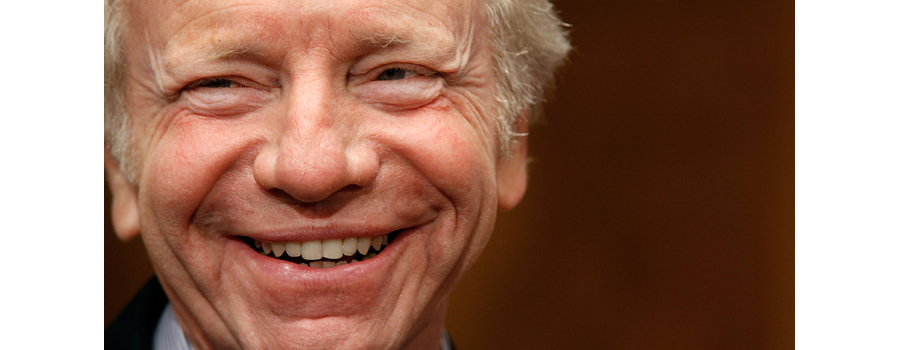
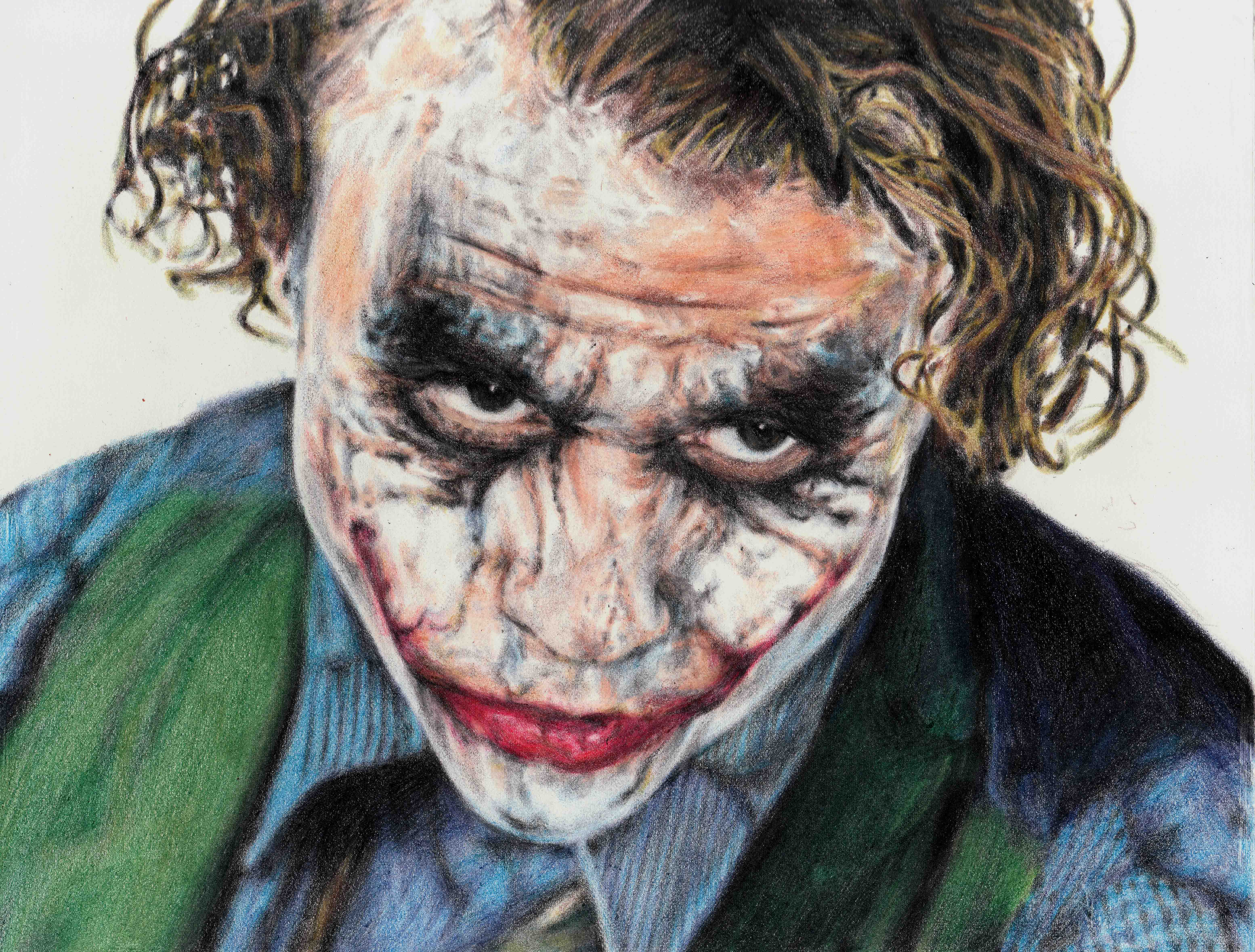
The reason I put up these two images is not because I think Joe Lieberman is a bad guy, or that he is in any way scary. The point I want to make is that Health Care politics has a kinship with professional wrestling because it is scripted. Lieberman, like any of the “bad guys” in wrestling has a job to do – he has to move the story forward. To do so, he appears on stage at strategic intervals when the story is failing. He does eeeeeeevil things, now threatening to help filibuster the Medicare 55 option.

It’s scripted. He works very closely with the Democrats on all of this stuff, and appears when he should and says what he must. In the end, he will take the heat when the ‘desired’ legislation (which is doomed to fail anyway) goes down. Other Democrats feel less heat because of Lieberman.

So Joe is an actor on a stage, and I even like him, much as I like villains in any movie. (All time classic: Heath Ledger’s “The Joker.”)

Lieberman should paint his face.

But I much prefer professional wrestling, as the players aren’t so slimy. But please note: The mindless zombies who think wrestling is real cannot hold a candle to the party hacks who buy the “Bad-guy-Joe” narrative.